
Top Umbrella Stands for a Dry Entryway in 2026
The best umbrella stands of 2026 do one small job brilliantly: they catch the rain before it reaches your floor. A good stand holds every umbrella upright, collects the drips in a tray you can empty in seconds, and tidies the messiest corner of the hallway. A bad one wobbles, tips over the moment a heavy walking umbrella leans against it, and lets a puddle spread quietly across the wood. This guide covers the umbrella stands that keep an entryway dry, what separates them from the ones that fail, and how to pick the right one.
An umbrella stand earns its place in about ten seconds a day. You come in from the rain, slide the wet umbrella into the stand, and walk away. That is the whole test: if the stand is too light it tips, if the opening is too narrow the umbrella will not go in, and if there is no tray the floor gets wet anyway.
Key Takeaways
- Weight is the first test: a stand should be heavy enough that a tall, wet umbrella cannot pull it over.
- A removable drip tray is not optional. It is the part that keeps rain off your floor, and it should lift out for emptying and cleaning.
- Measure your umbrellas before you buy. A walking umbrella needs a taller, wider opening than a compact folding one.
- Metal and ceramic stands handle wet umbrellas best; untreated wood swells and stains if it stays damp.
- Match the stand to the household: one or two umbrellas need a slim stand, while a family of four needs a wide one with separate slots or compartments.
Why an Umbrella Stand Matters More Than You Think
Rain does not stop at the doormat. A wet umbrella left leaning against a wall drips down the skirting board, soaks into plaster, and leaves a dark stain that never quite dries out. Laid flat on the floor, it spreads water across the hallway and becomes a trip hazard in the dark. Hung on a hook, it drips onto whatever is underneath it, usually a pair of shoes. The umbrella stand exists because none of those options work, and the difference between having one and not having one shows up the first wet week of autumn.
Umbrellas also last longer stored upright and allowed to dry. A canopy crammed damp into a cupboard grows musty and weakens at the seams, while one standing in a ventilated stand dries in a few hours. The best travel umbrellas for rain in 2026 deserve that care, and so do the patio umbrellas that shade the whole table in 2026 when they come inside for winter.
The Main Types of Umbrella Stand
Umbrella stands come in a handful of shapes, and each one suits a different kind of home. Knowing the types before you shop saves you from buying a beautiful stand that does not fit a single umbrella you own.
Ceramic and Porcelain Stands
Ceramic stands are the classic choice. They are heavy, so they do not tip, and waterproof, so drips cannot damage them. The weight is the real advantage: a ceramic stand of three or four kilos holds a tall, wet walking umbrella without a wobble. The drawback is fragility: drop one on tile and it can chip, and a cracked glaze lets water into the body.
Metal Stands
Metal stands are the workhorses. Powder-coated steel and wrought iron are strong, slim, and easy to clean, and open-framed designs let air circulate so umbrellas dry faster. Brass and copper look warmer and suit traditional hallways, though they need an occasional polish. Check the coating: bare steel rusts at the first scratch, so a good powder coat or stainless frame is essential.

Wooden Stands
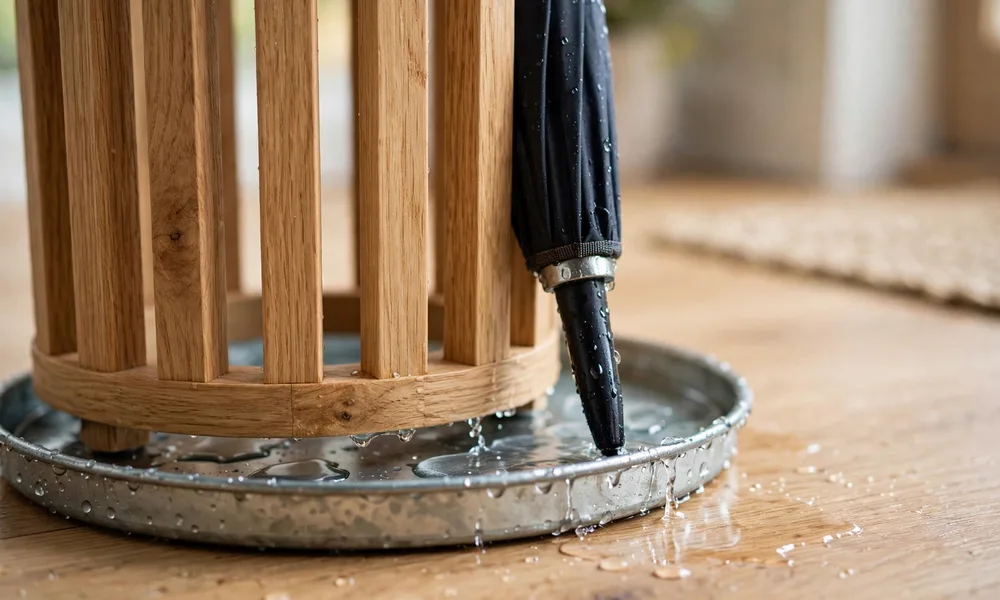
Wooden stands look wonderful in a hallway with wooden floors, bringing warmth that metal and ceramic cannot match. The catch is water: a wooden stand without a metal or plastic tray inside will stain, swell, and warp. The good ones all have a removable metal liner, and that liner matters as much as the timber.
Multi-Compartment and Slotted Stands
Multi-compartment stands divide the opening into two, three, or four sections, so each umbrella has its own place and wet canopies do not tangle. They are the best choice for a busy household, and some have separate slots for walking and folding umbrellas. If your household has more than three umbrellas, a compartment stand is almost always the right answer.
Wall-Mounted and Slim Stands
For narrow hallways, a wall-mounted or slim stand keeps the floor clear and tucks into the gap between a door frame and a radiator. The trade-off is capacity: a slim stand holds two umbrellas at most, and a wall-mounted one needs a solid fixing, because a wet umbrella is heavier than it looks.
Umbrella Stand Comparison
| Stand type | Best for | Weight and stability | Drip handling | Care needed |
|---|---|---|---|---|
| Ceramic or porcelain | Traditional hallways, tall walking umbrellas | Heavy and very stable | Needs emptying by hand | Wipe clean; avoid chips |
| Powder-coated metal | Busy family hallways | Good, if the base is wide | Removable tray, easy to empty | Wipe dry; check coating |
| Brass or copper | Decorative entryways | Heavy and stable | Tray or liner included | Polish occasionally |
| Wood with liner | Warm, natural interiors | Good, if the base is solid | Metal liner catches drips | Keep liner dry; oil wood |
| Multi-compartment | Households with four or more umbrellas | Very stable, wide base | Separate tray per section | Empty trays after rain |
| Slim or wall-mounted | Narrow halls and flats | Light; fix firmly | Small tray; empty often | Wipe down weekly |
The Drip Tray Is the Whole Point
Every umbrella stand is really a drip tray with a holder attached, and the tray deserves more attention than it usually gets. A good tray is deep enough to hold a day of rain without overflowing, wide enough to catch drips from umbrellas that lean at an angle, and removable, so you can tip it into the sink and rinse it in seconds. A shallow tray overflows. A fixed tray cannot be cleaned properly and grows a musty smell within a month. A tray that is narrower than the stand lets water run straight onto the floor, which defeats the purpose of the stand entirely.
Look for a tray with a raised rim of at least two centimetres and a surface that is easy to wipe. Metal trays are easiest to keep clean; plastic ones are light but can crack in cold hallways. Whatever the material, empty the tray after every wet day and wipe it weekly, because a stand that smells damp is a stand whose tray has been ignored.
The tray also protects the floor, and that is worth more than the stand itself in a home with wooden floors: water that sits on wood seeps into the grain and leaves dark rings no polish removes. The same logic applies to the top coat racks for a tidy entryway in 2026, where the best hallway furniture keeps wet weather contained instead of letting it spread.

Size, Capacity, and Measuring Your Space
Before you buy, measure three things: the height of your tallest umbrella, the width of the space by the door, and the number of umbrellas the stand must hold. A walking umbrella is typically between 80 and 95 centimetres long, and the stand should be at least 45 centimetres tall so the umbrella sits securely without toppling. A stand shorter than that leaves too much umbrella above the rim, and the whole thing becomes top-heavy. Folding umbrellas are shorter, usually under 30 centimetres, and they need a shallower stand or a compartment of their own, because they disappear into a tall tube and are hard to fish out.
Capacity is the number most buyers get wrong. Count every umbrella in the house, add one for guests, and buy a stand with room to spare: an overfull stand is worse than no stand, because umbrellas lean out at angles and drip onto the floor.
The stand needs about 30 centimetres of clear floor by the door, where you naturally reach for it as you come in, and it must sit clear of the door swing. In a narrow hallway, a slim stand against the wall beats a wide one in the middle of the floor.
Materials That Survive Wet Weather
An umbrella stand lives in water, so the material has to be chosen for wet conditions first and looks second. Ceramic and glazed porcelain are naturally waterproof and will not rust, stain, or swell, which is why they have been the default for a century. Powder-coated steel is the modern equivalent: strong, light, and immune to rust as long as the coating stays intact. Stainless steel needs no coating at all, though it shows water spots and fingerprints more readily.
Brass and copper age gracefully and develop a patina many people prefer to a factory shine, but they are heavy and expensive. Wood is the riskiest choice and the most rewarding when done well, but only with a watertight metal liner and sealed timber. Plastic stands are cheap, light, and completely waterproof, and they suit a back door or mudroom even if they are rarely beautiful.
Checklist: Before You Buy an Umbrella Stand
- Count every umbrella in the house and add one for guests, then buy a stand that holds that many.
- Measure your tallest umbrella and choose a stand at least 45 centimetres tall for walking umbrellas.
- Check the drip tray: it should be deep, wider than the stand, and removable for emptying and cleaning.
- Pick up the stand. If it feels light enough to tip with one hand, it will tip with a wet umbrella in it.
- Measure the space by the door, including the door swing, and confirm the stand fits without blocking the way.
- Match the material to the room: ceramic or metal for wet hallways, wood with a liner for warm interiors, slim or wall-mounted for narrow halls.
Frequently Asked Questions
How tall should an umbrella stand be?
For walking umbrellas, at least 45 centimetres tall, so the umbrella sits deep enough to stay upright. A stand of 50 to 60 centimetres suits most households with a mix of walking and folding umbrellas.
Do umbrella stands need a drip tray?
Yes, always. The tray is what keeps rain off the floor, and without one the stand is just a vase for umbrellas. It should be removable, deep, and easy to rinse in the sink.
What is the best material for an umbrella stand?
Ceramic and powder-coated metal are the safest choices for wet hallways, because they are waterproof and heavy enough to stay stable. Brass suits decorative entryways, and wood works only with a watertight metal liner.
How many umbrellas should a stand hold?
One more than your household owns, so there is room for a guest. Count every umbrella that lives by the door, including spares, and buy a stand with a slot to spare.
Where should an umbrella stand go?
Within arm’s reach of the front door, on the side you step towards as you come in, clear of the door swing. In a narrow hallway, a slim stand against the wall works best.
How do I stop an umbrella stand from smelling damp?
Empty the drip tray after every wet day, wipe it dry once a week, and let umbrellas dry upright with air circulating around them. A stand that smells is almost always a tray that has not been emptied.
The Bottom Line
The best umbrella stands of 2026 are heavy, well-sized, and honest about water. They hold every umbrella upright, catch every drip in a tray that is easy to empty, and look like they belong in the hallway. Choose ceramic or metal for a wet hallway, wood with a proper liner for a warm interior, or a multi-compartment stand for a busy family, and measure your umbrellas and doorway before you order. Get those details right and the entryway stays dry and the umbrellas last longer.


