
Best Dog Shampoos 2026
A good bath should leave a dog smelling fresh, feeling comfortable, and looking like itself again. The wrong shampoo can do the opposite: it can dry out the skin, leave the coat dull and sticky, or set off an itch that lasts for days after the bath is over.
Dogs are not small people, and their skin is not human skin. A shampoo that works well in your own shower can strip the natural oils from a dog’s coat and upset the balance of its skin. These are the best dog shampoos of 2026, chosen for coat type, skin sensitivity, rinsing, and how the dog feels the next day.
Key Takeaways
- Choose the shampoo for your dog’s coat and skin, not for the scent on the bottle, because a formula that suits a short-coated dog can dry out a long-coated one.
- Look for a pH-balanced, dog-specific formula, since human shampoo is too acidic for a dog’s skin and strips its natural oils.
- Short coats need a light, easy-rinsing wash, while long and double coats need extra conditioning to stop tangles.
- Puppies, older dogs, and dogs with itchy or flaky skin need the gentlest formula you can find, with as few fragrances as possible.
- Rinse longer than you think, because shampoo left in the coat is the most common cause of itching after a bath.
Dog Shampoos 2026 at a Glance
| Best for | Shampoo type | Coat type | Standout strength |
|---|---|---|---|
| Best overall | Gentle everyday shampoo | All coats | Cleans well without drying the skin |
| Best for sensitive skin | Fragrance-free oatmeal shampoo | All coats | Soothes itching and calms redness |
| Best for long coats | Conditioning shampoo | Long and curly coats | Loosens tangles and softens the coat |
| Best for puppies | Tear-free puppy shampoo | All puppy coats | Extra mild for young, delicate skin |
| Best for muddy dogs | Deep-cleaning shampoo | Short and thick coats | Lifts dirt and outdoor smells fast |
| Best for dry coats | Moisturising shampoo | Dry and double coats | Adds softness and shine back to the coat |
What a Dog Shampoo Is Really For
A dog shampoo has three jobs. First, it lifts dirt, mud, and smells out of the coat. Second, it cleans the skin underneath without stripping the oils that keep that skin healthy. Third, it leaves the coat in a state you can brush, so the dog does not knot up the moment it dries.
It helps to know what shampoo is not. It is not a treatment on its own for a skin problem, and it is not a substitute for brushing. A shampoo works best as part of a simple routine: brush first, wash with the right formula, rinse thoroughly, and dry the dog properly. Our guide to the best pet grooming kits of 2026 covers the brushes and clippers that pair with a good wash, and the same calm, unhurried approach applies here.
Why Dog Skin Needs Its Own Shampoo
A dog’s skin sits at a different pH from human skin. Human skin is slightly acidic, while a dog’s skin is closer to neutral, and a shampoo made for people is usually too acidic for a dog. Used once, it may cause no obvious harm. Used every few weeks, it can dry the skin, make the coat dull, and leave the dog itchy.
Choosing by Coat Type
Start with the coat in front of you, not the claims on the label. A short-coated dog, such as a Labrador or a Boxer, does well with a light everyday shampoo. It cleans the surface, rinses fast, and leaves the coat smooth without weighing it down. Anything heavy or oily will make a short coat look greasy.

A long-coated dog, such as a spaniel or a Shih Tzu, needs a conditioning shampoo. The conditioner in the formula softens the hair, loosens the tangles that form during the wash, and makes the brush-out afterwards far easier. Without it, a long coat can mat while it dries, and matting pulls at the skin.
Sensitive Skin, Puppies, and Older Dogs
Some dogs itch for reasons that have nothing to do with dirt. Dry air, allergies, and a coat that has been washed too often can all leave the skin red and flaky, and a strong shampoo makes each of them worse. For these dogs, a fragrance-free oatmeal shampoo is the safest starting point. Oatmeal soothes the skin, the lack of fragrance removes a common irritant, and a short ingredient list makes it easier to spot what agrees with your dog.
Puppies need a tear-free formula made for young skin. A puppy’s skin is thinner and more easily irritated than an adult dog’s, and a shampoo that stings the eyes will make the puppy dread the next bath. Wash a puppy gently, keep the water warm rather than hot, and keep the whole bath short and calm.
Ingredients Worth Looking For
A short, plain ingredient list is usually a good sign. Oatmeal, aloe vera, and coconut-based cleansers are gentle and well tested on dogs, and they clean without stripping the coat. Natural oils such as jojoba or coconut oil can help a dry coat, provided they are used lightly, so the coat feels soft rather than greasy.
Ingredients to Avoid
Some ingredients have no place in a dog shampoo. Human shampoo is the first to avoid, for the pH reason above, and so are dish soap and laundry detergent, which strip the coat completely and leave the skin raw. They may look like a quick fix for a muddy dog, but the damage shows up days later as flaking and itching.
How Often Should You Wash a Dog?
Most dogs need a bath every four to eight weeks, and many need far less. A dog that lives indoors, walks on pavements, and stays clean can go two months between washes without any harm. A dog that swims, rolls in mud, or works outdoors will need washing far more often, and that is where a gentle formula matters most.
How to Wash a Dog Properly
Brush the coat before the bath, not after it. Brushing first removes loose hair and tangles, and it stops the wash turning a small knot into a mat. Pay attention to the places that tangle most: behind the ears, under the collar, and around the legs.
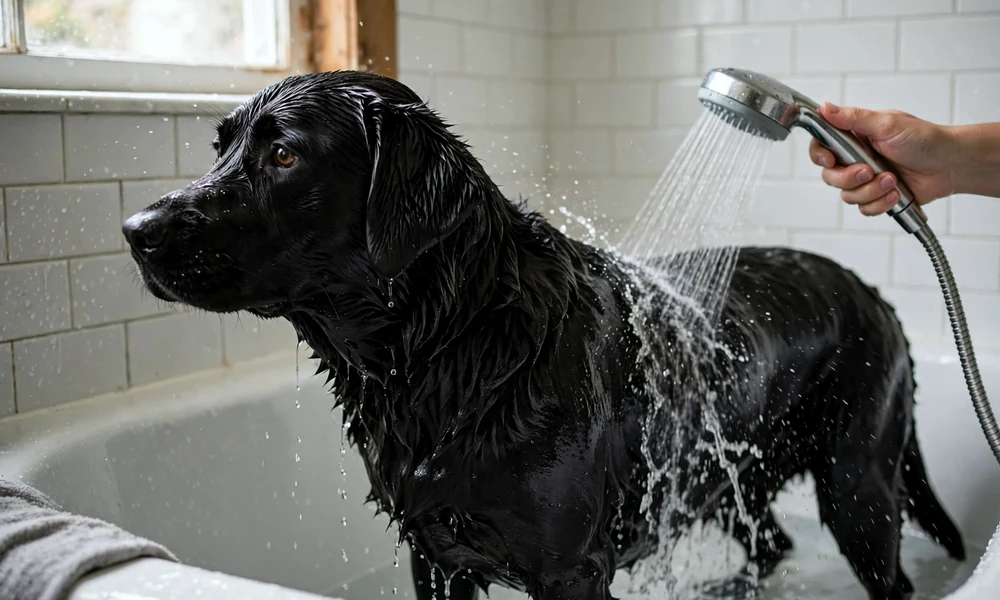
Wet the coat thoroughly with warm water before you add any shampoo. A coat that is only damp on the surface will not lather evenly, and the shampoo will sit on the top layer while the undercoat stays dirty. Work the water in with your hands, especially on a double coat, until the fur is wet right through to the skin.
Use less shampoo than you think you need. A small amount, worked into a lather with your fingertips, cleans the whole dog, and it rinses out far more easily than a large dollop. Massage gently rather than scrubbing, and keep the shampoo away from the eyes and the inside of the ears. A damp cloth is enough for the face.
Rinse, then rinse again. Run your hands through the coat while the water runs, and keep going until the water runs clear and the coat feels clean rather than slippery. On a thick-coated dog this takes several minutes, and it is the step most people cut short. When the coat squeaks slightly under your fingers, the shampoo is out.
Drying and the Brush-Out
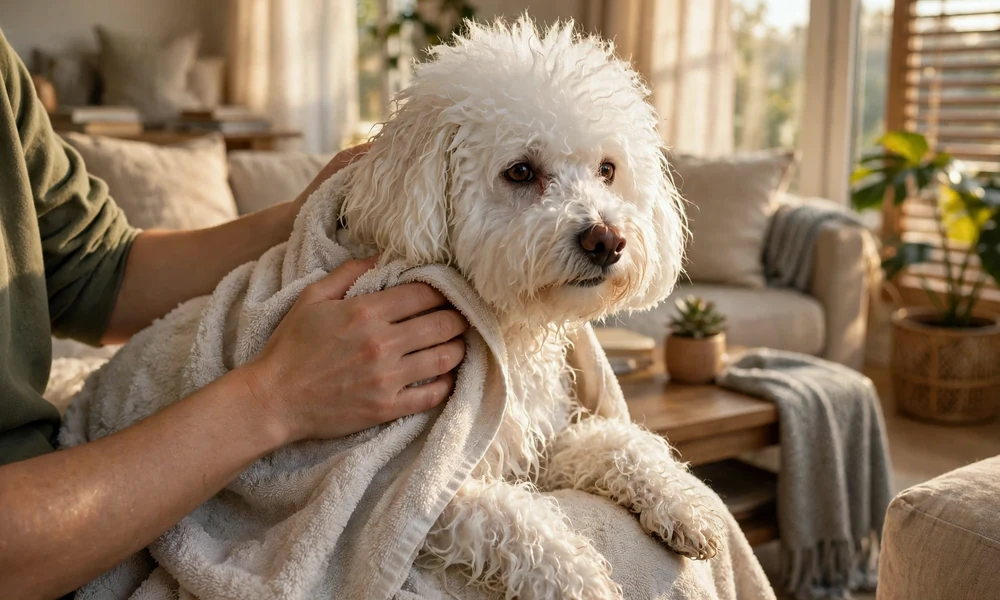
Drying matters as much as washing. A dog left wet in a cold room will shiver, and a long coat left damp will mat as it dries. Towel-dry first, pressing the towel against the coat rather than rubbing hard, which tangles the hair. A second dry towel is worth having for a large dog.
What a Dog’s Diet Has to Do With Its Coat
Our guide to the best dog food for your dog’s age and size in 2026 explains how to match food to a dog’s age and size, and the same thinking applies to the coat: a puppy, a working dog, and an older dog need different support. A healthy coat starts at the bowl, and the shampoo only keeps it clean.
Common Mistakes to Avoid
The most common mistake is washing with human shampoo, because it is already in the bathroom and it smells familiar. The second is using far too much product, which leaves residue that itches. The third is rinsing too quickly, especially on a thick coat, and then wondering why the dog scratches all evening.
Before You Buy: A Short Checklist
- Match the shampoo to the coat: light for short coats, conditioning for long coats, moisturising for curly coats.
- Check that the label says dog-specific and pH-balanced, and avoid human shampoo entirely.
- Choose fragrance-free or lightly scented if your dog itches, sneezes, or has sensitive skin.
- Read the ingredient list and avoid strong sulfates, parabens, and unfamiliar essential oils.
- Pick a puppy formula for a young dog, and a gentle one for an older dog.
- Use a small amount, rinse until the water runs clear, and dry the dog in a warm room.
- Keep the shampoo out of the eyes and ears, and ask a vet if the skin is broken or sore.
Frequently Asked Questions
Can I use human shampoo on my dog? No. Human shampoo is made for a different skin pH, and it strips the natural oils from a dog’s coat. Used regularly, it dries the skin and leaves the dog itchy, so a dog-specific shampoo is worth buying.
How often should I wash my dog? Most dogs need a bath every four to eight weeks. A muddy or swimming dog needs washing more often, while an indoor dog can go longer. Rinsing with plain water and brushing is often enough between full washes.
What is the best shampoo for an itchy dog? A fragrance-free oatmeal shampoo is the safest first choice, since it soothes the skin and removes a common irritant. If the itching continues, or the skin is red or broken, ask a vet before trying another formula.
Should I use a conditioner as well as a shampoo? A long or curly coat benefits from a conditioning shampoo, which softens the hair and stops tangles. A short coat rarely needs a separate conditioner, and a heavy one can make it look greasy.
Why does my dog scratch after a bath? The usual cause is shampoo left in the coat, because the rinse was too short. Rinse until the water runs clear and the coat no longer feels slippery. If the scratching continues after a thorough rinse, the formula itself may not suit your dog.
The Bottom Line
The best dog shampoo of 2026 is the one that suits your dog’s coat and skin, cleans without drying, and rinses away completely. It is a dog-specific, pH-balanced formula, matched to the coat in front of you, used in a small amount, and rinsed for longer than feels necessary.
Start with a gentle everyday shampoo, and only move to a specialist formula when your dog’s coat or skin asks for it. Wash the dog, dry it warmly, and give it a clean place to rest afterwards: our guide to finding a dog bed your dog will actually use in 2026 is a good place to finish the routine. A clean coat, a calm bath, and a comfortable bed are the whole job, done well.


