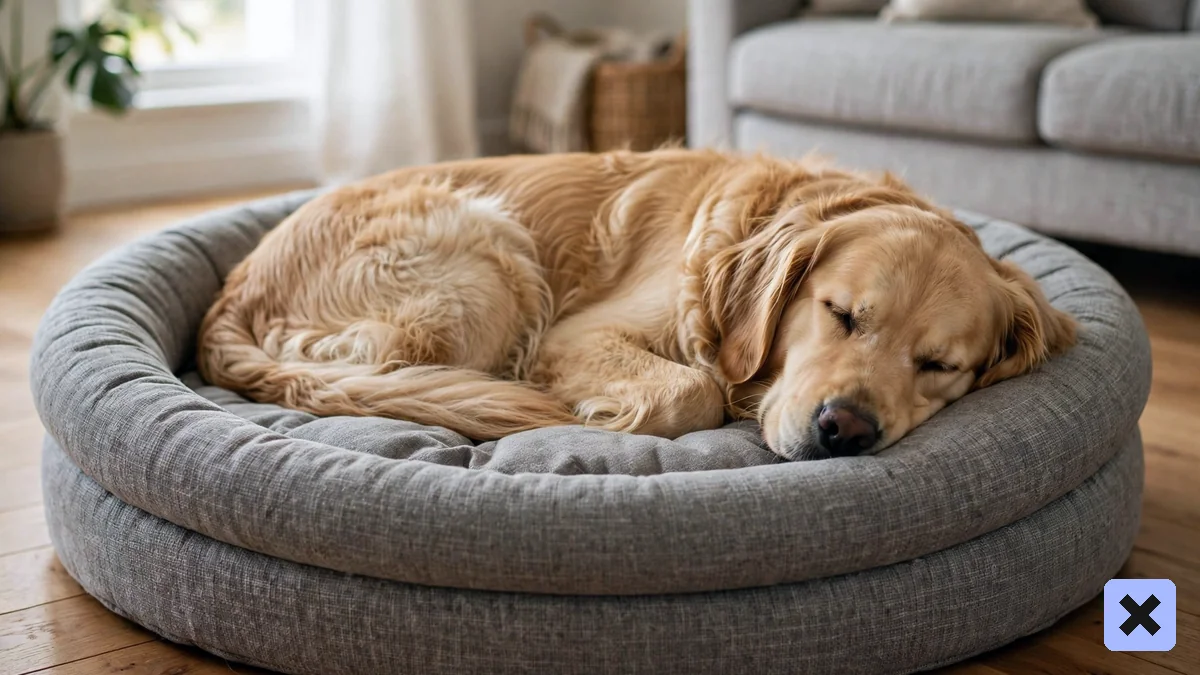
Finding a dog bed your dog will actually use is less about buying the most expensive one and more about matching the bed to the way your dog already sleeps. Some dogs curl into a tight ball, some sprawl flat on their side, and some lean against something solid. The best dog beds for 2026 are the ones that fit that habit, fit your dog’s size when fully stretched out, and survive being washed again and again without going flat. This guide covers the types, the sizes, the materials and the mistakes, so the bed you buy becomes the bed your dog chooses every night.
Key Takeaways
- Watch how your dog sleeps first: curlers need a round bolster bed, sprawlers need a flat mat with room to stretch.
- Measure your dog lying down, nose to tail base, then add 15 to 30 centimetres so the bed is never smaller than the dog.
- Memory foam is worth it for older dogs, large breeds and stiff joints; young healthy dogs are fine on dense standard foam.
- A removable, machine-washable cover is non-negotiable, and a waterproof liner underneath protects the foam from accidents.
- The best bed in the wrong spot will sit empty: put it where your dog already naps, near the family but out of draughts.
Why Most Dogs Ignore the Bed You Bought
Almost every dog owner has bought a bed that sat untouched while the dog slept on the sofa, the rug or the cold kitchen floor. There is usually a reason, and it is rarely stubbornness. The bed was probably the wrong size, the wrong shape, or in the wrong place. A bed that is too small forces a dog to curl tighter than it wants to or to hang its legs over the edge, and most dogs will simply leave. A bed that is too big can feel exposed and draughty to a small dog that wants to feel enclosed. And a bed placed in a hallway nobody uses, or beside a noisy washing machine, will lose to the living room rug every time.
Smell matters too. A brand-new bed smells of factory, plastic and packaging, and a strange-smelling object is not inviting to an animal that navigates the world by scent. Let the bed air out for a day, put a blanket your dog already uses on top of it, and let it pick up the smell of home.
Temperature is the other silent deal-breaker. Dogs overheat easily, especially thick-coated breeds, and a heavily padded bed in a warm room can be too hot. In summer, a raised mesh bed or a simple flat mat on a cool floor is often the winner, while in winter that same dog may want the thickest, warmest bed in the house.
The Main Types of Dog Bed, Compared
Five bed shapes cover nearly every dog. Bolster beds have raised sides all round and suit dogs that curl up and rest their head on an edge. Donut beds are round, deep and soft, and suit small dogs and enthusiastic curlers. Flat mats and crate pads are simple rectangles with little or no edge, and suit sprawlers and dogs that sleep in a crate. Orthopaedic beds use memory foam and suit older or larger dogs. Raised beds sit on a frame above the floor and suit hot dogs, outdoor use and dogs that like airflow underneath them.
| Bed type | Best for | Watch out for |
|---|---|---|
| Bolster bed | Curlers, dogs that lean and rest their chin | Bolsters that go flat within months |
| Donut bed | Small dogs, puppies, nervous sleepers | Too small once the dog grows |
| Flat mat or crate pad | Sprawlers, crate training, travel | Thin mats offer little joint support |
| Orthopaedic memory foam | Older dogs, large breeds, stiff joints | Cheap foam that never springs back |
| Raised mesh bed | Hot dogs, outdoor use, easy cleaning | Some dogs dislike the bouncy feel |
How to Measure Your Dog Properly
Sizing is where most dog bed purchases go wrong, because the sizes on the packet are vague. Small, medium and large mean different things to different brands. Measure your dog instead of trusting the label. Wait until your dog is asleep or fully relaxed, then measure from the tip of the nose to the base of the tail, and across the widest part of the body. Add 15 centimetres for a dog that curls and 30 centimetres for a dog that stretches out. That is the minimum length the bed should be.
Weight matters as well, because it decides how thick the foam needs to be. A heavy dog will compress cheap foam down to the floor within weeks. For dogs over 25 kilograms, look for foam at least 10 centimetres thick. Press the foam with your hand: good foam springs back slowly and does not stay dented. If a bed feels soft and squashy in your hand, it will feel worse under a dog.
Materials That Actually Last
The cover is the part of the bed you will deal with most, so it matters more than most buyers realise. Look for a removable cover with a proper zip, not a sewn-in one, and check that the fabric is machine-washable at a temperature that actually cleans it. Canvas, twill and heavy cotton blends are durable and wash well. Faux fur and plush covers feel lovely but show dirt, trap hair and take longer to dry. If your dog sheds heavily, a smooth, tight-weave fabric will be much easier to keep clean than a fluffy one.
Under the cover, the filling decides how long the bed keeps its shape. Memory foam is the best choice for support, but quality varies enormously: cheap memory foam goes flat and stays flat, while dense foam keeps its shape for years. Polyester fibre filling is soft and cheap, but it clumps after washing and needs regular plumping. Whatever the filling, a waterproof liner between the cover and the foam is worth having, since it protects the foam from accidents, drool and muddy paws.
Orthopaedic Beds: Who Really Needs One
Orthopaedic beds are marketed to every dog, but not every dog needs one. The dogs that genuinely benefit are older dogs, large and giant breeds, dogs recovering from surgery or injury, and any dog that is stiff when it gets up in the morning. For those dogs, a thick memory foam bed that spreads their weight evenly and takes pressure off hips, elbows and shoulders makes a real difference, and owners often notice it within a week.
For a young, healthy, light dog, a standard dense foam bed is perfectly adequate, and the extra money is better spent on a better cover or a second bed for another room. When you do buy orthopaedic, check the foam thickness and density rather than trusting the word on the label. Look for solid memory foam at least 7 to 10 centimetres thick, and be suspicious of beds that are very light for their size, since that usually means low-density foam.
Where to Put the Bed
Location is half the battle. Dogs want to be near their people, so the best spot is usually in the room where the family spends the evening, close enough to feel included but out of the main walkway. Avoid spots next to radiators, where a dog can overheat, and spots in direct draughts from doors and windows.
Many dogs like two sleeping spots: one in the living room for the evening and one in the bedroom for the night. Puppies and anxious dogs often settle better when the bed is near your side of the bed, and a worn item of your clothing in the bed helps for the first few weeks. For dogs that sleep in a crate, the bed or pad should fit snugly without bunching up at the edges.
Washing and Upkeep
Wash the cover every one to two weeks, vacuum the foam monthly, and air the whole bed outside on a dry day whenever you can. Most covers wash well at 30 to 40 degrees, but check the label, since some fabrics shrink. Use a gentle detergent and skip the fabric softener, which can coat the fibres. Dry the cover fully before putting it back on, since damp foam is a breeding ground for smells and mildew.
Hair is the daily battle. A quick vacuum with an upholstery attachment once a week keeps it manageable, and a rubber glove or a damp cloth run over the fabric lifts embedded hair surprisingly well. Replace a bed when the foam no longer springs back, the cover is torn beyond repair, or washing will not remove the smell. A good bed should last two to three years; a cheap one may last six months.

The Mistakes That Waste Money
The most expensive mistake is buying the prettiest bed rather than the most practical one. Decorative beds with pale fabrics, delicate trims and no washable cover look wonderful in a photograph and terrible after a month with a real dog. The second mistake is buying too small, which guarantees the bed will be ignored. The third is buying a bed your dog cannot get into or out of easily: older dogs and small dogs struggle with high bolsters and deep donut beds, and a bed with a low entry point is kinder to stiff joints.
Be honest about your dog’s habits before you buy: if your dog chews everything, do not buy a bed with a fluffy cover and a zip it can reach. For a wider look at pet purchases that rarely earn their keep, see The Worst Pet Supplies That Waste Money. And if shedding is a constant battle, a good vacuum matters as much as the bed itself: Best Robot Vacuums for Pet Hair 2026 compares the models that cope best with a house full of dog hair.
Dog Bed Buying Checklist
- Watch your dog sleep for a few nights and note whether it curls, sprawls or leans.
- Measure nose to tail base lying down, add 15 to 30 centimetres, and check the foam thickness for your dog’s weight.
- Choose a removable, machine-washable cover with a sturdy hidden zip.
- Add a waterproof liner if the bed does not already include one.
- Check the foam density by pressing it: it should spring back slowly, not stay dented.
- Place the bed where your dog already naps, near the family and out of draughts.
Frequently Asked Questions
How often should I wash my dog’s bed?
Wash the cover every one to two weeks, more often if your dog is muddy, moulting or has skin problems.
What size dog bed do I need?
Measure your dog lying down from nose to tail base and add 15 centimetres for curlers or 30 centimetres for sprawlers.
Are orthopaedic dog beds worth it?
Yes for older dogs, large breeds and dogs with stiff joints or recovering from injury. For young, healthy, light dogs, a good dense foam bed is enough.
Why does my dog sleep on the floor instead of its bed?
Usually the bed is too small, too hot, in the wrong place, or smells unfamiliar.
Can I put a dog bed in the washing machine?
Most removable covers can be machine-washed at 30 to 40 degrees, but the foam inner usually cannot.
How long should a dog bed last?
A good-quality bed lasts two to three years with regular washing. Cheap beds often go flat within six months.
The Bottom Line
The best dog bed for 2026 is the one your dog chooses night after night, and that comes down to size, shape, material and location rather than price or looks. Measure your dog, match the bed to how it actually sleeps, insist on a washable cover and a waterproof liner, and put the bed where your dog already wants to be. A soft throw from Best Throw Blankets for Sofas 2026 draped over the top makes it even more inviting on cold evenings, and costs far less than replacing a bed your dog never used.