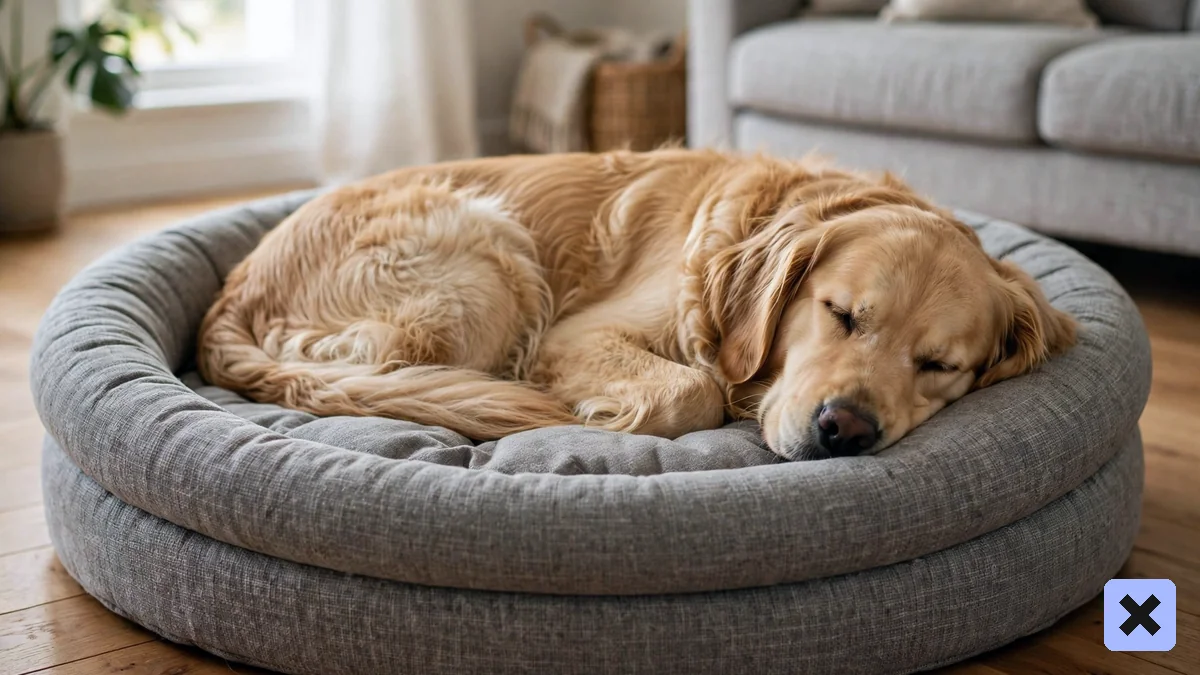
A dog spends twelve to fourteen hours a day sleeping, which makes its bed the most-used piece of furniture in the house. The best dog beds give that sleep real support: thick foam that holds its shape, a cover that washes clean, and a size and shape that match the way your dog actually sleeps. The worst beds go flat within weeks, smell after the first accident, and sit empty while your dog chooses the hard floor or your sofa instead.
The difference between the best and the worst dog beds in 2026 is not mainly about price. A well-made mid-priced bed will outlast a dear designer one that is filled with loose stuffing, and a cheap bed chosen to fit your dog’s sleeping style can serve for years. What matters is the filling, the cover, the size, and how honestly the bed matches your dog. This comparison puts both sides head to head, so you can tell them apart before you buy. If you want a guide that focuses only on the winning side, our guide to finding a dog bed your dog will actually use in 2026 covers the types and sizes in more detail.
Key Takeaways
- Watch how your dog sleeps first: curlers need a round bolster bed, sprawlers need a flat mat with room to stretch.
- Measure your dog lying down, nose to tail base, then add 15 to 30 centimetres so the bed is never smaller than the dog.
- Memory foam is worth it for older dogs, large breeds, and stiff joints; young healthy dogs are fine on dense standard foam.
- A removable, machine-washable cover is non-negotiable, and a waterproof liner underneath protects the foam from accidents.
- The best bed in the wrong spot will sit empty: put it where your dog already naps, near the family but out of draughts.
What Makes a Dog Bed Good or Bad
The filling is the first thing to judge, because it decides whether the bed supports your dog or slowly collapses under it. Dense memory foam moulds to the body, spreads weight evenly, and springs back when the dog gets up, which is why vets recommend it for older dogs and large breeds. High-density standard foam is the next best thing: firm, even, and far better than loose fibre filling, which clumps into lumps within weeks. The worst fillings are shredded foam offcuts and cheap polyester fibre, which flatten under a heavy dog and never recover. Press the middle of the bed hard with both hands: a good filling resists and springs back, while a bad one stays dented.
The cover is the second thing, and it decides whether the bed stays clean or slowly becomes a smell you cannot wash out. A good cover unzips fully, goes in the washing machine, and dries without shrinking, so the bed can be washed every couple of weeks. Look for a waterproof liner under the cover as well, because it stops accidents and drool soaking into the foam, where no amount of surface cleaning will reach them. The worst covers are sewn on, so the whole bed has to be washed at once and never dries properly, or made from thin fabric that tears at the seams after a few washes.
Size and shape are the third thing, and they are where most dog beds fail. A bed that is too small forces a large dog to hang its legs over the edge or sleep half on the floor, while a bed that is far too big leaves a small dog feeling exposed and cold. Measure your dog lying down, nose to tail base, then add 15 to 30 centimetres, and buy to that number rather than to the label, because sizes vary wildly between brands. Shape matters just as much: curlers need a round bed with a raised rim, sprawlers need a flat rectangle with no walls, and leaners need a bolster on at least one side.
The Best Side: Dog Beds That Earn Their Place
Orthopaedic memory foam beds are the best choice for older dogs, large breeds, and any dog with stiff joints, because the foam supports the body instead of letting it sink to the floor. A slab of dense memory foam at least 10 centimetres thick spreads a heavy dog’s weight evenly, takes the pressure off hips and elbows, and keeps its shape for years rather than months. These beds cost more than fibre-filled ones, but the difference shows in the morning: a dog that gets up easily from a memory foam bed is a dog that slept properly. For a senior dog, this is the single best purchase you can make for its comfort.

Bolster beds are the best choice for dogs that curl up or lean against something while they sleep, which is most dogs. The raised rim gives them a place to rest their chin and a feeling of shelter, and the round or rectangular shape holds body heat on cold nights. Choose a bolster that is firm enough to hold its shape when leaned on, because a soft, floppy rim collapses under a heavy head and offers no support at all. A good bolster bed has a removable cover on both the base and the rim, so the whole bed can be washed.
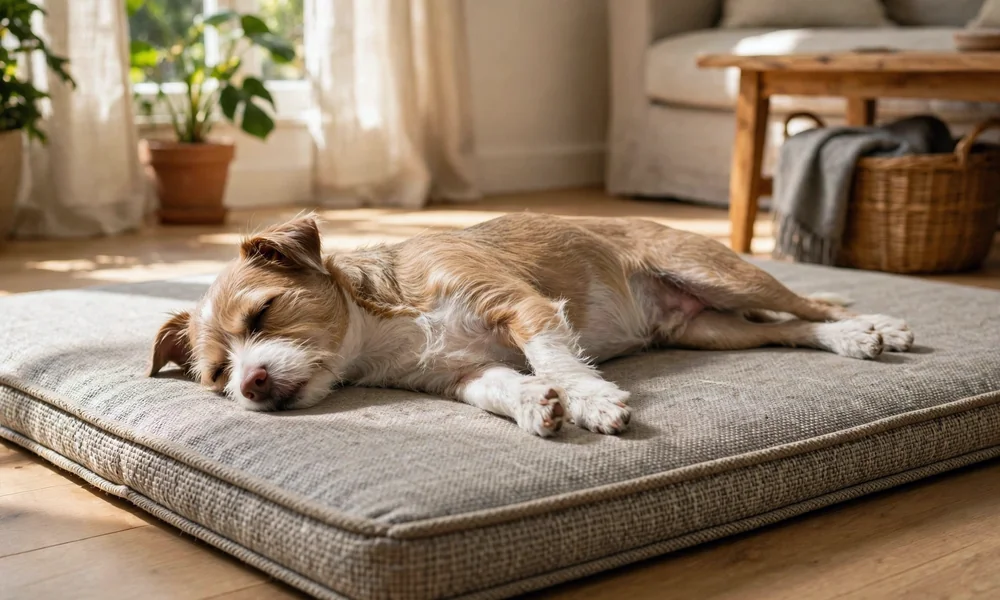
Flat mats are the best choice for sprawlers, hot dogs, and large breeds that stretch out fully when they sleep. A thick rectangular mat with no walls gives a big dog room to extend its legs in every direction, and the low profile makes it easy for an older dog to step on and off without climbing. Mats also suit warm houses and summer, because a dog that runs hot will avoid a deep, enclosed bed and choose the cool floor instead. A good mat is still at least 7 centimetres of dense foam with a washable cover, because a thin mat is just a rug.
The Worst Side: Dog Beds to Avoid
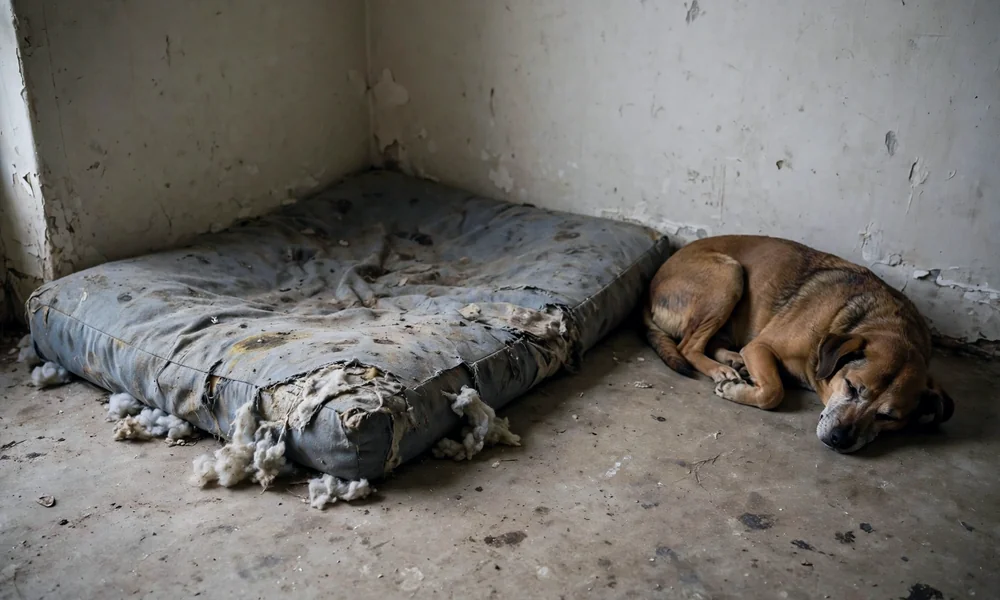
Thin fibre-filled beds are the worst value in the pet shop, because they fail in the one way that matters most: they go flat. A bed stuffed with loose polyester fibre looks plump on the shelf, but after a few weeks of a dog sleeping on it, the filling clumps into lumps and thin patches, and the dog is effectively sleeping on the floor. The cover is usually the cheapest part as well, thin fabric that stains, tears at the seams, and cannot be removed for washing. However cheap such a bed looks, it is the most expensive bed you can buy, because you will be replacing it within months.
Beds with sewn-on covers are the worst for anyone who cares about a clean house, because they cannot be washed properly. A dog bed collects hair, drool, dirt from paws, and the occasional accident, and a cover that does not come off means the whole bed has to go in the machine, where it never dries evenly and the filling clumps. Within months the bed smells, and no amount of surface spray fixes a smell that has soaked into the foam. If the cover does not unzip, do not buy the bed, however thick or handsome it looks on the shelf.
Beds bought in the wrong size are the worst kind of waste, because the dog will simply not use them. A bed that is too small leaves legs dangling over the edge and forces the dog onto the floor, while a huge bed in a small room dominates the space and still sits empty because it is in the wrong spot. The most common mistake is buying for the dog’s weight rather than its sleeping length: measure nose to tail base while the dog is lying down, add 15 to 30 centimetres, and buy to that measurement. A bed your dog ignores is not a bargain at any price.
Matching the Bed to Your Dog
Age changes what a dog needs from a bed more than any other factor. Puppies need a bed that is easy to wash, because accidents are certain, and a waterproof liner matters more than luxury foam. Adult dogs need a bed that matches their sleeping style and size, with a washable cover and dense filling that holds up to daily use. Senior dogs need memory foam above all else, because stiff joints and arthritis make a hard floor genuinely painful, and a thick orthopaedic bed can change how easily an old dog gets up in the morning. A good bed is one part of a healthy routine, and what a dog eats matters just as much: our guide to the best dog food for your dog’s age and size in 2026 explains how to feed for each life stage.
Chewing changes the choice completely. A determined chewer will destroy a soft fibre bed in a single afternoon, swallowing stuffing that can be dangerous, so the safest bed for such a dog is an elevated cot or a tough, tightly woven mat with no loose filling. Check the bed daily for tears, and replace it at the first sign of exposed stuffing rather than waiting for the dog to eat it.
Where the bed goes matters as much as what the bed is. Dogs sleep where the family is, so a bed tucked in a cold hallway or a draughty corner will sit empty while the dog follows you to the living room. Put the bed where your dog already naps, near the family but out of draughts and away from radiators, and keep it in the same spot so the dog learns it is theirs. If your dog splits its day between rooms, a second cheaper mat in the other room is better than dragging one bed around the house. A daily walk helps too: a tired dog sleeps deeply, and our guide to choosing a dog leash that won’t fray in 2026 covers the lead that will survive those walks.
Keeping a Dog Bed Clean
A good dog bed stays good only if it is washed regularly, and the best beds make that easy. Wash the cover every two weeks, more often if the dog is muddy or unwell, and let the foam air outside on a dry day whenever you can, because fresh air removes smells that washing cannot reach. Wipe muddy paws before the dog reaches its bed, and vacuum the bed weekly to keep hair and grit out of the fabric. Replace a bed when the foam no longer springs back, the cover will not come clean, or the smell survives a wash, because a bed that cannot be cleaned is a bed that is making your house smell. A waterproof liner under the cover stops most accidents reaching the foam, and it is worth buying one separately if the bed did not come with one.
The Verdict
The best dog beds of 2026 are the beds that match your dog’s age, size, and sleeping style. Memory foam wins for older dogs and stiff joints, bolster beds win for curlers and leaners, and flat mats win for sprawlers and hot dogs. The worst are thin fibre beds that go flat, sewn-on covers that cannot be washed, and beds bought in the wrong size. Measure your dog, press the filling, check that the cover comes off, and put the bed where your dog already sleeps, because the best dog bed is the one your dog chooses every single night.