The best dog food for your dog depends on three things that have nothing to do with the prettiest bag on the shelf: your dog’s age, your dog’s size, and how active they are. A puppy, an adult and a senior dog need different amounts of protein, fat and minerals, and a small terrier and a large retriever do not eat the same food in different amounts. They need different kibble sizes, different calorie densities and different portion sizes. Once you understand those three factors, choosing a food becomes much simpler.
This guide explains what the best dog food is for your dog’s age and size in 2026, in plain language. You will learn how puppy, adult and senior foods differ, why size matters as much as age, how to read a label without a nutrition degree, how much to feed, and the signs that tell you a food is working or that it is time to switch. It does not recommend one brand for every dog, because no single food suits them all.
Key takeaways
- Feed for life stage first: puppy, adult and senior foods are formulated differently for a reason.
- Size matters: small and large breeds need different kibble sizes, calorie density and portion control.
- A named animal protein should be the first ingredient, and the label should state it meets recognised nutrition standards.
- Measure food with a cup or scales, not a scoop by eye, and adjust by body condition.
- Switch foods gradually over seven to ten days to avoid an upset stomach.
Why age changes what a dog needs
A puppy is building bone, muscle and brain tissue at a remarkable rate, and that growth needs more energy and more protein per kilo of body weight than an adult dog needs. Puppy foods are more calorie-dense and contain higher levels of protein and fat, plus controlled calcium and phosphorus to support steady bone growth. That last point matters most for large-breed puppies, where growing too fast can cause joint problems later in life.
When to switch life stages
Small breeds reach adulthood faster, often by 10 to 12 months, while large breeds may still be growing at 18 months or even two years. That means a small dog can move to adult food at around a year, but a large dog should stay on a large-breed puppy formula until growth is finished. The same logic applies at the other end: a small dog may not need a senior formula until nine or ten, while a large dog may benefit from one at seven. Your vet can confirm the right moment, but the breed’s expected adult size is the best general guide.
Why size matters as much as age
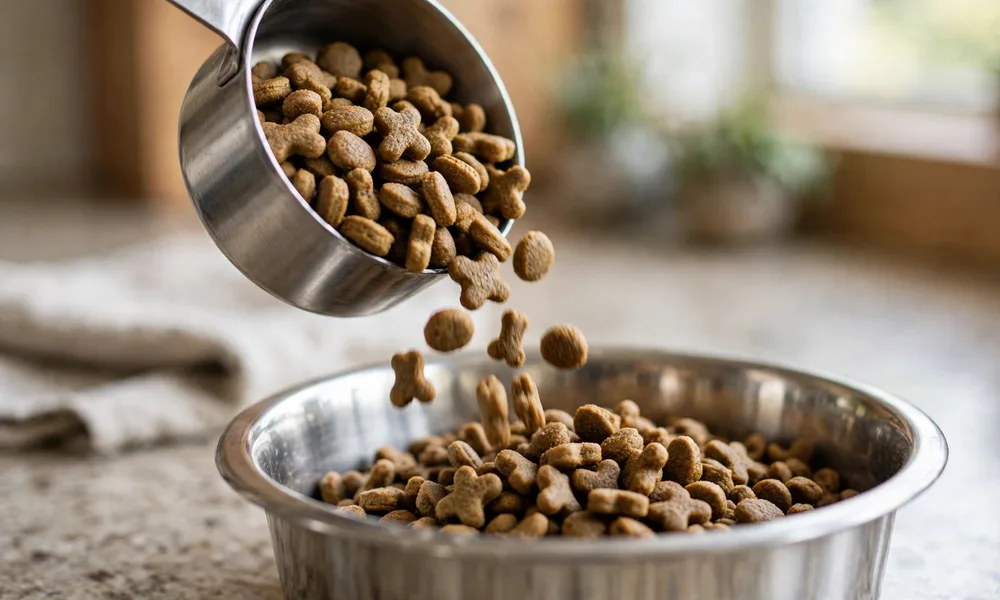
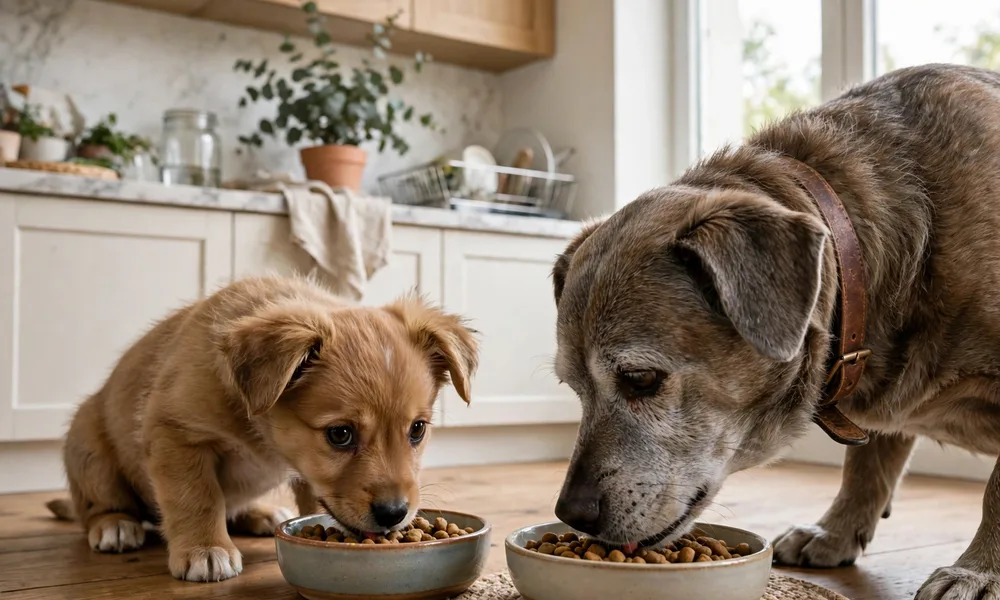
Small dogs have faster metabolisms and smaller stomachs, so they need a food that packs more calories into a smaller portion, with small kibble they can chew comfortably. A small dog eating large kibble will often swallow pieces whole or leave food uneaten. Large dogs have the opposite problem: small kibble is swallowed without chewing, which can lead to gulping, and their food needs careful calorie control because extra weight puts more strain on their joints.
Kibble size is not cosmetic
Kibble size affects how a dog eats. Small kibble suits small mouths and encourages chewing in dogs that bolt food. Large kibble slows down a big dog and gives their teeth something to work on. Some owners worry that larger kibble is harder to digest, but dogs digest kibble once it is chewed and swallowed; the size mainly changes eating speed and comfort. If your dog regularly leaves kibble, coughs while eating, or swallows without chewing, the kibble size is probably wrong for them.
How to read a dog food label
The ingredient list is ordered by weight before cooking, so the first ingredient is the biggest part of the food. Look for a named animal protein first, such as chicken, lamb, salmon or beef, rather than a vague term like meat meal or animal derivatives. A named meat meal, such as chicken meal, is also fine; it is simply meat with the water removed, so it is concentrated protein. What you want to avoid is a food whose first ingredients are all grains or fillers with meat appearing far down the list.
Grains, grain-free and wet versus dry
Grains are not the enemy for most dogs. Rice, oats and barley are digestible sources of energy, and a grain-inclusive food suits most healthy dogs. Grain-free foods replace grains with potatoes, peas or lentils, and they are useful for the small number of dogs with a genuine grain sensitivity, but they are not automatically healthier. If your dog does well on a grain-inclusive food, there is no reason to switch.
Comparison: feeding by age and size
| Dog | Food type | Typical protein | Feeding notes |
|---|---|---|---|
| Small-breed puppy | Small-breed puppy | 28 to 32 percent | Three to four small meals a day |
| Large-breed puppy | Large-breed puppy | 26 to 30 percent | Controlled growth, no overfeeding |
| Small adult | Small-breed adult | 24 to 28 percent | Small kibble, calorie-dense portions |
| Large adult | Large-breed adult | 22 to 26 percent | Joint support, watch the weight |
| Senior, any size | Senior formula | 22 to 28 percent | Fewer calories, easy to digest |
| Very active adult | Active or working formula | 26 to 30 percent | Higher fat for energy needs |
How much to feed
Overfeeding is the most common feeding mistake, and it is easy to make. A measuring cup or kitchen scales beats a scoop every time, because a heaped scoop can be a third more food than a level one. Feed the amount on the bag for your dog’s weight, split into two meals a day for adults and three or four for puppies, and treat treats as part of the daily total rather than extras on top. Treats should be no more than a tenth of daily calories.
Judge portions by your dog’s body, not by the bowl. You should be able to feel the ribs under a thin layer of fat without pressing hard, see a waist from above, and see a tuck in the belly from the side. If the ribs are hard to find, cut the food by about a tenth and check again in two weeks. If the ribs are very obvious and the hip bones show, increase by a tenth. Weigh your dog monthly if you can, because gradual weight gain is hard to spot day to day.
Switching foods without an upset stomach
Dogs do not cope well with sudden food changes. A new food introduced all at once often causes loose stools, wind or a refusal to eat. Switch gradually over seven to ten days: mix a quarter new food with three quarters old food for two or three days, then half and half, then three quarters new, then fully new. If stools loosen, hold at the current mix for an extra day or two before moving on.
What to avoid when choosing dog food
Avoid foods that hide behind vague ingredient names, that list no named protein in the first few ingredients, or that make big health claims without a complete-and-balanced statement on the label. Avoid switching foods every few weeks in search of a perfect one; constant change is harder on a dog’s digestion than a good-enough food fed consistently. And avoid feeding a puppy an adult food to save money, or an adult dog a puppy food because it seems richer; both mismatches cause problems over time.
Be careful with raw and home-cooked diets too. They can work, but they need careful balancing to avoid deficiencies, and raw meat carries hygiene risks for the household, especially with children or anyone with a weak immune system. If you want to cook for your dog, ask a vet or a qualified animal nutritionist to check the recipe. A well-made commercial food that matches your dog’s age and size is a safer starting point than an unbalanced home recipe.
Feeding is part of a wider daily routine that includes rest, exercise and the right equipment. A dog that eats well also needs a comfortable place to sleep, which is why our guide to finding a dog bed your dog will actually use pairs well with this one. And if you are away during the day, a timed feeder can keep meals regular, as covered in Best vs Worst Pet Feeders 2026. For owners who prepare food in bulk, the same portioning habits apply in the kitchen, and our roundup of Best vs Worst Meal Prep Containers 2026 covers containers that keep portions fresh.
Checklist: choosing the right dog food
- Pick a formula for your dog’s life stage: puppy, adult or senior.
- Match the size category to your dog’s expected adult weight.
- Check the first ingredient is a named animal protein.
- Confirm the label states the food is complete and balanced for that life stage.
- Measure every meal with a cup or scales and count treats in the total.
- Switch gradually over seven to ten days and judge the food after three to four weeks.
Frequently asked questions
What is the best dog food for a puppy?
A puppy formula matched to your dog’s expected adult size, with higher protein and fat than adult food and controlled calcium for large breeds. Feed three to four small meals a day and switch to adult food when growth is finished, around a year for small breeds and up to two years for large ones.
What is the best dog food for a senior dog?
A senior formula with moderate calories, good-quality protein to hold muscle, and ingredients that are easy to digest. Older dogs often benefit from joint support and extra moisture, and portions should be adjusted to their lower activity level.
Should I feed my large dog a large-breed food?
Yes, if your dog is expected to weigh over about 25 kilos as an adult. Large-breed formulas control calcium and calories for steadier growth in puppies and help protect joints in adults. Giant breeds over 45 kilos benefit from giant-breed formulas.
Is grain-free dog food better?
Not for most dogs. Grain-free food suits dogs with a genuine grain sensitivity, but grains like rice and oats are digestible and healthy for most dogs. There is no general health benefit to removing grains, so choose based on how your dog does on the food.
How often should I feed my dog?
Puppies need three to four meals a day, adult dogs do well on two meals a day, and seniors usually stay on two smaller meals. One meal a day is not ideal for most dogs, because it leaves a long gap and can cause hunger and begging.
How do I know if a dog food is working?
Look for firm stools, a shiny coat, steady energy and a stable weight over three to four weeks. Persistent loose stools, itching, a dull coat or weight drifting up or down are signs the food may not suit your dog, and a vet visit is wise if they continue.
The bottom line
The best dog food for your dog is the one that matches their age and size, starts with a named animal protein, states it is complete and balanced, and keeps them at a healthy weight with firm stools and a good coat. Start with life stage, then size, then portion control, and give any new food a fair few weeks before judging it. Get those basics right and most dogs will thrive on a straightforward, well-chosen food.