
The worst pet supplies that waste money are rarely the cheapest things in the shop. They are the clever-looking gadgets, the oversized beds, the subscription boxes and the premium foods that promise a happier, healthier pet and deliver very little your animal actually needs. Most pets are perfectly happy with a sturdy bowl, a comfortable place to sleep, a safe lead and a few durable toys, yet the pet aisle keeps growing because it sells to owners, not to animals.
That gap between what owners want to buy and what pets want to use is where the waste happens. A dog does not care whether its feeder connects to Wi-Fi. A cat does not care whether its water fountain has a coloured light. What they care about is food, water, rest, play and attention, all of which can be provided simply and far more cheaply than the average pet shop receipt suggests.
This guide looks honestly at the purchases that most often disappoint, the reasons they fail, and the simpler alternatives that work better. Good food, proper veterinary care and safe equipment are worth paying for; the spending to cut is the kind that adds cost without adding comfort, health or happiness.
Key takeaways
- Most pets need far fewer supplies than pet shops suggest, and the basics cover almost everything.
- Automatic feeders, smart gadgets and subscription boxes are among the worst pet supplies that waste money.
- Oversized beds, novelty toys and premium foods often cost more without improving comfort or health.
- Durability, washability and fit matter far more than branding, packaging or extra features.
- Buy one item at a time, watch whether your pet actually uses it, and return or replace anything ignored.
Why Pet Supplies Waste So Much Money
Pet spending is emotional spending. Owners want the best for animals they love, and manufacturers know it. Packaging shows happy dogs and relaxed cats, labels promise calm and health, and prices rise to match the feeling rather than the function.
Another problem is guesswork. Many owners buy before they know what their pet likes. A puppy may chew through a plush toy in minutes, and a cat may ignore an expensive bed and sleep in a cardboard box. Without a trial period, each guess becomes a cupboard full of unused kit.
Marketing also blurs the line between a need and a luxury. A second water bowl is useful; a self-cleaning litter tray with an app is a luxury. The worst purchases look essential in the shop and turn out to be optional at home.
The Worst Pet Supplies That Waste Money
The items below are not bad in every home, and some suit particular pets or routines. They appear here because they are expensive, frequently abandoned, and easy to replace with something simpler. If your pet genuinely uses one every day, keep it.
Automatic Pet Feeders
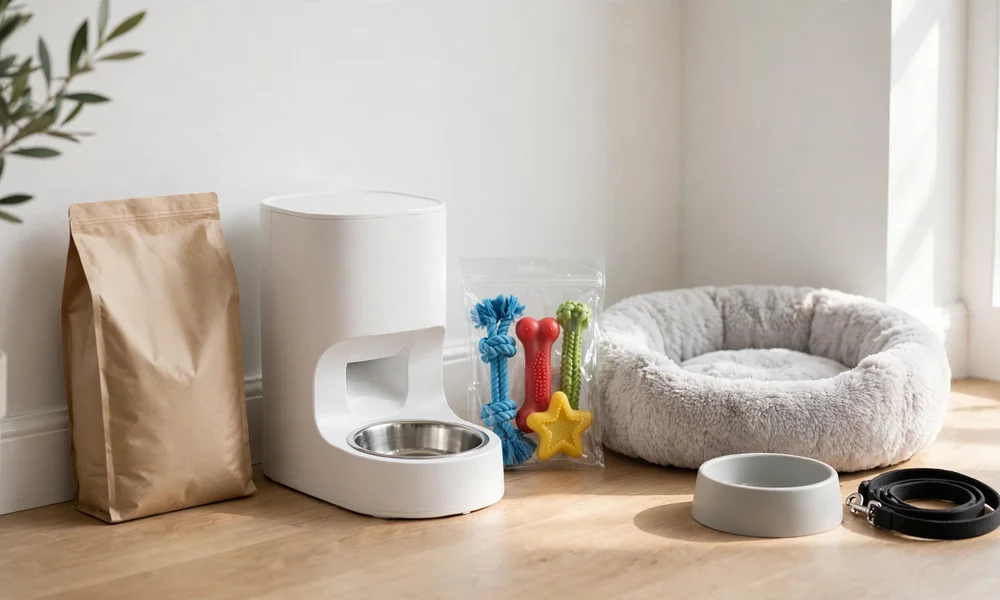
Automatic feeders promise perfect portions on a perfect schedule, and for some owners with irregular hours they can help. In practice, many are noisy, hard to clean and easy to jam, and a power cut or a blocked chute can mean a missed meal.
A measured scoop and a regular routine do the same job for almost nothing, and a trusted sitter is safer than a machine when you are away. Feeders also remove a useful daily check: watching how eagerly a pet eats, often the first sign that something is wrong.
Smart Water Fountains
Flowing water can encourage some cats to drink more, and a basic fountain is not a terrible idea. The expensive smart versions, however, add filters, sensors, lights and apps to a job a clean bowl already does. Filters need replacing, pumps need cleaning, and a fountain left unwashed quickly becomes dirtier than the bowl it replaced.
Most pets drink perfectly well from a wide, heavy ceramic or stainless steel bowl washed daily and refilled with fresh water. If your cat loves running water, a simple fountain without electronics is enough.
Subscription Boxes
Monthly pet boxes feel like a treat, and the first one usually is. By the third or fourth, the pattern is familiar: one toy your pet likes, two it ignores, treats it cannot eat, and packaging you did not need.
Subscriptions also encourage accumulation: toys pile up, treats go stale, and the excitement fades into clutter. Buying a single toy when the old one wears out is cheaper and far more likely to match what your pet enjoys. The same logic applies to the worst car accessories that waste money, where a one-off, well-chosen purchase beats a steady stream of extras.
Oversized and Designer Pet Beds
A good bed matters, but size and designer labels do not. Many pets prefer a bed they can curl against, not a vast cushion they slide across. Oversized beds take up floor space, are hard to wash, and often end up as expensive decoration while the pet sleeps on the sofa or the rug.
Choose a bed that fits your pet curled up, with a removable, washable cover. A mid-priced bed that survives the washing machine will outlast a luxury one that cannot be cleaned properly.
Novelty and Plush Toys
Plush toys shaped like food or cartoon characters are bought for the joke, not for the pet. Most are destroyed in a single play session, leaving stuffing across the floor and a toy that is no longer safe.
Durable rubber, rope and puzzle toys last longer and are safer. Rotate two or three sturdy toys rather than buying a dozen fragile ones.
Premium and Boutique Pet Food
Expensive food is not automatically better food. Some premium diets are excellent, but many charge a high price for fashionable ingredients and claims that sound impressive rather than proven. Grain-free, raw and boutique diets can be unsuitable for some pets.
What matters is a complete, balanced diet suited to your pet’s age, size and health, recommended by a vet rather than an advert. Spend the saving on veterinary check-ups, which do far more for long-term health than a designer label.
Pet Clothing and Costumes
A warm coat can help a small, short-haired or elderly dog in cold weather. Most pet clothing, however, is decorative, and many dogs find it uncomfortable or stressful. Cats almost always hate it.
One well-fitting, weatherproof coat for genuine cold is enough. The rest is dressing up an animal that would rather be running, sniffing and playing without an outfit in the way.
Grooming Gadgets and Gadget Kits
Pet grooming aisles are full of single-purpose tools: paw washers, ear cleaners with lights, de-shedding gloves and nail grinders with five attachments. Most are used once, then stored. A basic brush, pet-safe shampoo and nail clippers cover nearly all home grooming.
Complicated gadgets also increase the risk of mistakes: a noisy grinder can frighten a dog, and an unfamiliar tool can nick skin. Simple tools, used gently and regularly, keep a pet clean and comfortable. A similar trap appears with kitchen gadgets that waste counter space, where one good tool beats a drawer of single-purpose devices.
Pet Supplies Compared: What to Skip and What to Buy Instead
The table below sums up the most common wastes and the simpler swaps that work just as well, usually for far less money.
| Product | Typical Cost | Why It Wastes Money | Better Alternative |
|---|---|---|---|
| Automatic feeder | High | Jams, hard to clean, missed meals | Measured scoop and routine |
| Smart water fountain | High | Filters, pumps and apps add cost | Heavy ceramic or steel bowl |
| Subscription box | Monthly | Unwanted toys and stale treats | One toy at a time, chosen well |
| Designer pet bed | High | Too big, hard to wash, ignored | Washable bed that fits your pet |
| Novelty plush toys | Low each, high total | Destroyed fast, unsafe when torn | Durable rubber or rope toys |
| Boutique pet food | High | Price reflects marketing, not nutrition | Vet-approved complete diet |
| Pet costumes | Low each, high total | Uncomfortable and rarely worn | One warm coat if truly needed |
| Grooming gadget kits | Medium to high | Used once, then stored | Brush, shampoo and clippers |
How to Spot a Waste Before You Buy It
Before any pet purchase, ask three questions. First, does my pet actually need this, or do I want it? Second, will it be used every week, or will it be tried once and forgotten? Third, is there a simpler version that does the same job? If the answers are uncertain, wait a week. Most impulse pet buys lose their appeal within days.
Check the practical details too: can it be washed, does it fit your home and your pet, and is it safe if chewed or knocked over? A product that fails these tests is likely to become clutter, however clever it looks.
Reviews help, but read them carefully. Look for owners who have used the product for months, not days. Long-term reviews reveal the faults that first impressions hide.
Where the Money Should Go Instead
The best pet spending is boring spending. Good food, clean water, safe housing, identification, vaccinations and regular veterinary care make the biggest difference to a pet’s life. A comfortable bed, a secure lead and a few durable toys complete the essentials.
Time is also worth more than equipment. Daily walks, play and training keep pets healthier and happier than any gadget, and a cat with a scratching post and regular play does not need a subscription box.
That is the same lesson behind the worst home gym setups that waste money: expensive equipment cannot replace regular use. A simple setup used every day beats an impressive one that gathers dust, whether the equipment is for you or for your pet.
Checklist: Before You Buy Any Pet Supply
- Wait a week after first wanting it, and see whether you still think it is needed.
- Measure your pet and your space, and check the product fits both.
- Confirm it can be washed, cleaned or repaired without special parts.
- Choose durability and safety over colour, branding or extra features.
- Buy one item first, watch your pet use it, and only then buy a second.
- Keep the receipt and packaging until you know your pet accepts it.
Frequently Asked Questions
What are the worst pet supplies that waste money?
Automatic feeders, smart water fountains, subscription boxes, designer beds, novelty plush toys, boutique foods, pet costumes and complicated grooming kits are among the worst offenders. They are expensive, often ignored or quickly broken, and easy to replace with simpler alternatives.
Are automatic pet feeders worth it?
For most owners, no. A measured scoop and a regular routine work just as well, cost almost nothing, and let you notice changes in appetite.
Is expensive pet food better than cheaper food?
Not necessarily. Price often reflects packaging and marketing rather than nutrition. A complete, balanced diet suited to your pet’s age and health, and recommended by a vet, is the right choice at any reasonable price point.
How many toys does a pet actually need?
Two or three durable toys, rotated regularly, are enough for most pets. Replace a toy when it is worn or unsafe, not on a schedule.
Should I buy a subscription box for my pet?
Usually not. Boxes often include toys your pet ignores and treats it cannot eat. Buying a single well-chosen toy when needed is cheaper and far more likely to suit your pet.
What pet supplies are genuinely worth spending more on?
Spend more on veterinary care, a complete diet, a safe lead or harness, a washable bed and durable toys. These are used every day and directly affect health, safety and comfort, which is where extra spending actually pays off.
The Bottom Line
The worst pet supplies that waste money all share the same flaw: they are designed to impress the owner rather than serve the pet. Skip the smart gadgets, the subscriptions and the novelty toys, and spend instead on the simple things your pet uses every day — good food, fresh water, a clean place to sleep, safe equipment and your time.


