The worst car accessories that waste money are the ones that promise to transform your driving experience and then do almost nothing at all. Walk into any auto parts shop or scroll through an online marketplace and you will find hundreds of gadgets, covers, lights and organisers, each presented as essential. Most end up in a drawer or a landfill within a few months, and the money is gone for good.
Drivers waste money on car accessories for a simple reason: each purchase feels small. A ten-pound phone holder here, a fifteen-pound set of LED strips there, a twenty-pound seat cover that looked better in the photograph. None of them feels like a big decision, so nobody asks whether it will be used or whether the car already does the job without it. Added together over a year or two, those small purchases often total several hundred pounds.
This guide looks at the worst car accessories that waste money, explains why each one disappoints, and shows what to spend on instead.
Key takeaways
- Most car accessories fail because they solve a problem the car does not actually have.
- Cheap phone mounts, LED kits and scent products are among the worst value purchases for drivers.
- The true cost of an accessory includes fitting time, damage to trim and the cost of removing it later.
- A small number of well-chosen accessories, such as quality floor mats, genuinely earn their price.
- Before buying any accessory, check whether your car already has the feature built in.
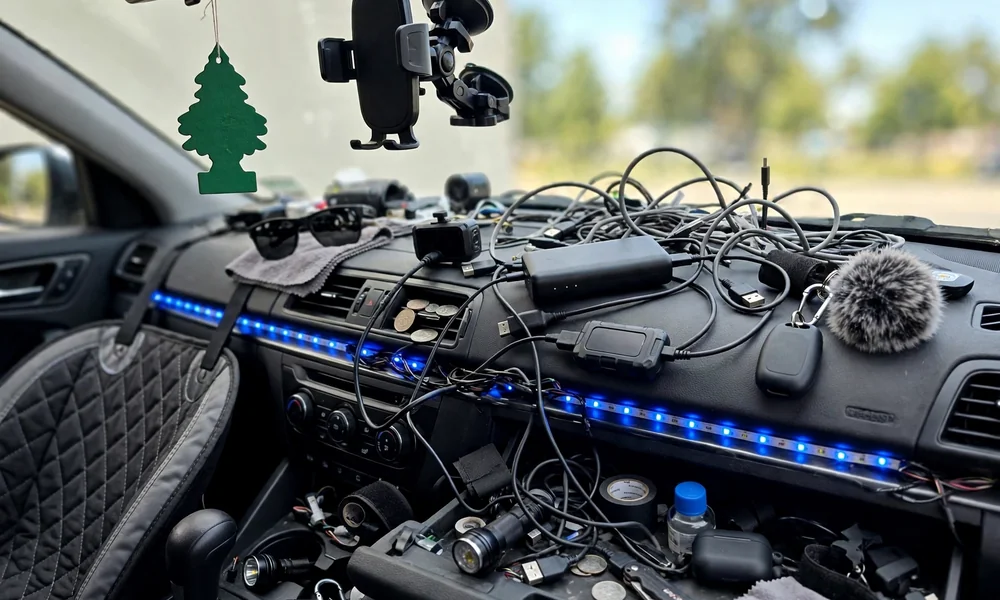
Why Car Accessories Waste So Much Money
Car accessories are a classic impulse purchase, sitting beside the till and promising an instant upgrade to a vehicle that is otherwise perfectly fine. The marketing works because it sells a feeling rather than a function: a sportier look, a cleaner cabin, a smarter dashboard. The feeling fades quickly.
The second problem is quality. The market is flooded with products built to a price rather than a standard. A mount that costs a few pounds is made from thin plastic and a weak suction cup, so it fails on the first hot day. An LED kit is wired with the cheapest components, so half the lights die within weeks. When the item fails, the buyer rarely returns it. Instead, they buy a slightly more expensive replacement, and the cycle continues.
Then there is fit. Cars differ in dashboard shape, vent design and seat dimensions, yet most accessories are sold as universal. A universal seat cover fits nothing properly, a universal phone mount blocks a vent or a control, and a universal organiser slides around the boot. Products designed for every car work well in none of them.
The Worst Offenders, Category by Category
The items below are the most common money-wasters, ranked by how little value they return for what they cost.
Cheap Suction-Cup Phone Mounts
The suction-cup phone mount is probably the single most replaced accessory in the world. It costs very little, sticks to the windscreen in the shop, and then falls off on the first warm afternoon, usually while the driver is following directions. Better mounts exist, usually vent-mounted or dashboard-mounted with a proper bracket, but the cheapest ones are a false economy.
Interior LED Light Strips
LED light strips are sold as a way to give a car a premium, nightclub atmosphere. In practice, they look impressive for about a week. Then the adhesive fails in the heat, the strips peel away from the trim, and the wires dangle beneath the dashboard. The colours soon feel distracting on a dark road, and many drivers switch them off permanently. Some cheap kits can also drain the battery, turning a cosmetic purchase into a repair bill.
Universal Seat Covers
Seat covers seem sensible: they protect the seats and cost less than reupholstering. The reality is usually different. A universal cover is baggy, slides when the driver moves, and bunches up at the edges. Within weeks, it looks worse than the seat it was supposed to protect. Worse still, a loose cover can interfere with side airbags. If seat protection matters, the answer is a cover made for the exact model, fitted properly, or simply regular cleaning.
Air Fresheners and Scent Gadgets
Air fresheners are cheap, so they rarely feel like a waste of money. But add up a year of hanging trees, vent clips and plug-in scent devices, and the total is surprising. The scent lasts a few days, the product dries out, and the driver buys another one. A freshener masks a smell instead of removing its cause: a car that smells of damp or smoke needs cleaning, not perfume. A thorough interior clean costs about the same as a year’s worth of fresheners and actually solves the problem.
Fake Performance Parts
Fake vents, stick-on spoilers, imitation exhaust tips and decorative bonnet scoops are the most visible waste of money in the accessory world. They are designed to make a car look faster, but they add weight, create drag and can come loose at speed. They also reduce the car’s value, because a buyer can see immediately that the car has been modified with parts that serve no purpose. A stick-on imitation is a decoration that pretends to be engineering. Drivers who want a sportier car should understand that the best driving car is not always the fastest before spending anything on imitation parts.
Roof Racks and Boxes Bought Just in Case
A roof rack or roof box is genuinely useful for a family holiday or a move. But many drivers buy one just in case, fit it, and then leave it on the car for months. A roof box left on permanently adds drag, increases fuel consumption and creates wind noise on every journey. The purchase only makes sense if it is used regularly and removed when it is not needed. The same logic applies to tow bars, bike racks and cargo carriers: tools for a specific job, not permanent decorations.
How Much Do These Accessories Really Cost?
The individual prices look small, which is exactly why the total surprises people. The table below shows typical prices and how long each item lasts before it is replaced. The replacement cycle is the part most buyers forget: an item that costs fifteen pounds but lasts three months costs sixty pounds a year.
| Accessory | Typical price | How long it lasts | Real yearly cost |
|---|---|---|---|
| Suction-cup phone mount | £8–£15 | 2–4 months | £30–£60 |
| Interior LED strip kit | £12–£25 | 3–6 months | £25–£50 |
| Universal seat covers | £20–£40 | 6–12 months | £20–£40 |
| Air fresheners | £2–£5 each | 1–2 weeks | £50–£100 |
| Fake spoilers and vents | £30–£80 | Until removed | £30–£80 |
| Roof box left fitted | £150–£300 | Years of extra fuel | £50–£100 in fuel |
Added together, a driver who buys several of these items can easily spend three hundred pounds or more in a year on accessories that add nothing. That is money that could have paid for a proper service, a set of quality tyres, or a repair that actually matters.
The Hidden Costs Nobody Mentions
The price on the box is only part of the cost. Accessories also cost time: fitting, adjusting and removing cheap products, refitting a seat cover after every journey, picking up a mount that fell off again.
Then there is damage. Adhesive strips pull paint and trim, suction cups mark the windscreen, and a poorly fitted roof rack can dent the roof rails. When the accessory is finally removed, the damage remains, and the repair costs more than the accessory ever did. Finally, there is resale. A car covered in stick-on parts looks neglected to a buyer, even if the engine is perfect, and buyers offer less.
What to Buy Instead
Not every accessory is a waste of money. Some genuinely improve a car and last for years. The difference is that the good ones solve a real problem, are made for the specific car, and are built to a proper standard. Before buying anything, work through this checklist.
- Check what your car already has built in before buying a gadget that duplicates it.
- Buy accessories made for your exact car model, not universal products that fit nothing well.
- Spend the money on quality floor mats that protect the carpets and last for years.
- Choose a proper phone mount with a solid bracket if your car has no built-in navigation.
- Put the accessory budget towards servicing, tyres and brakes first.
- Wait a week before buying any accessory you saw in an advert, and see if you still want it.
Quality floor mats deserve a special mention: every driver uses them daily, they protect something expensive, and they last for the life of the car when bought properly. A good set is bought once rather than replaced every year. The waiting rule is the most powerful tool of all: waiting a week separates the items you genuinely need from the items that only looked appealing in a photograph.
How to Spot a Wasteful Accessory Before You Buy
There are warning signs that an accessory will waste your money. The first is the word universal: a product that claims to fit every car has been designed for none of them. The second is a price that seems too good to be true. A mount that costs a tenth of the established brands is not a bargain, it is a product made from cheaper materials that will fail sooner.
The third warning sign is a product that solves a problem you do not have. A roof box for a driver who never travels with luggage, or a scent device for a car that already smells fine, are purchases driven by advertising rather than need. Ask yourself before buying: what exactly will be better tomorrow because I own this? If the answer is vague, the purchase is a waste. The same thinking applies when buying the car itself, and avoiding the most common car-buying mistakes saves far more money than avoiding any single accessory.
Finally, think long term. A heavy roof box increases fuel consumption, a loose seat cover rubs the upholstery, and cheap electronics drain the battery. In the same way, certain driving habits that wear out your car quietly add to repair bills over time. Small, repeated costs surprise drivers most, because no single one feels large enough to worry about.
Frequently Asked Questions
Are all car accessories a waste of money?
No. Quality floor mats, a proper boot liner and a well-made phone mount genuinely improve a car and last for years. The waste comes from cheap, universal products that duplicate features the car already has.
What is the worst car accessory to buy?
The cheapest suction-cup phone mount is a strong candidate. It falls off regularly, distracts the driver and usually needs replacing within a few months. A good mount costs more once but lasts far longer and is safer.
Do car accessories affect resale value?
Yes, usually for the worse. Stick-on parts, LED strips and universal covers make a car look modified and poorly cared for, which puts buyers off. Adhesive marks and trim damage can remain even after the accessories are removed.
Can accessories damage my car?
Yes. Adhesive strips pull paint and trim, suction cups mark glass, and cheap electronics can drain the battery. The repair often costs more than the accessory did.
Should I buy accessories from the car manufacturer?
Manufacturer accessories usually cost more, but they are made for the exact model, tested for safety and fitted properly. For items such as roof racks and tow bars, manufacturer or approved parts are usually the safer choice.
How can I stop wasting money on car accessories?
Wait a week before buying, check whether your car already has the feature, and buy only products made for your exact model.
The bottom line is simple: the worst car accessories that waste money are the cheap, universal gadgets that promise an upgrade and deliver a distraction. Spend on the car itself and buy only what solves a real problem.