
Pet Carriers That Travel Comfortably in 2026
The best pet carriers that travel comfortably in 2026 are the ones your cat or small dog actually relaxes in. A carrier is not just a bag with an animal inside it. For the pet, it is a bedroom, a seatbelt, and a safe place all at once. For you, it is the difference between a calm journey and a stressful one, whether that journey is a ten-minute drive to the vet or a flight across the country.
Carriers vary enormously, and the wrong one causes real problems. A carrier that is too small leaves a cat unable to turn around. One with poor airflow overheats a nervous dog. One with weak zips can open at the worst possible moment. This guide compares the main types and explains how to size a carrier for cats and small dogs.
Key Takeaways
- Measure your pet standing, sitting, and lying down, and choose a carrier with room to turn around.
- Mesh panels on three or four sides give the best airflow and let your pet see you.
- Soft-sided carriers fit under aeroplane seats more easily than hard-sided ones.
- Check your airline’s exact under-seat dimensions before every flight, because limits vary by airline and aircraft.
- Let your pet practise at home first, with treats and short sessions in a familiar room.
Why the Right Carrier Matters So Much
Most pets hate travelling, and the carrier is where that stress concentrates. A cat that feels trapped in a dark, airless box will panic, scratch, and howl for the whole journey. A dog that cannot see its owner will whine and try to push its way out. A good carrier reduces that stress by giving the animal space, air, light, and a view of you.
Safety matters just as much. An unrestrained pet in a car becomes a projectile in a sudden stop, and a loose cat on a plane is a danger to itself and everyone around it. A carrier with a seatbelt loop lets you secure it in the car, while locking zips and an interior tether stop a determined animal from escaping mid-journey. If you already use a dog crate at home, think of the carrier as its travel-sized cousin: same idea, smaller and lighter, built for movement.
The Main Types of Pet Carrier
Soft-Sided Carriers
Soft-sided carriers are the most popular choice, and for good reason. They are light, flexible, and easy to carry by hand or over a shoulder, and they compress slightly to fit under an aeroplane seat. Good ones have mesh on three or four sides for airflow, a removable fleece pad, a top opening as well as a side opening, and locking zips.
The weakness is structure. A soft carrier sags under a heavy pet, and a strong cat can push the mesh out of shape. They also offer less protection in a car accident than a hard shell. Soft carriers suit cats and small dogs up to about 7 kilograms, especially for flights and vet visits.
Hard-Sided Carriers
Hard-sided carriers are the safest option for car travel. The rigid shell protects the animal in a sudden stop, the wire door gives excellent airflow, and the solid base stays flat and stable. Most come apart into two halves for storage, and top-loading models make it far easier to settle a reluctant cat inside.
The trade-off is bulk and weight. A hard carrier is heavy to carry for long, it will not compress under an aeroplane seat, and it takes up real storage space at home. Hard carriers suit car journeys, vet trips, and larger cats, and any pet that scratches or chews through fabric.
Backpack Carriers
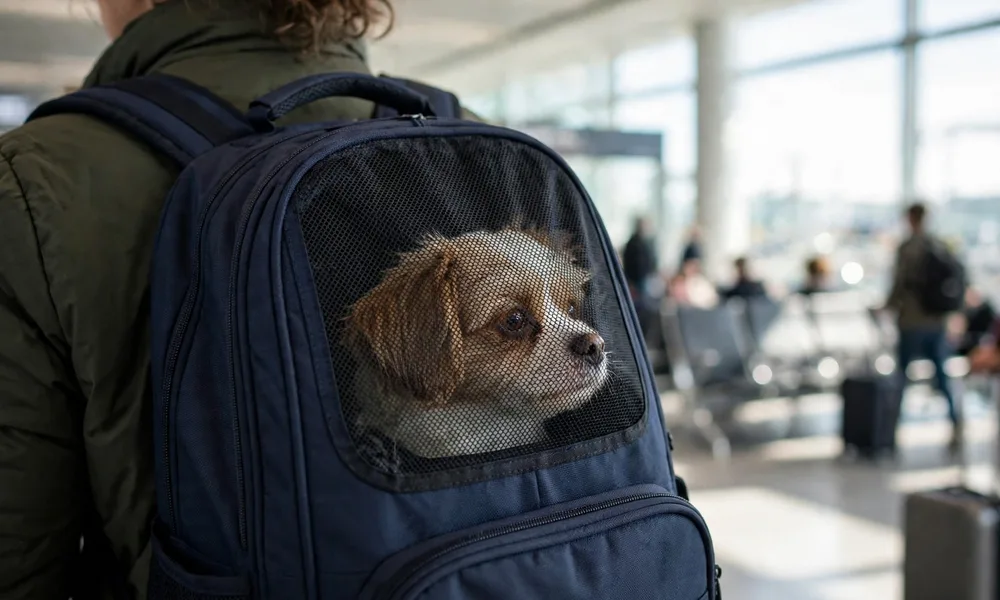
Backpack carriers free both of your hands, which makes them ideal for walking, cycling, and navigating a busy airport. The pet sits behind you in a ventilated compartment, often with a mesh window, and the weight sits on your shoulders rather than in one hand. Good backpacks have padded straps, a chest strap, and a safety tether inside.
The catch is that the pet cannot see you, which unsettles some animals, and the compartment is smaller than a shoulder carrier. Backpacks suit small, calm pets and active owners who walk or cycle with their animal. They are a poor choice for nervous cats.
Wheeled and Rolling Carriers
Wheeled carriers work like small cabin suitcases, with a telescopic handle and smooth-rolling wheels. They are a blessing for anyone who cannot carry weight, for long airport walks, and for larger small dogs that are too heavy to lift. Many convert between rolling, shoulder, and backpack modes.
The compromise is that wheels add weight and bulk, and the carrier is harder to lift into a car boot or an overhead locker. Wheeled carriers suit frequent flyers, older owners, and anyone travelling with a heavier pet.
Slings and Shoulder Pouches
Slings are the lightest option of all: a soft pouch worn across the body, with the pet tucked inside and its head poking out. They suit tiny dogs and very calm cats for short trips, and they fold into a pocket when not in use. They are also the least secure option, with no zips, no tether, and no protection if the pet panics.
Use slings only for short, calm outings with a pet you trust completely, and never for flights, cars, or vet visits where escape would be dangerous.

Pet Carriers Compared
| Type | Comfort | Weight | Flight fit | Best for |
|---|---|---|---|---|
| Soft-sided | Excellent | Light | Best | Flights and vet visits |
| Hard-sided | Good | Heavy | Poor | Car travel and chewers |
| Backpack | Good | Medium | Good | Walking and airports |
| Wheeled | Excellent | Heavy | Fair | Long trips, heavy pets |
| Sling | Fair | Very light | Not allowed | Short calm outings |
The table makes the trade-off plain: no single carrier wins on every measure. Soft-sided carriers are the best all-rounders for flights, hard-sided carriers are the safest for cars, and backpacks and wheeled carriers solve the carrying problem in different ways.
Sizing: Cats Versus Small Dogs
Sizing is where most carrier purchases go wrong. The rule is simple: your pet should be able to stand up, turn around, and lie down flat inside the carrier, with a little room to spare. Measure your pet before you buy anything, and compare those measurements with the carrier’s interior dimensions, not the exterior ones.
Cats and dogs need different things. Cats prefer a snug, den-like space, and a carrier that is too large makes them feel exposed and anxious. A carrier just big enough for the cat to turn around is usually right, with a familiar blanket inside. Small dogs, by contrast, like to see out, and they settle better in a carrier with large mesh panels and a view of their owner.
Weight limits matter too. Most soft carriers are rated for pets up to 7 or 8 kilograms, and exceeding that limit strains the seams, the zips, and your shoulder. Weigh your pet before you buy, and if your dog is close to the limit, size up to a hard-sided or wheeled carrier instead.
Travelling by Car, by Air, and to the Vet
Car travel is the most common use for a carrier, and the rules are simple. Secure the carrier with a seatbelt through its loops or straps, place it on the back seat or the footwell, and never put it in the boot. Keep the car cool, never leave a pet in a parked car, and stop every couple of hours on long drives so the animal can drink and stretch.
Flying needs more preparation. Check your airline’s exact under-seat dimensions and pet rules before every trip, because limits vary by airline, aircraft, and route. Book the pet’s place early, arrive with time to spare, and carry food, water, and cleaning supplies. A good carry-on bag keeps everything in one place.
Vet visits are the shortest trips but often the most stressful, because the animal associates the carrier with the clinic. Leave the carrier open at home between visits, with a blanket and treats inside, so it becomes a familiar resting place rather than a signal of trouble.
The Worst Carriers to Avoid
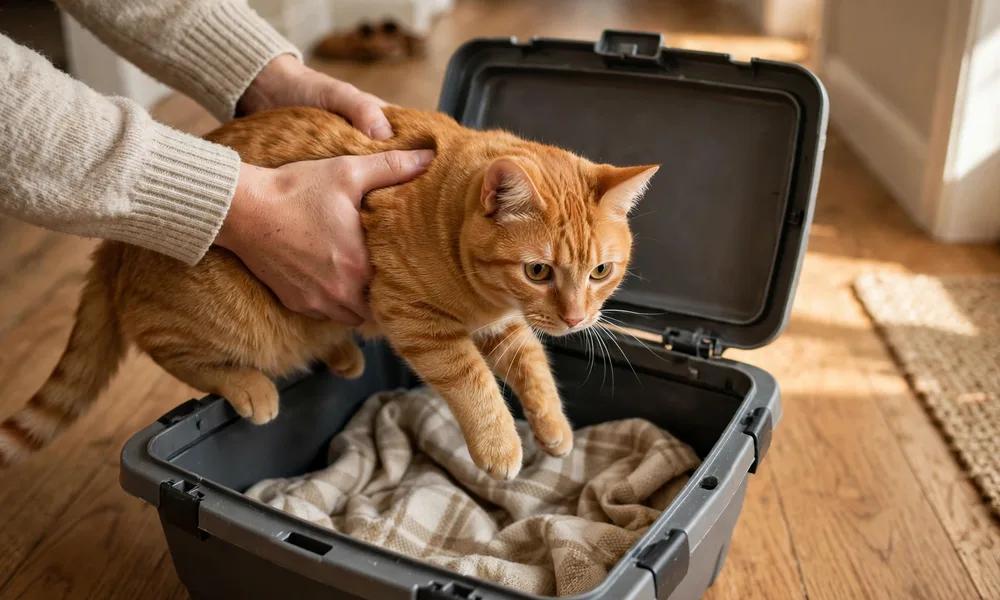
The worst carriers look smart in the shop and fail on the first real journey. Flimsy carriers with thin mesh and weak zips are the classic trap: a determined cat can push a paw through the mesh, and a strong dog can force a cheap zip open. Carriers with no interior tether are worse, because a pet that escapes at an airport is in real danger.
Avoid carriers with a single small ventilation panel, because the animal will overheat in summer. Avoid very cheap hard carriers with brittle plastic, which can crack in cold weather. And avoid any carrier you cannot clean easily, because a carrier that smells of the last journey is one your pet will dread. For the dog-specific side of travel, the detailed dog carriers for travel guide covers airline rules and sizing for small dogs in depth.
Checklist: Buying a Pet Carrier
- Measure your pet and compare with the carrier’s interior dimensions.
- Pick soft-sided for flights, hard-sided for car safety and pets that chew.
- Check for mesh on three or four sides, locking zips, an interior tether, and a washable pad.
- Make sure the carrier fits your airline’s under-seat dimensions if you plan to fly.
- Test the handles and straps with your pet’s weight inside, and check the carrier stores easily at home.
- Let your pet practise at home first, with treats and short sessions.
Frequently Asked Questions
What size pet carrier do I need for my cat?
Your cat should be able to stand up, turn around, and lie down flat inside the carrier, with a little room to spare. Measure your cat lying down and add a few centimetres. Cats prefer a snug carrier, so do not buy one much larger than needed.
Can I take a pet carrier on a plane?
Yes, most airlines accept small cats and dogs in the cabin in a soft-sided carrier that fits under the seat. Check your airline’s exact size limits and pet rules before every flight, because they vary by airline and aircraft, and you usually need to book the pet’s place in advance.
Are soft-sided or hard-sided carriers better?
Neither is better overall. Soft-sided carriers are lighter, easier to carry, and fit under aeroplane seats, which makes them best for flights. Hard-sided carriers are safer in a car and tougher against chewing and scratching, which makes them best for road trips.
How do I get my cat used to a carrier?
Leave the carrier open at home with a blanket and treats inside, so your cat explores it on its own terms. Start with short sessions, reward calm behaviour, and close the door for a few minutes at a time. Never force a cat inside on the first try.
Can a pet carrier go in the car boot?
No. A carrier should go on the back seat or the footwell, secured with a seatbelt, where the temperature is controlled and you can see your pet. The boot is too hot in summer, too cold in winter, and too isolated for an animal in distress.
How do I clean a pet carrier?
Remove the pad and wash it, wipe the interior with warm soapy water, and let the carrier dry fully before storing it. Clean after every accident, and give the carrier a full wash at least once a month.
The Bottom Line
The best pet carriers that travel comfortably in 2026 are the ones that fit your pet, your journey, and your arms. A soft-sided carrier is the best all-rounder for flights and vet visits, a hard-sided carrier is the safest choice for the car, and a backpack or wheeled carrier solves the problem of carrying weight over long distances. Measure your pet, check the airline rules, and let your pet practise at home first, and the carrier becomes a safe little room your pet trusts, instead of a box it dreads.


