
A good work bag should disappear the moment you put it on, and a bad one reminds you of itself all day: the strap digs in, the flap will not stay shut, and the laptop rattles against the bottom. The messenger bags that carry work in style in 2026 avoid all of that, with a single cross-body strap, a flap that closes with one hand, and enough structure to protect a laptop without looking like luggage.
Messenger bags were designed for people who move. Couriers carried them across cities for decades before offices adopted them, and the shape still shows it: the bag sits on your hip, swings to your front when you need something, and keeps your hands free. The best ones in 2026 keep that practical shape and add materials that look right in a meeting room, not just on a bicycle.
Key Takeaways
- Buy a messenger bag sized to your laptop first: too small is useless, and too big will sag and swing.
- Full-grain leather ages beautifully and suits formal work, while waxed canvas is lighter, cheaper and better in the rain.
- A wide, padded, adjustable strap matters more than any other feature, because a narrow strap will hurt after twenty minutes.
- Look for a padded laptop sleeve, a zipped pocket for valuables, and a flap that closes securely.
- Check the stitching, the hardware and the strap attachments before you buy, because those are the parts that fail first.
Messenger Bags 2026 at a Glance
| Best for | Material | Laptop fit | Standout strength |
|---|---|---|---|
| Best overall | Full-grain leather | Up to 15 inches | Ages well and suits any office |
| Best for commuting | Waxed canvas | Up to 14 inches | Light, weatherproof and easy to carry |
| Best for large laptops | Ballistic nylon | Up to 16 inches | Tough, structured and rain resistant |
| Best for formal work | Smooth leather | Up to 14 inches | Clean lines that match a suit |
| Best for creatives | Canvas and leather trim | Up to 15 inches | Relaxed look with strong details |
| Best on a budget | Heavy cotton canvas | Up to 13 inches | Does the job for very little money |
Why the Messenger Shape Still Works
The messenger shape has survived because it solves the one problem every work bag has: getting things in and out quickly. A backpack makes you stop, take it off and unzip it; a briefcase needs a free hand and a flat surface. A messenger bag just swings forward, the flap lifts, and your laptop, notebook and charger are all there. That matters most on days spent moving between meetings, trains and coffee shops.
It also carries weight better than it looks. A cross-body strap spreads the load across your chest and shoulder instead of hanging it from one hand. The catch is balance: a badly packed messenger bag will pull to one side and ache by lunchtime, so the internal layout matters as much as the strap. Keep the laptop close to your body, the heavy items in the middle, and the small things in the outer pockets.
Size: Match the Bag to the Laptop
Size is the first decision, and the one people most often get wrong. Measure your laptop, including its case, and buy a bag whose padded sleeve is at least a centimetre larger in both directions. A sleeve that fits exactly will be a fight every morning, and one far too big lets the laptop slide around. The bag should be roughly the laptop’s width plus a few centimetres for a notebook and charger.
Think about what else you carry every day, and be honest. A laptop, charger, notebook, phone, keys, wallet and water bottle is a normal load, needing about 12 to 15 litres. If you also carry a book, a lunch box or a change of clothes, you need something bigger, and a backpack may serve you better. Overstuffing a messenger bag is the fastest way to ruin it: the flap will not close, the strap digs in, and the seams strain.
The Strap Makes or Breaks It
Look for a strap at least four centimetres wide, padded where it sits on your shoulder, and adjustable with one hand. A narrow strap concentrates the whole weight on a thin line, and after twenty minutes it will hurt no matter how light the bag is. The strap should attach with metal hardware, not plastic, and the attachment points should be stitched and riveted.

Materials: Leather, Canvas or Nylon
Full-grain leather is the classic messenger material, and it earns that status. It is the top layer of the hide, so it is strong, develops a rich patina, and small scuffs blend in rather than standing out. A good leather messenger bag lasts a decade or more and looks better in its fifth year than its first. The trade-offs are weight and price: leather is the heaviest and most expensive option, and it needs occasional conditioning. Avoid bonded leather, made from glued scraps, which peels within a year.
Waxed canvas is the lighter, cheaper alternative, and the better choice if you walk or cycle in the rain. The wax coating sheds water, the fabric is tough, and the bag weighs far less than a leather one of the same size. It has a relaxed look that suits creative workplaces, though it can look out of place with a formal suit. Rewax it once a year and it stays waterproof.
Ballistic nylon is the practical choice for heavy laptops and hard commutes: the toughest of the three fabrics, rain and scuff resistant, and it holds its shape even when half full. It looks more technical than leather or canvas, but for a 16-inch laptop and a daily train journey it is hard to beat. Whatever material you choose, check the stitching: even, tight rows and reinforced corners are the signs of a bag that will last. Our guide to the best laptop bags that protect your gear in 2026 covers the same checks in more detail.
Pockets and Organisation Inside
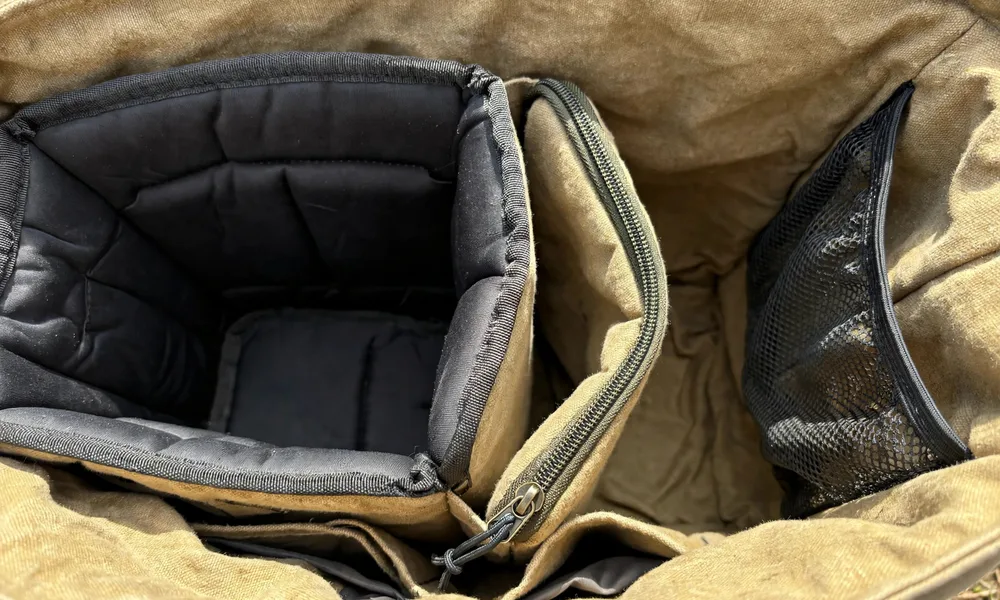
A messenger bag needs fewer pockets than you think, but in the right places: a padded laptop sleeve against the back panel, a zipped pocket for wallet, keys and phone, and one or two slip pockets for a notebook, pens and charger. Too many pockets turn the bag into a filing cabinet, and each extra pocket adds weight and bulk.
The flap deserves attention too, because it is the part you touch most. Buckles look classic and hold securely, but are slow to open. Magnetic clasps are fast and silent, which suits meetings, but can pop open if the bag is overstuffed. A zip under the flap is the most secure option, worth having for crowded trains. Test any closure with the bag full, not empty: a flap that closes neatly on an empty bag and will not meet its buckle on a full one is a common disappointment.
Carrying It Well: Fit, Balance and Comfort
Wear the bag high on your hip, not hanging by your knee. With the bottom of the bag at hip level, the weight stays close to your centre of gravity, the bag stops swinging, and you can reach the flap without bending. A bag that hangs low looks relaxed but pulls on your shoulder and bangs against your leg with every step.
Switch shoulders when you can, especially on long walks: a messenger bag loads one side of the body, and even the best strap cannot change that. If your commute is longer than half an hour on foot, or your laptop is 16 inches or larger, be honest: a backpack may be kinder to your shoulders, and a messenger bag better kept for shorter days and lighter loads. Our guide to briefcases that make work look effortless in 2026 covers the same trade-off for formal carry.

What to Avoid When You Buy
The most common mistake is buying a bag for how it looks in a photograph and never checking how it carries: a strap that slips, a flap that gaps, or a sleeve too small for your machine will not show in a product photo. The second is bonded leather, which peels and cracks within a year. The third is buying too big, so the bag sags and swings. The fourth is ignoring the hardware: plastic buckles and thin zips break first. The fifth is forgetting the rain. Our guide to what makes a great camera bag worth carrying in 2026 makes the same point about testing a bag loaded, not empty.
Before You Buy: A Short Checklist
- Measure your laptop with its case, and buy a sleeve at least a centimetre larger each way.
- Check the strap is wide, padded, adjustable with one hand, and fixed with metal hardware.
- Look inside: a padded laptop sleeve, a zipped pocket, and one or two slip pockets are enough.
- Inspect the stitching for even, tight rows, and check corners and strap attachments are reinforced.
- Test the flap closure with the bag full, and confirm it holds securely.
- Carry it loaded for five minutes, and check it sits at hip level without slipping or digging in.
Frequently Asked Questions
Are messenger bags good for laptops? Yes, provided the bag has a padded sleeve that fits your laptop and a strap wide enough for the weight. A 13- or 14-inch laptop suits a messenger bag best; a 16-inch machine is better in a backpack for long walks.
Is leather or canvas better for a messenger bag? Leather lasts longer, ages beautifully and suits formal work, while canvas is lighter, cheaper and better in the rain. Choose leather for the office, waxed canvas for commuting.
How do I stop a messenger bag hurting my shoulder? Wear it high on your hip, keep heavy items close to your body, use a wide padded strap, and switch shoulders when you can. If it hurts, something needs to come out.
Can I wear a messenger bag with a suit? Yes, if the bag is smooth leather in black or dark brown, with clean lines and minimal hardware. A waxed canvas bag looks out of place with formal tailoring, so keep it for casual days.
How do I clean a leather messenger bag? Brush off dust, wipe it with a damp cloth, and condition it two or three times a year. Keep it out of heavy rain, and never dry it on a radiator, which cracks the leather.
What size messenger bag do I need? Measure your laptop and add a few centimetres for a notebook and charger. Most people need 12 to 15 litres for a laptop, charger, notebook, phone and keys.
The Bottom Line
The best messenger bags of 2026 fit your laptop properly, carry comfortably on a wide padded strap, and close securely with a flap you can open with one hand. Full-grain leather suits formal work and a bag you want to keep for years, waxed canvas suits commuting and rain, and ballistic nylon suits a large laptop and a hard daily journey.
Start with your laptop, not the catalogue: measure it, check the sleeve, test the strap loaded, and inspect the stitching and hardware before you pay. Get that right and the bag disappears onto your shoulder and lasts long enough to become the bag you reach for without thinking.


