
The best saddle bags in 2026 are the ones you forget about until the moment you need them. A saddle bag is the small bag that straps under your bicycle saddle, and its whole job is to carry the few things that turn a puncture from a long walk home into a ten-minute roadside fix: a spare tube, tyre levers, a multitool and a way to inflate the tyre. The best ones stay put, keep the rain out, and open with one hand when your fingers are cold. The worst ones swing, rattle, and dump your kit on the road. This guide sorts the good from the bad.
Riding without a saddle bag is a gamble most cyclists lose eventually. A puncture rarely happens near home, and it never happens on a warm, dry day when you have time to spare. It happens in the rain, miles from anywhere, with the light fading. A well-packed bag turns it into a ten-minute fix; without one, you walk or wait for a lift. The bag itself costs less than a single taxi ride home, and it weighs less than a water bottle.

Key Takeaways
- The best saddle bags hold a spare tube, two tyre levers, a multitool and an inflator without bulging, and still close easily.
- A secure strap system matters more than size: a bag that swings or slips will annoy you on every ride and may fall off entirely.
- Water-resistant fabric and a covered zip keep your spare tube and tools dry, which is when you need them most.
- Buy the bag to fit your saddle and seat post, not the other way round, and check the clearance with your rear tyre first.
- Pack the bag once, test it on a short ride, and leave it packed, so it is always ready when a puncture strikes.
What a Saddle Bag Actually Is
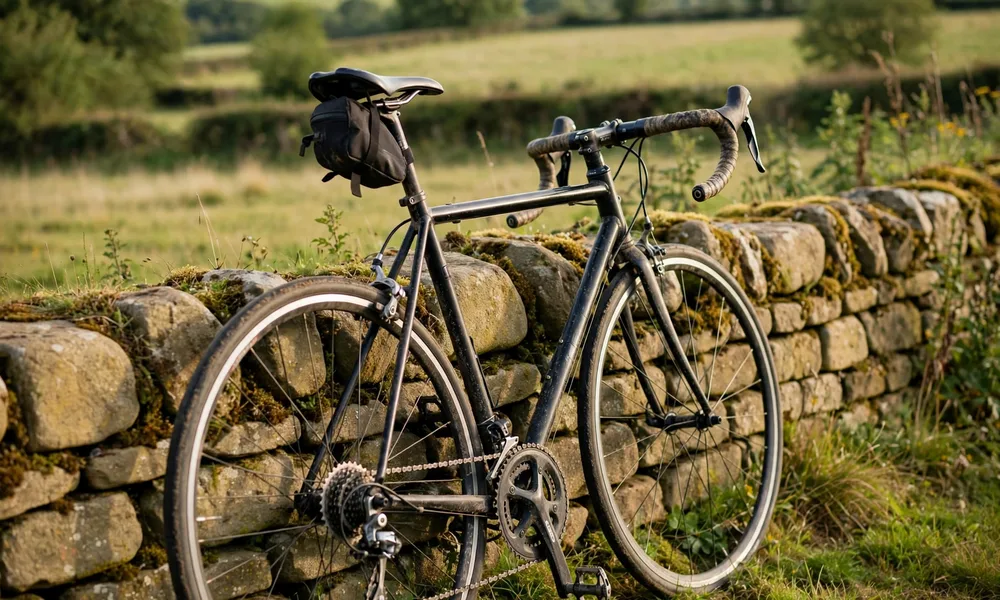
A saddle bag is a small, wedge-shaped bag that mounts underneath a bicycle saddle, usually held by straps around the saddle rails and the seat post. Its purpose is narrow and practical: to carry emergency repair kit on the bike itself, so it is always there whether or not you remembered to pack a rucksack. Most saddle bags hold between half a litre and one and a half litres.
It helps to be clear about the neighbours, because cycling storage gets confusing fast. A bike rack is a frame for carrying whole bicycles on a car, a completely different job, and our guide to bike racks for cars covers that. A bike basket is a container fixed to the handlebars or rear of the bike for carrying shopping and everyday loads while you ride, and our guide to bike baskets explains those. A messenger bag is worn on your body, across the shoulder, for carrying work and laptops. A saddle bag is none of these: it is the smallest, most focused piece of cycling storage, a repair kit that lives on the bike.
Saddle bags come in three broad shapes. Wedge bags are the classic teardrop that tapers towards the back, and they suit road bikes and most hybrids. Roll-top bags close by folding the top over, which sheds rain well. Seat packs are the larger, elongated bags that bikepackers strap under the saddle for multi-day trips. For most riders, a medium wedge bag is the right answer.
How We Judged the Saddle Bags
We judged every bag on the same five things. First, fit and security: does it stay still on rough roads, and does it fit a standard saddle without rubbing the rear tyre? Second, capacity: does a spare tube, two levers, a multitool and an inflator actually fit without a fight? Third, weather protection: does the fabric and zip keep rain out? Fourth, access: can you open it and get the tube out with cold hands? Fifth, durability: do the straps, buckles and stitching survive a season of daily use? A bag that fails on fit is useless however good it looks.
The Best Saddle Bags of 2026
The Everyday Wedge: Small, Neat and Always There
The best everyday saddle bag is the one you never think about. It holds a single road tube, two levers and a multitool, weighs under 100 grams, and sits tight under the saddle without swinging. Look for two straps around the saddle rails and a third around the seat post, because three points of contact stop the sway that single-strap bags suffer from. A water-resistant coated fabric is enough for most weather, and a zip with a storm flap keeps the worst of the rain out.
The Weatherproof Pick: For Riders Who Never Cancel
Some riders go out in weather that keeps everyone else indoors, and their saddle bag needs to match. The weatherproof pick uses a welded-seam waterproof fabric rather than a coated one, and a roll-top or waterproof zip closure instead of a standard zip. It costs more than the everyday wedge, but it keeps a spare tube dry through hours of rain, and a dry tube is one that will hold air when you fit it.
The Big Capacity Bag: For Gravel and Touring Riders
Gravel riders and tourers need more than a tube and a multitool. They carry a second tube, a patch kit, a chain tool, a tyre boot, snacks and sometimes a lightweight jacket. The big capacity bag holds around one and a half litres and uses a wide, stable mounting system with a reinforced back plate, so the extra weight does not swing. The best ones have an internal divider or a small mesh pocket, which stops the tools rattling and makes the tube easy to find in a hurry.
The Quick-Release Bag: For Riders Who Share Bikes
Some riders swap a saddle bag between bikes, or take it off at the cafe to stop it being stolen. For them, the quick-release bag is the answer. Instead of three fiddly straps, it uses a small bracket that bolts under the saddle rails once, and the bag clicks on and off in a second. The bracket adds a little weight and cost, and you need one bracket per bike, but it also holds the bag more rigidly than straps ever will, which means no sway at all, even on rough gravel.
Saddle Bags Compared
| Bag type | Capacity | Best for | Weak point |
|---|---|---|---|
| Everyday wedge | 0.5 to 0.8 litres | Commuting and road riding | Tight fit for larger tubes |
| Weatherproof roll-top | 0.8 to 1.2 litres | All-weather and winter riding | Costs more than a wedge |
| Big capacity bag | 1.2 to 1.6 litres | Gravel and touring | Can sway if poorly mounted |
| Quick-release bag | 0.7 to 1.0 litres | Sharing between bikes | Bracket needed on each bike |
The Worst Saddle Bags of 2026
The worst saddle bags share the same faults, and they are easy to spot before you buy. The first is a single-strap mount: a bag held by one thin strap will swing sideways on every bump, rub the tyre, and eventually work loose. The second is a cheap zip with no storm flap, which lets rain straight into the bag and soaks the spare tube. The third is a bag shaped like a box rather than a wedge, which catches the wind and snags on your shorts.
There is also a size trap worth knowing about. Some very small bags look neat and tidy, but they only fit a folded road tube if you roll it perfectly and leave the multitool at home. That defeats the purpose. A saddle bag that cannot carry the full repair kit is a decoration, not a tool.
Packing Your Saddle Bag So It Works
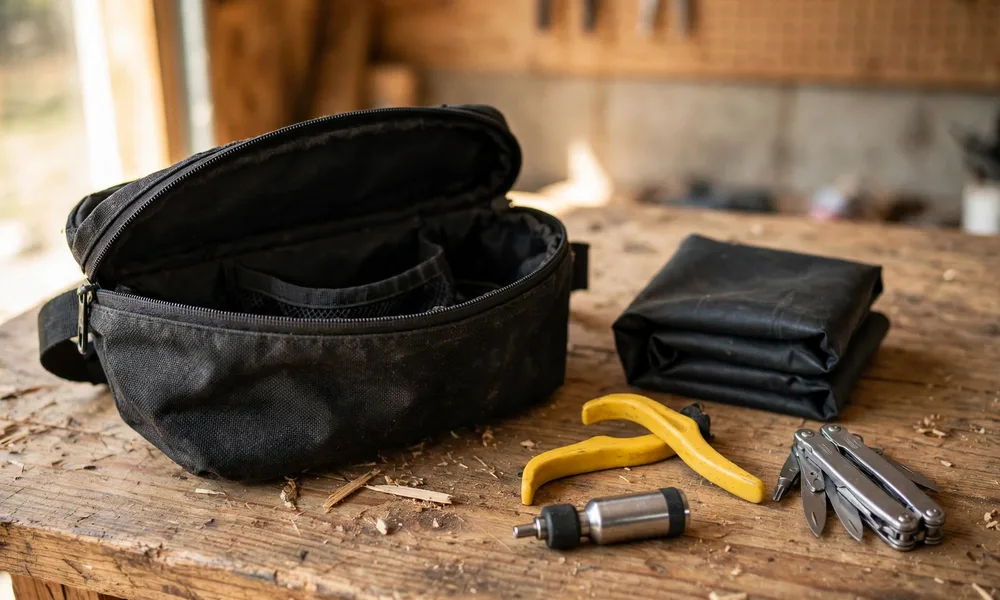
Packing a saddle bag well takes five minutes and saves a miserable hour. Start with the spare tube: fold it neatly, wrap it in a small plastic bag or an old sock, and put it at the bottom. Next, add the two tyre levers, flat against the side of the bag. Then the multitool, wrapped in a scrap of cloth so it does not rattle. Finally, the CO2 inflator or mini pump. Close the bag, give it a shake, and listen. If anything rattles, repack it.
Then test it. Ride your usual route, including the worst stretch of road you know, and check the bag afterwards. Check whether it moved or rubbed the tyre, and tighten the straps or reposition the bag before you trust it on a long ride. And once it is packed and tested, leave it alone. The biggest mistake riders make is borrowing the multitool from the saddle bag for a job at home and forgetting to put it back.
Checklist: Buying a Saddle Bag
- Measure your saddle rail spacing and seat post diameter before ordering, so the straps actually fit.
- Check rear tyre clearance with the bag fitted, especially if you ride a small frame or fat tyres.
- Choose a capacity that holds your full kit: tube, levers, multitool and inflator, with a little room to spare.
- Pick water-resistant fabric and a covered zip if you ride in rain more than once a month.
- Look for a reflective strip or logo, so the bag adds visibility on dark roads.
- Test the bag on a short ride before trusting it on a long one, and repack it if anything rattles.
Frequently Asked Questions
What should I carry in a saddle bag?
A spare inner tube, two tyre levers, a multitool with a chain tool, and a way to inflate the tyre, either a CO2 inflator with a cartridge or a mini pump. That kit fixes the vast majority of roadside problems. Add a tyre boot, a small patch of old tyre, if you ride rough roads, and a few cable ties for emergencies.
Will a saddle bag fit any bike?
Almost any bike with a standard saddle and a round seat post will take a wedge bag. Very small frames can struggle with tyre clearance, and dropper seat posts need a bag that mounts only to the saddle rails. Check the fit before a long ride, and avoid bags that rub the tyre.
Do I still need a saddle bag if I ride tubeless?
Yes. Tubeless sealant fixes small holes, but a cut or a burp can still leave you with a flat tyre that needs a tube. Carry a tube and levers even on a tubeless setup, because the day you need them is the day you will be glad you did.
How do I stop my saddle bag swinging?
Use all three straps, two on the saddle rails and one on the seat post, and tighten them properly. A bag that still swings is usually too big for its contents, so pack it fuller or size down.
Can a saddle bag get wet inside?
Yes, if the zip is unprotected or the fabric is only lightly coated. Water-resistant bags handle showers well, but for heavy or long rain you want a waterproof bag with welded seams or a roll-top closure.
Is a saddle bag better than a jersey pocket?
For repair kit, yes. A saddle bag keeps the weight on the bike, leaves your pockets free for food and a phone, and means the kit is there on every ride without thinking about it.
The Bottom Line
The best saddle bags in 2026 are small, secure, weather-resistant and always packed. Buy a medium wedge bag with a three-strap mount, pack it, test it, and forget about it until the day it saves your ride. That day will come, and when it does, the bag under your saddle will be the best money you ever spent on your bike. For more on keeping your bike rolling, our guides to bike locks and bike pumps are worth a read before your next ride.


