A bad night on the ground can ruin a camping trip before it starts, and the best camping mattresses in 2026 are the fix for anyone who drives to camp and wants a real bed. A camping mattress is a thick, mattress-like bed built for a tent: usually ten centimetres or more of foam, air, or both, with enough insulation to keep the cold ground at bay and enough width to sleep like you do at home. That makes it a different product from two neighbours you may already know: a sleeping pad is a thin, light layer made for carrying on your back, and a home air mattress is a guest bed made for a spare room with mains power.
Key Takeaways
- A camping mattress is a thick camp bed, ten centimetres or more, built for comfort in a tent; a thin sleeping pad is a different product made for carrying on your back.
- Self-inflating foam-core mattresses are the best all-round choice, because the foam insulates even if the air valve leaks a little overnight.
- Measure your tent floor before you buy: a mattress that fits the tent with room to spare sleeps far better than one squeezed against the walls.
- For cold nights, insulation matters more than softness; a foam core or an insulated air chamber keeps the ground from stealing your warmth.
- Check the valve, the packed size, and the weight capacity before you buy, since those three details decide whether the mattress is easy to live with.
What Makes a Camping Mattress Different
The difference starts with thickness. A camping mattress is built to keep your hips and shoulders off the ground even when you lie on your side, and that takes depth: ten to fifteen centimetres for most adults, more for side sleepers and heavier campers. A thin pad can be comfortable for a night, but after two or three nights the ground wins. A mattress spreads your weight across a deep layer of foam or air so no single point presses into the earth.
The second difference is insulation. Bare ground draws heat away from your body all night, faster than cold air does, and a mattress that ignores this will leave you shivering in a sleeping bag rated for much colder weather. Foam-core mattresses insulate by their nature, because the foam itself resists heat loss. Air mattresses need help: insulated chambers or a foam top, without which a cold night turns the air inside into a cold sink under your back.
It is worth drawing the other boundary clearly too. If you hike miles to your campsite with everything on your back, you do not want a camping mattress at all: you want one of the sleeping pads for camping that weighs under a kilogram and packs to the size of a bottle. The mattress in this guide is for campers who drive to the site, pitch a tent, and want to sleep properly.
The Main Types Compared
Most camping mattresses fall into four types, and the right one depends on how you camp. Self-inflating foam-core mattresses open a valve and expand on their own. Camp air mattresses inflate with a pump and pack smaller. Foam mattresses are solid slabs of dense foam: heavy and bulky, but indestructible. Hybrid mattresses combine a foam top with an air chamber for adjustable firmness.
| Mattress type | Thickness | Packed size | Best for |
|---|---|---|---|
| Self-inflating foam-core | 10–15 cm | Medium roll | Most car campers |
| Camp air mattress | 15–25 cm | Small pack | Families, tall campers |
| Solid foam mattress | 8–12 cm | Large roll | Base camp, budget |
| Hybrid foam and air | 12–20 cm | Medium roll | Comfort-first campers |
| Double camp mattress | 15–25 cm | Large pack | Couples in big tents |
Self-Inflating Mattresses: The Best All-Round Choice
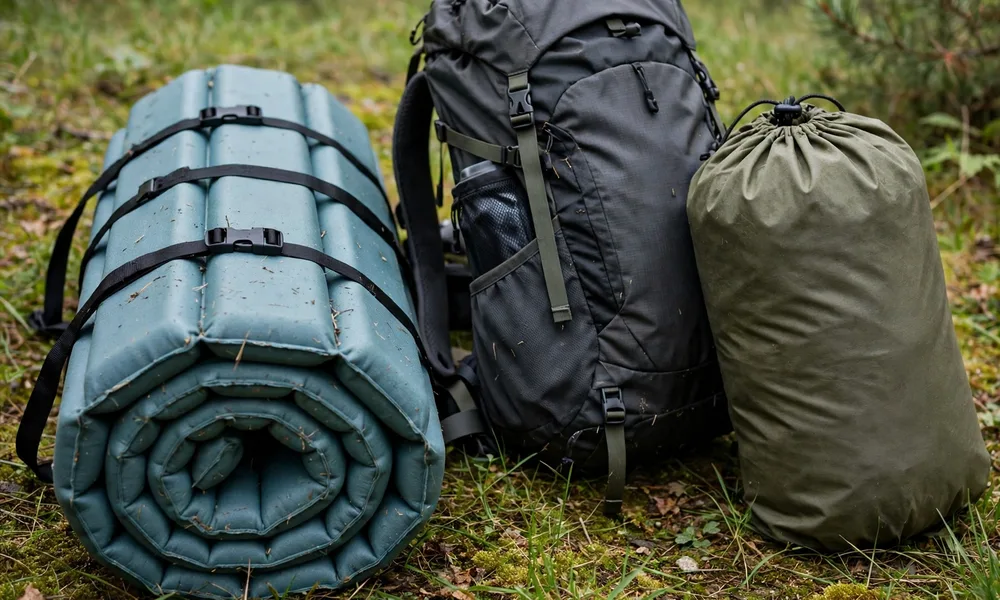
Self-inflating mattresses are the default recommendation for most car campers, and the reason is simple: they are hard to get wrong. Open the valve and the foam core expands, drawing air in on its own. Add a few breaths to reach the firmness you want, close the valve, and you are done. There is no pump to forget and no mains power needed, which matters at a campsite with no electricity.
The foam core is what makes this type special. Even if the valve leaks a little overnight, the foam still holds you up and still insulates, so you wake up on a slightly softer mattress rather than on the ground. That forgiveness is worth a lot on a multi-night trip. Foam also deadens movement, so a restless sleeper disturbs a tent mate less than on a bouncy air bed.
Camp Air Mattresses and Pumps
Camp air mattresses are the thickest and most bed-like option, and they suit families and tall campers best. A raised camp air mattress of twenty centimetres or more feels close to a real bed: you sit on the edge to put your shoes on, and the extra height keeps you further from the cold ground. They pack smaller than foam mattresses, which helps when the car is already full.
The catch is the pump. A camp air mattress needs one, and the pump decides how pleasant the mattress is to own. A small battery or USB-rechargeable pump inflates a double mattress in a few minutes and lets you adjust firmness without effort. Buy the pump with the mattress, charge it before the trip, and carry a manual backup, because a flat pump means a flat bed.

Foam and Hybrid Mattresses
Solid foam mattresses are the simplest camp beds you can buy: a slab of dense foam, usually with a washable cover, that cannot leak, cannot pop, and needs no pump at all. Unroll it and sleep on it. That reliability makes foam the best choice for base camp and for children. The downsides are bulk and weight: a foam mattress rolls into a large cylinder that takes real space in the car.
Size, Tent Fit, and Sleeping Position
Size is the mistake people make most often, because a mattress is bought at home and used in a tent. Measure your tent floor before you buy, and remember that tent walls slope inward, so a mattress that fits the floor may still press against the walls at sleeping height. Leave a gap of at least ten centimetres on each side, and check that the mattress does not block the door.
Length matters for tall campers. A standard single mattress is around 190 centimetres long, which is fine up to about 185 centimetres of camper. Taller campers should look for a long version. Width matters for restless sleepers: a standard single is about 65 centimetres wide, while a wide version runs 75 or more, and that extra width is the difference between sleeping and trying not to roll off.
Your sleeping position decides the thickness you need. Back sleepers are comfortable on ten centimetres, because their weight spreads evenly. Side sleepers need twelve to fifteen, because hips and shoulders press into a smaller area and will bottom out on a thin mattress. Stomach sleepers need a firmer mattress, since a soft one lets the hips sink and arches the lower back.
Think about the whole sleep system, not just the mattress. A mattress works with the tent that shelters it and the pillow that supports your head, so it is worth choosing them together. A good mattress inside one of the best camping tents with a proper pillow is a bed, not a compromise, and the three pieces together decide whether you wake up rested or wrecked.
Cold Nights, Durability, and Repairs
Cold is the real enemy of camp sleep, and the ground is how it gets in. A mattress insulates you from the earth, but only if it is built to. Foam-core mattresses insulate well by their nature, while an uninsulated air mattress on cold ground is little better than lying on the earth itself. If you wake up cold, the mattress is often the culprit, not the sleeping bag.
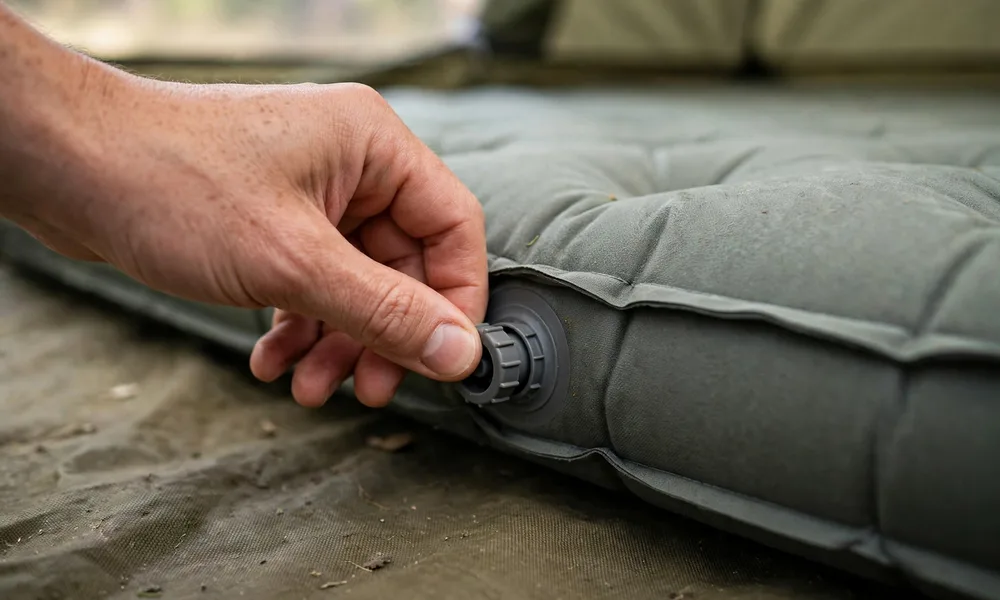
Durability decides how many trips a mattress survives. The fabric should resist punctures from stones and tent pegs, the seams should be welded or double-stitched, and the valve should seal firmly without hissing when pressed. Most failures are slow leaks at the valve or a seam, not dramatic punctures, so valve quality matters more than fabric thickness alone.
Before You Buy: The Checklist
- Measure your tent floor and check the mattress leaves a gap on every side, with the door clear and the walls not pressing in.
- Choose the type for your trip: self-inflating foam-core for most car campers, camp air for families and tall sleepers, solid foam for base camp.
- Check the thickness against how you sleep: ten centimetres for back sleepers, twelve to fifteen for side sleepers, firmer for stomach sleepers.
- Test the valve with cold hands, confirm the pump is included or bought with the mattress, and check the weight capacity.
- Inflate the mattress at home the night before and leave it overnight to catch slow leaks before you reach the campsite.
- Pack a repair kit, a fitted sheet or blanket for the top, and a pillow that suits the mattress height.
Frequently Asked Questions
What is the difference between a camping mattress and a sleeping pad?
A camping mattress is a thick, bed-like camp bed, usually ten centimetres or more, built for comfort when you drive to camp. A sleeping pad is a thin, light layer built for carrying on your back. If you hike to camp, buy a pad; if you drive to camp and want a real bed, buy a mattress.
Can I use a home air mattress for camping?
You can, but it is a poor choice. Home air mattresses are made for a bedroom floor with mains power, and their thin fabric punctures easily on rough ground. They also have no insulation, so they feel cold on the earth. A camp air mattress uses tougher fabric and insulated chambers, and it is built for the job.
How thick should a camping mattress be?
Ten centimetres suits most back sleepers, twelve to fifteen suits side sleepers and heavier campers, and twenty or more feels like a real bed for families and tall campers. Match the thickness to your car space and tent too.
Do self-inflating mattresses really inflate themselves?
Mostly, yes. Opening the valve lets the foam core expand and draw air in, and the mattress reaches about eighty percent of its thickness on its own. You then add a few breaths to reach the firmness you want. On a cold morning the foam expands more slowly, so give it a little longer.
How do I stop my camping mattress going soft overnight?
Inflate it fully, let it sit for ten minutes while the material stretches, then top it up before bed. Keep a blanket over the top to slow cooling, and check the valve seals firmly. New mattresses stretch most at first, so expect to add air on the first few nights.
What size camping mattress fits in my tent?
Measure the tent floor and leave at least ten centimetres clear on each side, with the door unobstructed. A standard single is about 65 by 190 centimetres and a double about 135 by 190, but tent walls slope inward, so check the fit at sleeping height, not just at the floor. Pair it with good camping pillows that match the mattress height.
The Bottom Line
The best camping mattress in 2026 is the one that matches how you actually camp: a self-inflating foam-core mattress for most car campers, a thick camp air mattress with a battery pump for families and tall sleepers, and a solid foam mattress for base camp and rough ground. Buy for thickness, insulation, and valve quality, and measure your tent before you order.