The best handlebar bags in 2026 are the ones you forget about until the exact moment you need them. A handlebar bag is a small bag that straps to the front of your bicycle, across the handlebars, and its whole job is to carry the few things you want during a ride rather than after it: your phone, a snack, a map, your keys, a thin waterproof layer. The best ones sit steady, keep the rain out, and open with one hand while you are still rolling. The worst ones swing, rattle, rub your cables, and dump your kit on the road at the first pothole. This guide explains how to pick one. Your pockets stay empty, your jersey stays dry, and everything you need is right in front of you.

Key Takeaways
- A handlebar bag is a small front-bar bag for ride essentials, not a luggage system.
- Most riders need between 2 and 5 litres; bigger bags steer worse and can block a front light.
- Waterproofing matters more than pockets: a roll-top or welded-seam bag keeps kit dry, while a zipped bag needs a rain cover.
- Mounting decides everything: two wide straps plus a head-tube tether stop swing, and a quick-release mount suits commuters best.
- Keep it light: heavy loads on the bars make steering vague, so save bulky gear for a frame bag or panniers.
What a Handlebar Bag Is, and What It Is Not
A handlebar bag hangs from the handlebars, usually in front of the stem, held by straps or a quick-release bracket. It sits where you can see it and reach it without stopping, which is the whole point. On a long ride, that means a snack, your phone, or a map without digging through a rucksack.
It is easy to confuse a handlebar bag with the other bags on a bike, so here is the distinction. A frame bag straps inside the triangle of the frame, between the top tube, seat tube and down tube, and it suits heavier kit you do not need every minute. A saddle bag tucks under the saddle and carries repair kit: a spare tube, tyre levers and a multitool. A basket is an open container fixed to the bars, good for shopping but open to rain.
What about panniers? A bike pannier hangs from a rack over a wheel, usually sold as a pair, and carries serious volume for commuting or touring. Panniers suit laptops and shopping; a handlebar bag suits a phone and a snack. The two complement each other: panniers carry the load, the handlebar bag carries the ride.
Size is the first thing to get right. Handlebar bags usually run from about 1.5 litres to 9 litres, and the sweet spot for most riders is 2 to 5 litres. A 2-litre bag holds a phone, keys, a snack and a card. A 4-litre bag adds a thin jacket or a small camera. Anything above 6 litres starts to affect the steering, especially on narrow drop bars, and it can block a front light or a computer mount. Measure the clear space between your grips first.
The Main Types of Handlebar Bag in 2026
Most handlebar bags fall into four broad types, and the shape decides how each opens and seals.
Roll-top waterproof bags
Roll-top bags are the workhorses. You fold the top down three times and clip it shut, which seals out rain far better than any zip. Welded fabric means no stitched seams for water to creep through. The trade-off is access: you must stop, unclip, and unroll to reach anything. They are the best choice if you ride through winter. Most hold 4 to 9 litres.
Zip-top commuter bags
Zip-top bags open along the top with a single zip, so you can reach in with one hand at a traffic light. They suit commuting, holding the things you use often. The weakness is weather. Zips leak in heavy rain unless they are covered, so look for a storm flap over the zip or a rain cover in the box. Most hold 2 to 4 litres, and many lift off in seconds with a quick-release bracket.
Map-case and clear-top bags
Map-case bags have a clear window on the lid, originally for paper maps and now mostly used for phones. You can glance at a route without taking the phone out, which is handy on unfamiliar lanes. The clear panel is the weak point: cheap ones cloud up, scratch, and fog in the cold, so check reviews before you buy. Treat the window as a viewer, not a control panel.
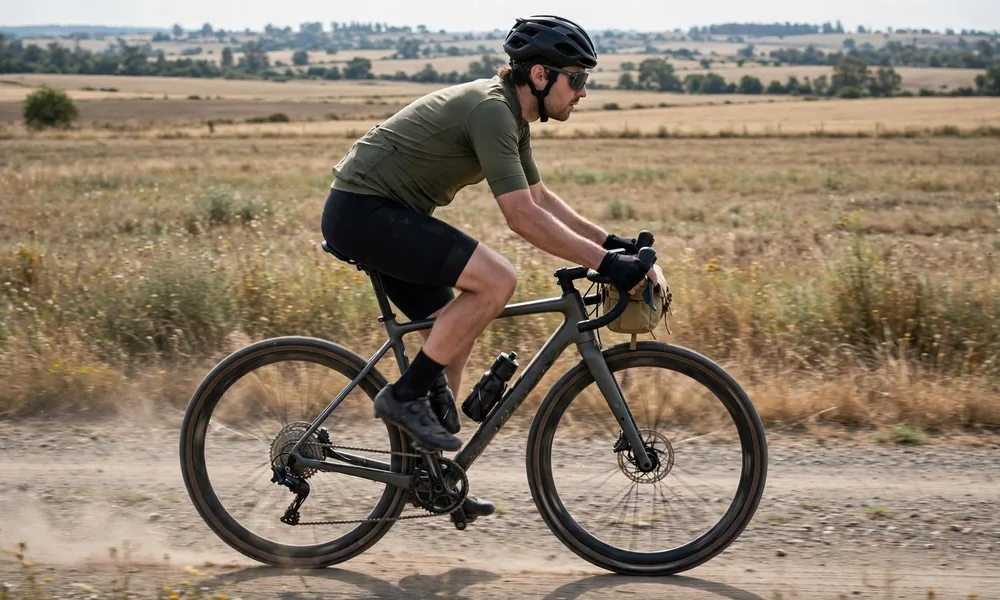
Bikepacking harness and dry-bag systems
A harness is not a bag at all. It is a cradle of straps that clamps to the bars and holds a dry bag of your choice, usually 8 to 15 litres. Bikepackers like it because a torn dry bag is cheap to replace. The downside is faff. Packing takes longer, nothing is reachable on the move, and a badly loaded harness sways. It suits multi-day trips off road, and is overkill for a commute.
How to Choose the Right Handlebar Bag
Choosing well comes down to four checks: size, weatherproofing, mounting, and access.
Size and shape
Start with your bars. Drop bars give you less clear width than flat bars, and a bag that is too wide will foul the brake levers. Measure the straight section of bar between the bends, then subtract room for cables. Round bags suit drop bars because they sit between the drops without snagging. Boxy bags suit flat bars, where a square shape packs better. A deep bag can rub the front tyre on small frames.
Weatherproofing
Rain is the real test. A bag that claims to be water-resistant will keep out a shower but not a downpour. Welded seams and a roll-top closure are the gold standard, and they are worth paying for if you ride all year. A zipped bag with a storm flap is a fair compromise for fair-weather riders. Test it at home first with a tissue inside under a tap.
Mounting and stability
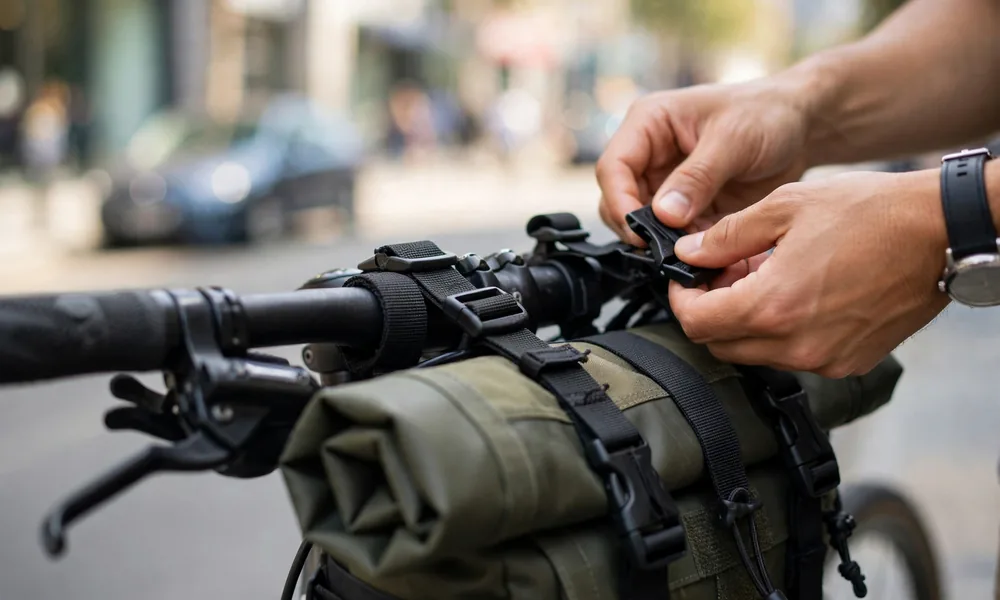
A bag that swings is worse than no bag at all. Swinging loads steer the bike for you, rub paint off the head tube, and wear out straps fast. The fix is simple: two wide straps around the bars, plus a tether to the head tube that stops the bag bouncing forward. Quick-release brackets are the most convenient option, because the bag lifts off with a button press. Strap mounts are cheaper but slower to remove; check them monthly, as webbing stretches.
Access on the move
Think about what you will actually reach for while riding. If the answer is food and a phone, you want a zip-top or a bag with an outside mesh pocket. If the answer is almost nothing, a roll-top is fine and drier. A small top pocket for a phone is genuinely useful; side pockets are often impossible with gloves on. Keep it simple: one main compartment, one small pocket, one-handed access.
Handlebar Bags Compared
The table below sums up the four main types at a glance.
| Type | Typical size | Weather protection | Access on the move | Best for |
|---|---|---|---|---|
| Roll-top waterproof | 4 to 9 litres | Excellent | Poor, needs a stop | Touring and winter riding |
| Zip-top commuter | 2 to 4 litres | Good with a flap | Excellent, one hand | Commuting and town rides |
| Map-case bag | 3 to 6 litres | Good | Fair, window only | Navigation and touring |
| Harness and dry bag | 8 to 15 litres | Excellent | Poor, needs unpacking | Multi-day bikepacking |
| Small feed bag | 1 to 2 litres | Fair | Excellent, one hand | Snacks on long rides |
One type deserves a special mention: the feed bag, sometimes called a stem bag. It is a small cylinder that straps to the bars beside the stem and holds food, a bottle, or a phone. Pair one with a small roll-top bag and you have weatherproof storage plus instant access to snacks.
The Worst Handlebar Bags: What to Avoid
Bad handlebar bags fail in the same few ways, and you can spot most of them before you pay. The first warning sign is a single narrow strap. One strap cannot stop a bag swinging, and a swinging bag will rub your cables, scratch your frame, and steer the bike on descents. The second is a bag with no stiffening: it collapses when half empty and sags onto the tyre. The third is fake waterproofing: a bag that says water-resistant and has ordinary stitched seams will soak through in real rain, and a zip with no cover is a funnel pointed at your phone. Finally, avoid bags that block your front light: check its position with the bag fitted. A mount that fits only one bar size is another trap: bars vary, and a bracket made for one diameter will either slip or crush on another.
Handlebar Bag Buying Checklist
- Measure the clear space on your bars and check the bag fits without touching brake levers or cables.
- Choose roll-top sealing for wet rides and zip-top access for commuting; never trust a bare zip in rain.
- Insist on two wide bar straps plus a head-tube tether, so the bag cannot swing or bounce forward.
- Keep the load light and under 5 litres for most riding, and move heavy kit to a frame bag or panniers.
- Check front-light and computer clearance with the bag fitted, before you ride anywhere in the dark.
- Test waterproofing at home with a tissue inside and a minute under the tap, before you trust it on a ride.
Frequently Asked Questions
Will a handlebar bag affect my steering?
A light bag barely affects steering, and most riders stop noticing it within a few minutes. A heavy bag does matter: it adds weight ahead of the steering axis, which makes the front end feel vague and slow to correct. Keep the load under about two kilos.
Can I fit a handlebar bag on drop bars?
Yes, and drop bars are the most common setup for handlebar bags. Round or sausage-shaped bags fit best between the drops, while wide boxy bags can clash with the brake levers. Measure the straight section of bar first.
Are handlebar bags waterproof?
Some are, and some only pretend to be. Roll-top bags with welded seams are genuinely waterproof, while zipped bags are usually water-resistant at best. Check the seams and closure, not the marketing words.
What size handlebar bag do I need?
Most riders need between 2 and 5 litres. Two litres covers a phone, keys and a snack. Four litres adds a thin jacket or a small camera. Above 6 litres, steering suffers, so size up only if you need the space.
Can I leave a handlebar bag on the bike when I lock up?
You can, but you should not leave anything valuable in it. A strap-mounted bag comes off in seconds, which is convenient for you and for a thief. Take the bag with you and leave the bracket on the bike.
Do I need a front rack to use a handlebar bag?
No. A handlebar bag mounts directly to the bars and needs no rack at all. Straps and a head-tube tether are all you need.
The Bottom Line
The best handlebar bags in 2026 are small, steady, and dry: a roll-top for touring and bad weather, a zip-top for commuting, and a harness for multi-day trips. Measure your bars, keep the load light, insist on a proper two-strap mount, and test the waterproofing at home. Get those right and the bag disappears into the ride.