
The best frame bags in 2026 are the ones you stop noticing about ten minutes into a ride. A frame bag is a bag that straps inside the triangle of your bicycle frame, using the empty space between the top tube, the seat tube and the down tube, and it turns dead space into the most useful storage on the bike. The best ones hold your phone, snacks, a multitool and a spare tube where you can reach them without stopping, stay silent over rough roads, and keep the rain out. The worst ones sag, swing, rub your knees raw, and fill with water the first time the sky opens.
That triangle is the reason frame bags work so well. It sits low and central, so the weight barely affects how the bike handles, unlike a heavy rucksack on your back or a loaded basket up front. It is also the one part of the bike that is doing nothing else: bottles live on the tubes, your hands live on the bars, and the middle of the triangle is empty on most bikes, waiting for a bag shaped to fill it.

Key Takeaways
- The best frame bags fill the frame triangle without touching your knees, your bottle cages, or the cables running along the tubes.
- Measure your frame before you buy: a bag that is too tall or too long will sag, rub, and annoy you on every single ride.
- Three wide straps beat six thin ones, because wide straps spread the load and hold the bag still over bumps.
- Water-resistant fabric and a covered zip matter more than a claimed waterproof rating, since zips are where rain gets in first.
- Pack the heavy things low and the things you need while riding on top, so the bag stays balanced and easy to reach.
What a Frame Bag Actually Is
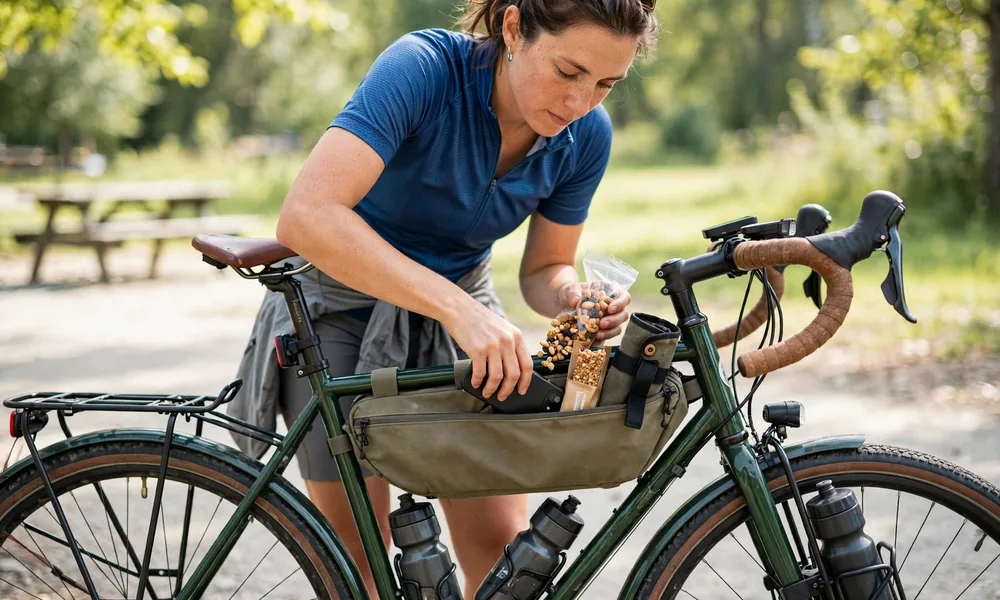
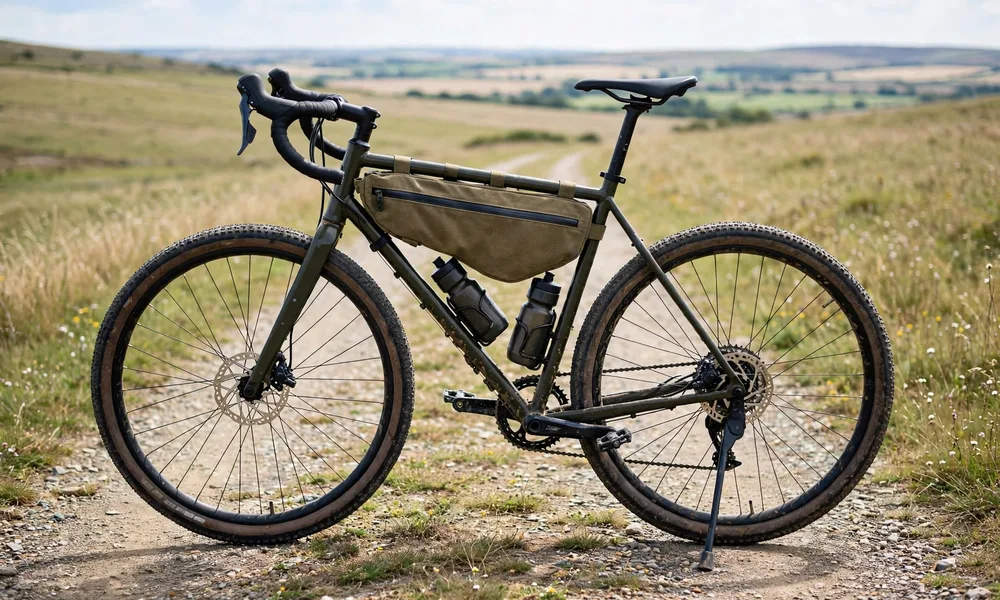
A frame bag is a soft bag, usually made from coated nylon or waxed canvas, that fastens to the three tubes of the frame triangle with straps, most often hook-and-loop straps that wrap around the top tube, the seat tube and the down tube. It is not a bag you wear, and it is not a container bolted to the bike. It lives in the triangle, and it comes in sizes from a slim half-litre pouch that holds a phone and a snack bar to a full-frame bag of five litres or more.
It helps to be clear about the neighbours, because cycling storage gets confusing fast. A saddle bag is a small wedge that straps under the saddle and carries a puncture repair kit, and our guide to saddle bags covers those. A bike basket is an open container fixed to the handlebars or the rear of the bike for carrying shopping, and our guide to bike baskets explains those. Panniers hang from a rack over the wheel and carry far more, while handlebar bags sit on the bars. A frame bag is none of these: it is the bag that fills the triangle, low and central, and it is the only storage that uses space the bike was already wasting.
The Three Shapes of Frame Bag
Full-frame bags fill the whole triangle, from the head tube to the seat tube, and they are the choice for bikepacking and long days out. They hold the most, often four to six litres, and they spread the load across the whole frame. The trade-off is that they take both bottle mounts, so you need to carry water another way.
Half-frame bags fill the top half of the triangle, leaving the bottom open for a bottle cage on the seat tube. They hold two to three litres, enough for a phone, wallet, keys, snacks, a multitool and a light jacket, and they are the best all-round choice for commuting and day rides.
Top-tube bags are the smallest of the family, a slim pouch that sits on the top tube just behind the stem. They hold well under a litre, they never touch your knees, and they are the best choice if your frame triangle is too small for a proper frame bag.
What to Look for Before You Buy
Fit comes first, and it is the one thing you cannot fix after the purchase. Measure the triangle: the length along the top tube, the height from the top tube down to the bottom bracket, and the angle of the down tube. Compare those numbers with the bag maker’s size chart, and leave at least a finger’s width of clearance at every edge.
Straps are the second thing to check. Wide hook-and-loop straps, at least 25 millimetres across, hold the bag still and spread the pressure so the bag does not saw at the paint. Three straps are usually enough for a half-frame bag, and five or six suit a full-frame bag.
Zips decide whether the bag is usable in real weather. A covered zip, one hidden under a storm flap, keeps rain out far better than an exposed zip, however good the fabric is. Two-way zips are worth having, because they let you open the bag a little from either end while you are riding.
Finally, think about what you will actually carry. A commuter needs a phone, keys, a wallet, a snack, and maybe a light lock, which is about two litres. A day rider adds a multitool, a spare tube, and a windproof jacket, which is about three litres. A bikepacker needs food for a whole day, a stove, and layers, which is five litres or more. Buying a bag that is too big is as bad as buying one that is too small: a half-empty bag flaps and sags, while a bag stuffed to bursting strains its zips.
Frame Bags Compared
| Bag type | Capacity | Best for | Bottles kept | Watch out for |
|---|---|---|---|---|
| Full-frame | 4–6 litres | Bikepacking, long days | None | Needs a big triangle |
| Half-frame | 2–3 litres | Commuting, day rides | One, on the seat tube | Check knee clearance |
| Top-tube | Under 1 litre | Phone and snacks | Both | Very little storage |
| Custom-fit | As measured | Unusual frames | Depends on design | Costs more, takes longer |
The Best Frame Bags by How You Ride
For commuting, the best frame bag is a half-frame bag of about two litres, with a covered zip on the drive side so you can reach it while riding, and a small internal pocket for keys so they do not scratch your phone. Check that the bag does not block the bike lock, so try the lock and the bag together before you commit.
For day rides and sportives, the best frame bag is a slim half-frame bag with a zip you can open one-handed while riding. The point of a frame bag on a day ride is access: food and a phone within reach without stopping the group. Look for a bag with a cable port, so a charging cable can run from a power bank inside the bag to a phone on the bars.
For bikepacking, the best frame bag is a full-frame bag, ideally one made to measure for your frame, with a large main zip, internal pockets, and a hydration port. Bikepackers pack the heavy, dense things in the frame bag, food, tools, a stove, and spare parts, because the low, central position keeps the bike stable on rough tracks.
How to Fit a Frame Bag Properly
Start with a clean, dry frame, and put a strip of clear protective tape on the tubes where the straps will sit. The straps will rub the paint over time, and the tape costs pennies while a repaint costs a fortune. Fit the bag empty first, with all the straps loose, and centre it in the triangle. Tighten the top-tube straps first, then the down-tube straps, then the seat-tube straps, pulling each one snug but not so tight that the bag puckers.
Then load it and ride. Pack the heavy things low and towards the bottom bracket, and the light, bulky things on top. Take a short ride and listen: a silent bag is a well-fitted bag, while any slapping or creaking means a strap is loose or the bag is the wrong size. Check your knees at the top of the pedal stroke, and check that you can still reach both bottle cages.
Mistakes That Ruin a Good Frame Bag
The most common mistake is buying by price instead of by fit. A cheap bag that is the wrong size is money wasted, while a well-fitting bag at twice the price will last for years. The second mistake is overloading it: a frame bag is not a pannier, and stuffing it until the zips strain will break the zip and bulge the bag into your knees. And do not forget security: a frame bag unclips in seconds, so never leave valuables in it when you park. Our guide to bike locks explains how to protect the bike itself.
Frame Bag Checklist
- Measure the frame triangle and compare it with the maker’s size chart before ordering.
- Check knee clearance at the top of the pedal stroke with the bag loaded.
- Choose wide straps, at least 25 millimetres, and fit protective tape under them.
- Pick a covered zip you can open with gloves on, ideally a two-way zip.
- Keep bottles, cables and the frame pump reachable with the bag fitted.
- Pack heavy items low, keep valuables in a dry bag, and take the bag off when you park.
Frequently Asked Questions
Will a frame bag fit my bike?
Most bikes with a normal diamond frame will take a half-frame bag, and medium and large frames will usually take a full-frame bag. Measure the triangle and check the maker’s size chart. Small frames, step-through frames and folding bikes often need a top-tube bag or a custom-made bag instead.
Do frame bags damage the frame?
They can rub the paint where the straps sit, especially on a dirty frame. Fit clear protective tape under the straps, keep the frame clean, and check the tape every few months. With tape fitted, a frame bag causes no damage at all.
Can I still use bottle cages with a frame bag?
With a half-frame bag, yes, you keep the seat-tube bottle. With a full-frame bag, no, both mounts are covered, so you need another way to carry water, such as a hydration pack or a handlebar bottle mount.
Are frame bags waterproof?
Most are water-resistant rather than fully waterproof, and the zip is the weak point. A bag with a covered zip will keep rain out in a shower, but for long wet rides, keep a phone and anything paper in a dry bag inside it.
How much can a frame bag carry?
A half-frame bag holds two to three litres, enough for a phone, keys, wallet, snacks, a multitool and a spare tube. A full-frame bag holds four to six litres, enough for a day of food and layers. They are not a substitute for panniers on a loaded tour.
Will a frame bag slow me down?
Barely. The weight sits low and central, where it affects handling least, and the bag is inside the frame, so it adds almost no wind resistance. A loaded frame bag is faster and more comfortable than the same weight in a rucksack on your back.
The Bottom Line
The best frame bag is the one that fits your triangle, stays silent, and keeps your essentials within reach without getting in the way. Measure first, buy a half-frame bag for commuting and day rides, a full-frame bag for bikepacking, and a top-tube bag if your frame is small. Fit protective tape, pack the heavy things low, and leave the bag on the bike so it is always ready.


