The Bike Pumps That Inflate Fast Without the Fuss in 2026
The bike pumps that inflate fast without the fuss in 2026 turn a flat tyre into a two-minute pause. A good pump moves a lot of air with every stroke, grips the valve first time, and shows an honest pressure reading. A bad pump leaks at the valve, wobbles on its base, and takes a hundred strokes to reach riding pressure.
Speed is only half the story: a pump that is a nuisance to use will be left at home. The best pumps balance speed against size, weight and simplicity: a floor pump at home, a mini pump on the bike, and a carbon dioxide inflator in a race pocket.
Key Takeaways
- A floor pump with a large barrel is fastest at home.
- A mini pump is a rescue tool: it gets you home.
- Check the valve fit: a head that grips both valve types properly saves the most time.
- A clear gauge matters more than a high maximum pressure: the right pressure is what makes a tyre ride well.
- Carry the pump you will use: a light mini pump beats a powerful one left in the garage.
What Makes a Bike Pump Fast
A bike pump is fast when it moves a large volume of air with each stroke, and that volume comes from the barrel. A wide, long barrel holds more air than a narrow, short one, so a floor pump can take a road tyre from flat to full in twenty strokes, while a slim mini pump might need a hundred. A wide barrel needs more force, so the fastest pumps use a long handle and a stable base.
The valve connection decides speed too, and it is where cheap pumps waste the most time. A good head seals tightly the first time, with a lever that locks it in place, and does not leak while you pump. A bad head slips off and hisses air out, forcing you to start again. Look for a head that fits both Presta and Schrader valves, because the day you borrow a bike, you will need the other type.
The gauge is the third thing. A tyre at the wrong pressure rides badly: too soft and it feels sluggish and risks a pinch flat, too hard and it bounces and grips less in corners. A clear gauge lets you stop at exactly the right pressure. One that reads ten pounds out is worse than none, so check it against a known gauge when new.
The Main Types of Bike Pump Compared
Every pump type is built for a different job.
| Type | Best for | Strength | Weakness |
|---|---|---|---|
| Floor pump | Home inflation and weekly top-ups | Fastest; most air per stroke | Too big to carry on a ride |
| Mini pump | Emergency repairs on the road | Light; mounts on the frame | Slow; many strokes needed |
| CO2 inflator | Racing and fast roadside fixes | Inflates a tyre in seconds | Single use per cartridge; no gauge |
| Hand pump | Touring and occasional use | Simple; reliable | Slower than a floor pump |
| Electric pump | Riders who want no effort | Push-button inflation to a set pressure | Needs charging; heavier |
| Shock pump | Mountain bike suspension | Precise high-pressure control | Only for suspension; not for tyres |
The floor pump is the best choice for home, because nothing else inflates a tyre as fast. A mini pump is the best choice for the road, because it is the pump you will have when the puncture happens.

Floor Pumps: The Fastest Way to Inflate at Home
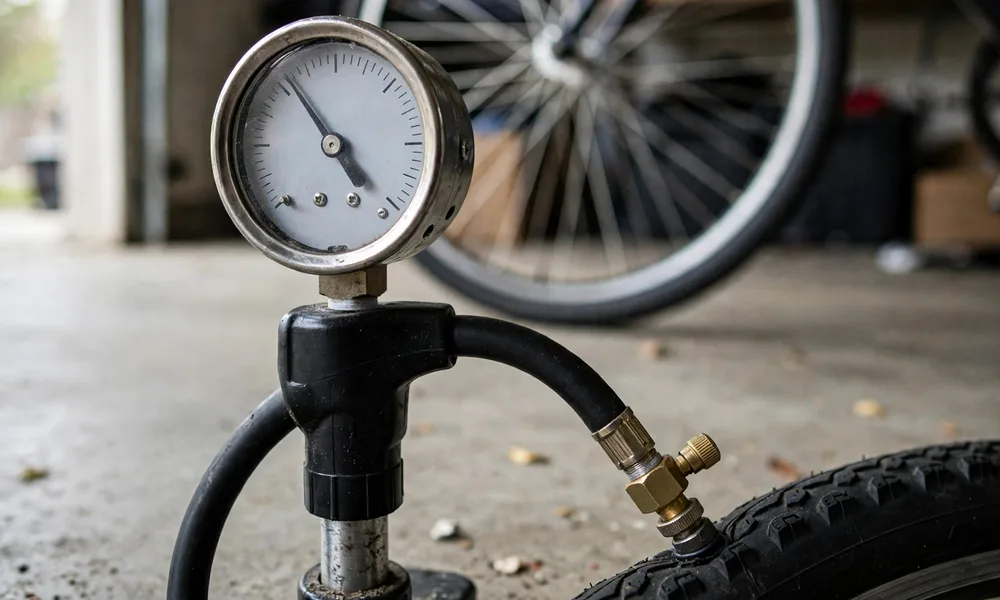
A floor pump stands on the ground, with a long barrel, a wide base, a tall handle and a hose that reaches the valve. You stand on the base, push the handle down with both hands, and your weight does the work, so inflating a tyre to sixty or eighty pounds takes seconds. The best have a base that stays put, a handle that grips well wet, and a hose long enough to reach the valve.
Buy a barrel matched to your tyres. A high-volume pump suits mountain bike and gravel tyres, which need a lot of air at low pressure. A high-pressure pump suits road tyres, which need less air at much higher pressure. Pick the one that matches the bikes you ride most.
A good floor pump lasts for years. Keep it dry, because a damp shed will rust the piston and stiffen the seals. Oil the piston occasionally, replace the head seal when it leaks, and keep the hose away from sharp edges.
Mini Pumps and CO2 Inflators for the Road
A mini pump is the pump you carry on the bike: it needs to inflate a tyre well enough to get you home, not perfectly. The best fit in a jersey pocket or clip to the frame, and are strong enough to reach riding pressure without falling apart. Look for a flexible hose: a rigid head puts sideways force on the valve and can snap it.
The weakness of every mini pump is speed: a small barrel moves little air per stroke, so reaching sixty pounds takes far longer than at home. Buy the longest one you are willing to carry, and practise using it at home before you need it on the road.
A carbon dioxide inflator is the fastest roadside option: a small cartridge of compressed gas fills a tyre in seconds. It is the choice of racers, but each cartridge is single use, so a second puncture leaves you with nothing, and there is no gauge, so you judge the pressure by feel. Carry a mini pump as well: a CO2 inflator is a brilliant first fix and a poor second one.
The Worst Bike Pumps: What to Avoid
The worst bike pump is the flimsy mini pump that comes free with a cheap bike. The barrel is thin plastic that flexes, the handle comes off in your hand, and the head does not seal on the valve. It looks like a pump in the shop, and it is useless on the road, the only place it matters.
The second failure is a head that fits only one valve type. Most road and gravel bikes use Presta valves, while most hybrids, mountain bikes and city bikes use Schrader, and a pump that only fits one will leave you stranded the day you ride the other bike. A dual head or reversible insert costs almost nothing.
The third failure is a gauge you cannot trust. One mounted at the bottom of the barrel, facing away from you, is hard to read while you pump, and a cheap gauge can read ten or fifteen pounds out. If you cannot see the pressure, you will stop too early and ride soft, or pump too far and risk blowing the tyre off the rim.
Getting the Pressure Right
Pressure is what makes a tyre work. The number on the side of the tyre is the maximum, not the recommendation, and the right pressure depends on your weight, the tyre width, and the surface. A heavier rider needs more, a wider tyre needs less, and a rough surface needs less than a smooth road. Start with the tyre maker’s recommendation, and adjust a few pounds at a time.
Check your tyres at least once a week, because they lose air slowly even without a puncture. A tyre that was perfect on Sunday can be soft by the following weekend, and riding on soft tyres is slower and more likely to end in a pinch flat. A floor pump makes the weekly check a one-minute job.
Your pump is part of a wider kit. A helmet protects you if a soft tyre causes a fall, and our guide to the best cycling helmets of 2026 covers which ones are worth wearing. Shoes that grip the pedals help you control the bike, and our guide to the best cycling shoes of 2026 explains what to look for. And if you ever need to inflate a car tyre, our guide to the best and worst tyre inflators of 2026 covers the devices built for that very different job.
Matching a Pump to Your Riding
A road rider needs a pump that reaches high pressure quickly, because road tyres run at sixty to a hundred pounds. A high-pressure floor pump with a narrow barrel is the right tool at home, and a longer mini pump with a hose is the right tool on the road. A mountain biker needs the opposite: a high-volume pump, because a fat tyre at thirty pounds holds far more air than a road tyre at eighty.
A commuter needs the pump that is there when the tyre goes flat on the way to work. A mini pump on the frame, a spare tube and tyre levers in a saddlebag get a commuter to work on time, and a floor pump at home is for the weekly top-up. A touring rider, days from a bike shop, needs reliability above all: a simple, sturdy hand pump with no parts to lose, and a spare seal in the repair kit.
Electric pumps suit riders who struggle with a floor pump or want the pressure set exactly with a button press. They are heavier and more expensive, and they need charging, so they are a convenience rather than a necessity. If you buy one, keep a mini pump as well, because a flat battery when you need it is worse than no pump at all.
Buying Checklist: Six Checks Before You Pay
- Push the pump head onto a valve in the shop and check it seals first time, with no hissing or slipping.
- Check the head fits both Presta and Schrader valves, or that the insert reverses without tools.
- Read the gauge from your pumping position and check the numbers are large and clear.
- Test the base: a floor pump should stand steady without rocking.
- Hold a mini pump at full extension and check the barrel does not flex.
- Confirm the carry: a mini pump should clip firmly to the frame or fit in your pocket.

Frequently Asked Questions
How often should I pump up my bike tyres?
At least once a week, and before any long ride. Tyres lose air slowly, and one that felt fine last week can be ten pounds soft today, which makes the bike slower and more likely to puncture.
What pressure should my bike tyres be?
It depends on your weight, the tyre width and the surface. Start with the tyre maker’s recommendation, then adjust a few pounds at a time.
Is a floor pump better than a mini pump?
For inflating at home, yes: a floor pump is far faster and easier to use. A mini pump is a rescue tool for the road. Most regular riders need both.
Can I use a car pump on a bike tyre?
Only with care: a car tyre inflator can over-inflate a bike tyre in seconds, because a bike tyre holds far less air, and some do not fit Presta valves.
Are CO2 inflators worth it?
For racing and fast roadside fixes, yes: they inflate a tyre in seconds. For general riding, carry a mini pump as well, because a CO2 cartridge is single use and a second puncture would leave you with no way to inflate it.
How do I know if my pump gauge is accurate?
Check it against a separate gauge you trust. If the readings differ by more than a few pounds, trust the separate gauge.
The Bottom Line
The bike pumps that inflate fast without the fuss are matched to the job: a floor pump at home, a mini pump on the bike, and a CO2 inflator for racing. Buy a head that seals first time, a gauge you can trust, and a barrel that suits your tyres, and check your pressure every week. The fastest pump is the one there, working, when the tyre goes flat.