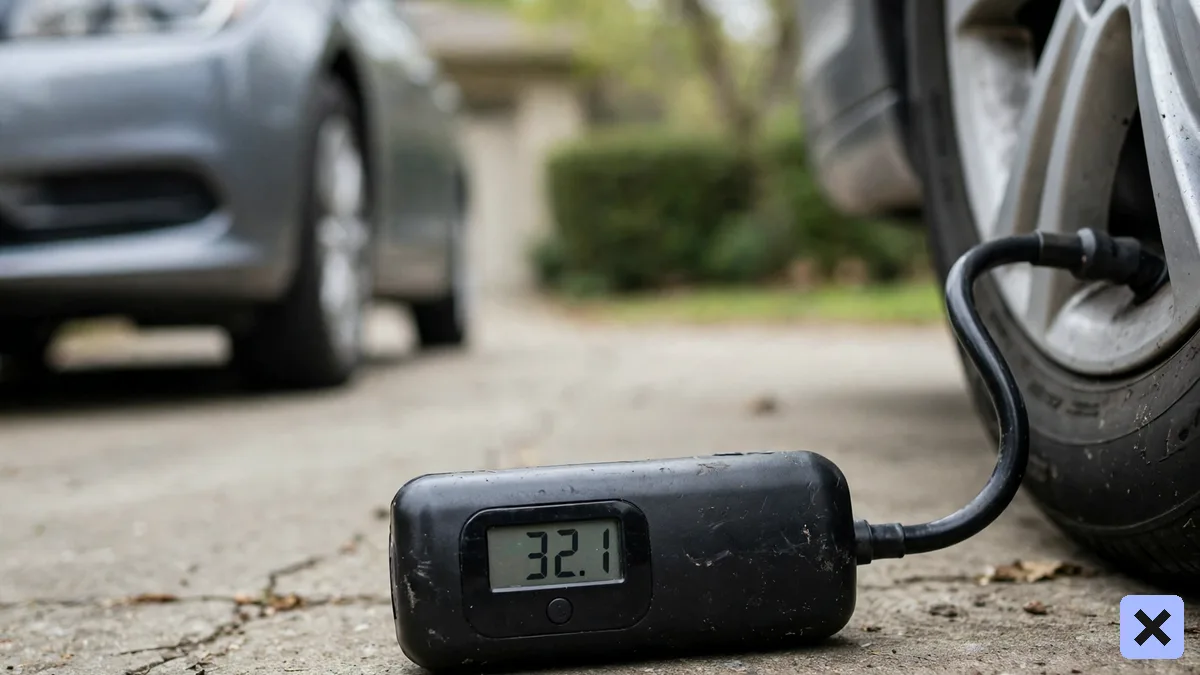
A tyre inflator is a small, unglamorous device that earns its keep on the worst day of your driving year. You notice it when a warning light comes on at the start of a long journey, when a tyre looks soft in a cold snap, or when you are parked on a hard shoulder with a slow puncture and a long way to go. In those moments, the difference between the best and the worst tyre inflators in 2026 is the difference between driving away calmly and waiting for help.
Most of the time, a tyre inflator sits quietly in the boot, forgotten for months. That is exactly why it matters so much when you need it. The best inflators are ready after months of neglect, pump a car tyre from soft to correct pressure in a few minutes, show an accurate reading, and switch themselves off at the pressure you set. The worst ones are flat when you need them, pump so slowly that you give up, or overheat and cut out halfway through the job.
How to Judge a Tyre Inflator Before You Buy One
A tyre inflator has one job, and it is a simple one: put air into a tyre, accurately and quickly, whenever you need it. The first thing to check is speed. A good inflator will take a standard car tyre from around 20 PSI to 32 PSI in roughly four to six minutes. A bad one can take fifteen minutes or more, and some never get there at all, because the motor overheats and shuts down before the tyre is full.
Accuracy matters just as much as speed. Tyres need the right pressure, not roughly the right pressure, and a gauge that reads several PSI out will leave you either under-inflated, which wears tyres out and wastes fuel, or over-inflated, which makes the car skittish and the ride harsh. The best inflators have a digital display you can read clearly, a preset function that stops the pump at the pressure you choose, and a reading that stays honest.
Power source is the third thing to think about. Some inflators plug into the car’s 12-volt socket, some run on a rechargeable battery, and some do both. A 12-volt model will run as long as the car is running, but its cable must be long enough to reach every tyre, and it is useless if the car battery is flat. A battery model is more convenient and can also inflate bicycle tyres, balls and air beds, but only if the battery holds its charge between uses. The best models do both, so you are covered either way.
The Best Tyre Inflators in 2026
The best tyre inflators of 2026 are compact, accurate and fast enough to make topping up a tyre a two-minute job rather than a chore. They have settled into a clear shape: a small, solid unit with a digital display, a preset pressure function, an auto shut-off, and a battery that holds its charge for months. The best of them also plug into the car, so you have two ways to power them, and they come with adapters for bicycles, balls and inflatables, which makes them useful well beyond the car.
What sets the best apart in practice is trust. You set the pressure you want, press start, and the machine does the rest, stopping exactly where you asked. You can check the reading against a separate gauge and find it agrees. You can inflate a tyre that has been slowly losing air over a cold week and be on your way in minutes, without a trip to a petrol station or a queue at an air pump that may or may not work.
Fast, Accurate Inflation
The best tyre inflators move air quickly. Their motors are efficient enough to bring a car tyre up to pressure in a few minutes without overheating, and they keep that pace across all four tyres if you need them to. That matters more than it sounds: a slow inflator is not just inconvenient, it is a safety risk, because a tyre that takes twenty minutes to inflate is a tyre you will leave soft, and a soft tyre is a dangerous one. Accuracy is where the best inflators really earn their price. A good digital gauge reads within one PSI of the true pressure, and the auto shut-off stops the pump at the number you set.
Power That Is There When You Need It
The best tyre inflators solve the power problem by giving you options. A dual-power model runs from its own rechargeable battery for quick top-ups and from the car’s 12-volt socket for longer jobs, so you are never stuck because one source has let you down. The battery itself is the key detail: the best batteries hold their charge for months in a cold boot, charge over USB-C, and show you clearly how much charge is left. A good inflator also comes with a cable of three metres or more, long enough to reach the rear tyres from the front socket without straining.

Built to Live in a Boot
A tyre inflator lives in a boot, which is a hard place to live. It gets knocked around by luggage, baked in summer, frozen in winter, and forgotten for months at a time. The best inflators are built for that life: a solid case that does not crack, a hose that does not kink and split, a valve connector that screws on firmly and stays on, and a motor that can run for ten minutes without overheating. You can throw one in the boot, forget about it, and find it working six months later, and that is exactly the test it has to pass.
The Worst Tyre Inflators in 2026
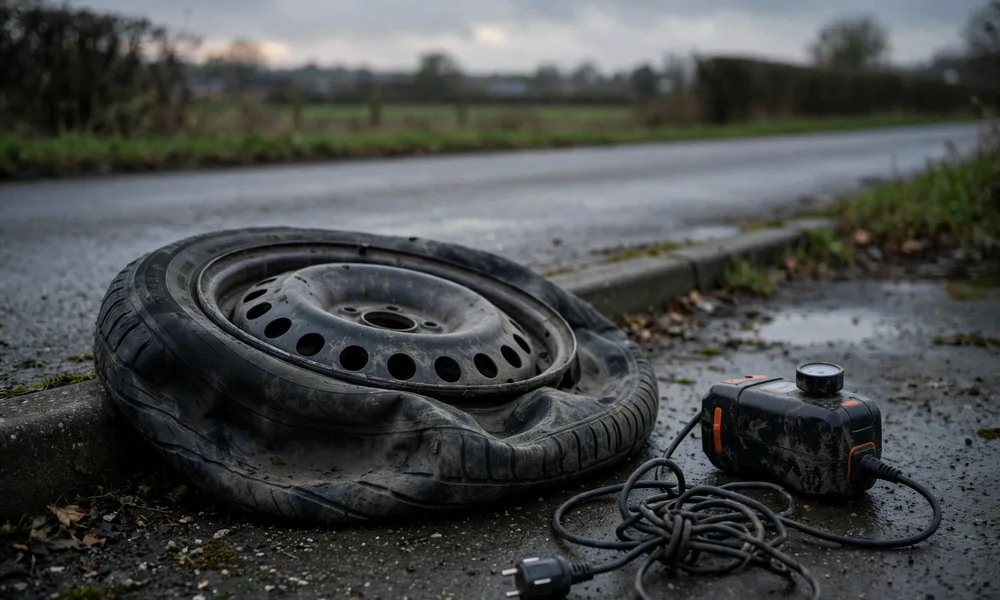
The worst tyre inflators in 2026 are still easy to buy, because they are cheap and they look like the good ones in a photo. They are small, they have a display, and the listing promises fast inflation and pinpoint accuracy. Then you use one, and the truth comes out in stages. First the hose leaks where it meets the valve, so the pressure climbs slowly and the reading jumps around. Then the motor gets hot and the pump slows to a crawl. Then it cuts out, and you are left with a tyre that is still soft and a pump that needs ten minutes to cool down before it will try again.
Slow Pumping and Overheating
The most common failure in a cheap tyre inflator is speed, or rather the lack of it. A weak motor moves air slowly, and because it is working hard, it gets hot. Most cheap inflators have a duty cycle of ten minutes or less, which means they must rest and cool down after a short run, and some will cut out without warning in the middle of a tyre. If you are inflating one tyre from flat, that can mean two or three cooling breaks and half an hour of waiting. Overheating also damages the inflator itself: the motor wears out faster, the seals harden, and the hose becomes brittle, so each use is a little worse than the last.
Gauges You Cannot Trust
A tyre inflator with an inaccurate gauge is worse than no gauge at all, because it gives you confidence you should not have. The worst inflators have gauges that read several PSI high or low, or that drift as the pump warms up, so the number on the display bears only a passing resemblance to the pressure in the tyre. Some have analogue dials so small and vaguely marked that reading them to within two PSI is guesswork. The lack of an auto shut-off makes it worse: without it, you must watch the gauge and stop the pump yourself, and if the gauge is wrong, you will stop at the wrong pressure.

Dead Batteries and Short Cables
Battery-powered inflators fail in a particular way: they are dead when you need them. The cheapest batteries self-discharge quickly, especially in a cold boot, so a pump you charged in summer is flat by winter. Some take eight hours or more to charge, and some use a special charger that is easy to lose and hard to replace. Corded inflators fail differently but just as surely. A cable shorter than three metres will not reach the rear tyres from the front socket, and a short hose means the unit dangles from the valve or sits at an angle that strains the connection and leaks air.
Best vs Worst: Head to Head
Put the best and the worst tyre inflators side by side and the comparison is stark. A good inflator brings a car tyre from 20 to 32 PSI in about five minutes; a bad one takes fifteen or more and may cut out before it finishes. A good inflator reads within one PSI and stops automatically at the pressure you set; a bad one reads several PSI out and leaves you guessing. A good inflator runs from a battery that holds its charge for months and from the car’s socket as well; a bad one is flat after a few weeks in the boot, or tethered to a cable too short to reach the back tyres.
The difference shows up in the details too. A good inflator has a hose that reaches comfortably, a connector that seals firmly, and a case that survives life in a boot. A bad one has a hose that kinks, a connector that leaks, and a case that cracks the first time a suitcase lands on it. Price tells part of the story: the cheapest inflators are cheap because every component is the cheapest available. The sensible choice is a well-reviewed mid-priced model with a digital display, auto shut-off, dual power and a maximum pressure of at least 100 PSI.
The Verdict
The verdict is clear: buy the best tyre inflator you can sensibly afford, and do not trust the cheapest ones with your safety. The best tyre inflators in 2026 are fast, accurate, reliable and built to survive in a boot, and they turn a stressful roadside moment into a five-minute job. The worst ones are slow, inaccurate and unreliable, and they fail in the exact situation where you need them most, which makes them a false economy at any price.
If you remember only one rule, make it this: check the accuracy, the speed and the power source before you check the price. An inflator with an honest digital gauge, an auto shut-off, a run time long enough to fill a tyre from flat, and a battery that holds its charge is worth paying for. An inflator that fails any one of those tests will let you down, however good its numbers look on the box. The best tyre inflator is the one that works on the worst day, not the one that looks best on a shelf.
Who Each Side Is For
The best tyre inflators are for anyone who drives, but they are essential for some drivers more than others. They suit people who drive long distances, who travel with children, who drive in winter when cold air drops tyre pressures overnight, and anyone who has ever had a slow puncture miles from help. They also suit cyclists and families, because the same machine inflates bicycle tyres, balls and air beds through the summer. The worst tyre inflators, frankly, are for no one. If you already own one, test it now, on your own driveway, before you need it. For a wider look at avoiding trouble on the road, see our guide to the worst road trip mistakes, and families choosing car gear may also want our comparison of the best vs worst car seats. If you are planning summer driving, our guide to the best minivans for summer driving is worth a read too.


