A car seat is the one piece of baby gear you hope you never have to test for real, and the one you use more than any other. From the first drive home from the hospital to the school run years later, your child will spend thousands of hours strapped into it. A good car seat holds a small body snugly through every bump and turn, fits your car without a fight, and still feels comfortable after an hour on the motorway. A bad one wobbles on its base, twists its straps every time you buckle up, and leaves a tired child wriggling against hard edges.
This comparison puts the best car seats of 2026 head to head against the worst, judging them the way a parent actually lives with them: how safely they hold a child, how easy they are to install properly, how comfortable they are on long journeys, and how long they genuinely last before your child outgrows them.
Key Takeaways
- The best car seats install firmly with almost no movement at the belt path, and the harness tightens smoothly every time.
- Rear-facing for as long as possible is the safest way to travel, so a seat with generous rear-facing limits is worth paying for.
- Deep side wings, a sturdy shell, and energy-absorbing foam matter far more than cup holders or fancy fabrics.
- The worst seats are hard to install correctly, have straps that twist constantly, and are outgrown far sooner than claimed.
How Car Seats Actually Protect Your Child
A car seat works by spreading the force of a sudden stop across the strongest parts of a small body and keeping the head, neck, and spine moving together as one unit. In a rear-facing seat, the whole shell cradles the child and absorbs the impact, which is why safety experts recommend keeping children rear-facing for as long as the seat allows, usually well past their second birthday. When a seat fits properly, there is less than an inch of movement where the belt or anchor holds it, and the harness lies flat with no slack you can pinch.
There are three main types, and most families will use all of them over time. Infant carriers clip in and out of a base, so you can lift a sleeping baby from the car without waking them, but they are outgrown quickly, often before the first birthday. Convertible seats start rear-facing and turn forward-facing later, lasting from birth to around four years, which makes them the best value for most families. All-in-one seats add a high-back booster stage and can stretch to ten years or more, although they are heavier and bulkier to move between cars. If your family spends a lot of time on the road, our guide to the best minivans for winter driving in 2026 looks at the roomiest family cars, and a wide back seat makes fitting any car seat far easier.
Three checks matter more than any feature list. First, the install: a seat that moves more than an inch side to side at the belt path is not fitted tightly enough, however expensive it was. Second, the harness: straps should sit at or below the shoulders when rear-facing and at or above when forward-facing, with the chest clip level with the armpits. Third, the fit for your child: the top of the head should stay at least an inch below the top of the shell when rear-facing, and the harness should pass the pinch test, where you cannot pinch a fold of strap at the collarbone.

The Best Car Seats of 2026
The best car seats of 2026 earn their place by doing the unglamorous things brilliantly: they install tightly in minutes, the harness adjusts without a wrestling match, and a child can sit in one for two hours without complaining. They are built around a rigid shell, honest weight and height limits, and fabrics that survive sick days and spilled snacks.
Best for most families: a convertible seat with a rock-solid install
For a normal family car, a well-built convertible seat is the best all-round buy. It starts rear-facing for a newborn, with an infant insert that fills the extra space, and turns forward-facing when your child is big enough, usually around age two or three. The best ones use a push-button anchor system or a belt lock-off that removes the guesswork from installation: you thread the belt, pull it tight, and the seat barely moves. The harness adjusts from the front with one smooth pull, the headrest slides up with the straps so you never have to rethread them by hand, and the whole thing is wide enough for a growing toddler without being so wide that three seats cannot fit across.
Best for newborns: an infant carrier with a stay-in-car base
For the first year, nothing beats an infant carrier on a base that stays in the car. You click the carrier in, hear it lock, and you are done, which matters at two in the morning when you are carrying a sleeping baby and a bag in the rain. The best carriers have a load leg that braces against the car floor and reduces rotation in a crash, a base with a clear level indicator so you can see at a glance that the angle is right, and a canopy that actually covers a sleeping baby instead of flapping uselessly. The carrier itself should be light enough to carry one-handed, because a heavy carrier plus a growing baby quickly becomes a two-handed job that strains your back and your patience.
Best for long-term value: an all-in-one seat that grows with your child
If you would rather buy once and forget about car seats for years, an all-in-one seat is the sensible choice. It covers the infant stage, the forward-facing toddler years, and the high-back booster stage, often up to ten years of use. The best ones keep generous rear-facing limits, so a child can stay rear-facing until three or four, and the booster mode positions the adult belt correctly across the hips and shoulder instead of letting it ride up onto the stomach. The trade-off is size and weight: these seats are heavy, and moving one between cars is a chore best avoided. Buy one per car if you can, fit it once, and leave it there.
The Worst Car Seats of 2026
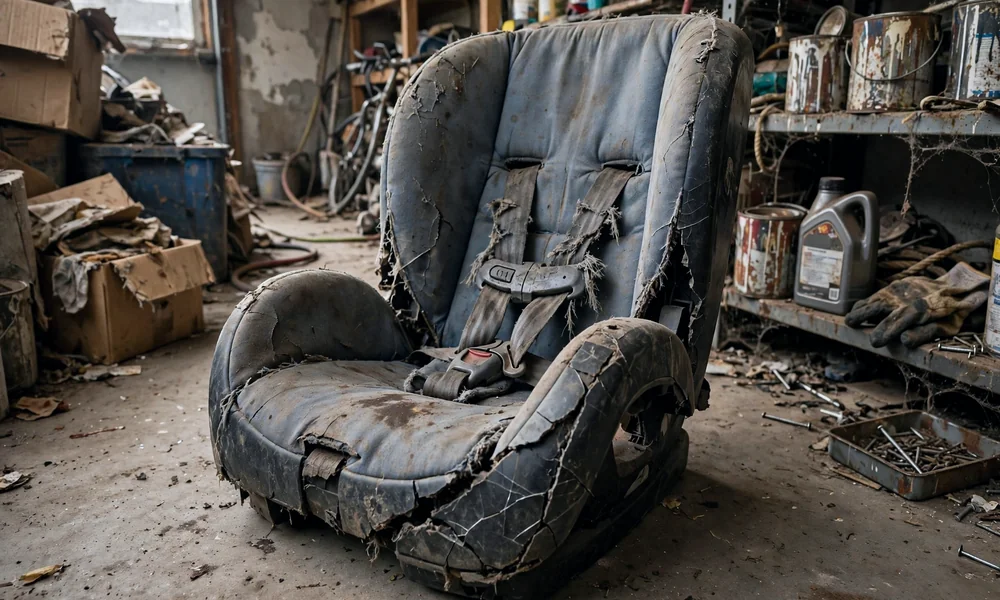
The worst car seats look convincing in the shop and fall apart in daily use. They promise high weight limits and easy installation on the box, then fight you every time you try to fit them. The harness twists, the buckle sticks, the padding flattens within months, and the seat itself shifts on its base no matter how hard you pull the belt.
Worst for safety: seats that never sit still
The single most dangerous fault a car seat can have is an install that will not stay tight. Some seats have belt paths that are too narrow to thread properly, anchor connectors that are stiff and hard to release, and bases that rock on the vehicle seat because the shape does not match. Parents end up driving with a seat that slides an inch or two on every corner, and in a sudden stop that movement becomes force on a small body. A seat that cannot be fitted tightly in your car is a bad seat for your car, whatever the reviews say.
Worst for daily use: twisting straps and sticking buckles
A car seat you dread using is a car seat you will use badly. The worst offenders have harness straps so thin and floppy that they twist every time you take your child out, so each journey starts with you untwisting straps with cold fingers. The buckle sticks in winter, the chest clip slides down on its own, and the headrest adjustment needs two hands and a knee to move. These are the seats that end up handed down or sold on, not because the child outgrew them, but because the parents gave up on them.
Worst value: seats outgrown far sooner than claimed
Some seats claim to last from birth to twelve years and manage barely half of that. The rear-facing limit is low, so a tall toddler is forward-facing far too early. The shell is short, so the child’s head reaches the top while they are still small. The booster mode is an afterthought, with belt guides that let the adult belt sit across the stomach instead of the hips. Parents who bought for the long term find themselves shopping for a replacement seat within two years, having paid a premium for a promise the seat could not keep.

Best vs Worst Head to Head
Put the two sides next to each other and the difference is obvious within a minute of fitting them. The best seat clicks into its base with a firm thunk, the belt pulls tight without a struggle, and a shake at the belt path moves it less than an inch. The worst seat needs three attempts, a knee in the base, and a second person pulling the belt, and it still rocks. The best harness lies flat, adjusts with one hand, and stays where you put it. The worst harness twists, the chest clip wanders, and the buckle needs a thumb pressed hard enough to hurt. On the road, a child in the best seat sits upright, supported, and quiet. A child in the worst seat slumps to one side, complains about the hard edges, and wriggles out of position.
Comfort tells the same story. The best seats use dense foam that holds its shape for years, fabrics that breathe in summer, and padding placed where a child’s head and hips actually rest. The worst use thin foam that flattens in months, shiny fabrics that make a child sweat, and padding that looks generous in the shop but compresses to nothing under a real child. When families travel with little ones, keeping them comfortable matters beyond the car too, and our round-up of the best travel pillows for toddlers in 2026 covers the small things that make long journeys easier for small passengers.
The Verdict
The best car seats win this comparison by a wide margin, and the reason is simple: they make safety easy. A seat that installs tightly, adjusts smoothly, and fits a growing child for years does not rely on you being an expert every morning. It protects your child on the rushed school run as well as on the careful weekend drive, because the good habits are built into the design. The worst seats demand expertise, patience, and strength just to reach a basic level of safety, and on a bad day they do not get it. Buy a convertible from a maker with a reputation for honest limits, try it in your own car before you commit, and keep your child rear-facing for as long as the seat allows. That is the whole secret, and it is worth every penny.
Who Each Is For
The best car seats are for any parent who wants the morning routine to be boring, in the best sense of the word: click in, tighten, drive. They suit first-time parents who are still learning the harness, families with two cars who need a seat that moves without a fight, and anyone planning a second child, because a well-built seat survives the hand-me-down. The worst seats, if they suit anyone at all, suit only a car that is rarely used for short trips with an older child, where the seat is fitted once and never moved. For a wider look at how the rest of your car’s safety kit compares, our head-to-head on the best vs worst dash cams of 2026 shows the same pattern: the good ones are easy to fit and forget, and the bad ones fight you every day.