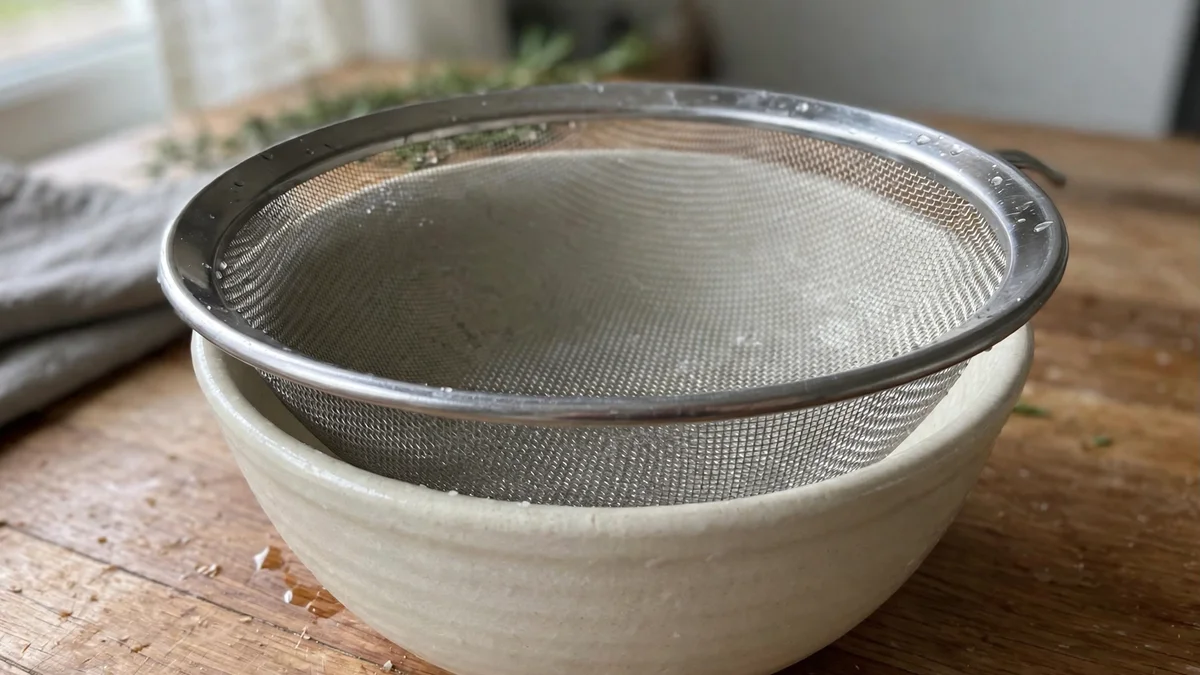
The best mesh strainers in 2026 are the quiet workhorses of the kitchen: a fine woven bowl that rinses quinoa without losing a grain, strains stock until it runs clear, and sifts flour without a cloud of dust over the counter. They cost little, take up almost no space, and make a dozen small tasks faster and cleaner when the mesh is right. When the mesh is wrong, the same tool is a nuisance — grains slip through, stock drains at a crawl, or the rim bends the first time it meets a heavy pot.
This guide covers the mesh strainers worth owning, how fine the mesh should be for each job, which materials last, and the sizes that fit the bowls you already have. There is no single perfect strainer for every kitchen — the right answer is usually two or three, each chosen for the task it does best.
Key Takeaways
- Fine mesh is the default for most kitchens: it holds rice, quinoa, lentils and berries, and strains sauces and stock cleanly.
- Match the strainer to the bowl it will sit over — a rim that rests securely is worth more than a fancier mesh.
- Stainless steel mesh with a welded frame lasts longest, survives the dishwasher, and does not stain or hold smells.
- Buy two sizes, not one: a medium strainer for everyday rinsing and a small one for tea, cocktails and single servings.
- Clean the mesh straight after use with a brush under running water; dried food in a fine weave is the main reason strainers get thrown away.
What a Mesh Strainer Actually Does
A mesh strainer is a bowl or cone of woven wire mesh on a frame, with a handle and usually a small hook on the opposite side. You pour through it and the mesh holds back the solids while the liquid passes, or you hold food in it under the tap while the water runs through. The weave is the whole point: unlike a colander with punched holes, the mesh is many fine wires, so the openings are small, even and consistent.
That fineness decides what it is good at. A mesh strainer rinses small grains that would fall through a colander, catches the tiny seeds and pulp in a sauce, and sifts dry ingredients evenly. It is not built to hold a full pot of boiling pasta — that is the colander’s job — and it is not a sink strainer, which sits in the drain and catches food before it reaches the pipes.
Most kitchens use one for the same handful of jobs: rinsing rice, quinoa and lentils; washing berries; straining stock, sauces and custards; sifting flour, cocoa and icing sugar; and straining loose-leaf tea or a shaken cocktail.
The Main Types of Mesh Strainer
Mesh strainers look alike at a glance, but the shape, depth and mesh size change what each one is good for. Buying the wrong shape is the most common disappointment.
Fine-Mesh Bowl Strainers
The standard fine-mesh bowl strainer is the one to buy first. It is a shallow to medium-depth bowl of tightly woven mesh, usually between 15 and 20 centimetres across, with a long handle. The fine mesh holds the smallest grains and seeds, so it is the right choice for rinsing quinoa, straining sauces and sifting flour. The trade-off is speed: very fine mesh drains slowly with thick liquids, so a sauce needs a stir to keep it moving.
Medium-Mesh Strainers
A medium-mesh strainer has visibly larger openings and drains much faster. It suits washing vegetables, rinsing beans and straining pasta for one or two people, where speed matters more than catching the tiniest particles. It will not hold quinoa or fine seeds, so it is a complement to a fine strainer rather than a replacement for one.
Conical Strainers (Chinois)
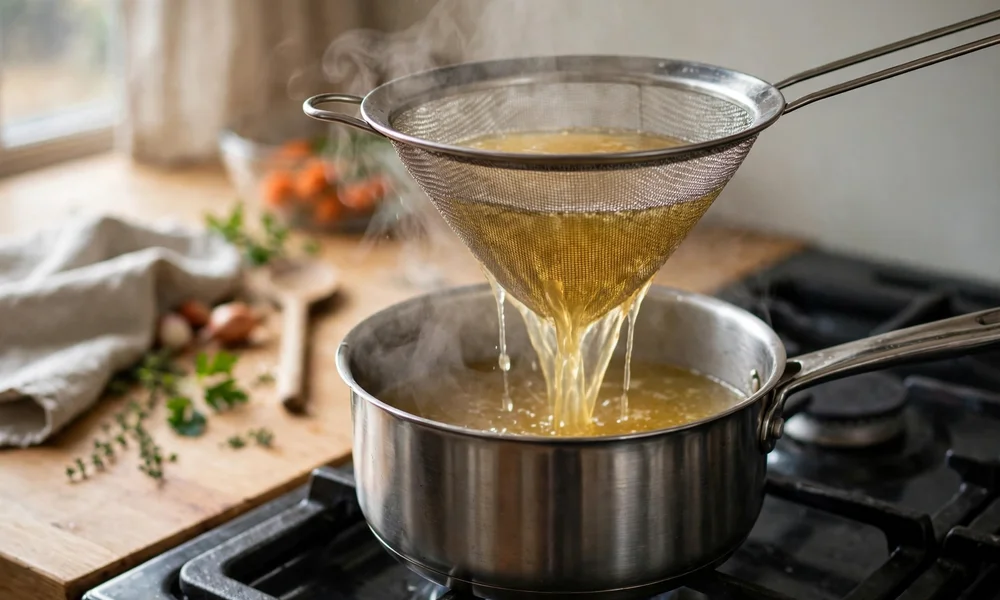
A conical strainer, often called a chinois, is a deep cone of fine mesh, made for straining stocks, soups and sauces in volume. The cone shape gives the liquid a large mesh area to pass through, so it drains faster than a flat bowl of the same fineness, and you can press solids against the sides with a ladle to extract the last of the liquid. It is the best choice for anyone who makes stock regularly, and overkill for anyone who does not.
Small Tea and Cocktail Strainers
Small strainers, around 7 to 10 centimetres across, are made for single servings: straining loose-leaf tea into a cup, catching ice shards and pulp from a shaken cocktail, or dusting cocoa over a dessert. They are cheap, they last for years, and they are the strainer most people reach for daily once they own one.
Mesh Size: Fine Enough to Hold, Open Enough to Drain
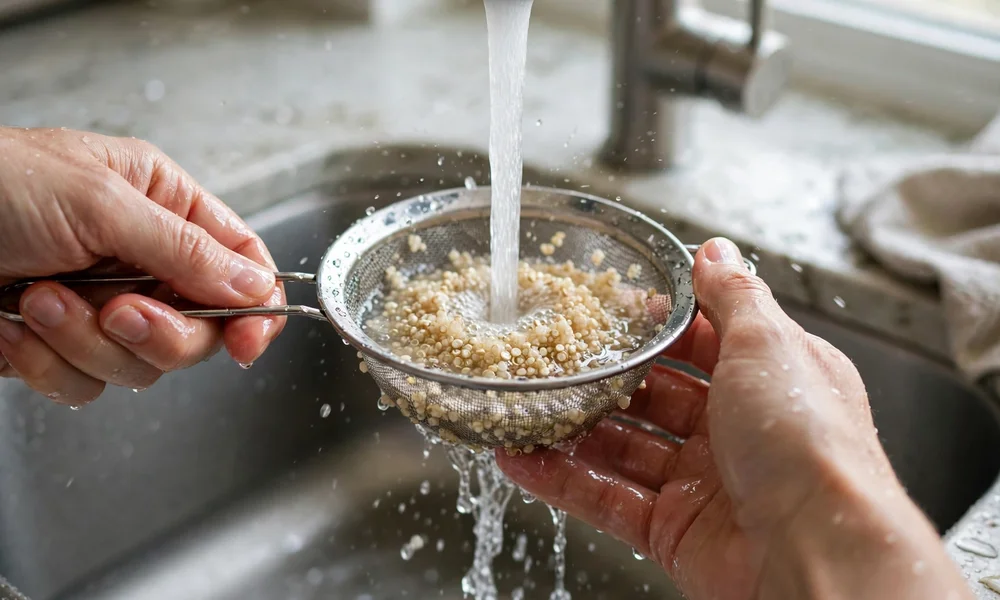
Mesh size is the single most important choice, and it is a trade-off you cannot escape. Finer mesh catches more but drains more slowly and clogs faster; coarser mesh drains quickly but lets small food through. For a first strainer, go fine: most everyday jobs involve small food, and a fine strainer that drains slowly is still useful, while a coarse strainer that loses the quinoa is not.
Test the mesh before you buy if you can. Hold it up to the light: the weave should be even, with no gaps, kinks or loose wires. A grain of rice is a useful test at home — if it slips through easily, the strainer will not hold rice, lentils or small seeds. Depth matters too: a shallow bowl drains fast but spills if you pour too fast, while a deeper bowl holds a full rinse without spilling.
Materials and Build: What Lasts
Stainless steel is the best material for a mesh strainer, and it is not close. The mesh resists rust, survives the dishwasher, does not stain from turmeric or tomato, and does not hold smells. Look for mesh welded to the frame rather than crimped or glued: welded joints do not loosen, trap food, or come apart after a year of hot water. The frame should feel rigid when you press the rim — a frame that flexes will eventually let the mesh sag, and a sagging mesh drains unevenly and tears sooner.
Plastic mesh strainers are cheaper, but the mesh stretches, the frame warps in hot water, and stained plastic never looks clean again. Nylon mesh is gentler on non-stick pans but the least durable. Wooden handles feel good but need drying after every wash; a steel handle with a hanging hole is the most practical choice.
Mesh Strainers Compared
| Type | Best for | Mesh | Drain speed | Watch out for |
|---|---|---|---|---|
| Fine-mesh bowl | Rinsing grains, straining sauces, sifting | Very fine | Slow | Clogs with thick sauces |
| Medium-mesh bowl | Washing vegetables, rinsing beans | Medium | Fast | Loses quinoa and small seeds |
| Coarse strainer | Draining vegetables and pasta | Coarse | Very fast | Poor for fine work |
| Conical chinois | Stocks, soups and sauces in volume | Very fine | Medium | Takes up storage space |
| Small tea and cocktail | Tea, cocktails, dusting cocoa | Very fine | Slow | Too small for cooking jobs |
How to Choose the Right Mesh Strainer
Start with the jobs you actually do. If you rinse rice or quinoa most days, a fine-mesh bowl strainer around 18 centimetres across is the first buy. If you make stock or soup weekly, add a conical strainer. If you drink loose-leaf tea or make cocktails, a small fine strainer pays for itself in a month.
Size the strainer to the bowl it will sit over, not to the drawer it will live in. A strainer that rests on the rim of your usual mixing bowl, with the mesh hanging clear of the bottom, drains properly and stays steady while you pour. One that is too small drops into the bowl and sits in the liquid; one that is too large will not sit flat and rocks as you pour. Check our guide to the best mixing bowls if you are replacing both at once. For draining a full pot of pasta, a colander is the better tool: its punched holes and deep bowl are built for volume and boiling water, while a mesh strainer is built for fineness and control.
Cleaning and Care
Clean a mesh strainer straight after use, while food is still wet. Rinse it under running water from both sides, then brush the mesh gently with a soft brush to lift anything caught in the weave. Turn it over and rinse again from the back, because food pushed through from the front often sits on the underside. Shake off the water and leave it to air-dry mesh-side up, or hang it by the handle so air reaches both sides.
For dried-on food, soak the strainer in hot soapy water for ten minutes, then brush again — never scrape the mesh with a knife or a scouring pad, which snags the wires and opens gaps in the weave. Bicarbonate of soda paste lifts stains and smells, and white vinegar removes limescale in hard-water areas. Most stainless steel strainers can go in the dishwasher, but hand-washing keeps the mesh tighter for longer.

Before You Buy: A Quick Checklist
- Mesh is fine enough to hold a grain of rice, with an even weave and no loose or kinked wires.
- The rim rests securely on the bowl you use most, with a hook or tab that stops it tipping.
- The frame is rigid stainless steel with welded joints, and the mesh does not sag when pressed.
- The handle is comfortable with a full bowl of wet food, and has a hole for hanging.
- The size matches your cooking: medium for everyday rinsing, small for tea and cocktails.
- It cleans easily under running water with a brush, and dries fully when hung up.
Frequently Asked Questions
What is the difference between a mesh strainer and a colander?
A mesh strainer uses fine woven wire mesh for small, precise jobs: rinsing grains, straining sauces, sifting flour. A colander uses punched holes in a deep bowl for volume: draining a full pot of pasta or a large batch of vegetables.
What size mesh strainer should I buy first?
Buy a fine-mesh bowl strainer around 18 centimetres across first. It handles a batch of rice or a bowl of berries, is small enough for one hand, and is fine enough for sauces, sifting and small grains.
Can I put a mesh strainer in the dishwasher?
Most stainless steel strainers can go in the dishwasher, but hand-washing is better: a quick rinse and brush straight after use keeps the mesh clean and tight for longer.
How do I clean dried food out of a fine mesh strainer?
Soak it in hot soapy water for ten minutes, then brush the mesh gently from both sides. For stains or smells, use bicarbonate of soda paste, or white vinegar for limescale. Never scrape the mesh with a knife or scouring pad.
Is a conical chinois strainer worth it?
It is worth it if you make stock, soup or sauces in volume a few times a month: the cone gives the liquid a large mesh area, so a fine strain drains faster. If you rarely make stock, a fine bowl strainer does the same job more slowly and takes up far less space.
Why does my strainer let quinoa through?
The mesh is too coarse. Quinoa is one of the smallest grains cooked at home, and only a fine mesh holds it, so use a fine-mesh bowl strainer for quinoa, rice and small seeds.
The Bottom Line
The best mesh strainers are simple tools chosen for a specific job: fine mesh for grains, sauces and sifting, medium mesh for fast rinsing, and a conical strainer for stock in volume. Stainless steel with a welded frame will last for years; a cheap strainer with thin mesh and a weak frame will bend, clog and need replacing. Buy the sizes that match your cooking and clean the mesh straight after use.