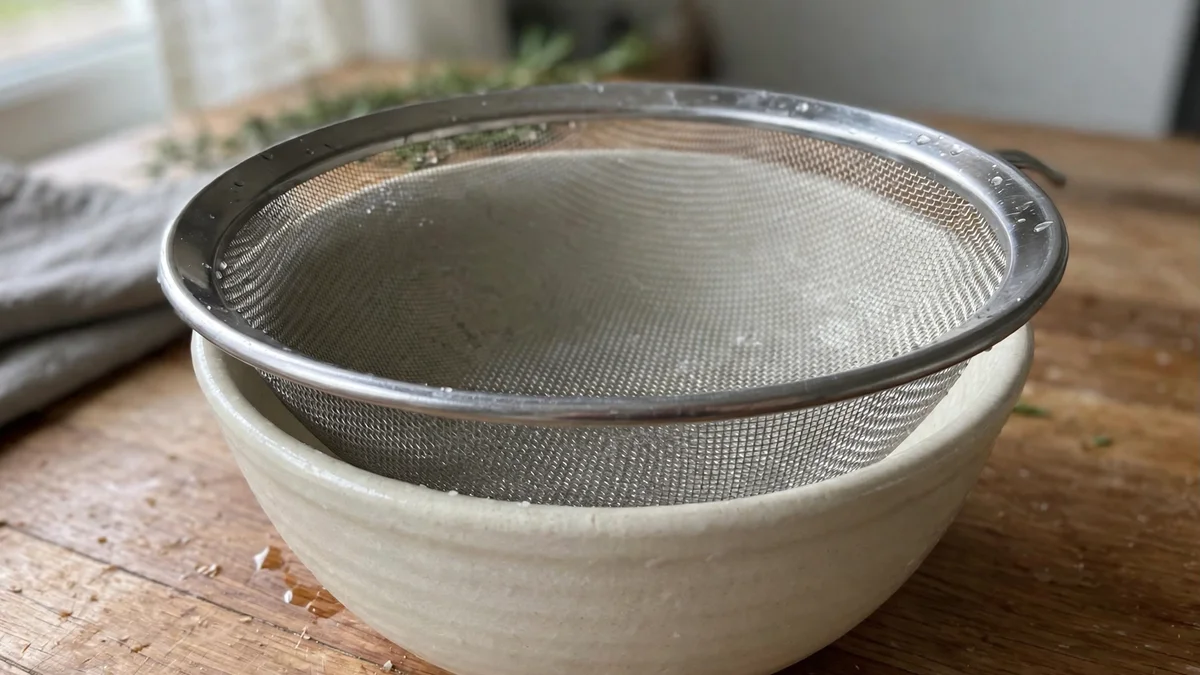
Sink Strainers That Keep Drains Clear in 2026
A good sink strainer is the cheapest plumbing insurance in your kitchen. It sits in the drain, catches the rice, peelings and coffee grounds that would otherwise slide down the pipe, and saves you from slow drains, bad smells and plumber call-outs. The difference comes down to mesh size, fit and material.
This guide explains how sink strainers work, which types suit which sink, how to measure your drain so the strainer sits flat, and how to keep it clean without it becoming the smelliest thing in the kitchen. No brand matters as much as the basics: a strainer that catches small food, lets water through quickly and lifts out easily beats an expensive one that does none of those things.
Key Takeaways
- Measure the drain opening before you buy: a strainer that is even a few millimetres too small will let food slip past it.
- Fine mesh catches rice, coffee grounds and small peelings, but it needs emptying more often than a coarse perforated strainer.
- Stainless steel lasts longest and survives the dishwasher; silicone rims grip better and protect ceramic sinks from chips.
- Empty the strainer after every meal, not once a day, or trapped food starts to smell within hours.
- With a garbage disposal, use a strainer with a stopper or a removable basket, and never push food through it on purpose.
Why a Sink Strainer Earns Its Place
Every kitchen drain collects food whether you mean it to or not. Rinsing plates, washing vegetables and scraping pans all send small pieces down the plughole, and they build up: grease coats them, they stick to the inside of the pipe, and the narrowing gap slows the water until the sink drains like a blocked bathtub. A strainer breaks that chain at the start, catching solids before they reach the trap.
The second job is stopping smells. Food trapped in a drain trap rots, and the smell comes back up through the plughole every time you run the tap. A strainer you can lift out and empty puts the food in the bin or compost instead. It also protects a garbage disposal, because bones and stringy peelings dull its blades and jam its motor.
There is a money argument too. A plumber clearing a blocked kitchen drain costs many times what a decent strainer costs, A strainer will not fix a drain that is already blocked, so if your sink already drains slowly, read our guide to drain cleaners that clear slow sinks fast before fitting a new one.
The Sink Strainer Types Worth Knowing
Every sink strainer is a variation on the same idea: a perforated cup or basket that sits in the drain and lets water through while holding food back. The differences are in the holes, the rim and how it seals.
Mesh basket strainers
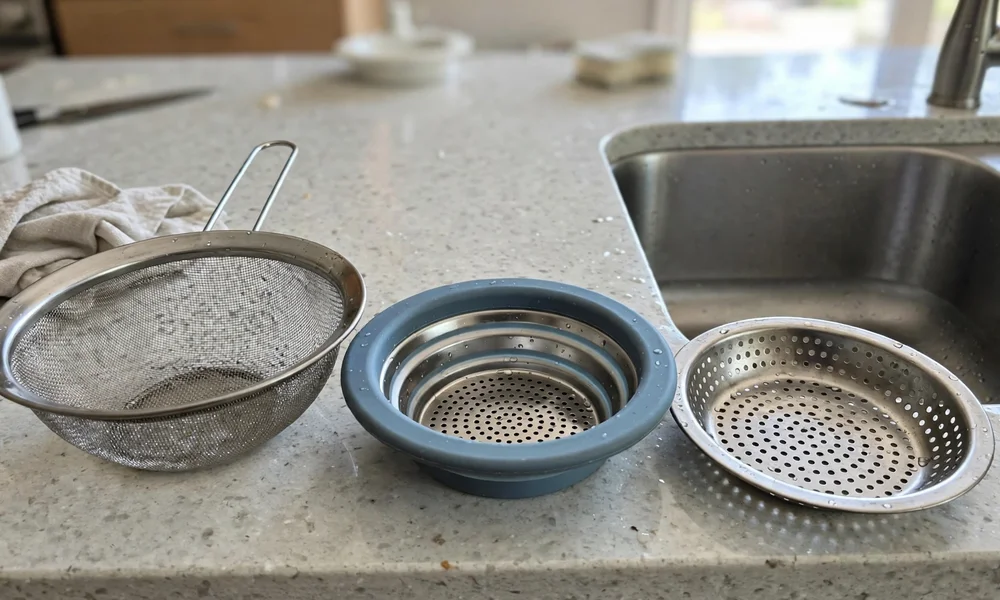
A mesh basket is a fine wire cup with a rim that rests on the drain opening and a small handle on top. It catches almost everything, including rice, coffee grounds and tiny peelings, which is why it is the most popular type. The trade-off is speed: fine mesh slows the water, so empty it often rather than buying a coarser one.
Perforated steel strainers
A perforated strainer is a solid steel cup with punched holes instead of woven mesh. It drains faster than mesh and is easier to wipe clean, because food does not tangle in the weave, though it will let very small particles through. It suits households that mostly rinse plates and wash vegetables.
Silicone rim strainers
A silicone rim strainer has a flexible silicone edge around a steel or plastic basket. The rim grips the drain, seals better than plain metal and will not chip a ceramic or enamel sink, and it stays cooler to touch when hot water has been running. The downside is staining from turmeric and tomato, and cheap silicone going floppy after a year of hot water,
Pop-up and stopper strainers
A pop-up strainer combines a basket with a stopper: press it down to seal the drain and fill the sink, press again to open it and let the water drain through the basket. It is the most convenient type if you often fill the sink for washing up. Springs and seals wear out, though, and a pop-up that no longer seals drains slowly even when you want the sink full.
Disposable mesh bags
Disposable mesh bags fit over a small frame in the drain and are thrown away when full. They catch very fine particles and never need scrubbing, which suits rented homes. They are also the most wasteful and expensive option over a year, and they can tear on a sharp bone, sending everything into the drain at once.

Mesh Size: Fine Enough to Catch, Open Enough to Drain
Mesh size is the most important choice, and it is a trade-off you cannot escape. Finer mesh catches more but drains more slowly and clogs faster; coarser mesh drains quickly but lets small food through. Go fine if rice, lentils and coffee are regulars; go medium perforated if you mostly rinse plates and wash salad.
Test the mesh against a grain of rice: if a grain slips through easily, the strainer will not protect your drain from the foods that cause most blockages. If water pools above the basket while the tap runs at normal pressure, the mesh is too fine for your sink and you will end up lifting the basket mid-rinse, which defeats the point.
Depth matters as much as mesh size. A shallow basket fills quickly and needs emptying after every plate, while a deeper basket holds a whole meal’s worth of scraps without slowing the drain. Deep baskets suit large households; shallow ones suit small sinks, where a deep basket would sit too low and block the trap.
How to Measure Your Sink Drain
Most strainers fail because they were bought by guesswork. Sinks look standard, but drain openings vary, and a strainer a few millimetres too small will rock, rattle and let food slip around its edge, while one too large sits proud of the sink base and catches every plate. Measuring takes two minutes and a ruler.
Measure the diameter of the drain opening across its widest point, then the depth from the sink base to the top of the drain flange, because a basket deeper than the drain will jam against the trap. If your sink has a garbage disposal, measure with the disposal flange in place.
Also check the shape of your drain. Most kitchen drains are round, but some older sinks have square or oval drains, and a round strainer will never seal in a square hole. For those, look for a flat silicone strainer mat or a square basket. If you are replacing a sink as well, our guide to the best kitchen sinks of 2026 explains which sink and drain combinations make strainers easiest to fit and clean.
Sink Strainers Compared
| Type | Catches finest food | Drain speed | Cleaning effort | Best for |
|---|---|---|---|---|
| Mesh basket | Excellent | Moderate | Moderate | Rice, coffee and small scraps |
| Perforated steel | Good | Fast | Easy | Busy sinks and heavy use |
| Silicone rim | Good | Moderate | Easy | Ceramic sinks and uneven drains |
| Pop-up stopper | Good | Moderate | Moderate | Filling the sink for washing up |
| Disposable mesh bag | Excellent | Moderate | None | Rentals and short-term use |
The table shows why there is no single best strainer. A mesh basket wins on catching power, perforated steel wins on speed and toughness, and silicone wins on sealing and sink protection.
Cleaning a Sink Strainer Without the Smell
A strainer only works if it is cleaned, and cleaning it is a thirty-second job that most people put off until it smells. Empty the basket into the bin or compost after every meal, while the food is still wet and loose. A quick rinse under the hot tap and a shake is enough for daily cleaning,
For a strainer that already smells, soak it in hot water with white vinegar for twenty minutes, then scrub the mesh with an old toothbrush and rinse well. Avoid bleach on stainless steel, because it can pit the surface, and let the strainer dry fully before putting it back, because a damp basket left in a dark drain is where mould and smells start.
The habit that matters most is emptying the basket before it is full. A strainer that is half full still drains; a strainer packed solid becomes a plug, and water backs up into the sink while you are still rinsing.
Mistakes That Make Strainers Useless
The most common mistake is buying the wrong size and living with the gap: food slips around a loose strainer exactly where you cannot see it, and the drain blocks just as fast as if you had no strainer at all. The second mistake is never emptying it, because a full strainer is a plug, not a filter. Third, never pour grease down the sink: it passes straight through any mesh, so pour cooled grease into a jar or the bin.
Another mistake is using a strainer as a mini colander. A sink strainer is not a colander that drains pasta fast without the mess, and lifting a basket full of hot pasta water will scald your fingers and dump the food back into the sink. Do not push food through the strainer either: if it does not pass on its own, it belongs in the bin.
Your Sink Strainer Checklist
- Measure the drain diameter and depth before you buy anything.
- Pick fine mesh for rice and coffee, perforated steel for speed and toughness.
- Check the rim seals flat against the sink base with no rocking or gaps.
- Make sure the basket lifts out easily with one hand, even when full.
- Empty the basket after every meal and rinse it under the hot tap.
- Soak it weekly in hot water and vinegar, and replace it when the mesh tears or rusts.
Frequently Asked Questions
Do sink strainers fit all kitchen sinks?
No. Drain openings vary in diameter and depth, and some older sinks have square or oval drains. Measure your drain and compare it with the strainer’s stated size,
Will a sink strainer slow my drain?
A clean strainer slows the water only slightly. A full or clogged strainer slows it a lot, so empty the basket after every meal and the drain will run as fast as it did without one.
Can I use a sink strainer with a garbage disposal?
Yes, and you should, because it stops bones and stringy peelings jamming the disposal. Use a strainer made for disposal sinks, with a basket that sits above the disposal flange, and never push food through it on purpose.
How often should I replace a sink strainer?
A stainless steel strainer lasts years if the mesh stays intact. Replace it when the mesh tears, the rim warps, the handle breaks or rust appears at the joints
Are silicone strainers better than steel ones?
Neither is better in every way. Silicone seals better and protects ceramic sinks, while steel lasts longer, handles boiling water and cleans more easily. Choose silicone for an uneven or ceramic sink, and steel for a busy sink.
Can I put a sink strainer in the dishwasher?
Most stainless steel strainers are dishwasher safe, and a weekly cycle keeps them clean. Skip the hottest cycle for silicone rim models, which can warp a thin rim.
The Bottom Line
A sink strainer is a small, cheap piece of kit that does a job nothing else in the kitchen does: it stops food reaching your drains in the first place. Measure your drain, pick the right mesh, empty the basket after every meal, and replace it when the mesh tears.