
A dash cam is the quietest witness you will ever own. It sits on your windscreen, records every mile, and says nothing until the day you need it: a crash that was not your fault, a hit-and-run in a car park, a claim your insurer wants proof for. The best dash cams of 2026 do that job without fuss. The worst ones promise the same protection and fail at the exact moment they matter.
This guide puts the best dash cams against the worst, side by side, so you can tell them apart before you buy. If you want the winners only, our roundup of the best dash cams 2026 compares the strongest cameras for different drivers. A dash cam is only one of the gadgets on your windscreen, so our guide to the best car phone mounts covers the other thing most drivers stick to the glass. And if you want a camera for more than the car, our roundup of the best cameras 2026 covers stills and video away from the road.
Key takeaways
- Choose at least 1440p resolution, and 4K if you often drive at motorway speed or want the clearest number plates.
- Night vision matters more than smart features, because many incidents happen in low light.
- Use a high-endurance memory card made for continuous recording, and format it regularly.
- Parking mode only works well with a proper hardwire kit or a dedicated battery pack.
- The worst dash cams fail silently: check that yours is actually recording, every week.
How a dash cam actually works
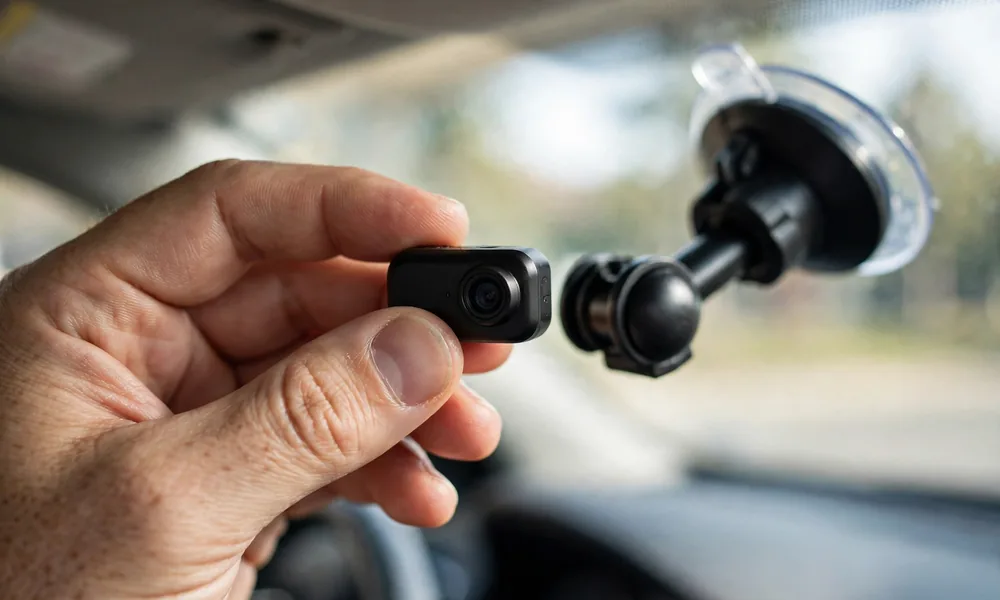
A dash cam is a small video camera that mounts on your windscreen and records continuously while you drive. It writes video in short clips, usually one to three minutes long, onto a memory card. When the card fills up, it overwrites the oldest clips, so it never stops recording. When its sensor detects a sudden jolt, it locks the current clip so it cannot be overwritten. That locked clip is the one you need after a crash.
Most cameras draw power from the car: a cable to the 12-volt socket, or a hardwire kit to the fuse box. Some have a small battery or a capacitor that keeps them running for a few seconds after the power cuts, long enough to save the final clip. The better ones add a rear camera, GPS, and a parking mode that wakes the camera if someone bumps your car while it is parked.
The best side: what the best dash cams get right
The best dash cams are boring in the best way. You fit them once, forget about them, and they record every journey without a beep, a freeze, or a missed clip. The video is sharp, the camera survives summer heat and winter cold, and the file you need is easy to find. That reliability is the whole product.
Video sharp enough to read a number plate
Resolution is the headline number, but the sensor and the lens matter just as much. A well-made 1440p camera often beats a cheap 4K camera that compresses its video too heavily. What counts is whether you can read a number plate at motorway speed, in bright sun and in shade. Before you buy, watch sample footage from the exact model and look at how it handles number plates, not just how pretty the road looks.
Frame rate matters too. Most cameras record at 30 frames per second, which is fine for normal driving. A wide field of view, around 140 degrees, covers the road ahead and the lanes beside you without bending the edges of the picture into a fisheye curve. And a good camera starts recording within seconds of the car starting.
Night vision that works in the dark
Many incidents happen early in the morning, late in the evening, or on poorly lit roads, so night performance is where good cameras earn their price. The best models use larger sensors that gather more light, and they control glare from headlights without turning the rest of the picture black. They also handle the sudden change from a dark road to a brightly lit petrol station without washing out for several seconds.
Cheap cameras fail here first. Their night footage is a dark smear with blown-out headlights, and a number plate is unreadable beyond a few feet. Some add infrared lights or a night mode that looks impressive on the box but does little through a windscreen. The test is simple: watch night sample footage from the model you are considering. If you cannot read a plate on a car two lengths ahead, the camera is not good enough.
Reliable recording, day after day
A good dash cam records in all weathers without overheating, freezing, or corrupting its memory card. The best use a capacitor instead of a lithium battery, because capacitors cope with a hot windscreen in summer far better than batteries do. They also use a proper file system that survives being switched off mid-write, and they warn you loudly if the memory card fails, rather than recording nothing in silence.
The memory card is part of the camera, not an afterthought. Use a high-endurance card made for continuous recording, not a cheap card meant for a phone. Format it in the camera every month or two, and replace it once a year. The best cameras make this easy, with a clear warning if the card fails. The worst give you no warning at all, and you only discover the card died when you need the footage.
The worst side: where the worst dash cams go wrong
The worst dash cams are not always the cheapest. Some cost as much as a good camera and fail just as fast, because the money went into a big screen and a long feature list rather than the sensor and the build. What they share is a pattern: impressive numbers on the box, disappointing footage on the road, and a habit of failing quietly, so you only find out when it is too late.

Soft video that proves nothing
The most common complaint about bad dash cams is the video. At motorway speed a number plate is a white blur. In bright sun the sky is blown out and the shadows are black. In rain the picture smears. The camera records, the file plays, and it proves nothing, because the one detail that matters is unreadable. This is usually a small sensor, a cheap plastic lens, or heavy compression squeezing the video into tiny files to save card space.
Some bad cameras make things worse with fake resolution. They claim 4K on the box but record at a lower resolution and stretch the picture to fit. The file says 4K, the picture looks like 720p, and no setting fixes it. The only defence is sample footage from the exact model, watched at full size. If the seller shows no sample footage, that is your answer.
The camera that stops recording and never tells you
A dash cam that stops recording is worse than no dash cam at all, because it gives you false confidence. The worst offenders freeze on a hot day, corrupt the memory card, or fill the card with locked clips until there is no space left, then quietly stop. Some show a red light that looks exactly like the recording light. Others beep once and go silent. You drive for weeks believing you are covered, and you are not.
Heat is the usual killer. A cheap lithium battery swells in a hot car, the camera shuts down, and one day it never starts again. A good camera uses a capacitor and is rated for the temperatures a windscreen actually reaches in summer. If reviewers mention random shutdowns, believe them.
Parking mode that drains your battery or does nothing
Parking mode sounds simple: the camera watches your parked car and records if someone bumps it. In practice, cheap cameras do it badly. Some draw power until the car battery is flat, and you come back to a car that will not start. Some wake up too late, and record the empty street after the other car has gone. Some record all night on every passing cat and fill the card before morning.
Good parking mode needs a proper hardwire kit with a voltage cut-off, which stops drawing power before the car battery gets too low, or a dedicated battery pack that charges while you drive. It also needs a buffered mode, which saves the seconds before the impact, not just after it. If a camera claims parking mode but works only from the 12-volt socket with no cut-off, skip it.
Best vs worst: head to head
Put the two sides next to each other and the pattern is clear. The best dash cam reads a number plate at motorway speed, day and night, from a large sensor and a high bitrate. The worst records a blur from a small sensor and heavy compression, and calls it 4K. The best camera uses a capacitor, survives a hot windscreen, and warns you if the card fails. The worst uses a cheap battery, shuts down in the heat, and fails in silence.
The gap shows in the extras too. The best camera has parking mode with a voltage cut-off and buffered recording, a mount that stays put, and an app that simply works. The worst drains your car battery, wakes up too late, and falls off the glass. None of these differences is visible in a glossy product photograph. All of them are obvious within a week of real driving.

The verdict
The best dash cams of 2026 are genuinely good value. A well-made camera costs less than a single insurance excess, and it can save you far more than that the first time someone lies about what happened. The worst dash cams are a false economy: they look like the good ones, cost nearly as much, and fail at the exact moment they are needed. Video quality, night performance, and silent reliability matter far more than screen size or feature count.
If you remember one rule, make it this: buy the camera for the worst day, not the best one. Watch its night footage and check its heat rating. A camera that works on a sunny afternoon is easy to make. A camera that works on a wet night in January is the one worth your money.
Who each side is for
The best dash cams are for anyone who drives most days: commuters, parents doing the school run, delivery drivers, and anyone who has ever had a claim argued over. They suit people who want to fit a camera once and forget it, knowing the footage will be there if it is ever needed. If that is you, spend a little more on a camera with a good sensor, a capacitor, and a proper hardwire kit. It will pay for itself the first time it matters.
The worst dash cams suit almost nobody, but they do have one honest use: a very cheap camera for a car that rarely leaves the driveway can still record a bump in a car park. If you drive short, slow, daytime trips and only want a basic record, a basic camera may be enough, as long as you accept its limits and check every week that it is still recording. For everyone else, the worst side of this market is a false economy.
Choose carefully, watch real sample footage, and fit the camera properly. The best dash cam is the one you never think about until the day you need it. The worst is the one you think about on that day, usually while you are explaining to your insurer why the footage is missing.


