
A dining table is the hardest-working piece of furniture most homes own. It is where breakfast, homework and long dinners with friends all happen. A good one disappears into daily life and simply works. A bad one nags at you every single day: it wobbles when you lean on it, it shows every ring and scratch, it seats four people in theory and two in comfort, and it slowly turns the room it sits in into a place you avoid.
This comparison puts the best dining tables of 2026 head to head against the worst, judged the way a real household would judge them: by sitting down, eating, spilling something, clearing up, and living with the thing for a year. The same honest testing sits behind our comparison of the best and worst dining chairs of 2026, because a table is only half the meal, and the chair you sit on decides whether you linger or get up with a sore back.
Key Takeaways
- Stability comes first: a table that rocks or wobbles when you cut bread has already failed, whatever it cost.
- Solid wood ages well and forgives mistakes; thin veneer and hollow cores show damage fast and cannot be repaired.
- Measure the room, then the people: a table that seats six on paper often seats four in comfort, and chairs need room to pull out.
- The finish matters more than the look: a surface that shrugs off hot plates, red wine and homework glue will outlast a prettier one.
- Buy the shape for your life, not the photograph: round tables suit small rooms and conversation, long rectangles suit big families and hosting.
How to Judge a Dining Table Before You Buy
Most dining table regrets start in the shop, where a table looks wonderful under bright lights and nobody sits at it properly. The first test is the simplest and the one most buyers skip: put both hands on the edge and lean. Then press down on one corner, then the opposite one. A good table stays still. A bad one rocks, creaks, or flexes under your weight, and that movement will only get worse as the joints loosen over the years. If it is a display model, sit at it. Your knees should clear the apron underneath, your elbows should not crowd your neighbour, and your plate should sit flat without sliding towards you.
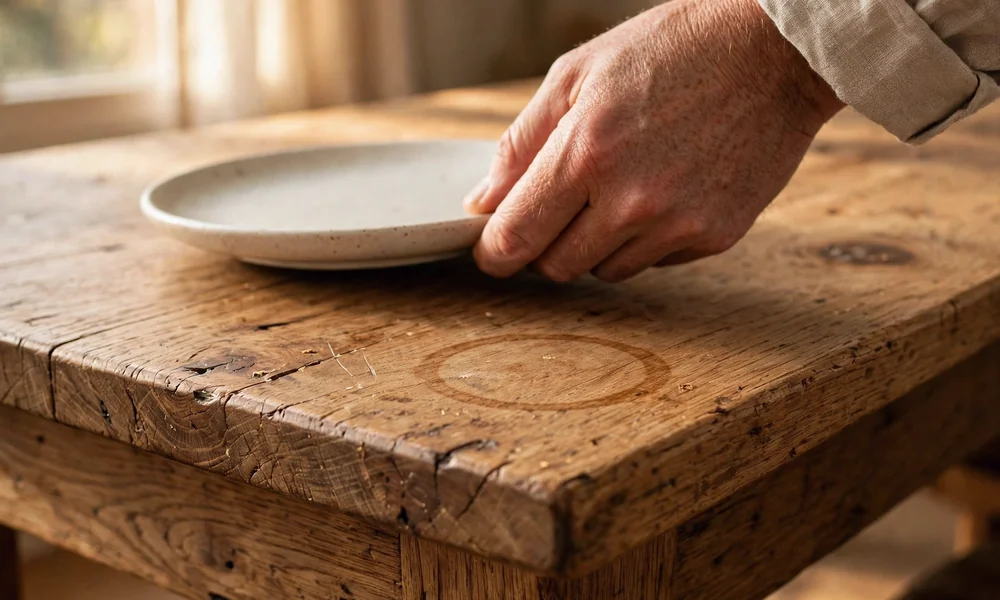
The second test is the finish. Run your hand across the top. It should feel smooth but not plasticky, and you should be able to see the grain rather than a printed picture of grain. Ask what the surface is made of, in plain words, and do not accept vague answers. Solid wood, properly sealed, can be sanded and oiled back to life after a decade of family dinners. A thin veneer over chipboard cannot: once water gets under the edge, it swells, and once the veneer chips, the pale board underneath shows forever. Glass looks clean in the shop and shows every fingerprint, crumb and smear at home.
The third test is size, and it is the one people get wrong most often. Measure the room, then subtract the space chairs need. A person needs about sixty centimetres of width at the table and at least seventy-five centimetres behind their chair to push back and stand up. A table that fits the room on a tape measure can still trap everyone against the wall at dinner. Think about how you actually eat: a family of four that hosts six at Christmas needs an extending table, not a bigger fixed one, and a couple in a flat needs a table that works for two on a Tuesday, not a banquet they will never hold.
Shape and Size: What Actually Works
Rectangular tables are the default for a reason. They seat the most people for their footprint, they push against a wall when space is tight, and they suit long rooms. The best rectangles of 2026 have solid legs at the corners, a top thick enough not to flex, and an apron that leaves room for knees. The worst have legs set so far in that the people at the ends sit with a leg between their feet, or a top so thin that a heavy casserole in the middle makes it bow. A rectangle also rewards honesty about numbers: a table sold as seating eight will seat eight only if everyone is slim, friendly and happy to share elbow room, and most families will find six comfortable and eight a squeeze.
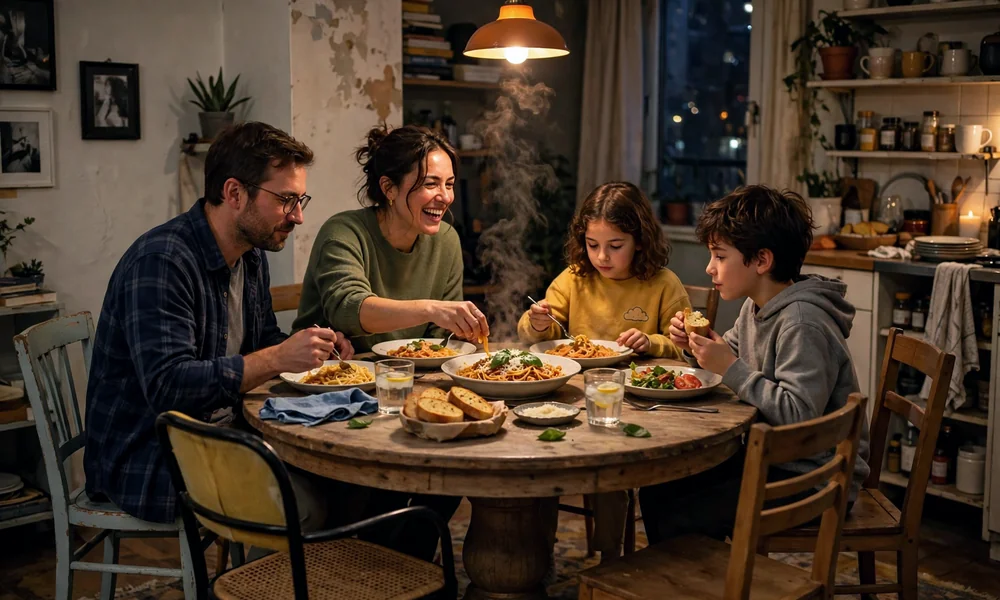
Round tables are the better choice for small rooms and for conversation. Nobody sits at the head, everyone can see everyone else, and a round table fits into a square corner of a kitchen in a way a rectangle never will. The best round tables of 2026 have a sturdy central pedestal that does not tip when someone leans on the edge, and a top wide enough for plates, glasses and a serving dish in the middle. The worst have a pedestal base too light for the top, so the whole table tips when a child climbs on, or a top so small that dinner becomes a relay race to the sideboard.
The Best Dining Tables of 2026
The best dining tables of 2026 share a small set of habits, and none of them is about fashion. They are stable, honestly made and easy to live with. Their tops are thick, their joints are tight, and their finish can survive a hot plate, a spilled glass of red wine and a child doing homework with a glue stick. They do not punish you for actually eating at them. A good table is a working surface first and a piece of decoration second, and the best makers understand that order.
What really sets the best tables apart is how they age. Solid oak, walnut and ash develop a patina: small marks that blend into the grain and tell the story of the house, rather than damage that ruins the piece. A solid wood top can be sanded and re-oiled in an afternoon and look new again, which is why the best tables of 2026 are often the ones that will still be good tables in 2036. The same thinking runs through the rest of the room: our comparison of the best and worst rugs of 2026 covers the floor beneath the table, and a rug that survives dropped food and dragged chairs matters just as much, because the dining room is judged as a whole, not piece by piece.
The Worst Dining Tables of 2026
The worst dining tables of 2026 share a pattern too, and it usually starts with a photograph. The table looks wonderful online: a dramatic marble-effect top, slim metal legs, a price that seems too good to be true. Then it arrives, and the top is a printed picture of marble on a thin board, the legs are hollow tubes that flex when you lean on them, and the whole thing rocks on a flat floor because the legs were never properly levelled. In real life, it behaves like a prop.
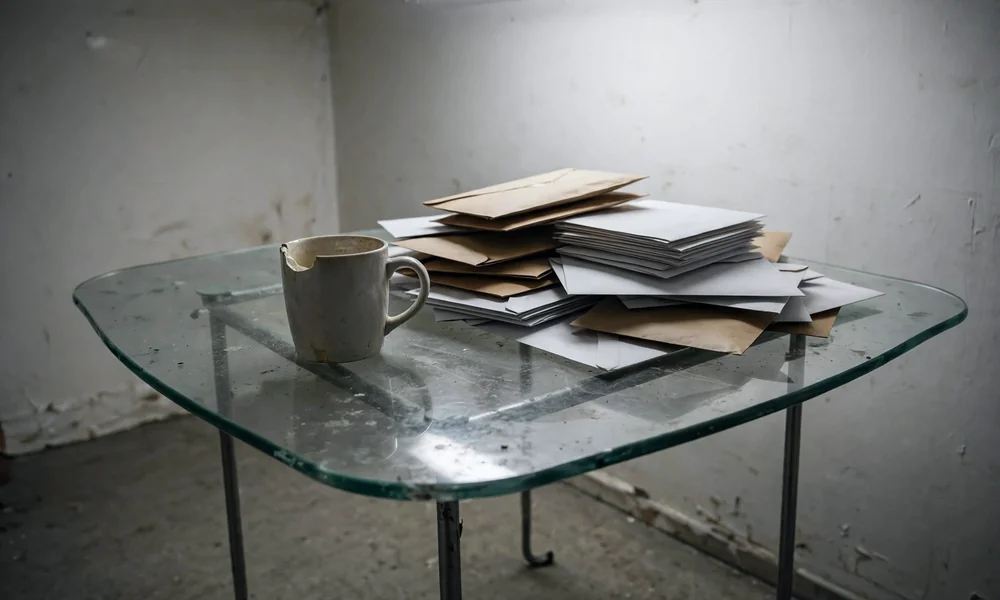
The worst tables also hide their weakness until it is too late. A hollow-core top sounds fine when you tap it in the shop and feels alarmingly light when you lift it at home. A veneer edge peels after the first wipe with a damp cloth. A glass top shows every fingerprint within an hour of cleaning, and a cheap white top stains the first time someone puts down a mug of tea without a coaster. Look underneath a bad table and you will find staples and glue where a good table has screws and dowels, and the first sign of trouble is usually a leg that slowly works itself loose.
Then there is the size lie. The worst tables are sold with seating numbers that belong in a fantasy: a table one hundred and twenty centimetres long, sold as seating six, will seat four adults in comfort and six only if two of them are children who do not mind eating with their elbows tucked in. The worst tables are not the ones that break; they are the ones that make every meal slightly worse, day after day, until the family starts eating on the sofa instead.
Materials: What Lasts and What Does Not
Solid wood is still the safest choice, and it has been for centuries, for the simple reason that it can be repaired. Oak is hard, heavy and forgiving. Walnut is darker and more formal, and shows dust more readily. Ash is pale and light, and suits smaller rooms. Pine is softer and cheaper, and dents easily, but a pine table that is honestly made will last years and can be sanded back to new. The key question is not which wood, but whether the top is solid all the way through, or a thin skin over something cheaper, because that single fact decides whether the table can be repaired or must be replaced.
How to Avoid the Worst Dining Tables
Buy the table for the meals you actually eat, not the ones you imagine. A family that eats together every night needs a table that survives homework, craft projects and spilled drinks, and a couple that hosts twice a year needs an extending table, not a banquet. The room around the table matters too: our comparison of the best and worst curtains of 2026 covers the light and privacy of the dining room, and a table that sits in a room that feels good will be used far more than one that sits in a room that feels like a showroom.
Finally, trust what you feel when you sit down. If the table rocks, if your knees hit the apron, if the edge is sharp, or if the top feels like plastic under your hand, walk away, even if the price is tempting. A dining table is bought once and lived with for years, and the cheapest way to buy one is to buy the right one first. A bad table rarely gets better with time.
The Verdict
The best dining tables of 2026 are not the grandest or the most expensive. They are the ones that get the basics right, every day, for every meal: a top that stays flat and steady, a finish that forgives a spill, legs in the right place, and a size that fits the room and the people who eat in it. They are often modest pieces, and they are easy to recognise once you know what to look for: solid material, tight joints, a sensible shape, and a seller who can tell you how it is made and how it is repaired.
The worst dining tables of 2026 fail at the same basics, and they fail in the same ways: thin tops that flex, hollow legs that wobble, finishes that stain at the first spill, and seating numbers that belong in a brochure rather than a dining room. They are easy to recognise too, once you know what to look for: a photograph that looks too good for the price, a top that feels too light, joints you cannot see, and a seller who cannot answer a plain question. Choose the table that is honest about what it is.


