A wardrobe is the largest piece of furniture in most bedrooms, and the one you use every single day. You open it first thing in the morning and last thing at night, and when it works well you barely notice it: the doors glide, the clothes hang straight, and everything you need is where you expect it to be. When it works badly, it nags at you daily. Doors stick or sag, shirts come out creased, the rail bows under winter coats, and the bottom becomes a pile of things you cannot find. The gap between the best wardrobes of 2026 and the worst is not really about price or looks. It is about whether the thing does its job, day after day, for years.
This comparison puts the best wardrobes of 2026 head to head against the worst, judged the way a real owner would judge them: the doors after a year of use, the rail under a full load of coats, the shelves after the winter jumpers go in, and the state of your clothes when they come out. The same honest testing sits behind our comparison of the best and worst bed frames of 2026, because a bedroom is only as good as the furniture that holds it together, and both earn their place the same way: by working quietly without a fuss.
Key Takeaways
- Build quality beats looks: solid panels, a strong rail and proper hinges matter more than a pretty finish.
- Measure twice, buy once: a wardrobe two centimetres too wide for the wall will ruin a room.
- Doors tell the truth: if they stick, sag or rattle in the showroom, they will be far worse at home.
- Ventilation matters: clothes in a sealed, damp box come out smelling musty, however good the wood.
- Pay for the inside, not the outside: adjustable shelves and a deep rail are worth more than a mirror.
How to Judge a Wardrobe Before You Buy
Most wardrobe disappointments are decided in the showroom, when you fall for the finish and stop checking the structure. The photograph on a website is chosen to sell the wardrobe, not to describe it, and the lighting hides the plastic edge that will peel within a year. The price is no safer. A wardrobe can cost a fortune for a fashionable colour while its rail is a hollow tube, its back is a sheet of cardboard, and its hinges are the cheapest the factory could find.
The useful information is in the details you can touch. Open and close the doors ten times and watch whether they stay level. Pull a drawer out fully and see whether it runs straight or wobbles sideways. Push the back panel and feel whether it flexes like paper. Look at the rail fixings: a rail held by two small screws into thin board will bend within months, while a rail bolted through solid sides will hold a full winter of coats without complaint. A door that feels light and hollow will warp; a door that feels solid will usually stay true.

The Best Wardrobes of 2026
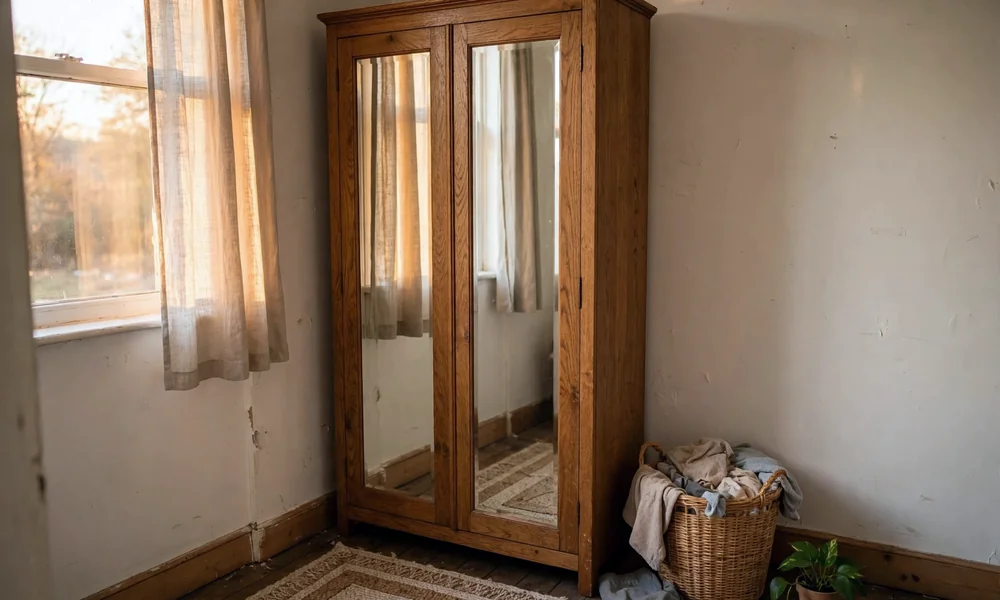
The best wardrobes of 2026 are built like furniture that expects to be used every day for a decade. Their panels are thick enough not to bow, their backs are solid enough to keep the whole carcass square, and their rails are fixed through the sides rather than screwed into the surface. The doors close with a soft, certain click instead of a rattle, and they still close the same way a year later, because the hinges are adjustable and strong enough for the weight they carry. Nothing about them is flashy. They simply work, and they keep working.
Inside, the best wardrobes are planned around real clothes rather than a catalogue photograph. There is a full-length hanging section for coats and dresses, a double rail for shirts and trousers, shelves deep enough for folded jumpers, and a drawer or two for the small things that otherwise end up in a pile. The shelves adjust, because your storage needs change with the seasons, and the rail sits high enough that long coats do not pool on the floor. Some of the best have a shallow shelf at the top for the things you use twice a year, and space at the bottom for shoes, so the floor of the wardrobe does not become a graveyard of odd socks.
Choosing Between Sliding, Hinged and Fitted Wardrobes
Sliding doors suit a small bedroom because they need no clearance to open, and a good sliding wardrobe feels effortless: one finger moves a heavy door along a smooth track. A bad one is the opposite. The doors jump their track, pinch fingers, and leave a gap that lets dust in. When you test one, slide each door slowly and listen. A quiet, even glide means good rollers and a straight track. A grating sound or a door that sticks halfway means trouble that will only get worse as dust gathers in the track.
Hinged doors are simpler and often stronger, because each door hangs on its own hinges and can be adjusted. They need space to swing open, so they suit a larger bedroom, and they give you full access to the whole interior at once, which makes finding things easier. The weakness of a hinged wardrobe is always the hinge. Cheap hinges loosen within months, and a door that drops a few millimetres will catch on the frame every time you close it. Check that the hinges are metal, adjustable in three directions, and fixed with enough screws to carry the door for years.
Fitted wardrobes use every centimetre of a wall, from floor to ceiling, and they can make an awkward room feel finished. They are also the most expensive option and the hardest to fix if the installer gets it wrong. A badly measured fitted wardrobe will have gaps at the edges, doors that do not line up, and shelves that cannot be moved. If you choose fitted, the installer matters more than the brand: ask to see their previous work and check the measurements yourself. The same care pays off with freestanding furniture too, as our comparison of the best and worst bookshelves of 2026 shows, because a tall piece of furniture that does not fit its wall is a problem whatever it holds.
The Worst Wardrobes of 2026
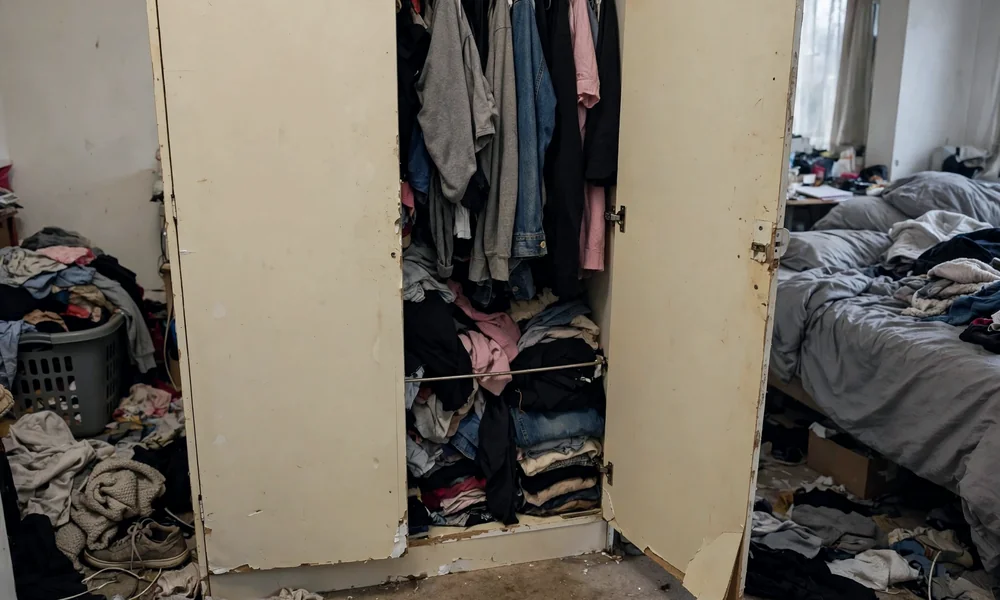
The worst wardrobes of 2026 fail at the same basics, and they fail in the same ways. Their panels are thin, so the whole carcass twists as soon as it is loaded, and the doors stop meeting in the middle. Their backs are flimsy sheets pinned on with staples, and one damp winter is enough to make them buckle. Their rails are hollow tubes held by tiny brackets, and the first time you hang a row of heavy coats the rail bends, then drops, then takes the side panel with it. They look fine in the photograph. They fall apart in the bedroom.
The most common failure is the flat-pack wardrobe that was never really designed to be moved. It arrives in a dozen thin boards, and the cam locks that hold it together loosen with every door slam. Once they loosen, the whole wardrobe starts to lean. The doors are the first thing to go: they sag on their hinges, catch on the frame, and eventually refuse to close at all. A wardrobe that cannot close is not a wardrobe. It is a shelf with a door leaning against it, and your clothes live in the dust of the room instead of behind a door.
Measuring, Fitting and Living With Your Wardrobe
Measure the room before you shop, and check the width at the floor and at the top of the skirting board, because walls are rarely straight and a wardrobe that fits at the bottom may not fit at the top. Leave room for the bed, the door of the room itself, and the radiator, because a wardrobe pushed against a radiator will dry your clothes and warp its own back panel. If the room has a sloping ceiling or an awkward corner, a freestanding wardrobe that you can move is often wiser than a fitted one that cannot be adjusted.
When the wardrobe arrives, build it where it will stand, on a flat floor, and do not rush the fixings. Tighten every cam lock fully, check that the carcass is square before you fix the back, and anchor a tall wardrobe to the wall, especially if children use the room. A tall, loaded wardrobe can tip, and a wall strap costs almost nothing. Load it sensibly: heavy coats on the rail, folded jumpers on shelves, shoes at the bottom, and nothing piled on top, where dust gathers and boxes slide off. Leave a little air between the clothes, because a wardrobe packed tight smells musty within weeks.
Keep it dry and it will last. Wipe up any damp, leave the doors open for an hour after a steamy shower in an en-suite bedroom, and do not push the wardrobe hard against a cold outside wall, where condensation collects behind it. A small gap of a few centimetres lets air move and stops mould from growing on the back panel. The room around the wardrobe matters too: heavy curtains that trap damp air against the wall make the problem worse, and our comparison of the best and worst curtains of 2026 covers the window dressings that keep a bedroom dry and comfortable, because a wardrobe is only as healthy as the room it stands in.
Caring for a Wardrobe So It Lasts
A good wardrobe needs very little care, but the little it needs should not be skipped. Tighten the hinge screws once a year, because they loosen slowly and a door that drops a millimetre today will catch on the frame by winter. Oil a squeaking hinge with a single drop rather than a spray, and wipe the excess away so it does not stain the wood. Clean the sliding track with a dry brush, because dust in the track is what makes sliding doors grind and jump. Wipe shelves with a barely damp cloth and dry them at once, so water never sits on the surface and lifts the finish.
The Verdict
The best wardrobes of 2026 are not the grandest or the most expensive. They are the ones that get the basics right, every day, for years: solid panels, a strong rail, doors that stay true, shelves that adjust, and a finish that can be wiped clean and repaired. They are often plain, and they are easy to recognise once you know what to look for: doors that close with a certain click, a rail that does not flex under a row of coats, and a back panel that feels solid when you push it.
The worst wardrobes of 2026 fail at the same basics, and they fail in the same ways: thin panels that twist, flimsy backs that buckle, hollow rails that bend, and doors that sag within months. They are easy to recognise too, once you know what to look for: a door that rattles in the showroom, a back panel that flexes like paper, and a price that looks too good until you count the replacements. Choose the wardrobe that is honest about what it is, and your clothes will hang straight, your mornings will be easier, and you will not be shopping for another wardrobe next year.