Travelling with a small dog changes every part of a journey, from the walk through the terminal to the moment you settle into your seat. A good carrier is not just a bag with a dog inside it. It is your dog’s bedroom, seatbelt, and safe place all at once, and the wrong one can turn a short flight into a long, stressful afternoon for both of you.
The best dog carriers for travel in 2026 are the ones that keep your dog calm, comfortable, and safe while staying easy for you to carry, stow, and clean. Size, airflow, weight, and airline fit matter far more than colour or extra pockets. The sweet spot is a carrier your dog can stand up in, turn around in, and lie down in, with room to breathe and a view of you.
Key Takeaways
- Measure your dog standing, sitting, and lying down before you buy anything, and choose a carrier that fits those measurements with a little room to spare.
- Soft-sided carriers fit under most aeroplane seats more easily than hard-sided ones, and they are lighter to carry through a busy airport.
- Mesh panels on three or four sides give the best airflow and let your dog see you, which keeps most dogs calmer than a dark, closed carrier.
- Check your airline’s exact under-seat dimensions and pet rules before every trip, because limits vary by airline, aircraft, and route.
- Let your dog practise at home first, with treats, short sessions, and the carrier left open in a familiar room.
How We Judged
We judged every carrier on the same five questions. Does it fit a small dog comfortably, with room to stand, turn, and lie down? Does it fit under a typical aeroplane seat, and does it compress a little without squeezing the dog? How is the airflow, and can the dog see out without feeling exposed? How easy is it to carry for an hour or more, by hand, over a shoulder, or on a rolling frame? And how easy is it to clean?
We also weighed durability, zip quality, and safety details such as an interior tether, a locking zip, and a base that stays flat and stable. A carrier that tips over when your dog shifts its weight is a bad carrier, however pretty it looks. We gave extra credit for a removable, washable base pad and a top opening as well as a side opening.
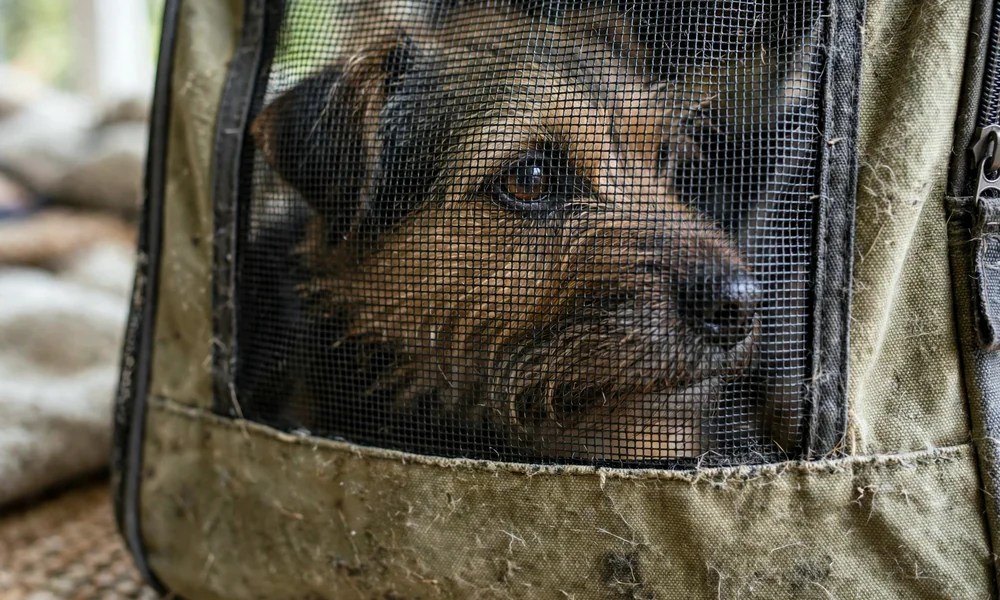
Best Overall
The best overall travel carrier is a soft-sided cabin carrier with mesh on three sides, a padded shoulder strap, and a flat, stable base. It is the most flexible choice for most small dogs and most trips. It fits under the seat on most airlines, it is light enough to carry through a long terminal, and it opens from the top and the side so your dog can step in or be lifted in without fuss. Look for a removable fleece pad, a safety tether that clips to a harness, and zips that lock so a clever nose cannot push them open mid-flight.
What sets the best overall carrier apart is how it behaves in real travel, not on a shelf. It holds its shape when your dog moves, it does not sag onto your dog’s back, and it stays upright on a luggage trolley and on the floor of a car. The shoulder strap should be wide and padded, because a thin strap will dig in after twenty minutes.
Best Airline-Approved
The best airline-approved carrier is the one that matches your airline’s published size limits with room to spare, not the one with the boldest label on the box. Airline approval is not a single standard. Each airline sets its own maximum length, width, and height for in-cabin pets, and those limits change with the aircraft. Check the airline’s pet page and measure the carrier yourself.
A good airline carrier is soft-sided, slightly compressible, and low enough to slide under the seat without forcing it. It should have mesh on at least three sides so cabin crew can see your dog is settled, and a solid base so it does not collapse when the seat in front moves. Keep your airline’s pet rules and your dog’s health documents in the carrier’s outer pocket.
Best Backpack Carrier
The best backpack carrier is the right choice when your trip involves walking, hiking, or a long stretch on foot. It spreads the weight across both shoulders, leaves your hands free, and keeps your dog close to your body, which most dogs find reassuring. Look for padded shoulder straps, a chest strap, a waist belt, and a stiffened back panel that keeps the carrier from slumping. Mesh panels and a top opening your dog can peek out of are worth paying for.
Backpack carriers suit small dogs up to the carrier’s stated weight limit, and it is worth respecting that limit strictly. Try the loaded carrier at home before a trip, adjust the straps so the weight sits on your hips as well as your shoulders, and take breaks so your dog can stretch its legs.
Best Rolling Carrier
The best rolling carrier is the answer for longer airport days, older travellers, and anyone who does not want to carry a dog on one shoulder for an hour. It works like a small cabin suitcase, with a telescopic handle, smooth wheels, and a carrier that lifts off the frame or converts to a shoulder bag when you reach the plane. The wheels should roll straight and quietly, the handle should extend without wobbling, and the carrier should sit low and stable so it does not tip when your dog shifts.
Rolling carriers are heavier than soft shoulder carriers, so check the weight before you add your dog. The trade-off is worth it on a long trip through a large airport, but it is less useful on stairs, escalators, and rough ground, where you will need to lift it.
Best Budget Carrier
The best budget carrier proves that you do not need to spend a fortune to travel well with a small dog. It is a simple soft-sided carrier with mesh windows, a padded base, a shoulder strap, and a safety tether, made from a fabric that wipes clean and dries quickly. It may have fewer pockets and a simpler frame than a premium carrier, but it should never cut corners on the things that keep your dog safe: strong zips, a flat base, good airflow, and a tether that holds.
When you shop on a budget, check the stitching around the zips and the base, and test the carrier with your dog at home before you rely on it. A budget carrier that fits your dog well and meets your airline’s size limits is a better buy than an expensive carrier that is too big or too heavy.

What to Look for When Choosing
Size comes first, and it is worth getting right. Measure your dog from nose to base of tail while standing, and from the top of the head or ears to the floor. Add a few centimetres in each direction so your dog can turn around and lie down flat. Then measure the carrier inside, not outside, because thick padding and frames eat into the space your dog actually gets.
Weight limit is the next number to respect. Every carrier has a maximum dog weight, and it is there for safety, not as a suggestion. A carrier loaded beyond its limit will sag, the straps will strain, and the base may bow. Weigh your dog before you shop, and if your dog is close to the limit, choose a carrier rated for a heavier dog.
Ventilation is what keeps a carrier comfortable on a warm day and a long flight. Mesh on three or four sides is best, with at least one large panel your dog can see through. The mesh should be fine enough to keep claws in and strong enough to resist scratching. Avoid carriers with a single small window, and avoid solid carriers with no mesh at all for air travel.
Airline rules are the part most travellers get wrong, because they assume one airline’s rules apply everywhere. They do not. Check the maximum carrier dimensions, the pet fee, the number of pets allowed in the cabin, and whether your route or aircraft has extra limits. Some airlines ask you to book your pet in advance, some ask for a health certificate, and some will not accept pets on certain flights at all.
Comfort is the test that decides whether your dog will settle or spend the whole trip whining. A good carrier has a thick, removable base pad, a soft interior with no hard seams or exposed zips, and enough headroom for your dog to sit up without crouching. The interior tether should clip to a harness, never to a collar, so your dog cannot slip out when you open the carrier.

Travel Tips and Mistakes to Avoid
The most common mistake is buying a carrier on the day of travel and expecting your dog to love it. Dogs need time to accept a new space, so start at home a week or two before your trip. Leave the carrier open in a room your dog likes, put a familiar blanket and a few treats inside, and let your dog explore it without pressure. By travel day, the carrier should smell like home.
Another mistake is overpacking the carrier with toys, bowls, and blankets until there is no room left for the dog. Pack light inside the carrier and keep the extras in your own bag. A small water bowl that clips to the side, a favourite toy, and a thin blanket are enough. Bring paper towels and spare pads in case of an accident.
At security, you will usually need to take your dog out of the carrier and carry it through the scanner while the empty carrier goes through the belt, so practise that step at home too. Arrive early, walk your dog before you go through security, and offer water little and often. Once seated, slide the carrier under the seat, open a mesh panel a little so your dog can see you, and keep your hand near the carrier for the first few minutes.
For road trips, the same carrier works well in a car, provided it is secured with a seatbelt or placed on the floor where it cannot slide. Never let a dog ride loose in a moving car, and never leave a dog alone in a parked car, even for a few minutes. Stop every two or three hours for a walk, water, and a toilet break.
Closing
The right carrier does not just move your dog from one place to another. It gives your dog a familiar, safe space in unfamiliar places, and it gives you the freedom to travel together without worry. Measure carefully, check your airline’s rules, practise at home, and choose the carrier that fits your dog and your kind of trip. For more travel ideas, see our guide to the best and worst carry-on luggage for 2026, our picks for the best travel backpacks for 2026, and our warning about the worst pet supplies that waste your money.