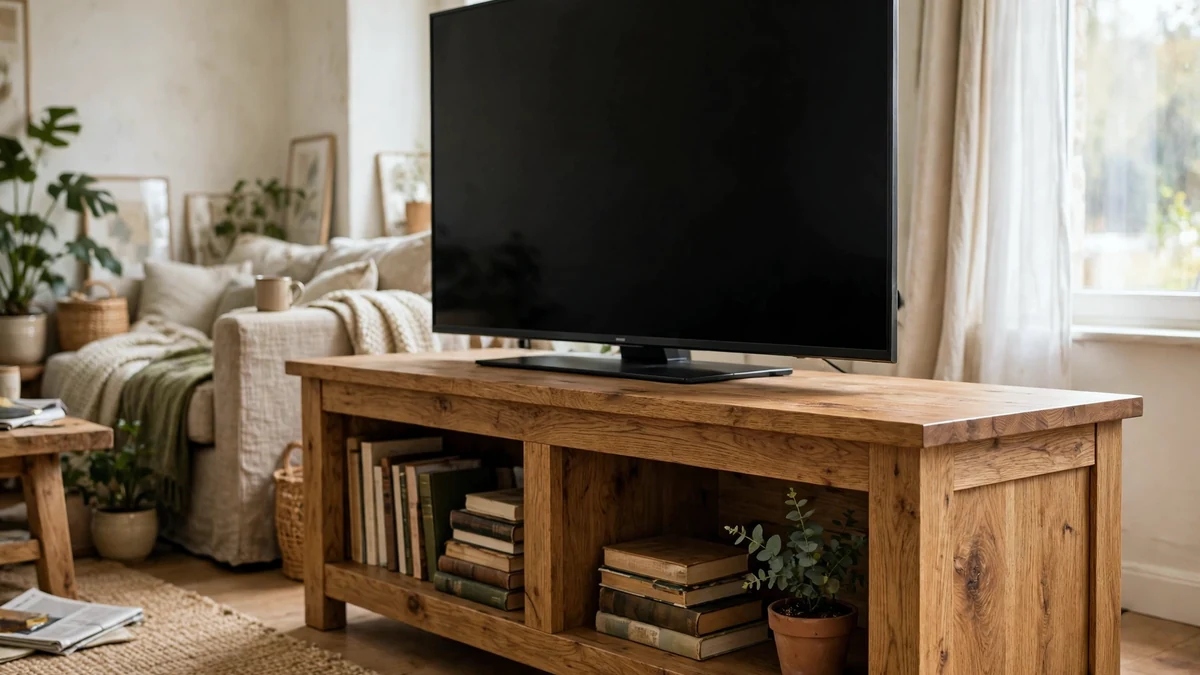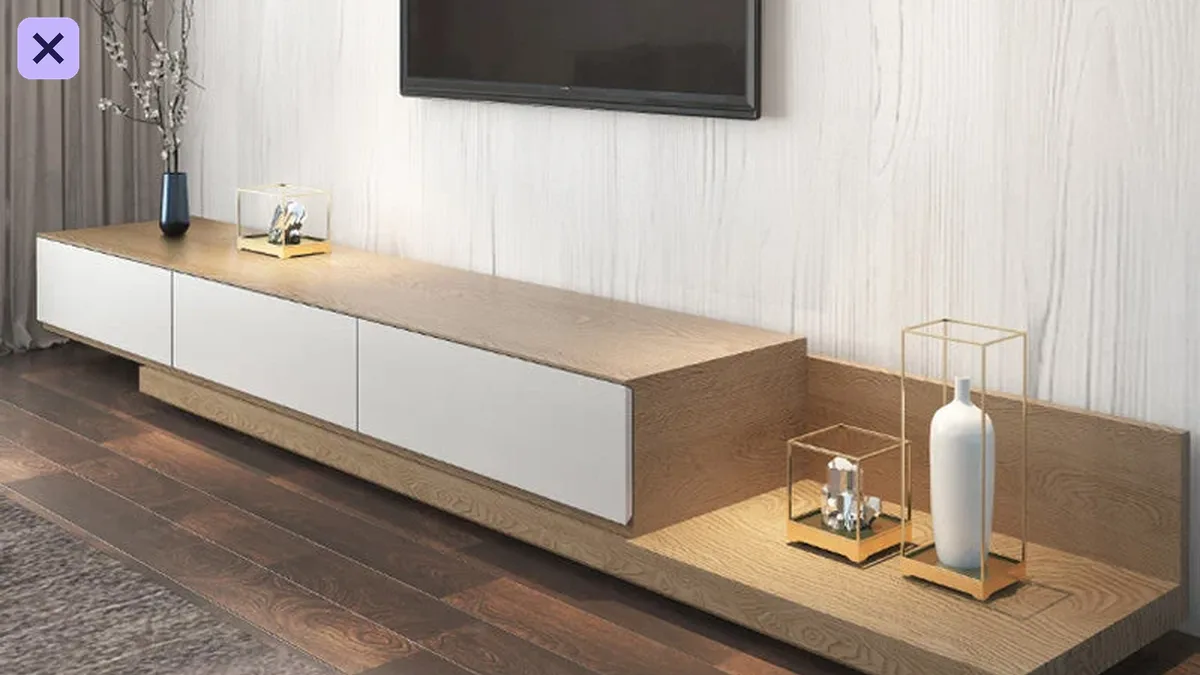
A Guide to TV Consoles That Hide the Clutter in 2026
A TV console that hides the clutter is the difference between a living room that feels calm and one that feels like a storage cupboard with a screen on top. The best TV consoles in 2026 do two jobs at once: they hold the television at the right height, and they swallow the boxes, cables, remotes, controllers and discs that come with it.
Most people buy a TV console the wrong way round. They fall for a finish or a shape, then discover the soundbar does not fit and the cables spill out of the back like spaghetti. Measure first, think about what goes inside it, and only then worry about how it looks.
Key takeaways
- A TV console should be at least 10 centimetres wider than your television on each side, so the screen never overhangs it.
- Closed doors and drawers hide clutter far better than open shelves.
- The centre of the screen should sit at eye level when seated, usually meaning a console 40 to 60 centimetres tall.
- Look for cable holes, channels or a false back before you buy, or the wires will always show.
- Games consoles and receivers need airflow, so closed cabinets need gaps or vented backs.

What a TV console is really for
A TV console is a low, wide piece of furniture that sits under the television and holds everything the television needs. That list grows every year: a set-top box, a streaming stick, a soundbar, a games console or two, a router, a stack of remotes, and the cables that connect them. Older stands were built for one box and a video recorder. Modern consoles must cope with far more, and the best are designed around storage first and style second.
The other job is visual. A television is a large black rectangle, and a console grounds it. Without one, a wall-mounted screen floats awkwardly, and a screen on a too-small stand looks like it might topple. The worst consoles are the wrong-sized ones: too narrow and even an expensive television looks temporary, too deep and the walkway becomes an obstacle course. A wide, low console is also inherently stable, which matters in homes with small children or large dogs.
Getting the size right
Size is where most TV console purchases go wrong, and it is the easiest mistake to avoid. Measure the television, the wall, and the distance from your sofa to the screen, then buy the console that fits those numbers.
Width: wider than the screen, always
The console should be wider than the television, with at least 10 centimetres showing on each side. A 55-inch television is about 123 centimetres wide, so the console should be at least 145 centimetres. A 65-inch screen is about 145 centimetres wide, which calls for a console of 165 centimetres or more. If you are still choosing the screen, our guide to the best TVs of 2026 lists the widths of the most popular models. The extra width also matters for the soundbar, which is usually 80 to 120 centimetres long. Our guide to the best soundbars of 2026 covers how much space the most popular models need.
Height: eye level from the sofa
The centre of the screen should sit at roughly eye level when you are sitting on the sofa, about 100 to 110 centimetres from the floor. If the television stands on the console, the console height plus half the screen height should land near that number. For a 55-inch screen, that usually means a console 40 to 50 centimetres tall; for a 65-inch screen, 35 to 45 centimetres. For a wall-mounted screen, a low console looks sleek but holds less; a taller one gives more storage but can push the screen too high.
Depth: enough for the boxes
Most TV consoles are 35 to 50 centimetres deep, which is enough for a games console, a receiver and a soundbar with room for air to circulate. Anything shallower than 35 centimetres will struggle with deeper equipment, and anything deeper than 50 centimetres starts to jut into the room. Measure the deepest piece of equipment you own, add 5 centimetres for cables at the back, and that is your minimum depth.
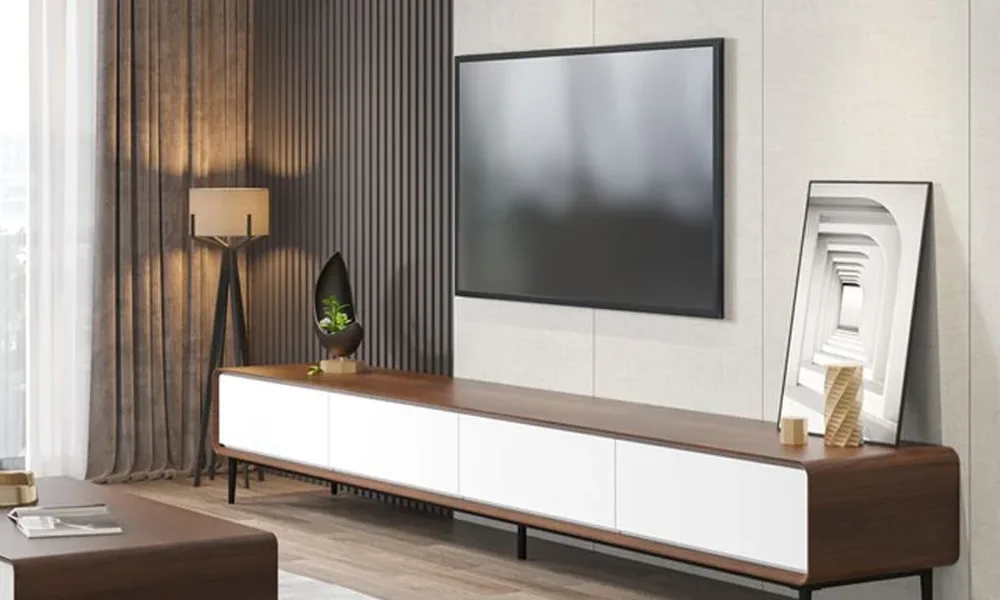
The main types of TV console
TV consoles fall into a handful of types, and each suits a different kind of living room. The right choice depends less on taste than on how much you need to hide. A household with two games consoles, a receiver and a box of DVDs needs something very different from one that streams everything and owns one remote.
| Type | Best for | Clutter hiding | Watch out for |
|---|---|---|---|
| Low closed cabinet | Most living rooms | Excellent — doors hide everything | Heat build-up behind closed doors |
| Open shelving unit | Minimalists with little gear | Poor — everything is on show | Dust, and cables always visible |
| Drawer console | Remotes, discs and small items | Very good — drawers swallow small clutter | Deep drawers can become junk drawers |
| Floating or wall-mounted | Small rooms, modern looks | Good — if it has closed sections | Needs a solid wall and careful fixing |
| Corner console | Awkward room layouts | Good — uses dead space | Hard to find in the right size |
| Media wall unit | Big screens and lots of gear | Excellent — the most storage | Can dominate a small room |
The low closed cabinet is the safest choice for most homes. Doors hide the mess, drawers take the small things, and the flat top gives the television a home. The trade-off is ventilation: a games console in a sealed cupboard will overheat, so look for vented backs, gaps around the doors, or a mesh panel.
Open shelving looks wonderful in photographs and terrible in real life unless you are disciplined. Every box, cable and controller is visible, and dust settles within days. It works best as a second layer: a closed cabinet for the ugly equipment, with one or two open shelves for books or plants.
Storage that actually hides the clutter
A console with a single open shelf and nowhere to put cables is not a storage solution. It is a display shelf with a television on it. The consoles that work have thought about what actually lives in a living room.
Closed storage beats open storage
Doors and drawers are the most effective clutter-hiders ever invented. A console with two cupboards and a central drawer can hide a set-top box, a router, a stack of discs, three remotes and a games controller, and the room looks no different. The same items on open shelves look like a shop display nobody tidied. If you have children, closed storage has a second benefit: the expensive equipment is behind a door, out of reach and out of sight.
Cable management is a feature, not an afterthought
Every television setup has cables, and every cable will find its way onto the floor unless the console gives it a path. Before buying, look for cable holes in the back panel, a channel or tray behind the shelves, and enough space behind the equipment for plugs to sit without bending. A console with a false back or a removable rear panel is ideal: you can route cables inside the furniture and out of sight. If the console you love has no cable management, add it with adhesive clips, a short cable tray under the top shelf, and a power strip mounted inside the cabinet. A wall-mounted setup hides cables differently, and our guide to the best TV mounts of 2026 covers the options.
Ventilation and access
Games consoles, receivers and set-top boxes generate heat, and heat trapped in a closed cupboard shortens their lives. Look for vented backs, slatted doors or a gap at the rear of each shelf. Leave at least 5 centimetres of space above any games console and never stack one hot box on another. If a cupboard feels warm after an evening of use, drill a few discreet holes in the back panel or move the hottest box to an open shelf.
Materials and finishes that last
A TV console takes daily abuse. Mugs get set down on it, remotes get dropped on it, children lean on it, and the sun hits it every afternoon. Solid wood and wood veneer on a solid core are the most durable choices; oak, walnut and ash age well. Avoid thin foil finishes on cheap particleboard: they chip at the corners, swell if a drink spills, and cannot be repaired. If the budget only stretches to flat-pack, choose thick panels, metal fixings rather than plastic cams, and a back panel that screws in.
Glass doors look sleek and let remote controls work through them, but they show dust and fingerprints, and they reveal whatever is behind them. Frosted or smoked glass is a good middle ground. As for colour, a neutral wood tone or a matte dark finish will outlive trends, while high-gloss white shows every fingerprint by day thirty.
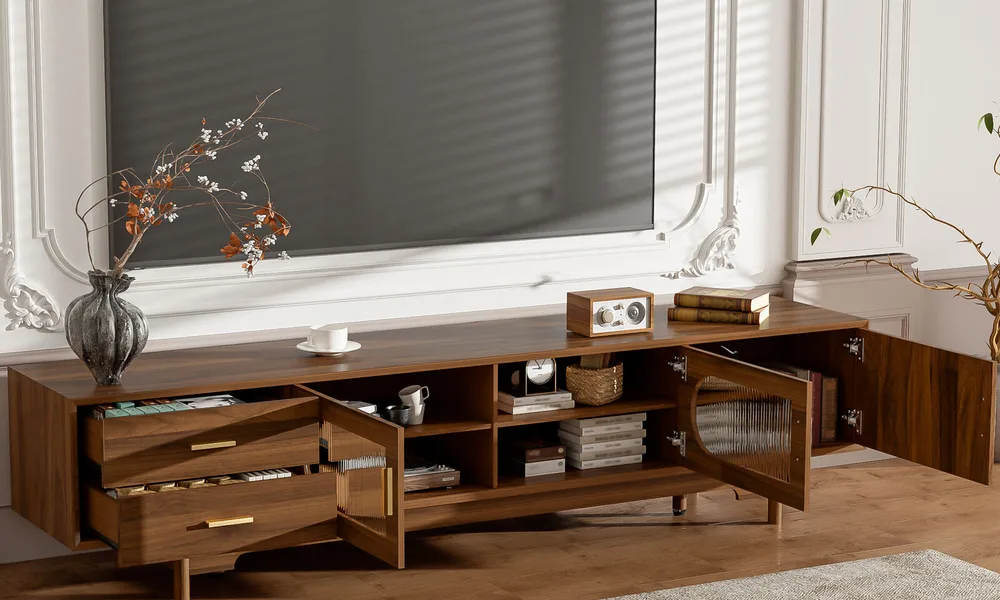
Before you buy checklist
- Measure the television width and add 20 centimetres: that is your minimum console width.
- Measure the deepest piece of equipment plus 5 centimetres for cables: that is your minimum depth.
- Sit on the sofa and check the screen centre will land at eye level, about 100 to 110 centimetres from the floor.
- Open the doors and drawers: they should move smoothly, and the back panel should have cable holes or a removable section.
- Check ventilation: vented backs, gaps or slatted doors for any cupboard holding a games console or receiver.
- Test stability: push the console gently from the side and the top. It should not rock, and it should have adjustable feet or a wall anchor.
Frequently asked questions
How wide should a TV console be for a 55-inch TV?
At least 145 centimetres. A 55-inch television is about 123 centimetres wide, and the console should extend at least 10 centimetres beyond the screen on each side. A console of 150 to 180 centimetres looks best.
Should the TV console be wider than the TV?
Yes, always. A console narrower than the television looks unstable and unfinished, and it leaves the soundbar and other equipment with nowhere to go. The only exception is a wall-mounted television above a floating console, where a slightly narrower console can look intentional.
What is the best height for a TV console?
Most consoles are 40 to 60 centimetres tall. The centre of the screen should sit at eye level when seated, roughly 100 to 110 centimetres from the floor. For a 55-inch screen that usually means 40 to 50 centimetres; for a 65-inch screen, 35 to 45.
How do I hide cables behind a TV console?
Route them through the cable holes in the back panel, use adhesive clips or a cable tray inside the cabinet, and mount the power strip inside the console. If the console has no cable holes, trunking painted the colour of the wall will hide the run to the socket.
Can I put a games console inside a closed TV cabinet?
Yes, but only if the cabinet has ventilation. Games consoles need airflow, especially on top. Look for vented backs or slatted doors, leave at least 5 centimetres of space above the console, and never stack two hot devices together.
Is a floating TV console a good idea?
It is a good idea in small rooms, because it frees up floor space and makes cleaning easier. It needs a solid wall, proper fixings rated for the weight, and careful cable routing, and it holds a little less than a floor-standing console.
Bottom line
The best TV console in 2026 is wider than your television, tall enough to put the screen at eye level, deep enough for your equipment, and closed enough to hide the clutter it holds. Measure the screen, the equipment and the wall before you shop, choose closed storage with ventilation over open shelves, and pick a material that survives daily use.