A Guide to Pumice Stones That Smooth Rough Skin in 2026
A pumice stone is the oldest exfoliating tool still in regular use, and in 2026 it remains the simplest way to smooth rough heels, elbows and callused skin without buying another cream or gadget. It is a piece of volcanic rock, full of tiny holes, that gently files away dead skin when it is used on warm, damp skin with light pressure. No batteries, no refills, no subscription — just a stone that costs very little and lasts for months when it is looked after.
Key takeaways
- Natural pumice is volcanic rock with an uneven, porous surface; synthetic pumice is made to a consistent grit and is usually the safer choice for beginners.
- Always use a pumice stone on warm, soaked skin, never on dry skin, and use light, circular strokes instead of pressing hard.
- Two or three short sessions a week beat one aggressive session, because over-scrubbing leaves skin raw and makes it build up faster.
- Rinse the stone after every use, let it dry completely in the open air, and replace it every two to three months or as soon as it starts to crumble.
- Moisturise straight after pumicing, while the skin is still slightly damp, so the cream can finally reach the living skin underneath.
What a pumice stone actually is
Pumice is volcanic glass full of air bubbles. When lava rich in gas cools quickly, it traps tiny pockets of air and hardens into a rock so light it can float. Those bubbles are what make it useful: broken open, the stone presents thousands of small, rough edges that catch dead skin cells and lift them away.
Natural vs synthetic pumice: which should you buy?
Natural pumice stone
A natural stone is a piece of real volcanic rock, and you can feel it: the surface is irregular, the pores vary in size, and the stone has a satisfying weight in the hand. Fine-grained natural pumice is excellent for regular maintenance on heels and elbows, while coarser pieces tackle thick calluses faster. The downside is inconsistency.
Synthetic pumice stone
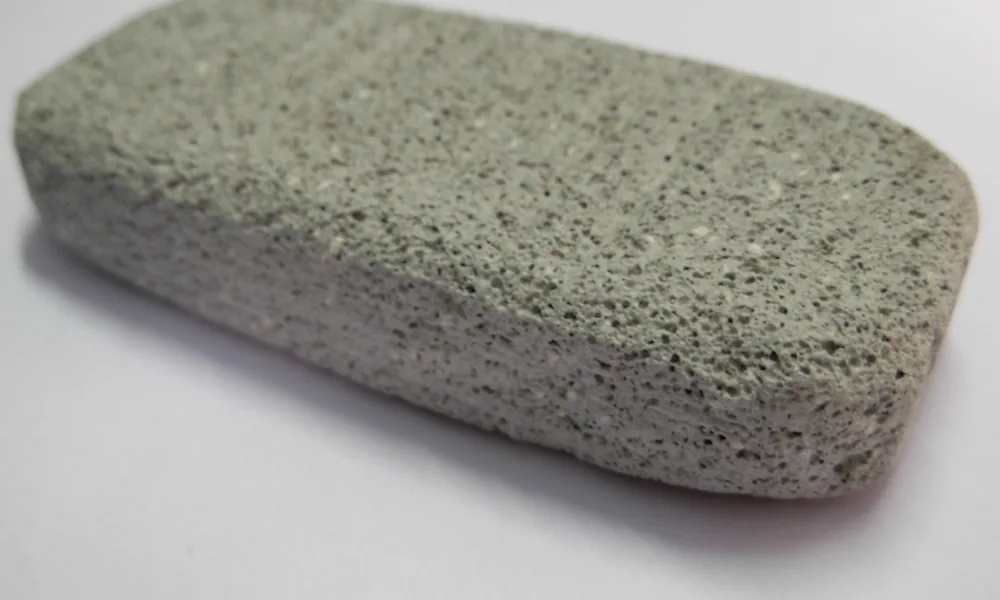
Synthetic pumice is made, not mined, and that is its advantage. The grit is uniform across the whole surface, the stone holds its shape when wet, and it does not crumble as quickly as a soft natural piece. Most synthetic stones are moulded with a handle or a contoured grip, which makes them easier to hold with wet, soapy hands.
How to use a pumice stone properly
Technique matters more than the stone. Almost every bad pumice experience — redness, stinging, skin that feels rougher the next day — comes from using it on dry skin, pressing too hard, or going on for too long. The right routine takes about five minutes and should never hurt.
Step 1: soak first
Soak the area for five to ten minutes in warm water before you pick up the stone. A bath, a shower, or a basin of warm water all work; the point is to soften the dead skin so it comes away easily. A foot soak with Epsom salt or a few drops of oil makes the job easier still, and it turns a chore into a small ritual worth looking forward to. Never pumice dry skin: dry dead skin resists the stone, so you press harder, and harder pressure is what causes scratches and soreness.
Step 2: wet the stone and use light circles
Wet the stone, then work in small, light circles over the rough patch. Let the weight of the stone do the work and keep your pressure gentle — about the same as writing with a pencil. Work on one area for twenty or thirty seconds, rinse the stone, and check the skin.
Step 3: rinse, dry and moisturise
Rinse the skin, pat it dry, and moisturise while it is still slightly damp. This is the step that makes the whole routine work: with the dead layer gone, cream can finally reach the living skin. A thick foot cream with urea does the heavy lifting on heels, and plain cotton socks worn over it at night keep the cream in place for hours. If you skip the moisturiser, the skin dries out again within a day and the roughness returns faster than before.

Choosing the right shape and grip
Pumice stones come in more shapes than most people expect, and the shape decides how comfortable the stone is to use. A flat rectangular stone is the classic: one broad face for heels, one edge for the sides of the toes. An oval stone fits the palm and follows the curve of a heel nicely.
How often should you use a pumice stone?
Two or three times a week is right for most people, in short sessions of a few minutes. Daily use is fine for very rough heels in the first couple of weeks, as long as the pressure stays light and the skin never feels sore afterwards. Once the skin is smooth, drop back to once a week for maintenance. The sign that you are overdoing it is skin that looks pink, feels tight, or stings when you put cream on. That is your cue to stop for a week and let the skin recover.
Pumice stone vs the alternatives
| Tool | Best for | Control | Upkeep | Cost |
|---|---|---|---|---|
| Pumice stone | Regular heel and elbow smoothing | Excellent — hand pressure | Rinse and air-dry | Very low |
| Foot file (metal or glass) | Thick, dry calluses | Good — flat surface | Rinse and dry | Low |
| Body scrub | Whole-body exfoliation | Moderate — grain size | None — use and rinse | Low to medium |
| Electric foot file | Very thick calluses, fast | Lower — easy to overdo | Replace rollers | Medium |
| Foot mask | Deep softening overnight | High — timed treatment | None — single use | Medium |
A pumice stone sits in the middle of this table on purpose. It is slower than an electric file and less dramatic than a peeling foot mask, but it is the tool you will actually reach for twice a week, and that consistency is what keeps feet smooth. The foot masks that soften rough feet overnight are a good occasional boost, and a body scrub is the right choice when you want to exfoliate everywhere at once — but for the daily reality of rough heels, the stone is the workhorse.
Caring for your pumice stone
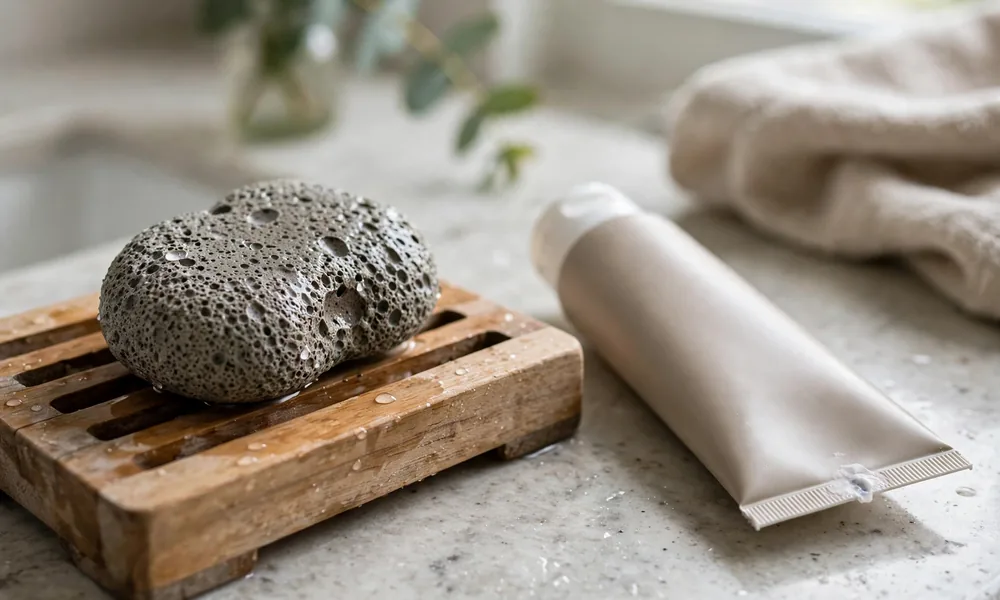
A pumice stone is porous, which means it holds water and dead skin in its pores after every use. If you leave it sitting in a puddle in the shower, it stays damp, and damp stone grows bacteria and mould. The care routine is simple: rinse the stone under running water after every session, scrub it with an old toothbrush once a week to clear the pores, and store it somewhere it can dry completely — on a soap dish with drainage, on a hook, or in a mesh bag hung in the open air.
Safety: when not to use a pumice stone
A pumice stone is safe for most people, but there are situations where it should stay in the drawer. Never use one on broken, blistered, bleeding or infected skin, and never on a cut, a blister, or an ingrown toenail. Stop immediately if the skin goes red, stings, or bleeds — you have gone too far, and the skin needs a week of rest and moisturiser, not more exfoliation.
If you have diabetes, poor circulation, or nerve damage in your feet, be extra careful. Reduced feeling means you may not notice that you are pressing too hard, and slower healing means a small nick can become a serious problem. Many podiatrists advise people with diabetes to avoid pumice stones altogether, or to use them only very gently and stop at the first sign of redness.
Common mistakes to avoid
The first mistake is pumicing dry skin — soak first, every time, or the stone will scratch instead of smooth. The second is pressing hard: a pumice stone works by friction over time, not force, and heavy pressure removes living skin along with the dead. The third is chasing perfect smoothness in one session; thick calluses took weeks to build and take weeks to reduce safely, and trying to erase them in one evening leaves raw skin that hurts to walk on. The fourth is forgetting to clean the stone, which turns a cheap tool into a bacteria hotel. And the fifth is skipping moisturiser afterwards, which undoes the whole point. Avoid those five and a pumice stone will serve you well for years.
Checklist: buying and using a pumice stone
- Choose fine or medium grit for your first stone, and synthetic if you want a consistent surface every time.
- Pick a shape that fits your hand when wet — a handle or contoured grip helps if your hands are stiff.
- Soak the skin for five to ten minutes in warm water before every session, and wet the stone too.
- Use light, circular strokes for twenty to thirty seconds per area, and check the skin often.
- Rinse the stone after use, scrub it weekly with a brush, and let it dry completely in open air.
- Moisturise straight after pumicing, while the skin is still slightly damp, and wear socks over foot cream at night.
Frequently asked questions
How long does a pumice stone last?
With regular use, two to three months. Natural stone softens and crumbles faster than synthetic, and any stone that smells after washing or sheds crumbs should be replaced straight away, however new it is.
Can I use a pumice stone on my face?
No. Facial skin is far thinner than heel skin, and even a fine pumice stone is too rough for it. Use a gentle facial exfoliant instead and keep the stone for feet, elbows and knees.
Is a pumice stone better than a foot file?
They do different jobs. A stone is best for regular smoothing and finishing, because its curved surface follows the shape of a heel. A file is better for quickly reducing a very thick, dry callus. Many people keep both: the file for the heavy work, the stone for the weekly routine.
Can I share a pumice stone with someone else?
No — a pumice stone is a personal item. Its pores trap dead skin and moisture, and sharing it can spread fungal infections such as athlete’s foot. Buy one per person; they cost very little.
Does a pumice stone help cracked heels?
It helps with the thick, rough skin around a crack, which makes the crack less likely to deepen. But it will not heal a crack that is already open or bleeding — that needs rest, moisturiser and, if it does not improve, a podiatrist.
Should I use a pumice stone before or after a shower?
During or just after, when the skin is warm and soft. Soak for five to ten minutes first, pumice for a few minutes, then rinse and moisturise. Doing it before a shower, on dry skin, is the most common mistake and the main cause of soreness.
The bottom line
A pumice stone is one of the rare products that does exactly what it promises for almost no money: it smooths rough skin, it lasts for months, and it asks nothing of you except a few minutes twice a week and a rinse afterwards. Choose a fine or medium stone — synthetic if you want consistency — soak first, use light circles, moisturise after, and keep the stone clean and dry.


