
Best Foot Creams for Happy Feet in 2026
The best foot creams for happy feet in 2026 are thicker, richer and far more hardworking than the lotion you use on your arms, and that difference is the whole point. Feet carry your full weight all day, they spend hours pressed into shoes, and the skin on your heels is several times thicker than the skin on your face. A light body lotion simply sits on top of that skin and disappears, while a proper foot cream sinks in and stays put long enough to work.
Most people only think about their feet when something hurts: a heel cracks open in winter, a blister forms on a long walk, or sandals reveal skin that has gone rough and grey. By then the damage has been building for weeks. The people with the softest feet are not the ones who buy the most expensive cream. They use a decent cream every single night, in the right way, and give it time to work while they sleep.
Key takeaways
- Foot cream needs to be thicker than body lotion, because heel skin is far thicker than skin anywhere else on the body.
- Urea is the ingredient that matters most for cracked heels, and a cream with 10 to 25 percent urea does the heavy lifting.
- Apply foot cream at night and wear cotton socks over it, so the cream stays on the skin for hours instead of rubbing off on the floor.
- Use a small amount and rub it in properly: a thick white layer that never absorbs is wasted cream, not extra care.
- Stop and rest the skin if it stings, peels or goes red, and skip strong exfoliating creams on broken or bleeding skin.
Why feet need a different cream
Feet are built differently from the rest of the body. The soles have no oil glands of their own, so they cannot moisturise themselves the way your face does, and every step presses the skin against the ground. The body answers that pressure by growing the skin thicker. That thick skin protects you, but it is also slow to absorb anything you put on it, so a thin lotion evaporates before it gets through.
The heel is the extreme case. Its skin can be four or five times thicker than the skin on your cheek, and when it dries out it hardens instead of flaking. Then it splits. A good foot cream does two things at once: it softens the hard outer layer so it can flex instead of splitting, and it seals moisture underneath so the skin can repair itself.
What is actually inside a good foot cream
The ingredient list tells you almost everything you need to know, and urea sits at the top of it for a reason. It pulls water into the skin, and at higher strengths it loosens the bonds between dead skin cells, so hard skin softens and sheds. A cream with around 10 percent urea is a good everyday choice for dry feet. A 20 to 25 percent cream is a repair treatment for cracked heels: use it for a few weeks, then step down to something gentler.
Shea butter and glycerin do the quieter work. Glycerin draws moisture in, shea butter seals it there, and together they keep the skin supple between applications. Lanolin does a similar job and is especially good in winter, because it forms a barrier that cold air cannot strip away. Some creams add menthol for a cooling tingle that feels wonderful on tired feet, though it does nothing for the skin itself.
The cracked-heel problem
Cracked heels follow a pattern, and once you recognise it you can stop them before they start. The skin dries out first, usually in winter, when cold air and hot showers strip its natural oils. The dry skin hardens into a thick rim around the heel. Then pressure does the rest: every step pushes the rim outward, and eventually it splits. The first split is small and easy to miss. The second one hurts.
The fix is not to attack the hard skin with a file every day. Filing feels productive, but over-filing thins the skin unevenly and can leave it raw, which makes the next crack worse. Soften first, file gently once or twice a week at most, and only on damp skin after a shower. Then apply a urea-rich cream and put socks on. Within two or three weeks of nightly cream, most cracked heels look and feel dramatically better.
Thick creams, balms and lotions, compared
Foot creams come in three shapes, and the shape matters as much as the brand. A lotion is thin and fast, a cream is thick and slow, and a balm is almost solid. Lotions suit feet that are already in good condition. Creams suit dry feet and cracked heels, because they stay put. Balms suit the worst cases, because they seal everything in. Most people need a cream for every night and a balm for the worst weeks.
| Type | Best for | Texture | How often | Watch out for |
|---|---|---|---|---|
| Light lotion | Healthy feet, daily upkeep | Thin, absorbs fast | Once or twice a day | Too weak for cracked heels |
| Rich cream | Dry feet, early cracks | Thick, needs rubbing in | Every night | Can feel greasy in shoes |
| Urea cream, 10 percent | Dry, rough heels | Rich, slightly tacky | Every night | Mild tingle on sensitive skin |
| Urea cream, 20 to 25 percent | Cracked, hard heels | Very thick, slow to absorb | Nightly for 2 to 4 weeks | Stings on broken skin |
| Balm or salve | Deep cracks, very rough patches | Almost solid, waxy | Nightly on the worst spots | Messy; needs socks over it |
How to use foot cream so it actually works
The routine matters more than the product, and it takes about three minutes. Wash your feet with warm water and a gentle soap, and dry them properly, including between the toes, because moisture left sitting there invites fungal infections. While the skin is still slightly damp, scoop out a coin-sized amount of cream for each foot and rub it in slowly, spending extra time on the heels. Do not put cream between your toes.
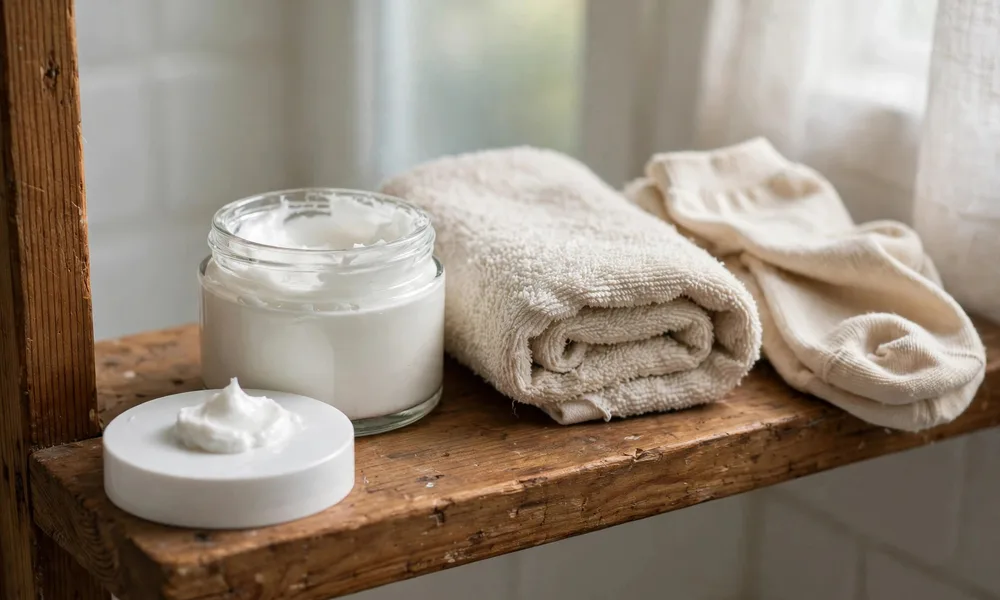
Then put on a pair of clean cotton socks. This is the step most people skip, and it is the one that makes the biggest difference. Bare feet on a floor or in bed rub the cream off within minutes. Socks hold it against the skin for hours, and the warmth helps it sink in. Any clean cotton socks will do, and keeping a dedicated pair by the bed makes the habit easy.

Choosing a cream for your feet
Sensitive skin needs a cream with a short ingredient list and no fragrance. Perfume is the most common cause of stinging and redness in foot creams, and it adds nothing to the treatment. If your skin is reactive, choose a plain cream, patch-test it on one heel for two nights, and only then use it on both feet. A good hand cream follows the same logic, and our guide to why hand cream matters more than you think in 2026 makes the same point: the skin that works hardest needs the most consistent care.
Feet that spend all day in trainers or work boots have their own problem, which is friction and sweat rather than dryness. A cream will not stop a blister, but soft, supple skin blisters less easily than dry, brittle skin, and the socks you wear matter as much as the cream. Our guide to athletic socks that stop blisters before they start in 2026 explains how the right sock cuts friction, and slippers that actually last in 2026 are worth choosing carefully at home, because a good slipper cushions the heel.
Mistakes that waste good cream
The most common mistake is using too much. A thick white layer that sits on the skin and never absorbs is wasted cream, and it ends up on the sheets. A coin-sized amount per foot, rubbed in until the skin looks matte rather than shiny, is enough.
The second mistake is inconsistency. Foot cream works by keeping the skin moisturised day after day, and one heroic application a week does almost nothing. Three minutes a night, every night, beats a long pampering session once a week. The third mistake is filing too hard: a gentle file on damp skin once a week, then cream, is all most feet need.

Foot cream buying checklist
- Check for urea on the label: 10 percent for everyday dry feet, 20 to 25 percent for cracked heels.
- Look for shea butter or glycerin in the first five ingredients, and skip creams where fragrance comes first.
- Choose a thick cream or balm for heels, and a lighter lotion only if your feet are already healthy.
- Buy a tube you will actually use: a pump or a wide jar beats a fiddly sachet, and keep it by the bed.
- Pick fragrance-free if your skin is sensitive, and patch-test on one heel for two nights first.
- Keep a pair of clean cotton socks with the cream, because the socks are half the treatment.
Frequently asked questions
How often should I use foot cream?
Every night is the right answer for most feet. A nightly application with cotton socks over it gives the cream hours to work, and the effect builds over two to three weeks. Once your feet are soft, you can drop to three or four nights a week, but stopping altogether usually brings the dryness back within a fortnight.
Can I use body lotion on my feet instead?
You can, but it will not do much. Body lotion is designed for thinner skin and evaporates before it gets through the thick skin on your heels. It is better than nothing, and fine for the tops of the feet, but for heels and cracked skin you need a thicker cream with urea.
Should I put foot cream between my toes?
No. The skin between the toes is thin and stays damp easily, and cream trapped there creates the warm, moist conditions that fungi love. Moisturise the tops, the soles and the heels, and leave the spaces between the toes dry.
Why does my foot cream sting?
Stinging usually means the cream contains a strong exfoliant, such as a high dose of urea or an acid, and the skin has a small split you cannot see. It can also mean the cream is fragranced and your skin is reacting to the perfume. Stop using it for a few days, then switch to a plain, fragrance-free cream with a lower urea strength.
How long does it take to fix cracked heels?
Most cracked heels improve noticeably within two to three weeks of nightly urea cream with socks, and feel fully better within a month to six weeks. Deep cracks take longer, and cracks that bleed or do not improve after a month need a pharmacist or a doctor rather than a stronger cream.
Do I need expensive foot cream?
No. Price tracks scent and packaging far more than it tracks results. A plain pharmacy cream with 10 percent urea and shea butter will outperform a luxury cream with no active ingredients. Read the first five ingredients on the label and choose the thickest texture you will actually use every night.
The bottom line
Happy feet come from a boring routine, not a miracle product. A thick cream with urea and shea butter, rubbed in properly every night and held against the skin by cotton socks, will do more in three weeks than any single expensive treatment. Start tonight and give it a month.


