
Foot Masks That Soften Rough Feet Overnight in 2026
The best foot masks in 2026 are the ones that match what your feet actually need: a moisturising sock mask worn overnight for rough, dry heels, or a peeling bootie worn for an hour when thick, built-up skin needs to shed. A foot mask is not a foot cream and it is not a foot soak. It is a sealed treatment: a sock or bootie soaked in serum that wraps the whole foot, holds the ingredients against the skin, and does in one evening what weeks of cream cannot. If your heels catch on sheets or crack in winter, a foot mask is the fastest fix that actually works.
Feet are built differently from the rest of the body. The soles have no oil glands of their own, so they cannot moisturise themselves the way your face does, and every step presses the skin against the ground. The body answers that pressure by growing the skin thicker, and heel skin can be four or five times thicker than the skin on your cheek. That thick skin is slow to absorb anything, which is why a mask works where a quick rub of lotion does not: hours sealed inside a sock give the ingredients time to get through.
Key Takeaways
- A foot mask is a sealed sock or bootie treatment, not a cream or a soak: the seal is what makes it work.
- Moisturising masks are for dry, rough feet and are worn overnight; peeling masks are for thick, built-up skin and are worn for about an hour.
- Urea, shea butter and glycerin do the heavy lifting in moisturising masks; fruit acids do it in peeling ones.
- Apply a mask to clean, dry feet, and wear cotton socks over a moisturising mask to keep it in place overnight.
- Never use a peeling mask on cracked, bleeding or very sensitive skin, and never peel shedding skin off by hand.

What a Foot Mask Actually Is
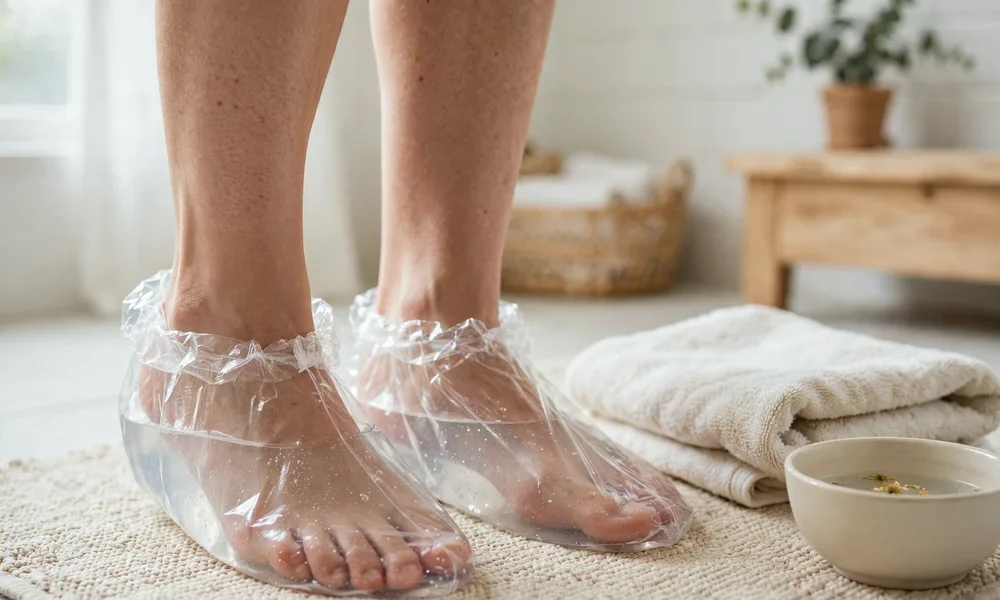
A foot mask is a pair of socks or booties pre-soaked in a serum, worn for a set time and then removed. Moisturising masks are fabric socks lined with rich cream, worn for twenty minutes or overnight. Peeling masks are plastic booties filled with exfoliating acids, worn for sixty to ninety minutes, then rinsed. In both cases the mask delivers the ingredients and seals them in, which is why one session can soften feet more than a week of nightly cream.
It is worth being clear about what a mask is not. A foot cream is daily maintenance: a thick cream rubbed in every night, which works slowly and needs repeating. Our guide to the best foot creams for happy feet in 2026 covers that daily routine in detail. A foot soak is warm water in a basin, which softens skin and rests tired muscles but adds nothing that stays on the skin. A mask sits between the two: stronger and faster than a cream, and longer-lasting than a soak.
Moisturising Masks vs Peeling Masks, Compared
These are the two kinds of foot mask, and choosing the wrong one is the most common reason a mask disappoints. A moisturising mask adds moisture and softens the surface: it is for dry, rough, dull feet that are not yet thick. A peeling mask dissolves the bonds between dead skin cells, so the thick layer sheds over the following week: it is for calluses no cream can touch.
| Type | Best for | How long | Results in | Watch out for |
|---|---|---|---|---|
| Moisturising sock mask | Dry, rough heels | 20 min or overnight | Next morning | Can feel slippery in bed |
| Peeling bootie mask | Thick, callused skin | 60–90 minutes | 5–7 days | Stings broken skin; never force peeling |
| Overnight gel socks | Very dry feet | All night | Next morning | Needs cotton socks over the top |
| Cooling gel mask | Tired, hot feet | 20–30 minutes | Straight away | Light on moisture; a treat, not a repair |

The 7 Best Foot Masks for Rough Feet in 2026
1. Best overall: an overnight urea moisturising sock mask
Urea matters most for cracked heels, and an overnight sock mask with a good dose of it is the most effective foot treatment you can buy. Urea pulls water into the skin and loosens the bonds between dead skin cells, so hard skin softens in one night.
2. Best for thick calluses: a fruit-acid peeling bootie
When heel skin feels like a shell, no moisturiser can get through it, and a peeling bootie is the right tool. The acids inside, usually lactic and glycolic, dissolve the glue holding dead skin together, and the thick layer sheds over the following week. Only use one on intact skin, never on cracked or bleeding heels.
3. Best for cracked heels: a shea butter and glycerin overnight mask
Cracked heels need moisture pulled in and a rich seal to hold it there. Shea butter provides the seal, glycerin pulls the moisture in, and together overnight they soften cracks a daytime cream never reaches. Use it two or three nights running when cracks are worst, then weekly.
4. Best budget: a plain glycerin sock mask
You do not need an expensive mask to get soft feet. A simple sock mask built on glycerin and a little shea butter does the basic job well: it seals moisture against the skin for hours, and the results are hard to tell apart from a mask costing three times as much.
5. Best for tired feet: a cooling gel mask
Some foot masks are about comfort rather than repair. A cooling gel mask, kept in the fridge and worn for twenty minutes after a long day, eases hot, aching feet fast. It will not fix cracked heels alone, but it makes the routine feel like a treat, which keeps people doing it.
6. Best for very dry feet: reusable gel socks with a serum
Reusable gel socks are lined with soft gel that holds serum against the skin, and can be washed and reused for weeks. They suit very dry feet because the gel keeps the treatment against the skin all night without the slipperiness of a disposable sock. They cost more upfront, but work out cheaper than disposables over a month.
7. Best for sensitive skin: a fragrance-free moisturising mask
Fragrance is the most common cause of irritation in foot products, and cracked feet are already vulnerable. A fragrance-free mask with a short ingredient list, built on glycerin and shea butter with no essential oils, is the safest pick for sensitive skin. It is also the best choice for the days between peeling masks.
Ingredients That Earn Their Place
The ingredient list tells you almost everything, and urea sits at the top of it for a reason. At low strengths it pulls water into the skin; at higher strengths it also loosens dead skin, so it appears in both kinds of mask. Shea butter and glycerin are the other two worth looking for: shea seals moisture in, glycerin draws it in, and together they do more than either alone. Lactic and glycolic acids are the exfoliating acids in peeling masks, effective because they are strong, which is why they demand respect.
What to avoid is just as clear. Skip masks with heavy fragrance if your heels are cracked, because perfume on broken skin stings and can irritate. Skip any peeling mask that does not list its acids or their strength: an unknown dose can range from doing nothing to a painful over-peel. And a mask does not replace a cream: the mask is a weekly reset, the cream is the daily upkeep that keeps results from fading in three days.
How to Use a Foot Mask Properly
Preparation takes five minutes and makes the difference between a mask that works and one that does not. Start by washing your feet and drying them properly, including between the toes. If you have thick calluses, soak your feet first: our guide to foot soaks that soothe tired feet explains the warm-water routine that softens hard skin so the mask can get through it. Then put the mask on, smooth out any air pockets, and seal the top if it has a sticker or tab.
For a moisturising mask, wear cotton socks over the top, especially overnight: they keep the mask in place and the serum off your sheets. In the morning, rub in the leftover serum rather than washing it off. For a peeling mask, wear it for the full sixty to ninety minutes, then rinse and wait: shedding starts in three to five days, and you must let it happen on its own. Never pull peeling skin off by hand: the skin underneath is new and fragile, and tearing it leaves raw patches that take weeks to heal.
The Mistakes That Waste a Good Foot Mask
The most common mistake is using a peeling mask on cracked or bleeding heels. The acids sting broken skin, and they can make a small crack into a painful split. If your heels are cracked open, use a moisturising mask until the skin has closed before considering a peel. The second mistake is impatience: expecting results the next morning, then using a second mask. Peeling takes five to seven days, and a second bootie too soon over-exfoliates the new skin underneath.
The third mistake is skipping the cream afterwards. A mask softens feet dramatically, but the effect fades within days without a nightly cream to maintain it. And the fourth is wearing a moisturising mask without socks over it and then wondering why it slid off halfway through the night. Our guide to hand masks that soften dry hands overnight makes the same point for hands: the sealed sock or glove is what turns a good cream into a treatment.
Your Foot Mask Checklist
- Wash and dry your feet fully before any mask, including between the toes.
- Choose a moisturising mask for dry, rough feet and a peeling mask for thick calluses.
- Wear cotton socks over a moisturising mask overnight.
- Never use a peeling mask on cracked, bleeding or very sensitive skin.
- Let peeling happen on its own; never pull skin off.
- Follow every mask with a nightly foot cream.
Frequently Asked Questions
How often should I use a foot mask?
A moisturising mask once a week is enough, or two to three nights running when heels are badly cracked. A peeling mask no more than once a month, because the skin needs time to renew.
Can I sleep in a foot mask?
Yes, if it is a moisturising mask: that is the best way to use one, with cotton socks over the top. Never sleep in a peeling mask; wear it for sixty to ninety minutes, then rinse it off.
Do peeling foot masks hurt?
On healthy, intact skin they should tingle at most. If one stings or burns, remove it and rinse straight away: the skin was probably already cracked.
Can I use a foot mask if I have diabetes?
Be cautious. Feet with poor circulation or reduced feeling heal slowly, and a peeling mask can cause damage that goes unnoticed. Check with your doctor before using one.
Why are my feet rough again a week after a mask?
Because a mask is a reset, not a cure. Feet lose moisture every day, and without a nightly cream the softness fades within days. A weekly mask plus a nightly cream keeps feet soft.
Are foot masks better than foot cream?
They do different jobs. A mask is stronger and faster, because the seal holds the ingredients against the skin for hours. A cream is the daily maintenance that keeps the results.
The Bottom Line
A foot mask is the fastest way to fix rough feet, as long as you pick the right kind: a moisturising sock mask overnight for dry, cracked heels, or a peeling bootie for thick, built-up skin. Use it weekly, follow it with a nightly cream, and never force the peeling.


