
Mixed nuts are the snack that looks simple and turns out to be anything but. A good bag of mixed nuts is crunchy, buttery, a little salty, and satisfying in a way that keeps you from reaching for a second snack an hour later. A bad bag is stale, oddly sweet, or so dominated by cheap peanuts that the almonds and cashews on the front of the packet feel like a rumour. The best mixed nuts in 2026 are the ones where every handful tastes like the picture on the bag, and this guide explains how to find them.
Buying mixed nuts well comes down to four things: which nuts are actually in the blend, how they were roasted, how much salt and sugar was added, and how fresh the bag is. Get those four right and the brand hardly matters. Get them wrong and even an expensive bag disappoints. This guide walks through each one, compares the main types of blend, and shows how to read a label in about thirty seconds.
Key Takeaways
- The best mixed nuts list almonds, cashews, walnuts and pecans first, with peanuts — if they appear at all — well down the list.
- Dry-roasted nuts taste cleaner and keep better than oil-roasted ones, and raw nuts are the best choice for baking and cooking.
- Unsalted or lightly salted blends let the nuts speak for themselves; heavily salted and honey-roasted bags are mostly salt and sugar.
- Fresh nuts smell sweet and nutty, never bitter or paint-like, and they should snap or crunch rather than bend.
- Buy smaller bags more often, keep them sealed in a cool cupboard, and move an opened bag to the fridge if it will last more than a fortnight.
What Is in a Good Mixed Nut Blend?
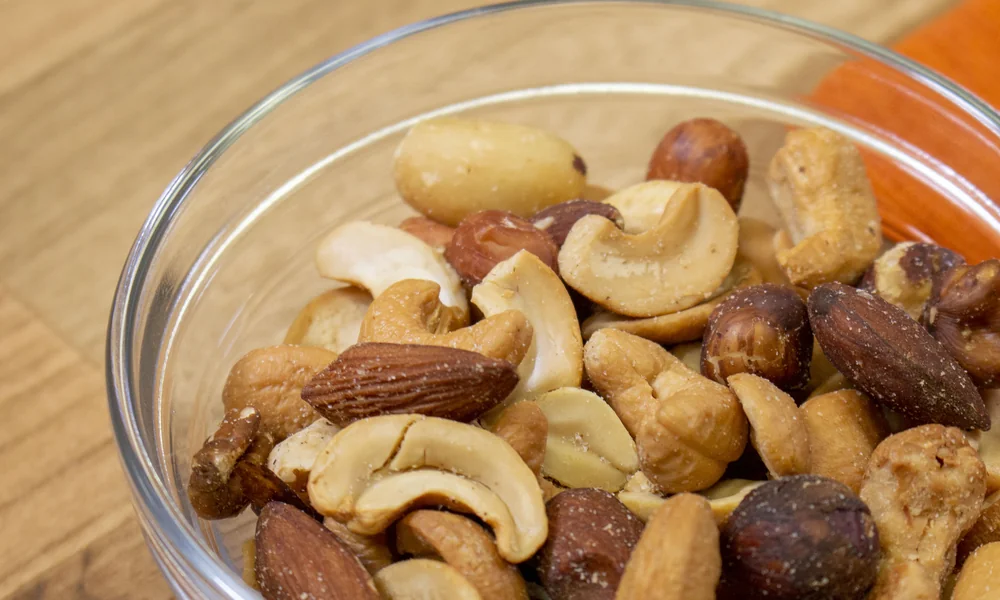
A mixed nut blend is only as good as its nuts, and not all nuts cost the same. Almonds, cashews, walnuts, pecans, hazelnuts, pistachios and Brazil nuts are the expensive, flavoursome members of the family. Peanuts are far cheaper, which is why they dominate the cheapest bags. There is nothing wrong with peanuts — they are tasty, filling and a legume rather than a true nut, though few shoppers care about the botany — but a bag that is mostly peanuts is a bag of peanuts with garnish, not a mixed nut blend.
Read the ingredient list in order, because ingredients are listed by weight. In a good blend, almonds or cashews come first, followed by walnuts or pecans. If peanuts are first, the bag is built for price rather than flavour. If the list starts with a nut you do not like, move on; no amount of roasting fixes a blend built around the wrong nuts. The best blends also name the proportion of each nut, or at least show a mix you can see through the packet, with different shapes, colours and sizes rather than a uniform sea of one nut.
Mixed Nut Blends Compared
| Blend type | Typical nuts | Best for | Watch out for | Typical price |
|---|---|---|---|---|
| Classic salted | Peanuts, almonds, cashews | Everyday snacking, drinks | Peanut-heavy, very salty | Low |
| Premium unsalted | Almonds, cashews, walnuts, pecans | Snacking, cheese boards | Goes stale faster once open | High |
| Trail mix | Mixed nuts plus dried fruit | Walking, travel, lunchboxes | Added sugar, chocolate pieces | Medium |
| Roasted and spiced | Almonds, cashews, peanuts | Parties, drinks, bold flavour | Spice coatings hide stale nuts | Medium |
| Raw mixed nuts | Almonds, walnuts, hazelnuts | Baking, cooking, muesli | Bland eaten straight from the bag | Medium |
Roasted vs Raw: Which Is Better?
Roasting is where flavour is made. Heat deepens the taste of a nut, brings out its oils, and turns a mild raw almond into something warm and toasty. Most mixed nuts are sold roasted, and for snacking that is usually the right call. The question is how they were roasted. Dry-roasted nuts are cooked in hot air with little or no added oil, so they taste clean and keep well. Oil-roasted nuts are fried in oil, which gives a richer, almost glossy flavour but adds fat and can turn rancid sooner.
Salted vs Unsweetened: The Flavour Trade-Off
Salt is the oldest trick in the snack book. A little salt makes nuts taste more like themselves; a lot of salt makes them taste of salt. Lightly salted blends, at around 0.3 to 0.5 grams of salt per 30-gram serving, hit the sweet spot for most people. Heavily salted bags can carry more than a gram per serving, which is a lot of salt for a small handful, and it leaves you thirsty and reaching for more without feeling satisfied.
Unsalted nuts are the honest option, and they are worth trying even if you think you will miss the salt. Without salt, the differences between the nuts stand out — the sweetness of a pecan, the butteriness of a cashew, the mild bitterness of a walnut — and you can season them yourself. A pinch of flaky sea salt, a little smoked paprika, or a squeeze of lime over a bowl of unsalted nuts gives you the flavour you want without the salt overload of a factory-seasoned bag.
How to Read the Label in Thirty Seconds
The front of the packet is advertising. The back is the truth, and it takes half a minute to read. Start with the ingredient list: nuts first, in an order you like, with salt near the end and no sugar at all in a plain blend. Then check the nutrition panel for a 30-gram serving, which is roughly a small handful. Good mixed nuts carry around 170 to 200 calories, 5 to 7 grams of protein, 2 to 3 grams of fibre, and less than 2 grams of sugar per serving.
Freshness: The Thing Nobody Talks About
Freshness matters more with nuts than with almost any other snack, because their oils turn rancid. Rancid nuts taste bitter, smell faintly of paint or old oil, and feel soft or waxy instead of crisp. They are not dangerous in small amounts, but they taste dreadful, and a bag that has turned will put you off nuts for weeks. The best defence is to buy from shops that sell a lot of nuts, so stock turns over quickly, and to buy smaller bags more often rather than one giant bag that sits open for a month.
Mixed Nuts for Snacking, Baking and Cooking
For everyday snacking, a small handful — about 30 grams — is the right portion. It is enough to feel satisfied without turning a snack into a meal, and it is easy to measure once: pour a handful into a small bowl rather than eating from the bag, and you will be surprised how much more slowly you eat. Mixed nuts are also the backbone of a good trail mix, and pairing them with dried fruit adds chew and sweetness that balances the richness of the nuts. Our guide to what makes great dried fruit worth stocking covers which dried fruits hold up best in a mix and which ones are mostly added sugar.
In the kitchen, mixed nuts are more versatile than most people realise. Roughly chopped, they add crunch to salads, stir-fries and grain bowls. Ground, they thicken sauces and fillings. Toasted and chopped, they top porridge, yoghurt and ice cream better than any sprinkle. Walnuts and pecans are the best baking nuts, holding their texture in cakes and biscuits, while almonds and hazelnuts are the ones to reach for in pastry and muesli. If you bake with nuts often, buy them raw and toast only what you need. For breakfast, a spoonful of chopped mixed nuts over porridge or stirred into granola that is actually healthy adds protein and crunch that keeps you full until lunch.
Mixed Nuts vs Other Snacks
Compared with other snacks, mixed nuts sit in the middle: more filling and more nutritious than crisps or crackers, but more calorie-dense than fruit or popcorn. A handful of nuts carries roughly the same calories as a small bag of crisps, yet it keeps you full for far longer, because of the protein, fibre and healthy fats. That is why nuts work as a snack rather than a nibble — they actually satisfy hunger instead of just delaying it.
Popcorn is the lighter alternative, and it wins on volume: you can eat a large bowl of air-popped popcorn for the calories in a small handful of nuts. Our guide to popcorn worth popping covers kernels, microwave bags and ready-popped options, and it is worth reading if you want a snack you can eat in quantity. Crackers and dried fruit sit between the two — lighter than nuts, but easier to overeat, and dried fruit in particular can be surprisingly sugary. The honest answer is that the best snack depends on the moment: nuts when you are properly hungry, popcorn when you want volume, and fruit when you want something sweet.

Checklist: Buying Mixed Nuts
- Almonds, cashews, walnuts or pecans are listed first, not peanuts.
- The nuts look varied in shape and colour through the packet, not uniform.
- Salt is under 0.5 grams per 30-gram serving, and there is no added sugar in a plain blend.
- The best-before date is months away, and the bag smells sweet and nutty when opened.
- The nuts snap or crunch rather than bending, and none taste bitter or paint-like.
- The price per 100 grams is fair for the nuts inside, and the bag size matches how fast you will eat it.
Frequently Asked Questions
Are mixed nuts healthy?
Yes, in sensible portions. Mixed nuts are rich in healthy fats, protein, fibre, vitamin E and magnesium, and they keep you full. The catch is calories: a small handful is about 170 to 200 calories, so eating from the bag without thinking can add up quickly. Unsalted, unsweetened blends are the healthiest choice.
How many mixed nuts should I eat a day?
Around 30 grams, roughly a small handful, is a good daily portion for most people. It delivers the nutritional benefits without overdoing the calories. If you eat nuts every day, vary the blend so you get a wider range of nutrients rather than the same nuts every time.
Do mixed nuts need to be refrigerated?
Not if you finish the bag within a week or two, but the fridge helps once a bag is open, especially in a warm kitchen. The cold slows the oils from turning rancid. For storage beyond a month, the freezer is better, and frozen nuts thaw in minutes.
Are raw or roasted mixed nuts better?
Roasted nuts taste better for snacking, because roasting deepens the flavour. Raw nuts are better for baking and cooking, where you control the seasoning and heat. Dry-roasted beats oil-roasted for a cleaner taste and longer shelf life.
Why do some mixed nuts taste bitter?
Bitterness usually means the nuts are stale or over-roasted. Walnuts are naturally a little bitter, which is normal, but a paint-like or harsh bitterness means the oils have turned rancid. Return the bag if it tastes that way from new, and store opened bags in the fridge.
Are mixed nuts safe for children?
Whole nuts are a choking hazard for young children, so they should not be given to children under five. For older children, a small portion of mixed nuts is a good snack, but check for nut allergies first — schools and nurseries often have nut-free rules, so check before packing them in a lunchbox.
The Bottom Line
The best mixed nuts in 2026 are the ones with good nuts listed first, light seasoning, and a fresh crunch in every handful. Buy a premium unsalted blend for everyday snacking, keep a raw bag for baking, and save the sweetened and heavily spiced bags for treats. Read the label, trust your nose, store the bag properly, and the humble mixed nut becomes one of the best snacks in the cupboard.


