Popcorn Worth Popping: The Best Kernels and Bags of 2026
Popcorn is the rare snack that can be genuinely light, endlessly customisable and cheap all at once. The best popcorn in 2026 is not one brand or one bag. It is the right popcorn for the moment: kernels you pop yourself when you want flavour and value, a good microwave bag when you want speed, and a ready-popped bag when you want something to eat straight from the packet.
This guide explains what popcorn is, how the three main ways of buying it compare, and how to read a packet so you can tell a good bag from a salty, greasy one. It covers kernels against microwave bags against ready-popped, oil against air-popped, the flavours worth trying, and how to store popcorn so it stays crisp.
Key takeaways
- Loose kernels are the best value and the best flavour: they cost pennies a bowl, pop fresh, and let you control the salt, oil and seasoning yourself.
- A good microwave bag pops almost every kernel and leaves little unpopped corn at the bottom. A bad one leaves a quarter of the bag unpopped and tastes of burnt butter flavouring.
- Ready-popped bags are the most convenient, but check the salt and sugar per serving, because some sweet and salty bags are closer to sweets than to popcorn.
- Air-popped popcorn is the lightest option, with no oil at all. Oil-popped popcorn tastes richer and holds seasoning better, and a little good oil is no bad thing.
- Popcorn goes stale fast once it is open. Keep kernels in a sealed jar in a cool cupboard, and keep popped popcorn in an airtight tin, not an open bag.
What popcorn actually is
Popcorn is a particular kind of corn, and it pops for a simple reason. Each kernel is a tiny sealed parcel: a hard outer shell wrapped around a starchy centre that holds a little water. When the kernel is heated, the water inside turns to steam, pressure builds, and the shell gives way. A good kernel pops into a piece many times its original size, while a poor one barely opens, or stays shut altogether.
There are two main shapes of popped corn. Butterfly popcorn pops into irregular wings and folds, which catch salt and seasoning well and feel light and crisp. Mushroom popcorn pops into tight, round balls, which are sturdier and hold coatings such as caramel and cheese far better without breaking.
The three ways to buy popcorn
Popcorn reaches the shelf in three forms, and each suits a different moment. Loose kernels are the raw ingredient. Microwave bags are kernels sealed in a pouch with oil and flavouring, ready for the microwave. Ready-popped bags are popcorn that has already been popped, flavoured and sealed, ready to eat. None of them is the best in every situation, and the honest answer is to keep two of them in the cupboard: kernels for the evenings when you have five minutes, and a ready-popped bag for the times when you do not.
Loose kernels
Kernels are the cheapest way to eat popcorn, by a wide margin. A large bag of kernels costs about the same as two or three microwave pouches and makes dozens of bowls. They also give you the most control: you choose the oil, or none at all, the salt, and the flavour. And they keep for a very long time in a sealed jar, a year or more, which makes them the most practical pantry staple of the three.

Microwave bags
Microwave bags are the compromise: faster than kernels, fresher than a ready-popped bag. You put the pouch in the microwave, listen for the popping to slow to a couple of seconds between pops, and tip it into a bowl. The best bags pop almost every kernel, leaving only a small handful unpopped at the bottom. The worst leave a quarter of the bag behind and smell faintly of burnt butter substitute.
Ready-popped bags
Ready-popped popcorn is the simplest option of all: open the bag and eat. It is the best choice for a lunchbox, a train journey or a picnic, where there is no microwave and no pan. The best ready-popped bags stay crisp for weeks in a sealed bag, and the flavouring is evenly spread rather than pooled at the bottom.
The main types, compared
| Type | Freshness | Cost per bowl | Best use |
|---|---|---|---|
| Loose kernels | Best, popped to order | Lowest | Movie nights and everyday snacking at home |
| Microwave bags | Good, popped in minutes | Medium | Quick evenings when a pan feels like too much effort |
| Ready-popped bags | Good if the bag is fresh | Highest | Lunchboxes, travel and eating straight from the bag |
| Sweet and coated bags | Good, but goes sticky fast | Highest | An occasional treat, not an everyday snack |
Oil or air-popped: which is better?
The popping method changes the taste more than the kernel does. Air-popped popcorn is the lightest way to eat it. Hot air does the popping, no oil is involved, and the result is plain, crisp and very low in fat. It is the best choice if you eat popcorn often, or if you want a blank base for your own seasoning. The downside is that seasoning does not stick well to dry popcorn, so salt tends to fall to the bottom of the bowl.
Oil-popped popcorn tastes richer, and for most people it tastes better. The oil carries flavour into every piece and gives salt and spices something to cling to. A tablespoon of oil per batch is enough, and the choice of oil matters. Coconut oil gives the classic cinema flavour that many people associate with popcorn, sweet and faintly buttery, while a neutral oil such as sunflower lets the corn taste come through.
Flavours worth trying
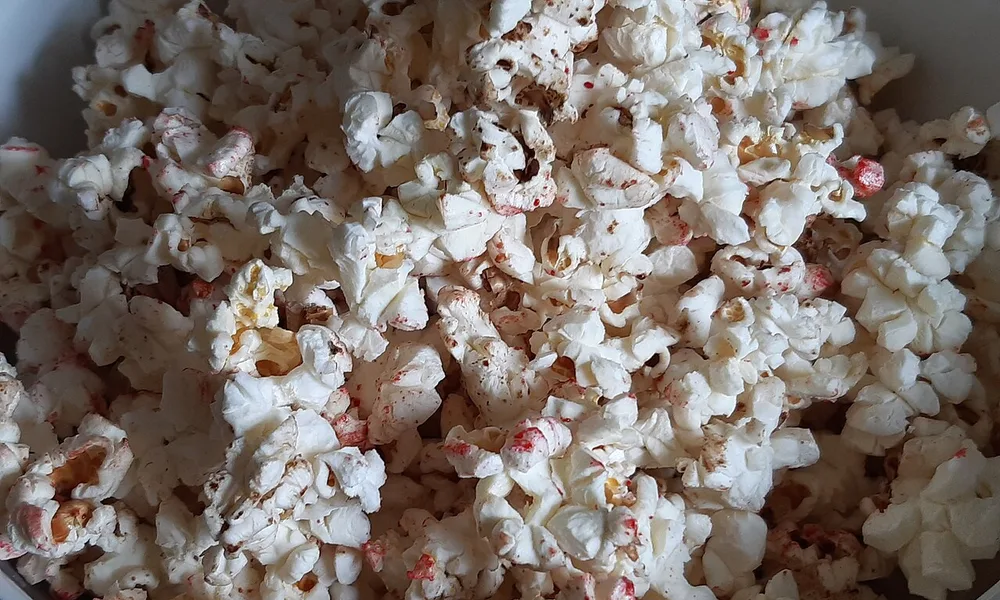
Plain salted popcorn is the classic for a reason, but popcorn takes flavour better than almost any other snack, and a little imagination goes a long way. The rule is to season while the popcorn is still warm, when the surface is slightly damp with oil and the seasoning can stick. Seasoning added to cold popcorn falls off, and seasoning added before popping burns.
For savoury flavours, the simplest are the best. Fine sea salt and a little melted butter is the cinema standard. Smoked paprika and a pinch of garlic powder gives a warm, smoky bowl. Nutritional yeast gives a cheesy, savoury flavour without any cheese at all, and it sticks well to lightly oiled popcorn.
Popcorn for movie night and beyond
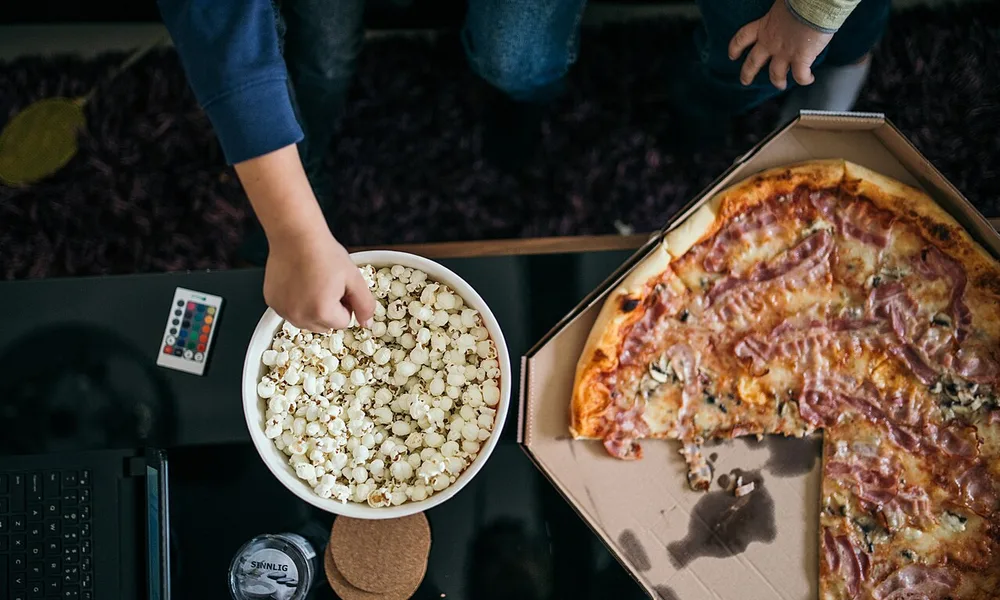
Popcorn and films belong together, and a movie night is where popcorn earns its place. The practical side matters as much as the flavour. A big bowl, popped just before the film starts, stays warm and crisp for the first half of the film. Popping a second batch at the interval is better than trying to keep one enormous bowl crisp for two hours.
For a family film night, plain or lightly salted popcorn suits everyone, and a second bowl with a sweeter flavour keeps the children happy without forcing the adults to eat caramel. For a grown-up film night, a savoury bowl with rosemary and black pepper feels more like a proper snack than a bag of crisps would. And for a solo evening, a single-serve microwave bag is the honest choice, because a full pan of kernels is too much for one person and goes stale before it is finished.
How to choose a bag and store it well
Choosing popcorn starts with the label. For kernels, the label should say nothing more than popcorn. For microwave bags, look for a short ingredient list: popcorn, oil, salt and flavouring. If the list runs to a dozen items, the bag is doing too much. For ready-popped bags, check the salt and sugar per hundred grams, and compare two bags side by side. The difference between the lightest and the sweetest bag on the same shelf can be surprising.
Storing kernels well is simple. Keep them in a sealed jar or tub in a cool, dry cupboard, away from the cooker and the sink. Do not store them in the fridge, where condensation can change their moisture and spoil the pop. Popped popcorn should be stored in an airtight tin or tub, never in an open bag, and never in the fridge, where it goes soft. A bowl left out overnight will be stale by morning, and there is no good way to bring it back.
Checklist: buying popcorn in 2026
- Buy loose kernels for everyday eating: they are the cheapest, freshest and most flexible option.
- Check the ingredient list on microwave and ready-popped bags, and choose the shortest list on the shelf.
- Compare salt and sugar per hundred grams before choosing a flavoured bag, especially a sweet one.
- Season popcorn while it is still warm, so salt and spices stick instead of falling to the bottom of the bowl.
- Store kernels in a sealed jar in a cool, dry cupboard, and store popped popcorn in an airtight tin.
- Match the popcorn to the moment: kernels for movie night, a microwave bag for a quick evening, a ready-popped bag for travel.
Frequently asked questions
Is popcorn healthy?
Plain popcorn is one of the healthiest snacks there is: whole grain, high in fibre and low in calories. What changes the picture is what is added to it. Lightly salted popcorn, air-popped or popped in a little oil, stays light. Popcorn loaded with butter, cheese flavouring or caramel is a treat, not a health food.
Why do some kernels not pop?
Usually because they are too dry or too damp, or because the heat was too low. Kernels need the right moisture inside to build steam, and they need enough heat to burst. Fresh kernels in a sealed jar pop almost every time.
Can you pop popcorn without oil?
Yes. An air popper pops kernels with hot air and no oil at all, and a microwave popper bowl does the same job. You can also pop kernels in a pan with a little water, though the result is less crisp. A light spray of oil after popping helps seasoning stick.
How long does popped popcorn stay fresh?
About a day in an open bowl, and two or three days in an airtight tin. After that it goes soft and chewy. Ready-popped bags stay crisp until they are opened, so check the date and keep the bag sealed until you are ready to eat it.
Is microwave popcorn bad for you?
Not in itself. The popcorn is the same as kernels. The difference is the oil and flavouring in the pouch. A plain or lightly salted microwave bag is a fine snack; a bag full of artificial butter flavouring and extra salt is a poorer choice, so read the label.
What is the difference between butterfly and mushroom popcorn?
Butterfly popcorn pops into irregular, winged shapes that catch seasoning well and feel light. Mushroom popcorn pops into round, sturdy balls that hold coatings such as caramel and cheese without breaking. Butterfly suits plain and salted popcorn; mushroom suits coated and sweet popcorn.
The bottom line
The best popcorn in 2026 is the popcorn that fits the evening. Keep a jar of kernels in the cupboard for movie nights, when fresh, warm popcorn is worth five minutes at the stove. Keep a couple of good microwave bags for the evenings when speed matters, and a ready-popped bag for the journeys and lunchboxes where there is no kitchen at all. Done that way, popcorn is the cheapest, lightest and most satisfying snack on the shelf.
For the machine that pops the kernels, see our comparison of the best and worst popcorn makers of 2026; for the microwave itself, see our guide to the best microwaves of 2026; and for what to watch while you eat it, see our round-up of the best and worst movies of 2026.