A popcorn maker should be the simplest machine in your kitchen. You add kernels, add heat, and a few minutes later you have a bowl of fresh popcorn that tastes far better than anything from a bag. Yet walk into any kitchen shop or scroll through an online store and you will find dozens of them, from slim hot-air poppers to heavy stovetop kettles, from collapsible silicone bowls to machines shaped like old cinema carts. Some of them are genuinely brilliant. Others burn half your kernels, scatter popcorn across the worktop, or fall apart within a month.
This comparison sorts the whole shelf into two camps: the best popcorn makers of 2026 and the worst. We judged them the way you would use them at home, on popping rate, flavour, ease of cleaning, build quality, and how much space they take up when they are not in use. A good popcorn maker should pop almost every kernel, leave very few burnt pieces, and be easy enough to clean that you actually use it more than once. A bad one fails on at least two of those counts, and the worst fail on all of them.
Key Takeaways
- Hot-air poppers and stovetop kettle poppers are the best popcorn makers overall, popping almost every kernel with very little waste.
- Collapsible silicone microwave poppers are the best choice for small kitchens and tight budgets.
- Cheap plastic hot-air poppers with weak fans are the worst, leaving many kernels unpopped and scorching the rest.
- Novelty cinema-style machines look fun but are bulky, hard to clean, and often cook unevenly.
- Buy for popping rate, cleaning, and storage first, and treat looks and extra features as a bonus.
How Popcorn Makers Actually Work
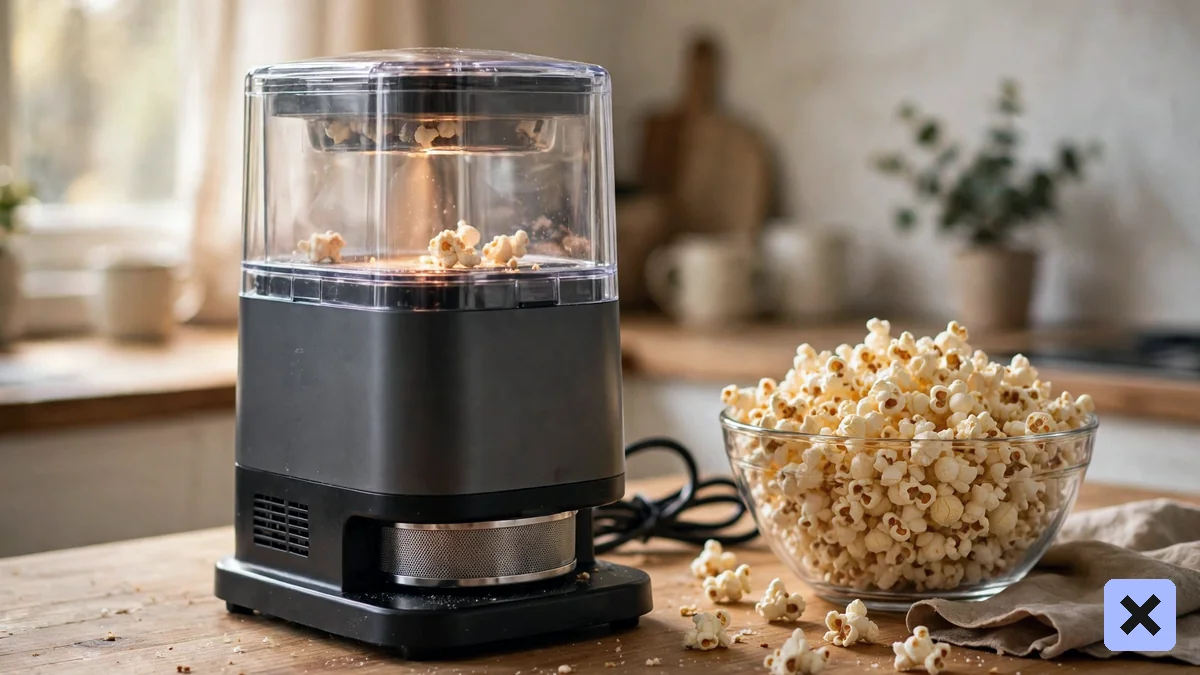
Hot-air poppers blow very hot air through a chamber of kernels. The kernels tumble in the airflow, heat evenly, and pop one by one before being blown out into a bowl. No oil is needed, which keeps the popcorn light and the machine easy to clean. The best hot-air models have a strong, steady fan and a well-shaped chamber, so almost every kernel pops and almost none escapes onto the floor.
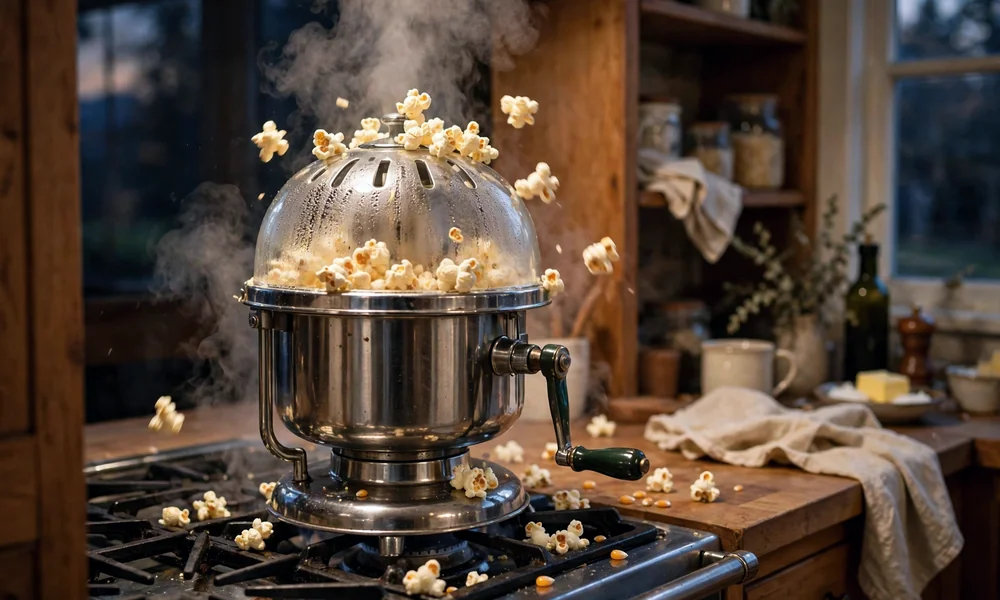
Stovetop kettle poppers use a pot with a stirring arm that you turn by hand over a hob. The oil in the pot carries heat into every kernel, and the stirrer keeps them moving so they do not sit in one hot spot and burn. This is the oldest method, and it still gives the richest flavour, because the oil lets salt and butter cling to every piece. It also gives you the most control, since you can hear and feel exactly when the popping slows down.
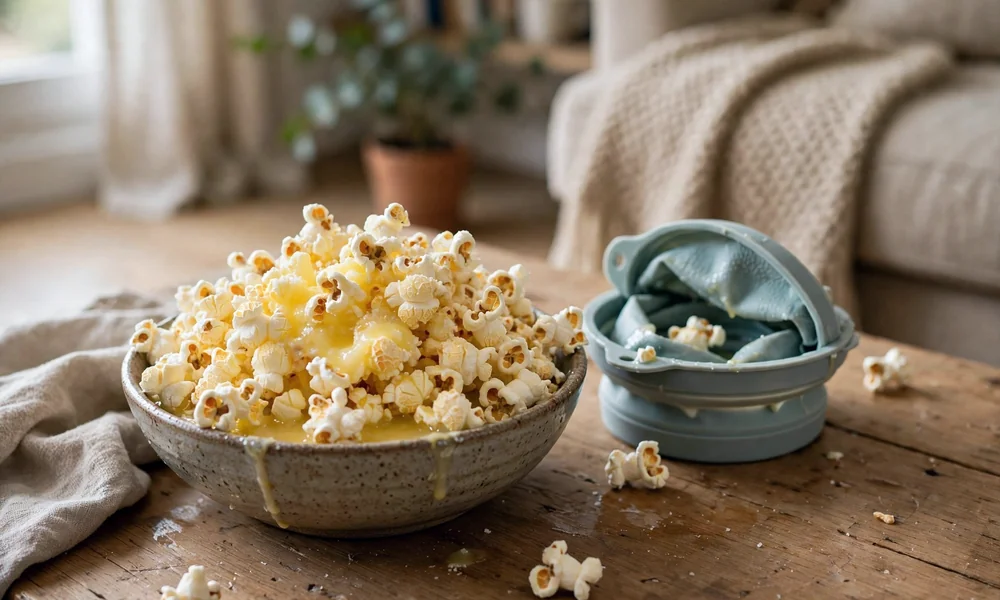
Microwave poppers are the simplest of all. A silicone bowl, sometimes with a lid that doubles as a butter melter, goes into the microwave with kernels inside. The microwaves heat the kernels directly, and the bowl contains the popping. There are no moving parts and nothing to plug in, which is why these are so popular in small flats and student kitchens.
The Best Popcorn Makers of 2026
Hot-Air Poppers: The Best All-Rounder
A good hot-air popper is the easiest way to make popcorn well. You measure kernels into the chamber, switch it on, and within three or four minutes a bowl of hot popcorn is ready, with no oil and no stirring. The best models pop around ninety-five per cent of their kernels, which means very little waste, and the popcorn comes out light and crisp, ready for whatever topping you like.
What separates a good hot-air popper from a bad one is the fan. A strong fan keeps the kernels tumbling so they heat evenly, and it pushes popped corn out of the chamber before it can overcook. A weak fan lets kernels sit still, so some never pop at all while others scorch against the hot plate. When you are choosing one, look for a solid base that does not wobble, a chamber that is easy to wipe out, and a chute that aims the popcorn into the bowl instead of across the kitchen.
Stovetop Kettle Poppers: The Best Flavour
If flavour matters more than convenience, the stovetop kettle popper is the best popcorn maker you can buy. The oil gives the popcorn a rich, buttery taste that hot air cannot match, and the stirring arm means you can use any oil you like, from plain vegetable oil to coconut oil for a cinema-style flavour. A well-made kettle popper also pops nearly every kernel, because you can feel the stirring resistance change as the kernels pop and you can lift the pot off the heat at exactly the right moment.
These poppers are usually made from aluminium or stainless steel, with a hand crank on the side and a lid that vents steam. The steam vent matters more than it looks: trapped steam makes popcorn chewy, while a vented lid keeps it crisp. The best models have a sturdy crank that turns smoothly, a handle that stays cool, and a pot that is deep enough to hold a large batch without overflowing.
Silicone Microwave Poppers: The Best for Small Kitchens
Not everyone has room for another appliance, and that is where the silicone microwave popper earns its place. It is a collapsible bowl that folds flat for storage, costs very little, and makes a generous bowl of popcorn in about two minutes in the microwave. There is no plug, no fan, and no stirring arm, so there is nothing to go wrong.
The best silicone poppers have a thick, sturdy base that sits flat in the microwave, a lid that lets steam escape without letting popcorn out, and a bowl that unfolds to a proper size rather than a shallow dish. Some lids have a small well on top where you can put a knob of butter, which melts from the heat of the popcorn below and drips through as you pour. It is a small detail, but it is the difference between popcorn that tastes plain and popcorn that tastes finished.
The Worst Popcorn Makers of 2026
Cheap Plastic Hot-Air Poppers: The Worst Value
The worst popcorn makers on sale today are the cheapest plastic hot-air poppers, the ones that cost less than a couple of bags of kernels and feel as light as a toy. Their fans are too weak to tumble the kernels properly, so a large share never pops at all. The kernels that do pop often sit too long in the hot chamber and come out scorched, while unpopped kernels rattle around and sometimes shoot out of the chute onto the floor.
The plastic itself is part of the problem. Thin plastic warps with heat over time, which makes the chamber fit worse and the popping worse still. The chute is often too short or angled badly, so popcorn misses the bowl. And because the whole machine is so light, it vibrates across the worktop while it runs. A popcorn maker that wastes a third of your kernels and makes a mess every time is not a bargain at any price, and it will cost you more in wasted kernels than a decent model would have cost in the first place.
Novelty Cinema-Style Machines: The Worst for Real Kitchens
Cinema-style popcorn machines look wonderful in a photograph. A little glass cabinet on legs, a red-and-gold design, a scoop and a bag holder, it promises a home cinema in miniature. In a real kitchen, though, most of them are a disappointment. They are large, they need a permanent spot on the worktop or the floor, and they are far harder to clean than they look, with corners and seams where oil and old kernels collect.
The popping itself is often mediocre. Many of these machines use a small kettle that heats unevenly, so the first kernels burn while the last ones barely pop. The glass cabinet steams up, which makes the popcorn go soft instead of crisp, and the warming light underneath can dry out a batch if you leave it sitting. They also use more oil than a stovetop popper, which means more fat and more washing up.
Single-Serve Pod Poppers: The Worst Running Cost
Some popcorn makers only work with single-serve pods or pre-measured packs sold by the same brand. The machine itself may pop reasonably well, but the running cost is the problem. Each pod costs many times more than the same amount of loose kernels, and you are locked into one supplier. If the pods are out of stock, or the brand stops making them, the machine becomes useless.
Best vs Worst: Head to Head
Put the two sides together and the pattern is clear. The best popcorn makers are simple machines that do one job well, while the worst are either too cheap to do the job at all or too complicated to be worth the effort. A good hot-air popper and a good stovetop kettle both pop more than nine out of ten kernels. A cheap plastic popper may pop only six or seven out of ten, and a novelty machine may do worse once the kettle starts to wear.

The Verdict: The Best Wins Clearly
The verdict is clear: a good hot-air popper is the best popcorn maker for most people in 2026, with a stovetop kettle popper just behind it for anyone who puts flavour first. Both pop nearly every kernel, both are easy to live with, and both will last for years. The silicone microwave popper is the best budget choice, especially if you are short on space.
The worst popcorn makers, the cheap plastic hot-air poppers, the bulky novelty cinema machines, and the pod-locked single-serve models, all fail the same simple test: they make popcorn worse, cost more over time, or take up more space than the result is worth. There is no reason to buy any of them when the best options are affordable and widely available.
If you only buy one thing, buy a well-made hot-air popper from a brand with solid reviews for popping rate and durability. Learn the right amount of kernels for your machine, keep it clean, and you will have fresh popcorn in minutes for years. That is what a good popcorn maker should do, and it is what the best ones do every single time.
Who Each Popcorn Maker Is For
Hot-air poppers suit families, frequent popcorn eaters, and anyone who wants a healthy snack with almost no washing up. They are fast, simple, and cheap to run, and they are the easiest machine to recommend to a first-time buyer.
Stovetop kettle poppers suit cooks who enjoy the process as much as the result, and anyone who wants the richest flavour. They are also the best choice for large batches, since a big kettle can fill a bowl for a whole family in one go.
Silicone microwave poppers suit small kitchens, students, renters, and anyone who eats popcorn occasionally rather than every night. They cost very little, store flat, and clean in seconds.
The worst machines suit almost nobody, which is the point. A cheap plastic popper might tempt a buyer on price, but it wastes kernels and makes a mess. A novelty machine might tempt a buyer on looks, but it takes up space and makes worse popcorn. And a pod machine might tempt a buyer on convenience, but it costs far more to run. In every case, a better machine costs less over a year of use.
For more kitchen comparisons, see our guide to the best vs worst air fryers, our round-up of the best microwaves, and our list of the worst kitchen gadgets that waste counter space.