
Pizza Dough That Crisps Like a Pizzeria in 2026
Great pizza starts long before the toppings go on. The best pizza dough in 2026 is the dough that bakes into a base with a crisp underside, a puffy golden rim, and a centre that is chewy rather than soggy. Whether you buy it fresh, refrigerated or frozen, the same qualities decide the result: the right flour, a slow rise, and dough that is stretched rather than rolled flat.
Most disappointing home pizzas are a dough problem, not a topping problem. Dough baked in a cool oven steams instead of crisping, which is why the base stays pale and soft while the cheese is already done. Understand those few variables and almost any pizza dough can be made to crisp properly, and the best ready-made doughs are the ones that make those variables easy to control.
Key takeaways
- Let pizza dough reach room temperature before stretching: cold dough tears, while rested dough stretches thin.
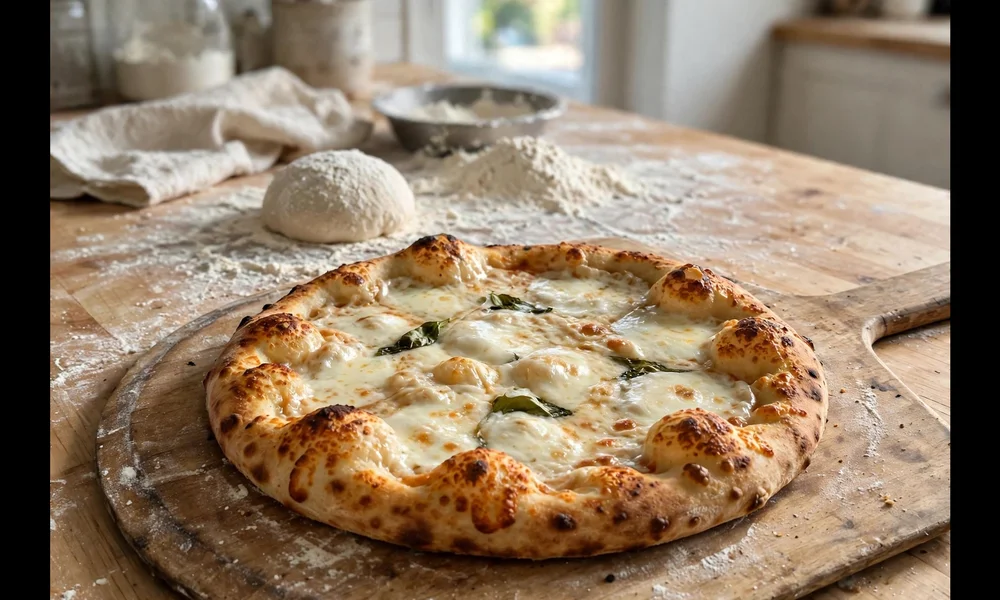
- Stretch by hand, do not roll: pressing from the centre out keeps the air in the rim, which is what makes a puffy, blistered crust.
- Bake as hot as your oven allows: a hot oven crisps the base fast, so the centre sets before the toppings make it soggy.
- Fresh dough suits same-day baking, refrigerated dough suits the week ahead, and frozen dough balls suit anyone who wants pizza on demand.
- Less sauce and less cheese crisp better: a light hand with toppings lets the base bake through instead of steaming under a wet layer.
What makes pizza dough crisp like a pizzeria
Crispness starts with the flour. Pizza dough made with strong bread flour or Italian 00 flour has more protein than dough made with plain flour, and that protein builds the stretchy gluten network that traps air as the dough rises. Those air pockets are what puff up in a hot oven and give the rim its open, chewy crumb. Dough made with plain flour can still make a good pizza, but it tends to bake softer and denser, with a rim that stays flat.
The rise matters just as much as the flour. A slow, cold rise in the fridge develops flavour and makes the dough easier to stretch, because the gluten relaxes over time. Dough that is rushed with too much yeast and a short warm rise tastes bland and tears easily, because the gluten is still tight. The oven does the rest: a base baked on a preheated surface crisps from below while the top cooks, and that two-sided heat is the closest a home oven gets to a pizzeria oven. A good pizza stone for home ovens holds heat and gives the base the fierce bottom heat it needs.
Fresh, refrigerated and frozen pizza dough compared
Fresh pizza dough is sold as a ball in a bag or tub, usually from a bakery or deli counter, and it is ready to use the same day. It has the liveliest yeast and the best flavour of any ready-made dough, because it has not been chilled for days or frozen. The trade-off is time: fresh dough needs an hour or two at room temperature before it will stretch, and it should be used within a day or two, because the yeast keeps working.
Refrigerated dough is the most common format: a ball or a tube in the chilled aisle, ready to stretch after half an hour on the counter. It keeps for a week or more, which makes it the best choice for planned meals during the week. Frozen dough balls are portioned before freezing, so every ball makes one pizza, and they keep for months. They need a few hours to thaw in the fridge and half an hour on the counter, so they suit anyone who wants pizza on demand but can plan a few hours ahead.
| Format | Best for | Storage | Crispness | Effort |
|---|---|---|---|---|
| Fresh ball | Same-day pizza | 1 to 2 days chilled | Excellent | Low |
| Refrigerated ball | Planned weeknight pizza | 1 to 2 weeks chilled | Very good | Low |
| Frozen ball | Pizza on demand | 2 to 3 months frozen | Good | Low, needs thawing |
| Home-mixed dough | Full control of flavour | 3 days chilled, 3 months frozen | Excellent, if slow-risen | Higher |
| Ready-rolled base | Fastest pizza | 1 week chilled | Fair, thinner crust | Minimal |

How to read a pizza dough label
The ingredient list for pizza dough should be short: flour, water, yeast, salt, and perhaps a little olive oil. Doughs with a long list of emulsifiers, preservatives and flavourings often bake up soft and pale, because the additives are there to make the dough survive long storage rather than to make it taste good. Salt should appear in the list too: unsalted dough tastes flat, and a dough with too little salt will not brown well.
Check the flour type and the yeast. Bread flour or 00 flour on the label is a sign of a dough built for crispness, while plain flour suggests a softer bake. What matters is the date: dough close to its use-by date has had longer to develop flavour, but dough past its date may have over-risen. Look at the ball through the packaging if you can: it should look smooth and slightly puffy, not collapsed or wet. A dough that has leaked liquid into the bag has over-proofed and will be sticky and hard to stretch.
Proofing, stretching and shaping
Proofing is the step that decides whether the dough will stretch or fight you. Take the dough out of the fridge and leave it covered on the counter for at least an hour, or until it feels soft and relaxed when you press it. Cold dough springs back every time you stretch it, because the gluten is tight, and it tears at the edges. Warm, rested dough stretches thin and stays where you put it.
Stretch by hand, not with a rolling pin. Press the ball flat in the centre with your fingertips, leaving a thicker rim around the edge, then lift it and let gravity stretch it as you turn it. The rim holds the air that puffs up in the oven, and a rolling pin squeezes that air out, which is why rolled pizzas bake flat and dense. If a thin spot appears, stop stretching that area and work the thicker parts instead. Slide the shaped base onto a floured pizza peel for home ovens before you add toppings, because a topped pizza is much harder to move than a bare base.
Toppings that help the base crisp
The fastest way to a soggy base is too much sauce. Two or three spoonfuls spread thinly is enough for a standard pizza: the sauce is there for flavour, not to cover every centimetre. Cheese matters too: fresh mozzarella holds a lot of water, and a pizza loaded with it will steam from below. Tear the mozzarella into small pieces and use less than you think, or mix it with a drier cheese. A good mozzarella that melts properly will stretch and brown without flooding the base.
Wet toppings are the other culprit. Fresh tomatoes, mushrooms and peppers all release water as they cook, and that water runs straight into the dough. Slice them thin, and if you have time, salt sliced tomatoes and mushrooms for ten minutes and pat them dry before they go on the pizza. Oily toppings like olives and artichokes should be drained well.
Baking hot for a crisp base
Heat your oven as hot as it will go, and give it at least thirty minutes to reach temperature. Most home ovens top out around 250 degrees, and that is hot enough if the oven is fully preheated and the base goes onto a hot surface. Put a stone or a heavy steel tray on the middle shelf while the oven heats, so it is screaming hot when the pizza lands on it.
Bake the pizza for seven to ten minutes, and check it halfway through. The rim should be puffed and golden with a few dark blisters, and the underside should be firm and browned when you lift an edge with a spatula. If the top is done but the base is still pale, move the pizza to the lowest shelf for the last two minutes. If the base is done but the cheese is not yet melted, move it up a shelf. Let the pizza rest for two minutes after it comes out: the base firms up as it cools, and cutting it straight away lets the steam escape and softens the crust.
Common problems and how to fix them
A base that stays soggy in the middle usually means the oven was not hot enough, the toppings were too wet, or the dough was rolled too thin in the centre. The fix is a hotter oven, a preheated stone, less sauce, and hand-stretching that keeps the centre a little thicker.
Dough that tears when you stretch it is usually too cold or too dry. Let it rest longer on the counter, and if the surface looks dry, brush it very lightly with water or olive oil before stretching. A base that burns on the bottom while the top is still pale means the stone was too hot or the shelf was too low: move the stone up one shelf and the pizza will bake more evenly.
Pizza dough checklist
- Let the dough rest at room temperature for at least an hour before stretching.
- Stretch by hand from the centre out, and leave the rim thick so it puffs in the oven.
- Preheat the oven as hot as it goes, with a stone or steel tray inside for thirty minutes.
- Use sauce and cheese sparingly, and drain wet toppings before they go on the pizza.
- Flour the peel well and shake it before the pizza goes into the oven.
- Rest the pizza for two minutes after baking so the base firms up before slicing.
Frequently asked questions
How long should pizza dough rest before stretching?
At least an hour at room temperature, or until it feels soft and relaxed when pressed. Cold dough springs back and tears, while rested dough stretches thin and stays where you put it.
Can you use pizza dough straight from the fridge?
You can, but cold dough springs back and tears easily. Give it an hour on the counter first.
Why is my pizza base soggy in the middle?
The most common causes are an oven that is not hot enough, too much sauce, and wet toppings. Preheat the oven fully, use a hot stone, and go lighter on the sauce and cheese.
Can you freeze pizza dough?
Yes, and it freezes very well. Divide it into balls, oil them lightly, and freeze in sealed bags for up to three months. Thaw overnight in the fridge first.
Should you roll pizza dough with a rolling pin?
No, hand-stretching gives a better crust. A rolling pin squeezes the air out of the rim, which is what makes it puff up and blister in the oven.
How hot should the oven be for pizza?
As hot as your oven allows, usually around 250 degrees, with at least thirty minutes of preheating. A hot oven crisps the base fast, before the toppings can make it soggy.
The bottom line
The best pizza dough in 2026 is the dough that makes a crisp base easy: good flour, a slow rise, and a format that fits how you plan. Fresh dough wins on flavour, refrigerated dough wins on convenience, and frozen balls win on readiness. Whichever you choose, rest it, stretch it by hand, bake it hot on a preheated surface, and go light on the toppings.


