A home oven can bake a perfectly decent pizza, but it cannot do it on its own. The rack is thin steel, the air is the only thing touching the dough, and the base steams before it crisps. The best pizza stones fix that one weakness by giving the dough something hot, heavy and thirsty to land on. A stone stores heat, pulls moisture out of the base, and turns a pale, floppy middle into a crust with bite. Once you have eaten a pizza baked on a properly preheated stone, a baking tray feels like a compromise you no longer need to make.
This guide covers pizza stones in the round: the materials, the sizes, the shapes, how to use one without cracking it, and which type suits which kind of cook. It is not a guide to ovens. If you are still deciding whether you need a dedicated appliance at all, our roundup of the best pizza ovens of 2026 covers the standalone machines that reach temperatures a home oven never will. A stone is the cheaper, simpler answer for everyone else, and for most kitchens it is the better one.
The first thing to understand is that a pizza stone is a heat battery. Cordierite, ceramic and steel all do the same basic job, but they do it at different speeds and with different trade-offs. Cordierite is the workhorse. It is a mineral ceramic that tolerates sudden temperature changes without cracking, absorbs moisture well, and costs very little. Most of the stones worth buying are cordierite, and most of the stones that crack in the first month are thin, glazed or made from an unnamed ceramic that was never meant to live in a hot oven.
Ceramic stones are the prettier cousins. They are usually glazed on one side or all over, which makes them easier to wipe clean and nicer to serve on, but the glaze is also the problem: it seals the pores that absorb moisture, so the base crisps more slowly. A glazed stone still beats a tray, but it rarely beats a raw cordierite stone of the same thickness. If you like the look of a ceramic stone and plan to use it as a serving board as well as a baking surface, it is a fair trade. If crispness is the only thing you care about, it is not.
Baking steels are the third option, and they are not stones at all. A steel plate is heavier, heats faster, and transfers heat more aggressively than any stone, which is why it produces the darkest, most leopard-spotted bases. The catch is the weight: a good steel weighs several kilograms and costs several times what a stone costs. It also needs care to stop it rusting, and it is unforgiving if you leave a pizza on it a minute too long. For enthusiasts chasing the darkest possible crust, steel is the upgrade. For everyone else, stone is the sensible starting point.
Cast iron deserves a mention because many kitchens already own it. A large cast-iron skillet or griddle can bake a very good pizza, and it has the advantage of working on the hob as well as in the oven. The base comes out crisp, the pan lasts forever, and you do not need to buy anything. The downside is shape: round skillets limit the size of the pizza, and a heavy pan is awkward to slide a raw pizza onto. If you already own one, try it before buying a stone. If you do not, a stone is the cheaper and more practical purchase.
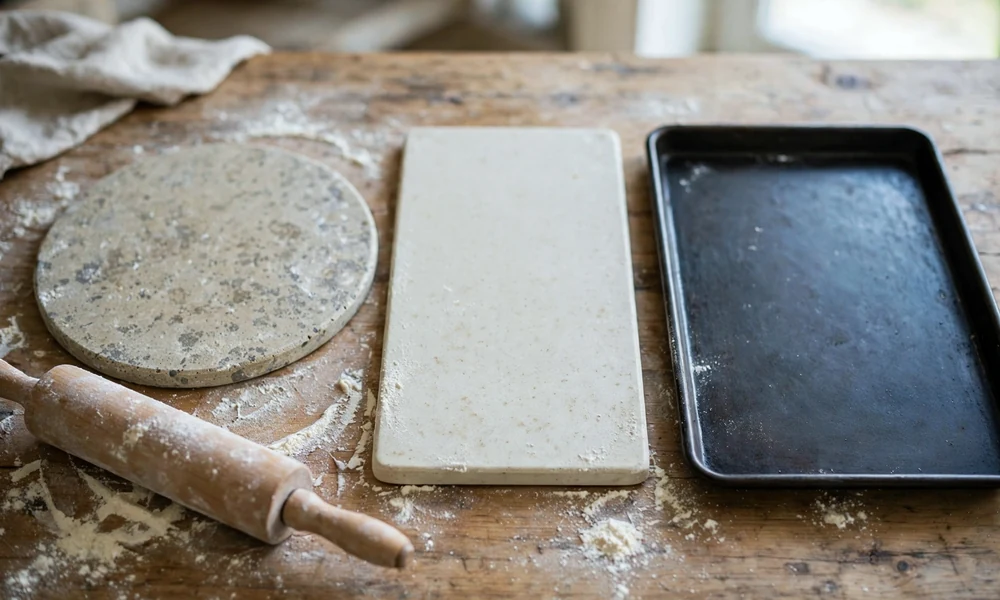
Thickness is the single most important specification on the box, and it is the one most shoppers ignore. A stone thinner than about 15 millimetres heats quickly but holds little heat, so the temperature drops the moment cold dough lands on it and the base steams instead of crisping. It is also the thickness most likely to crack. A stone of 15 to 20 millimetres holds enough heat to stay hot through the bake and is far more forgiving of the odd splash of cold water or a draught from an open oven door. Anything thicker is unnecessary weight for a home oven and takes so long to preheat that you will stop bothering.
Size is the second decision, and the rule is simple: measure your oven before you buy anything. A 15-inch round stone fits most standard ovens with room for air to circulate around the edges, and it bakes a pizza big enough for two people. A 16-inch stone sounds only slightly larger, but in a small oven it can block airflow and heat unevenly, leaving one side pale. Rectangular stones use the space better and suit cooks who bake bread as well as pizza, but they are harder to slide a round pizza onto without the corners catching. Whatever you choose, leave at least an inch of clearance on every side.
Shape follows the same logic. Round stones match round pizzas and round peels, and they heat evenly because there are no corners to stay cool. Rectangular stones are more versatile: they fit loaves, flatbreads and two small pizzas at once. Square stones split the difference and suit ovens that are wider than they are deep. There is no wrong answer here, only a match between the stone and the food you actually cook. If pizza is the only job, buy round. If the stone will earn its shelf space all week, buy rectangular.
Preheating is where most pizza stones fail, and it is never the stone’s fault. A stone needs at least 45 minutes in a hot oven before the first pizza goes on, and an hour is better. The oven thermometer may say the air is ready after fifteen minutes, but the stone is still cold in the middle, and a cold stone is just a heavy tray. Put the stone on the lowest rack or the oven floor if your manual allows it, turn the oven to its maximum temperature, and wait. The wait is the whole trick. A thermometer helps here more than any gadget, which is why our guide to the best oven thermometers of 2026 is worth a read before you blame your stone for a pale base.
Launching the pizza is the part that worries beginners, and it is easier than it looks. Dust a wooden peel with flour or fine semolina, stretch the dough on it, add the toppings quickly so the base does not have time to stick, and give the peel a small shake to check the pizza moves freely before you open the oven. Then slide it onto the stone in one confident motion. Hesitation is what causes sticking: a slow, timid launch lets the dough settle and grip. If you do not own a peel yet, a flat baking tray turned upside down works as a substitute, and our roundup of the best pizza peels of 2026 covers wooden, metal and combination peels for every budget.

Once the pizza is on the stone, leave it alone. Opening the oven door to check every minute drops the temperature and extends the bake, which dries out the toppings before the base has finished. A pizza on a properly preheated stone at maximum oven temperature takes roughly seven to nine minutes. Look for a base that is golden with dark spots, a rim that has puffed and blistered, and cheese that is melted but not browned. Then take it off the stone immediately: a pizza left sitting on a cooling stone goes soggy from underneath, which undoes everything the stone just did.
Cleaning is where good stones go to die, so the rules are worth learning properly. Never wash a cordierite or unglazed ceramic stone with soap. Soap soaks into the pores and comes back out in the next pizza, and no amount of rinsing fully removes it. Never plunge a hot stone into cold water, and never run it under a tap while it is still warm: thermal shock is the fastest way to crack one. Let it cool completely in the oven, scrape off stuck bits with a bench scraper or a stiff brush, and wipe it with a barely damp cloth if you must. The dark stains that build up over time are not dirt. They are seasoning, and they are a sign the stone is working.
Storage matters almost as much as cleaning. A stone left loose in a cupboard gets chipped on its edges, and a chipped edge is where a crack starts. Keep it in the oven if you have the space: it lives at a stable temperature there, it is always preheated when you need it, and it actually helps the oven hold a steadier temperature for everything else you bake. If you must store it elsewhere, keep it flat, keep nothing heavy on top of it, and keep it dry. A stone stored damp in a cold cupboard can grow mould in its pores, and that smell does not leave easily.
There are a few stones to avoid, and they are easy to spot. Any stone that does not name its material is a gamble. Any stone thinner than a centimetre is a crack waiting to happen. Glazed stones sold as non-stick are often just glazed stones with a marketing word attached, and the glaze still blocks moisture. Stones with handles or feet look clever but create cold spots and make the stone harder to fit on a rack. And a stone that costs less than a takeaway pizza is almost certainly too thin, too small, or made from a material the seller does not want to name.
So which stone should you actually buy? For most home cooks, the answer is a 15-inch round cordierite stone, 15 to 20 millimetres thick, from a maker that names cordierite on the box. It is affordable, forgiving, and capable of a genuinely crisp crust in an ordinary oven. It is the stone that makes the biggest difference for the least money, and it is the one we would buy first with our own money. If you bake pizza every week and want the darkest possible base, step up to a baking steel once you have learned the rhythm of launching and timing on stone. If you bake bread as often as pizza, choose a rectangular stone instead and let it earn its keep all week.

The honest truth is that the stone matters less than the habits around it. Preheat for the full hour, measure your oven before you buy, launch confidently, and leave the pizza alone while it bakes. A modest cordierite stone used well will beat an expensive steel used badly every single time. Buy the stone that fits your oven and your budget, treat it gently, and it will repay you with better pizza for years. The best pizza stone of 2026 is not the most expensive one on the shelf. It is the one that is sitting in your oven, hot, seasoned and ready, on a Friday night.