
A great pizza peel is the difference between a pizza that slides into the oven with confidence and one that folds over on itself, dumps its toppings, and lands in a sad heap on the oven floor. It is a simple tool — a flat blade on a handle — but the details matter enormously: the thickness of the blade, the taper of the edge, the length of the handle, and whether the surface is wood or metal. Get those right and launching a pizza becomes the easiest part of pizza night. Get them wrong and every bake starts with a struggle.
How We Chose the Best Pizza Peels
Every peel in this guide was judged on the same four things. First, release: a peel should let go of the dough with one confident shake, not demand scraping, lifting, or prayer. Second, blade quality: the leading edge should be thin and tapered enough to slide under a soft dough without pushing it into a wrinkle. Third, heat handling: metal peels need to survive the mouth of a blazing oven, and wooden peels need to stay flat and true after repeated exposure to steam and heat. Fourth, everyday practicality — weight, balance, handle length for your oven depth, and how it stores in a normal kitchen.
The 10 Best Pizza Peels of 2026
1. The Everyday Wooden Peel That Does Everything Well
Our top pick is a classic wooden peel made from a single piece of hardwood with a gently tapered blade and a comfortable, rounded handle. Wood is naturally non-stick when dusted with flour or semolina, which makes it the most forgiving surface for launching dough — exactly what beginners need and what experienced bakers still reach for when the dough is wet and delicate. The blade is thin enough at the edge to slip under a proofed base without deflating it, yet thick enough in the middle to stay rigid under a fully loaded pizza. It feels warm and balanced in the hand, and the wood develops a beautiful patina with use. The only real downside is maintenance: it needs occasional oiling and should never go in the dishwasher, but that is a small price for the best launching experience you can buy.
2. The Perforated Metal Launcher for High-Heat Ovens
If you bake in a dedicated outdoor pizza oven, a perforated metal peel is the professional choice. The holes let excess flour fall through before the pizza hits the stone, which means less burnt flour, less smoke, and a cleaner-tasting crust. The thin aluminium blade slides under dough with almost no resistance, and the metal does not care about the fierce heat at the oven mouth. This one earns its place because the perforations are small enough that soft dough does not sag into them, a flaw that ruins cheaper perforated peels. It is lighter than it looks, the handle stays cool, and it doubles as a turning peel for smaller pizzas. It is less forgiving than wood for very wet doughs, so dust it well and work quickly. If you have not chosen an oven yet, our guide to the best pizza ovens compares the outdoor models that reach true Neapolitan heat with the countertop options that fit a normal kitchen.
3. The Budget Wooden Peel That Punches Above Its Price
You do not need to spend much to get a peel that works. This affordable wooden peel has a smooth, sanded blade, a sensible 12-inch width, and a handle long enough to keep your hands clear of a hot oven. It lacks the refined taper of our top pick — the edge is a touch thicker, so very soft doughs need a little more flour underneath — but for the money it is hard to fault. It is the peel we recommend to anyone making pizza for the first time, or to anyone who wants a second peel for serving while the good one stays at the oven. Treat it with a light coat of food-safe oil now and then and it will last for years.
4. The Long-Handled Peel for Deep Ovens
Standard handles are fine for a kitchen oven, but a deep outdoor oven or a large built-in unit puts your hands uncomfortably close to the fire. This long-handled peel solves that with a handle that keeps you a full arm’s length further back, while the blade stays light and responsive. The extra length changes the balance slightly, so there is a short learning curve, but once your wrist adjusts, launching feels natural and safe. The handle is shaped for grip even with floury hands, and the whole peel hangs neatly from a hook when not in use. If your oven is deeper than a standard kitchen unit, this is the peel to buy.

5. The Compact Peel for Small Kitchens and Small Ovens
Not every kitchen has room for a full-size peel, and not every oven fits a 14-inch blade. This compact peel pairs a 12-inch blade with a shorter handle, making it easy to store in a drawer or hang inside a cupboard door. What it loses in reach it makes up for in control: the shorter handle gives you a steadier hand, which is genuinely helpful when you are learning to launch. It is ideal for countertop pizza ovens and small home ovens, and it pulls double duty as a serving board at the table. If space is tight, this is the smartest buy on the list.
6. The Stainless Steel Workhorse
Stainless steel peels are the tanks of the pizza world: heavy, indestructible, and completely unbothered by heat, moisture, or enthusiastic scrubbing. This one has a brushed blade that releases dough well once dusted, a riveted handle that will never wobble, and a hanging hole for storage. It is heavier than aluminium, so it suits bakers who like a solid, planted feel rather than a featherweight tool. It also excels at retrieving finished pizzas, because the stiff blade does not flex under a heavy, cheese-laden pie. The trade-off is weight and the fact that steel needs a good dusting of flour or cornmeal to release as cleanly as wood, but for durability nothing else comes close.
7. The Bamboo Peel for Everyday Baking
Bamboo is lighter than hardwood, naturally moisture-resistant, and kinder to the planet than most alternatives — and it makes a genuinely good pizza peel. This bamboo peel has a smooth, tight-grained surface that dough releases from easily, and it is noticeably lighter in the hand than a hardwood peel of the same size, which matters when you are launching several pizzas in a row. It resists warping better than many cheap wooden peels, and it cleans up with a quick wipe. The blade is a touch thicker than our top wooden pick, so it suits medium-hydration doughs best, but for weeknight pizza it is a delight to use and easy to recommend.
8. The Turning Peel for the Final Stretch
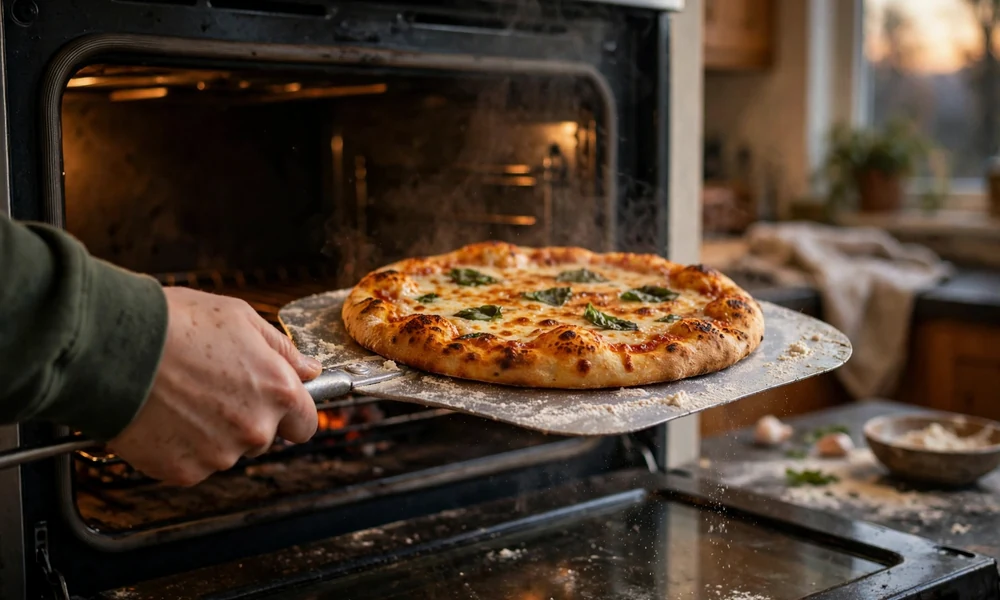
A turning peel is a small, round metal disc on a long handle, and it is not a launcher — it is the tool that rotates your pizza mid-bake so the crust browns evenly. In a hot oven, one side of a pizza can scorch while the other stays pale, and a turning peel fixes that in seconds without dragging the pizza off the stone. This one is light, perfectly balanced, and the disc is thin enough to slip under a half-baked pizza without tearing the base. If you already own a good launching peel, this is the single best upgrade you can make to your pizza setup, and it costs less than a takeaway pizza.
9. The Extra-Large Peel for Party Nights
When you are feeding a crowd, a 16-inch peel earns its keep. This extra-large peel handles family-size pizzas and big flatbreads without the dough hanging over the edges, and the wide blade gives you room to shape the dough right on the peel. The handle is reinforced to carry the extra weight without flexing, and the blade is beveled all the way around so it slides under dough from any angle. It is too big for small ovens and awkward to store, so it is not our everyday recommendation — but if your oven and your appetite are both large, nothing else will do.
10. The Best Peel and Stone Starter Set
For anyone starting from scratch, a peel bundled with a matching baking stone is the easiest route to great pizza. The peel in this set is a solid wooden launcher sized to the stone, so the pizza you build is exactly the pizza that fits your oven, and the stone itself holds heat beautifully for a crisp, leopard-spotted base. Buying them together costs less than buying separately, and you avoid the classic beginner mistake of a peel that is wider than the stone it serves. Our guide to the best pizza stones for home ovens explains what to look for in the stone itself, but this set is the simplest way to get both pieces right at once.
Wood vs Metal: Which Peel Material Is Best?
Wood and metal peels do different jobs, and most serious pizza makers eventually own one of each. Wood is the best launcher: its porous surface grips flour, releases dough gently, and stays cool enough to hold comfortably. It is the forgiving choice, especially for wet doughs and beginners. Metal is the best retriever and turner: it is thin, rigid, heat-proof, and easy to clean, and a perforated metal peel sheds the excess flour that would otherwise burn on the stone. The practical answer is to launch with wood and retrieve with metal. If you can only buy one, choose wood for a standard home oven and perforated metal for a dedicated high-heat pizza oven.
How to Launch a Pizza Without Sticking
Sticking is almost always a preparation problem, not a peel problem. Build the pizza quickly on a well-floured peel — every minute the dough sits, moisture seeps into the flour and glues it down. Use fine semolina or a fifty-fifty mix of flour and semolina under the base; the round grains act like tiny ball bearings. Give the peel a gentle shake before you head to the oven: if the pizza slides freely, it will launch cleanly, and if it does not, lift the stuck edge and toss a little more flour underneath. At the oven, rest the tip of the peel on the stone, tilt it down slightly, and pull back in one smooth motion — the pizza should stay put while the peel slides out from under it. Hesitation is the enemy; a quick, confident pull works better than a slow, careful one.
The Verdict
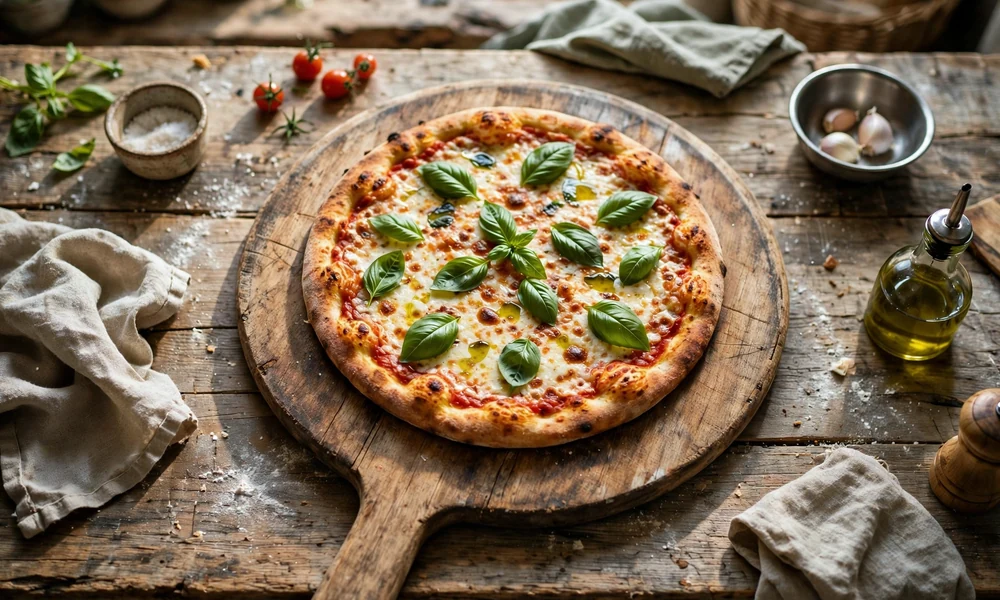
The best pizza peel for most people is a well-made wooden peel: it launches dough more forgivingly than anything else, feels good in the hand, and costs less than a single delivered pizza. Add a perforated metal peel when you move to a high-heat oven, and a small turning peel when even browning starts to matter to you. Buy the right size for your oven, dust with semolina, shake before you launch, and pizza night gets dramatically easier. Slice the finished pizza with a proper cutter rather than a kitchen knife — our roundup of the best pizza cutters covers the ones that slice cleanly without dragging the cheese. The peel is a humble tool, but it is the one that stands between you and the pizza you actually meant to make.


