
Why a Good Litter Mat Matters More Than You Think
A cat litter mat is the small, unglamorous rectangle that stands between your floors and a trail of gritty litter. Every time a cat steps out of the tray, granules cling to its paws and drop off over the next few steps. Without a mat, those granules end up ground into carpet, scattered across hard floors, and tracked into beds and sofas. With the right mat, most of them stay in one place that takes seconds to clean. The difference between the best cat litter mats of 2026 and the worst ones is not subtle: the best trap litter on the way out, stay flat, do not slide, and empty without a fight, while the worst shed their own fibres, curl at the edges, and become a second mess to manage. This guide covers the mat styles that actually work, how to match one to your litter and your cat, and the mistakes that make even a good mat fail.
How We Judged the Best Cat Litter Mats of 2026
We judged every mat on the same five tests. First, trapping power: how much litter stays on the mat after a cat walks across it, for both coarse clay granules and fine dust. Second, emptying: whether trapped litter pours out in one controlled tip, or needs shaking, scraping, or a vacuum to shift. Third, stability: whether the mat stays flat and in place on hard floors and low carpet, without curling corners that a cat can trip on or chew. Fourth, cleaning: how easily the mat itself washes, wipes, or hoses down, and how quickly it dries. Fifth, cat acceptance: whether cats walk across it willingly, because a mat a cat refuses to step on is a mat that does nothing at all. Size, weight, waterproofing, and how the mat looks in a real room all counted too, but the five tests above decided the ranking.
1. The Honeycomb Double-Layer Mat
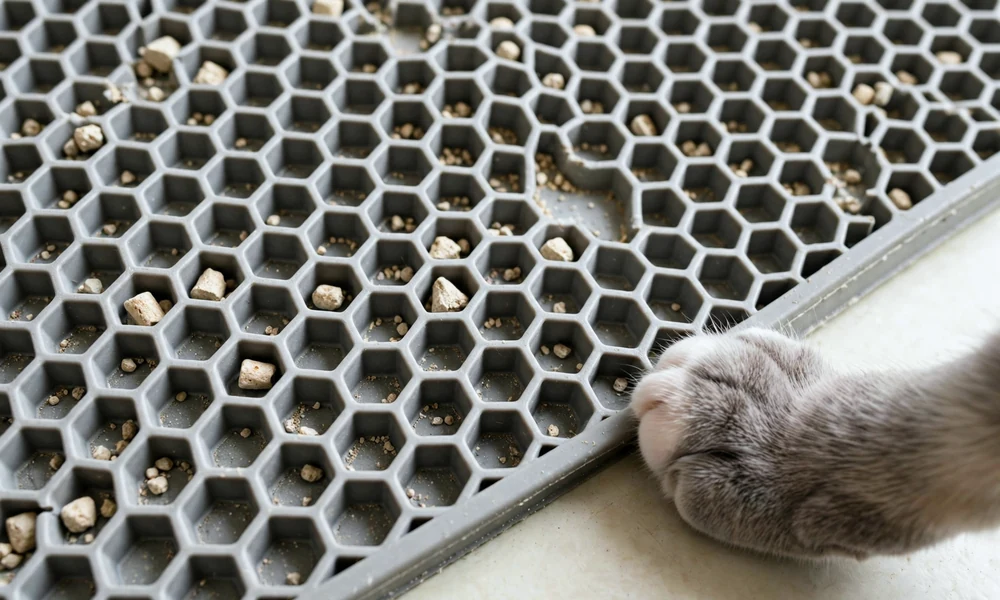
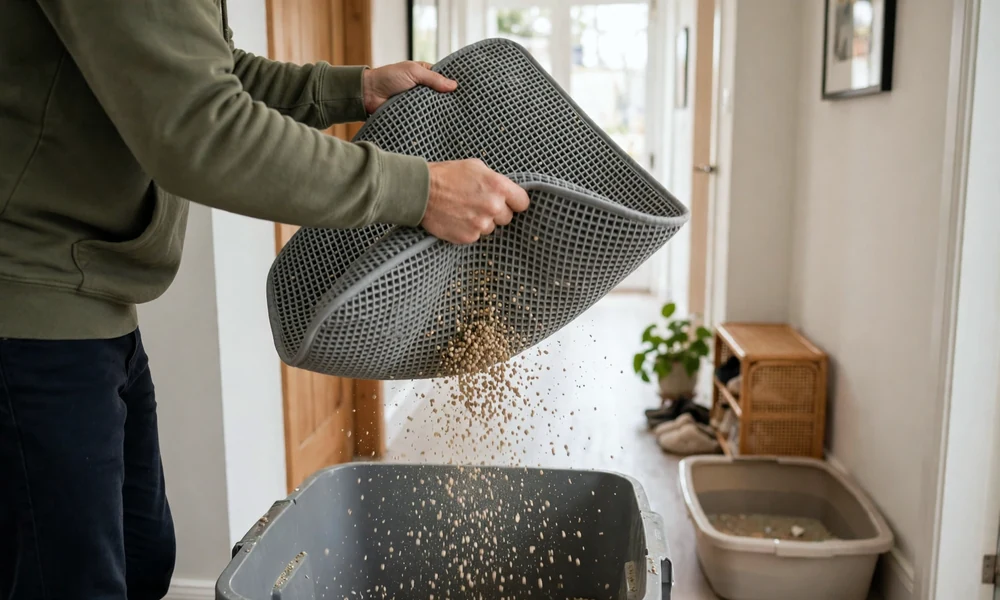
The honeycomb double-layer mat is the best all-round cat litter mat of 2026, and it wins on the emptying test more than any other style. Its top layer is a sheet of hexagonal holes; litter falls through into a pocket between the two layers, and the cat walks on a clean surface. When the pocket fills, you pick the mat up, carry it to the bin, and pour the clean litter back into the tray or tip it away. Nothing scatters, because the litter is held inside the mat until you choose to release it. For homes with a cat that flings litter, this design catches far more than any flat mat, and it does so without needing to be shaken over the floor.
It is not perfect. The honeycomb layer is firmer underfoot than a woven mat, and a few sensitive cats step around it at first, especially older cats with sore paws. It is also bulkier to store, and the larger sizes are heavy when full. But for trapping power and tidy emptying, nothing else in this guide comes close, and it is the mat we would buy first for a busy household with hard floors. Choose a size that extends at least a full cat-length beyond the tray entrance, so the cat takes several steps on it before reaching open floor.
2. The Woven PVC Loop Mat
The woven PVC loop mat is the softest-feeling mat in this guide and the easiest for nervous or older cats to accept. Its tangled loops catch granules as paws press into them, and because the loops are springy, the mat feels more like a rug than a piece of equipment. Cats that refuse firmer mats usually walk straight across this one. It also comes in the widest range of colours and sizes, so it is the simplest to match to a room, and it hoses down well when it gets dirty.
Emptying is its weak point. Loops hold litter well, which is the point, but getting it back out takes a firm shake outside or a quick vacuum, and fine dust settles deep into the weave. It is also the mat most likely to shed a few fibres in its first weeks, and cheap versions flatten quickly and stop trapping. Buy a dense, heavy weave rather than a thin one, and expect to shake it out every couple of days rather than once a week. For a single cat in a carpeted home, where dust matters less than comfort, it is an excellent second choice.
3. The Solid Silicone Mat
The solid silicone mat is the best choice for anyone whose main worry is mess on the floor rather than litter on the floor. It is fully waterproof, so a splash or an accident beside the tray never reaches the wood or carpet underneath, and it wipes clean with a damp cloth in under a minute. Its slightly tacky surface grips hard floors well, and most versions roll up for storage or travel. For a bathroom or utility-room setup, where the tray sits on tile and hygiene matters most, silicone is hard to beat.
Its trapping is only average. A flat silicone surface has nowhere for granules to hide, so litter sits on top until it is swept up, and a cat that exits at speed can kick granules straight across it. Raised edges and a textured or grooved surface help a lot, so look for those features rather than a plain flat sheet. It is also the lightest mat here, which means a strong cat can drag it out of position. Pair it with a tray that has high sides, and it becomes a tidy, low-effort setup that suits small spaces very well.
4. The Heavy Rubber Grooved Mat
The heavy rubber grooved mat is the toughest mat in this guide and the best for large or powerful cats. Deep grooves and ridges catch coarse litter as paws pass over them, and the weight of the rubber keeps the mat exactly where you put it, even when a big cat launches out of the tray. It does not curl, it does not tear, and it survives being hosed down outside without any fuss. In a garage, porch, or utility room, it is the most durable option you can buy.
How to Choose the Right Size and Placement
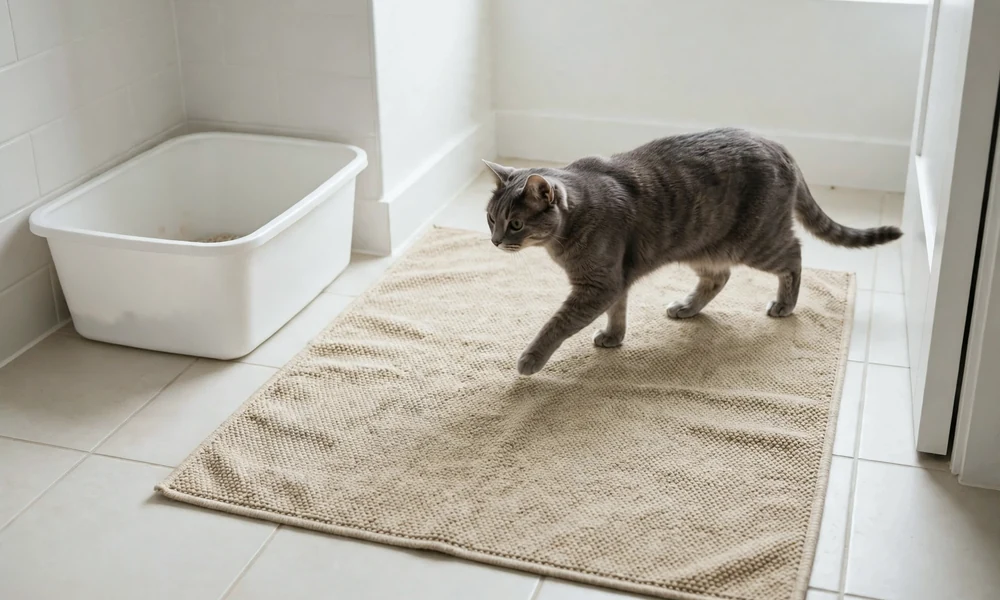
Size matters more than brand, and placement matters more than size. The mat should sit directly against the tray entrance, with no gap of bare floor between them, because the first step out of the tray drops the most litter. It should extend at least 60 centimetres beyond the entrance in the direction the cat walks, and wider than the tray itself, so the cat cannot step neatly around the edge. For a top-entry tray, place the mat on the side the cat jumps down onto. For a tray in a corner, an L-shaped arrangement of two mats can catch exits in both directions.
Think about the floor underneath as well. On hard floors, a mat with a grippy or slightly tacky base stays put; on carpet, weight matters more than grip. In a damp room, a waterproof mat protects the floor, while in a dry living room, comfort and looks matter more. And remember that the mat is part of a system: the tray and the litter you use decide how much scatter there is in the first place. A high-sided tray and a heavier litter cut the load on the mat before the mat even starts work, which is why choosing the right cat litter box and the right cat litter matters just as much as choosing the mat itself.
Cleaning and Looking After Your Mat
A litter mat is easy to look after if you build it into a short routine. Shake or tip the mat out every day or two, before the trapped litter builds up enough to spill over the edges. Vacuum the mat and the floor around it once a week, because fine dust is what a quick shake misses. Wash the mat itself every two to four weeks, following its material: silicone and rubber hose down outside, woven mats take a firm brush and a rinse, and fabric mats go in the machine on a gentle cycle. Always let the mat dry fully before putting it back, because a damp mat under a tray grows smells fast.
Mistakes That Make a Good Mat Fail
The most common mistake is buying a mat that is too small. A mat barely wider than the tray catches only the first step, and the cat carries the rest across the room. The second mistake is placing the mat with a gap between it and the tray, which creates a strip of bare floor that collects exactly the litter the mat was meant to catch. The third is choosing a mat for how it looks rather than how it traps: a thin decorative mat in a busy household is a waste of money, however well it matches the rug. The fourth is never emptying the mat until it overflows, at which point it starts shedding litter instead of catching it.
Frequently Asked Questions
Do cat litter mats really work? Yes, when they are big enough and placed correctly. A good mat catches most of the litter a cat carries out on its paws, and the best designs in this guide cut visible tracking sharply within a day. No mat catches everything, and fine dust will always escape to some degree, but the difference between a mat and no mat is large and immediate.
What size litter mat do I need? Bigger than you think. Aim for at least 60 centimetres beyond the tray entrance and wider than the tray, and go larger still for big cats, multiple cats, or a cat that exits fast. Measure the space before ordering, and remember that a mat that is too small is the most common regret buyers report.
Can I use a litter mat with any litter? Yes, but the match matters. Coarse clay and pellet litters suit deep honeycomb and grooved mats, which catch large granules well. Fine, dusty litters suit woven and mesh mats, which catch small particles better. Very light litters scatter further, so they need a bigger mat whatever the style.
Is a litter mat enough on its own? It is one part of a tidy litter area, not the whole answer. The tray, the litter, and the mat work together, and the rest of the cat’s comfort matters too: a rested cat in a calm home makes less mess, which is one reason a good cat bed earns its place in the same room as the litter area. Keep the mat clean, the tray scooped, and the setup in one sensible spot, and the whole area stays far easier to live with.
Our Verdict
The best cat litter mat of 2026 is the honeycomb double-layer mat: it traps the most litter and empties the most cleanly, which are the two things that matter most. If your cat dislikes firm surfaces, the woven PVC loop mat is the best alternative, and if your tray sits on tile in a bathroom, the solid silicone mat is the most practical choice. Whatever style you pick, buy it big, place it flush against the tray, and empty it often. Do those three things, and the litter on your floors will fall away fast.


