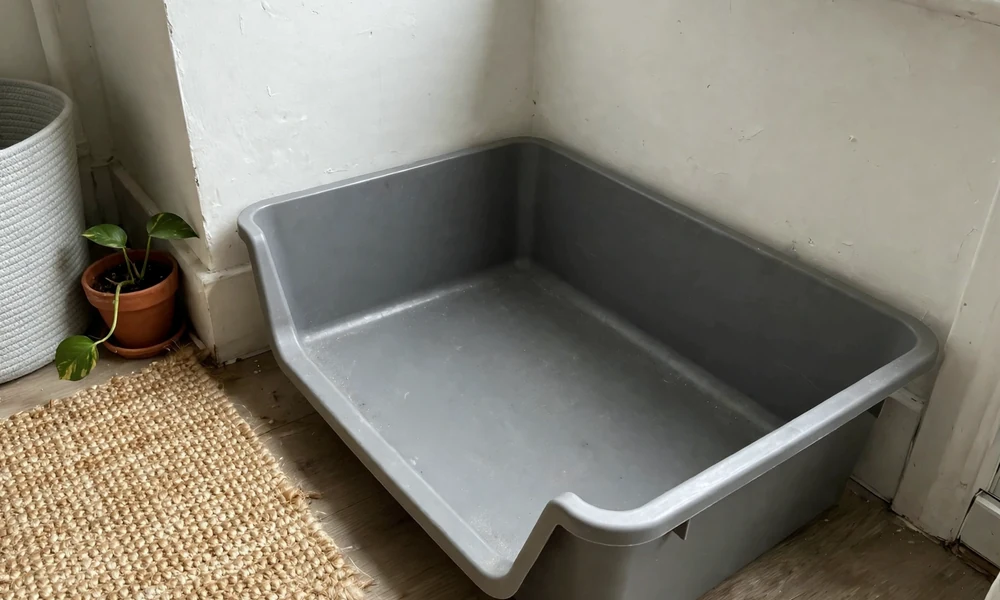
A litter box in a small flat has one job: to give a cat a clean, private place to go without turning the whole home into a litter tray. The worst cat litter boxes for small spaces of 2026 fail at it in ways that leave a hallway smelling of ammonia, a floor covered in tracked litter, and a cat that would rather use the sofa than the box. They are too small for the cat, too enclosed to clean, or made from plastic that holds smells no amount of scrubbing will shift. Owners buy them expecting a neat, compact box that fits a tiny bathroom or a quiet corner, something that keeps the mess contained. What they get is a box that leaks, a lid that traps odour, or a tray so cramped the cat refuses to use it. A small home leaves no room for error, and a box that ignores that is not a bargain. It is a daily problem.
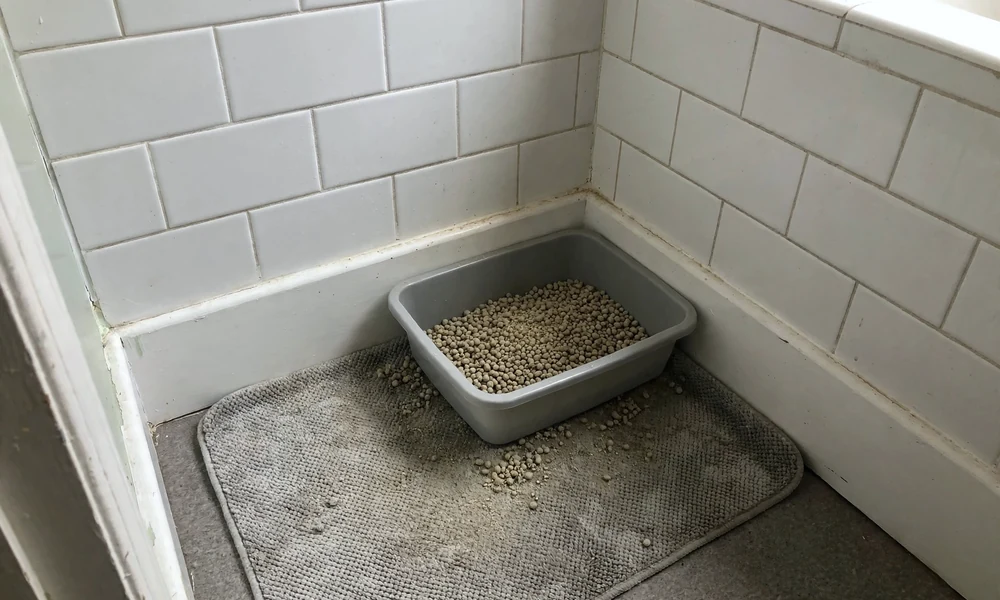
What Makes a Small-Space Litter Box Bad
A good litter box for a small space does three things: it fits the cat comfortably, it contains the litter and the smell, and it is easy to clean every day. The worst ones fail all three. The most common failure is size. Boxes sold for small spaces are often just shrunken versions of a normal box, too short for a cat to turn around in and too narrow for it to dig properly. A cat that cannot move inside its box will perch on the edge, kick litter over the side, or refuse the box entirely. The box should be at least one and a half times the length of the cat, and a box that is smaller than that is a box the cat will avoid, however neatly it fits the corner.
The second failure is height. Low-sided trays are easy for a cat to step into, but they are also easy for a cat to kick litter out of, and in a small flat that litter lands on the floor, the bed, and the sofa within a few steps. High-sided boxes contain the scatter, but a box with sides too high for a kitten or an older cat becomes a barrier the cat will not climb. The worst boxes get both wrong at once, with sides low enough to scatter and high enough to deter, and the owner ends up sweeping litter three times a day from a box that was supposed to solve the problem.
Lids That Trap Smells and Cats
Enclosed boxes promise privacy and odour control, and the worst ones deliver neither. A lid traps ammonia inside the box, so the cat steps into a cloud of smell every time it goes in, and a cat with a sensitive nose will choose the open floor over a box that stinks from the inside. The lid also traps humidity, so the litter clumps damp and the plastic grows a film of smell that no washing removes. Owners keep the lid because the box looks tidy from the outside, but the cat experiences a small, dark, smelly cupboard, and a cat that hates its box will find somewhere else to go.
Doors and flaps make the problem worse. A swinging flap that a cat must push with its head is a barrier many cats simply refuse, and a flap that sticks half-open lets smell out while still blocking the cat. Top-entry boxes suit agile adult cats in small flats, but they are wrong for kittens, older cats, and any cat with sore joints, and a cat that cannot climb in easily will not try twice. The best box for a small space is usually an open, high-sided tray in a quiet corner, because a cat that can see, smell, and enter its box freely is a cat that will use it.
Plastic That Holds Smells Forever
Cheap plastic is the quietest failure in a litter box, because it looks clean long after it has stopped being clean. Low-grade plastic scratches easily, and every scratch is a groove where urine soaks in and bacteria grow, so the box smells even when it has just been washed. The smell builds up over weeks until the whole corner of the room carries it, and the owner blames the litter when the box itself is the problem. A good box uses thick, smooth, non-porous plastic that wipes clean, but the worst boxes use thin, rough plastic that absorbs odour from the first week and never lets it go.
Seams and corners are where cheap boxes fail hardest. A box moulded in two pieces with a rough join leaks urine into the seam, and no amount of scrubbing reaches into a hairline crack. Removable rims that do not sit flush leave a gap where litter and liquid collect, and a box with a textured floor traps litter in every groove. The test is simple: run a finger along every seam and corner, and if it catches on a rough edge or a gap, that spot will hold smell within a month. A box should be smooth inside, with no place for liquid to hide, because a small flat has no spare air for a box that stinks.
The Corner Trap: Boxes Hidden Out of Sight
Small homes push owners to hide the litter box, and the worst boxes are designed to be hidden rather than used. A box tucked behind a washing machine, under a staircase, or inside a closed cupboard is a box the cat must work hard to reach, and a cat that has to squeeze past clutter to reach its tray will often choose the nearest rug instead. The hiding place also makes cleaning harder, so the box gets scooped less often. A litter box needs a quiet corner, not a hidden one, and the difference between quiet and hidden is whether the owner can see it, reach it, and clean it every day.
Furniture that hides a litter box makes the same mistake in a more expensive form. A cabinet with a cat-sized hole looks tidy, but it traps smell inside, blocks the light, and turns cleaning into a chore that involves moving furniture. The cat enters a dark, smelly box with one way in and one way out, and a nervous cat will not use a space it cannot escape from quickly. The cabinet also hides the early signs of a problem, so a leaking box or a cat that has stopped using it goes unnoticed for days. A box that is easy to see and easy to clean gets used and cleaned, and a box that is hidden gets ignored by both the cat and the owner.
Self-Cleaning Boxes That Do Not Work
Self-cleaning boxes promise to solve the small-space problem with technology, and the worst ones create a bigger problem than the one they solve. A self-cleaning mechanism that jams leaves the box full of waste, and a box that rakes or rotates on a timer can frighten a cat so badly that it never uses the box again. The mechanisms are noisy, they need power and special litter, and when they break, the whole expensive box becomes a very ordinary tray with a motor in the way. In a small flat, a broken self-cleaning box is worse than a simple tray, because it takes up more space and does less.

Size is the other self-cleaning problem. The mechanisms take up room inside the box, so the space left for the cat is smaller than a plain tray of the same footprint, and a cat that is cramped in its box will go elsewhere. The boxes are also heavy and awkward to empty when the mechanism fails. For most small homes, a simple, well-made open tray that is scooped daily beats a clever machine that jams, frightens the cat, and costs ten times as much. A litter mat under a good tray catches the scatter a simple box misses, and that combination works better than any gadget.
How to Spot a Bad Box Before You Buy
The shelf test takes a minute and saves a season of sweeping. Measure the box against your cat, not against the corner it will sit in: the box should be at least one and a half times the cat’s length, with room to turn and dig. Run a finger along the inside for rough seams and sharp edges, and press the sides to check that the plastic is thick and rigid rather than thin and flexible. Lift the lid, if it has one, and check that it comes off easily for cleaning, because a box that is hard to clean will not be cleaned often enough.
Placement matters as much as the box itself, and a small flat makes it harder. Put the box in a quiet, low-traffic corner where the cat will not be startled, and keep it away from the food and water bowls, because cats do not eat where they go to the toilet. Our guide to the best cat litter boxes of 2026 covers types, sizes, and materials in detail, and it is worth reading before spending anything, because the right box is the difference between a home that smells clean and a home that smells of a cat that has given up on its tray.
What to Buy Instead
The boxes worth buying share a short list of features, and none of them is expensive on its own. Thick, smooth, non-porous plastic with no rough seams, high sides that contain the scatter without blocking the cat, a size that fits the cat rather than the corner, and a lid that comes off easily or no lid at all. A box with those four things will stay clean, stay usable, and stay in use, and a box missing any one of them will fail at exactly that weak point. Pay for the plastic and the size first, because those are the parts that decide whether the cat uses the box or finds somewhere else.
Routine matters as much as the box, and a small flat makes it matter more. Scoop the box at least once a day, change the litter fully every week, and wash the box itself every two weeks, because a clean box is a used box and a dirty box is an ignored one. Keep one box per cat, plus one spare, which is the rule most vets recommend, even in a small home, because a cat that has to queue for its box will go elsewhere. A litter that actually controls odour helps too, but no litter can rescue a box that is too small, too smelly, or too hard to clean.
The Bottom Line
The worst cat litter boxes for small spaces of 2026 share a pattern: too small for the cat, plastic that holds smells, lids that trap odour, and mechanisms that jam and frighten. None of those failures is hard to spot before buying, and none of them is worth the saving, because a litter box is the one piece of kit that decides whether a small home smells clean or smells of a cat. Buy for the cat first and the corner second, choose smooth thick plastic, and scoop daily. A cat that likes its box is a cat that uses it, and that is the whole secret of a small flat that stays fresh.