Trimming a pet’s nails at home sounds simple until you are holding a wriggling paw and an animal that has decided this is the worst afternoon of its life. The worst pet nail clippers of 2026 fail at it in ways that leave a nail crushed instead of cut, a quick nicked and bleeding, and a pet that will never sit still for a trim again. They are too dull to cut, too big for small paws, or made from jaws that squeeze and tear instead of slicing cleanly. Owners buy them expecting a quick, painless trim, something that cuts in one smooth squeeze without crushing the nail or splitting the tip. What they get is a tool that tears, a handle that slips, or a blade that goes blunt after a month. A pet’s nails grow constantly, and clippers that ignore that are not a bargain. They are a stressful wrestling match waiting to happen.

What Makes Pet Nail Clippers Bad
Good clippers do three things: they cut cleanly in one squeeze, they fit the paws they are used on, and they stay sharp through many trims. The worst ones fail all three. The most common failure is dullness. Cheap blades are made from soft steel that loses its edge after a few uses, and a dull blade does not cut a nail, it crushes it, splitting the tip and squeezing the quick inside. The pet feels the crush as pain, flinches, and the next squeeze lands in the wrong place. A sharp blade slices the nail cleanly with almost no pressure, and the difference between a sharp blade and a dull one is the difference between a calm trim and a bleeding, frightened animal.
The second failure is size. Clippers sold for pets are often just human nail clippers scaled up, with jaws too small for a dog’s thick nails or too large for a cat’s delicate ones. A clipper that is too small cannot get around the nail properly, so the owner cuts at an angle and the nail splits. A clipper that is too large for a cat cannot see the quick, so the owner guesses and guesses wrong. Dogs and cats need different tools, and a clipper that pretends one size fits all pets is a clipper that will hurt one of them.
Jaws That Crush Instead of Cut
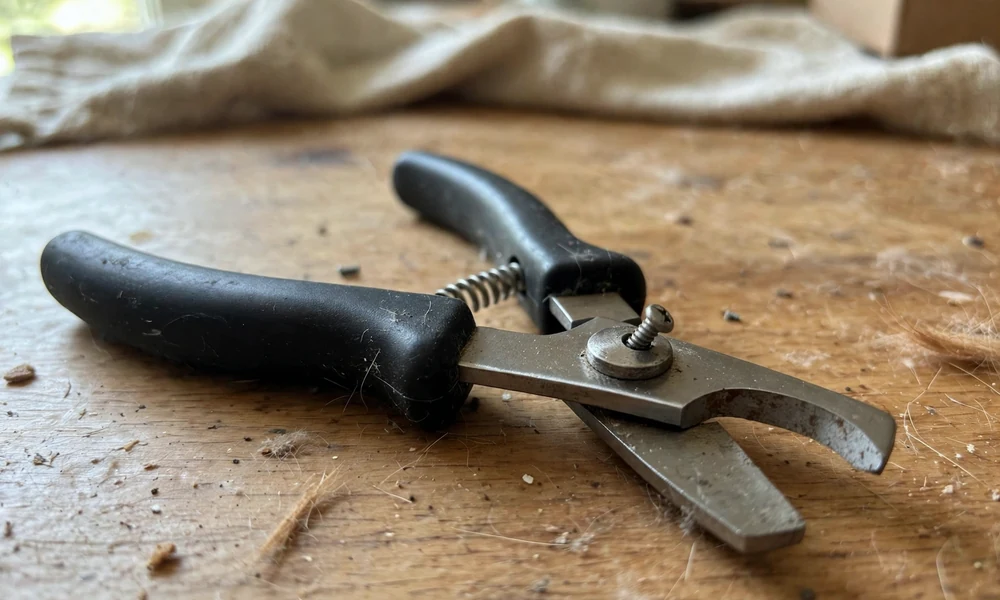
The jaw design decides whether a clipper cuts or crushes, and the worst designs get it wrong in the most basic way. A guillotine clipper with a single blade sliding past a hole works well when the blade is sharp and the hole fits the nail, but a cheap guillotine clipper has a blade that sticks, a hole that is too small, and a spring that is too weak to drive the cut. The nail ends up squeezed in the hole while the blade scrapes across it, and the result is a crushed, frayed nail that splits up the middle. Scissor clippers are better for most pets, but a cheap pair has jaws that do not meet cleanly, so they fold the nail instead of cutting it.
Alignment is the quieter version of the same problem. A clipper whose jaws do not close evenly puts all the pressure on one side of the nail, and the nail twists and splits instead of cutting straight. The jaws loosen with use, the pivot pin wears, and within a month the clipper that once cut cleanly now chews the nail instead. A good clipper has a solid pivot, jaws that meet precisely, and a spring that holds the jaws open until the owner squeezes. If the jaws wobble, gap, or stick, the clipper is failing, and the pet will be the one that suffers for it.
Grinders That Burn and Frighten
Nail grinders promise a smoother finish than clippers, and the worst ones deliver a hot, noisy, frightening experience instead. A cheap grinder spins too fast, and the friction heats the nail within seconds, so the pet feels a burning sensation and pulls its paw away. The heat builds up faster on a thick nail, which is exactly the nail that needs the most grinding, and a grinder that is too hot to touch is a grinder that is hurting the pet. The noise is the other problem: a high-pitched whine can undo weeks of patient training in seconds, and a pet that has been frightened by a grinder will not sit still for one again, however gentle the owner is.
Dust is the hidden cost of a bad grinder. A grinder without a guard or a dust catcher throws fine nail dust into the air, into the pet’s eyes, and into the owner’s lungs, and a pet that is breathing dust while its nail burns is a pet that will never accept a grinder again. The grinding heads themselves wear quickly on cheap models, becoming smooth and useless within a few uses, and a worn head spins without cutting, heating the nail without shortening it. A good grinder runs at a low, steady speed, stays cool, and has a guard that catches the dust, but the worst ones are loud, hot, and dusty, and a clipper is a better choice than a grinder that frightens the pet it is meant to help.
Handles That Slip and Hurt
A handle seems simple until it slips in the middle of a cut and the blade lands on the quick. Thin plastic handles crack under pressure, smooth metal handles slide in a hand that is holding a wriggling paw, and handles with no grip at all are impossible to control when the pet moves. The worst handles are also too small for a comfortable grip, so a trim of four paws leaves the hand aching, and a handle that is uncomfortable to hold is a handle that will be dropped at the worst moment. A good clipper has a solid, comfortable handle with a non-slip grip, because the person holding it needs control most in exactly the moments when a bad handle slips.
Size and weight matter more than owners expect, and the worst clippers get both wrong. A heavy clipper tires the hand quickly and makes the owner squeeze too hard, which crushes the nail, while a clipper that is too light feels flimsy and gives no feedback about how hard it is cutting. A well-balanced clipper feels solid and controlled, with the weight in the hand rather than the jaws, so the owner can use a gentle squeeze and let the blade do the work. If a clipper feels clumsy in the shop, it will feel worse when a pet is pulling its paw away.
The Quick: Where Bad Clippers Do Real Harm
The quick is the living tissue inside the nail, full of blood vessels and nerves, and a bad clipper is what nicks it most often. A dull blade crushes the nail and the quick together, a slipping handle moves the blade a millimetre too far, and a clipper that is too large for the paw hides the quick from view entirely. A nicked quick bleeds heavily, hurts the pet, and teaches it that nail trims are something to fear. The bleeding can be stopped with styptic powder, but the lesson the pet learns lasts far longer than the bleeding does, and a pet that has been hurt by clippers will fight every future trim.
Seeing the quick is the whole skill of trimming, and the worst clippers make it impossible. Dark nails hide the quick entirely, and a clipper with no guide, no light, and no way to see the nail properly leaves the owner guessing. A good clipper has a safety guard that stops the blade going too far, a design that lets the owner see the nail clearly, and a sharp edge that cuts a tiny amount at a time. Cut a little, check, and cut a little more, because a nail can always be trimmed shorter but a nicked quick cannot be un-nicked. Our guide to the best dog nail clippers of 2026 covers blade types and safety guards in detail, and it is worth reading before spending anything, because the right clippers are the difference between a calm trim and a bleeding paw.
How to Spot Bad Clippers Before You Buy
The cut test takes a minute and saves a season of fear. Test the clippers on a spare nail, a piece of thick card, or a wooden stick, and check that the blade cuts cleanly in one squeeze without crushing or tearing. Check that the jaws meet evenly, the pivot is solid, and the spring holds the jaws open. Look at the handle and check that it feels solid and comfortable, with a grip that will not slip when the pet moves. If the clippers crush, wobble, or feel flimsy in the shop, they will be worse on a real pet, not better.
Size is the other check, and it is the one most owners get wrong. Dogs and cats need different clippers, and within dogs, a small dog needs a smaller clipper than a large one. A clipper made for cats has small, precise jaws that can see the quick, while a dog clipper has larger, stronger jaws for thick nails. Buy for the pet in front of you, not the clipper on the packet, because the wrong size is a clipper that will either crush the nail or hide the quick, and both of those end in pain.
What to Buy Instead
The clippers worth buying share a short list of features, and none of them is expensive on its own. Sharp, hard steel blades that stay sharp, jaws that meet precisely with a solid pivot, a safety guard that stops the blade going too far, and a comfortable, non-slip handle. Clippers with those four things will cut cleanly, show the quick clearly, and hold up through many trims, and clippers missing any one of them will fail at exactly that weak point. Pay for the blade and the pivot first, because those are the parts that decide whether the nail is cut or crushed.
Routine matters as much as the clippers, and a short, calm trim beats a long, stressful one every time. Trim a little and often, rather than waiting until the nails are overgrown, and keep styptic powder nearby in case of a nick, because even good clippers can catch the quick on a dark nail. For a sense of how the same cutting logic applies to human nails, our guide to the best nail clippers covers blade sharpness and clean cuts, and the same principle applies here: a sharp blade, a steady hand, and a small cut at a time.
The Bottom Line
The worst pet nail clippers of 2026 share a pattern: dull blades that crush, jaws that do not meet, handles that slip, and a size that fits no pet properly. None of those failures is hard to spot before buying, and none of them is worth the saving, because clippers are the one tool that stands between a pet and a painful, bleeding nail. Buy sharp, buy the right size, test the cut before the pet, and replace clippers the moment the blade goes dull. A pet that trusts its trims is a pet with healthy paws, and good clippers are what make that possible.