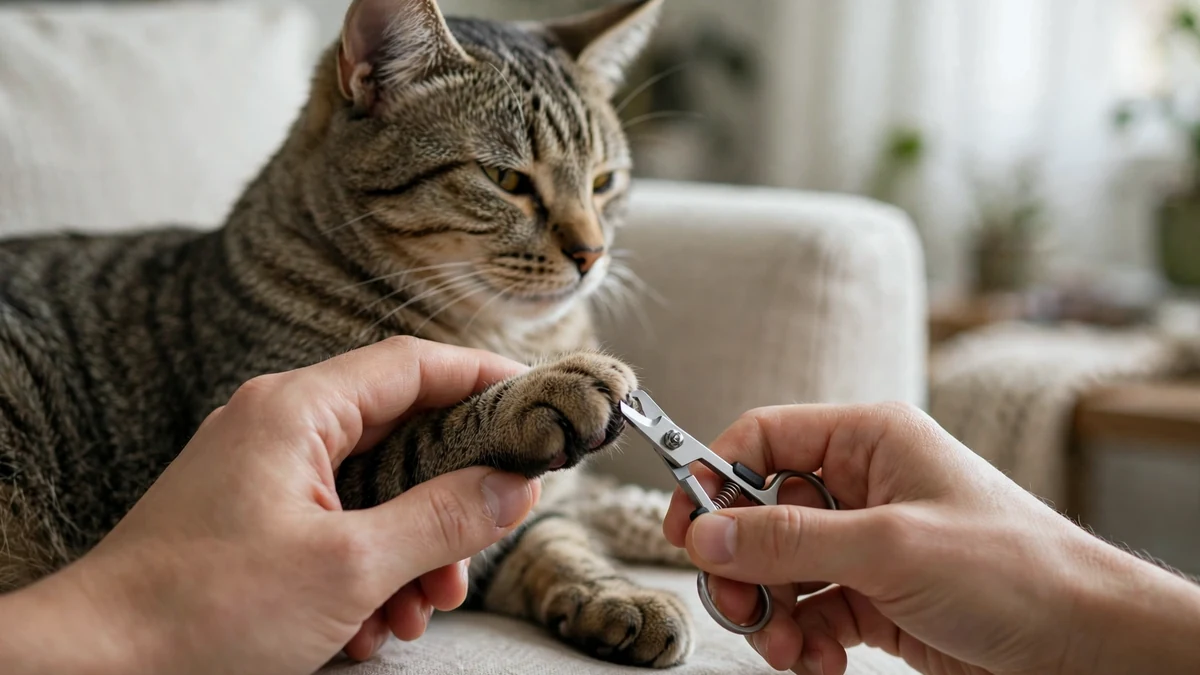
Trimming a cat’s claws sounds simple until you try it on a cat that has other plans. The claws are small, curved and sharp, the quick inside each one is easy to nick if you cut too far, and most cats would rather be anywhere else than sitting still while someone holds their paw. The right clippers change all of that. A good pair cuts cleanly with one gentle squeeze, fits a cat’s claw, and lets you finish before your cat loses patience. The best cat nail clippers of 2026 are not the biggest or most expensive tools on the shelf. They are the ones sized for cats, sharp enough to cut without crushing, and comfortable enough to hold steady while a paw wriggles.
Cat claws grow constantly, and indoor cats do not wear them down the way outdoor cats do on rough ground. Left alone, claws grow long, catch on carpets, and can curl back toward the paw pad. Most cats need a trim every two to four weeks, and the trick is having a tool that does the cutting for you, so your hands stay gentle and your cat stays calm.

What Makes a Cat Nail Clipper Good
The first thing to judge is the size of the cutting head. Cat claws are far smaller and thinner than dog claws, and a clipper built for a large dog will swallow a cat’s claw whole, hiding the quick from view and making it easy to cut too much. A cat clipper should have a small, precise head that lets you see exactly where the blade sits. If you cannot see the tip of the claw and the pink quick behind it, the tool is too big for the job.
Sharpness matters more than anything else. A sharp blade slices the claw in one clean motion, leaving a smooth edge. A dull blade crushes and splinters the claw instead, which hurts, leaves a ragged edge that snags on fabric, and makes the cat dread the next trim. Stainless steel blades hold their edge well and resist rust, and they are easy to wipe clean after use. If a clipper needs real force to close, its blades are dull or badly aligned, and it is time to replace it.
Comfort in the hand is the third test. You will hold the clipper in one hand and a paw in the other, often at an awkward angle, so the handles should fit your fingers without slipping. A non-slip grip helps when your hands are warm or nervous, and a spring that reopens the blades after each cut saves effort across ten claws. A safety guard sounds reassuring, but on many clippers it blocks your view of the claw, so many experienced owners prefer a clear view and a careful hand.
The Four Main Types of Cat Nail Clipper
Scissor clippers are the most popular choice for cats, and for good reason. They work like small scissors, with two short blades that close around the claw, and they give the best view of what you are cutting. They are light, quiet and easy to control, and they suit most cats, from kittens to seniors. Their weakness is that cheaper pairs can feel flimsy, and the blades can drift out of alignment if dropped. A well-made scissor clipper is the safest starting point for a first-time owner.
Guillotine clippers work differently. The claw slides through a small hole, and a single blade drops across it when you squeeze the handles. They cut cleanly when sharp, and the hole helps position the claw, but the design hides the claw at the moment of the cut, which makes it harder to judge how much you are taking off. They suit confident owners with calm cats, but beginners usually do better with a tool they can see through.
Plier clippers are the heavy-duty option. They are larger, with long handles and strong jaws, and they are built for thick claws. On a cat they are usually overkill: the jaws are wide, the tool is heavy, and the extra force is unnecessary for a claw the width of a matchstick. They can work for very large cats, but most owners will find them clumsy on a small paw.
Nail grinders do not cut at all. A small rotating head files the claw down a little at a time, which removes the risk of cutting the quick in one snip and leaves a smooth, rounded tip. The trade-off is noise and vibration, which many cats hate, and the job takes much longer, since each claw needs several seconds of grinding. Grinders suit cats that panic at the snip of a blade but tolerate a low hum; for most cats, a sharp scissor clipper plus a small file is faster and quieter.
How to Choose for Your Cat
Start with your cat, not the tool. A kitten has tiny, needle-sharp claws and needs a small, precise clipper, and a kitten that learns young that trimming is calm and quick will accept it for life. An older cat may have thicker, brittle claws that split if crushed, and sore joints, so short sessions matter more than a perfect finish. A nervous or wriggly cat needs a quiet tool and a fast cut, which points straight to scissor clippers.
Think about your own hands too. If you have small hands, a compact scissor clipper will feel natural; if you have large hands or stiff fingers, longer cushioned handles and a light spring will be easier to squeeze without shaking. Hold it, open and close it a few times, and see whether your hand stays relaxed: if your fingers ache after ten squeezes, the tool will fight you on the tenth claw.
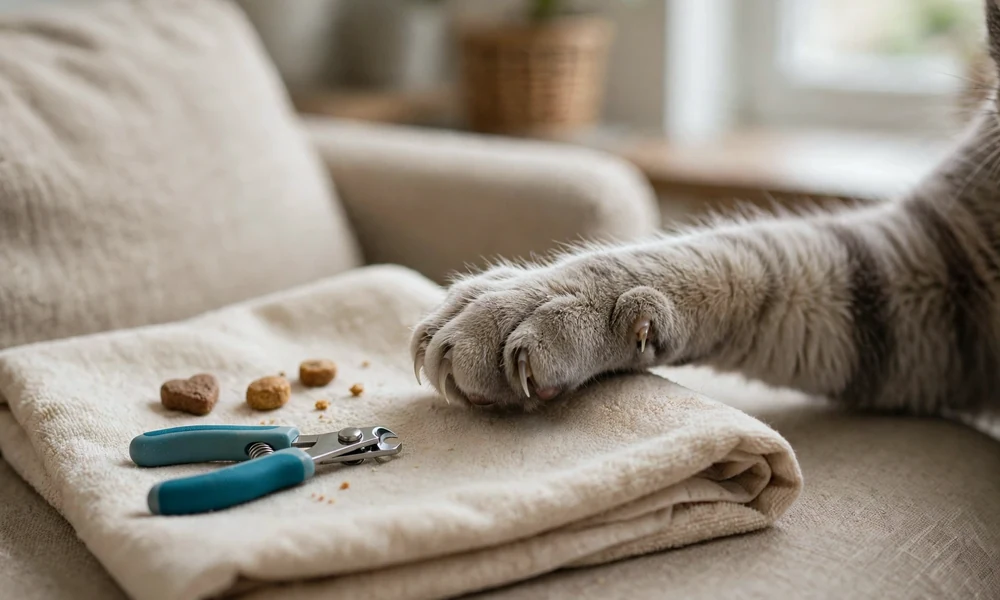
Good light is essential, because you need to see the quick, and a clipper with a bright handle is easier to find in a drawer. A small nail file is worth having for smoothing rough edges, and keeping the clippers, treats and towel together means nothing is missing halfway through. The general rules for a clean cut are the same whatever the tool, and the guide to nail clippers that cut clean without tearing explains why a sharp blade matters more than a strong hand.
How to Trim Safely, Step by Step
Pick a moment when your cat is already sleepy, after a meal or a play session, and sit somewhere comfortable with good light. Hold your cat on your lap or beside you on the sofa, and spend a minute just stroking the paws, so the touch is familiar before the clippers appear. Talk quietly, keep your movements slow, and let the cat sniff the clippers. The first session does not need to finish all four paws. Two claws done calmly beat ten done in a struggle, and you can finish the rest tomorrow.
To extend a claw, press gently on the top and bottom of the toe, and the claw will slide out of its sheath. Look at it in the light: the tip is pale and slightly curved, and behind it, in a light-coloured claw, you can see the pink quick, which carries blood and nerves. Cut only the pale tip, a millimetre or two, well clear of the pink. On dark claws, where the quick is hidden, cut even less, taking off just the sharp point. If you are unsure, cut less than you think you need. A small trim every two weeks is far safer than a big trim once a month.
Hold the clipper at a slight angle, so the cut follows the natural curve of the claw, and squeeze smoothly rather than snapping the handles shut. After each paw, give a treat and a pause, and watch for flattened ears, a swishing tail or a sudden freeze, which mean it is time to stop. Keep a little styptic powder nearby in case you nick the quick: a pinch on the tip stops the bleeding quickly, and it happens to almost every owner sooner or later.
Mistakes to Avoid
The most common mistake is cutting too much, too fast. New owners often treat a cat’s claw like a human fingernail and take off a big slice, and the result is a nicked quick, a yelp and a cat that hides at the sight of the clippers for months. The fix is patience: take off the tip only, and trim more often. The second mistake is using human nail clippers, which are shaped for flat nails, not curved claws: they crush a cat’s claw instead of cutting it. The right tool costs little and lasts for years.
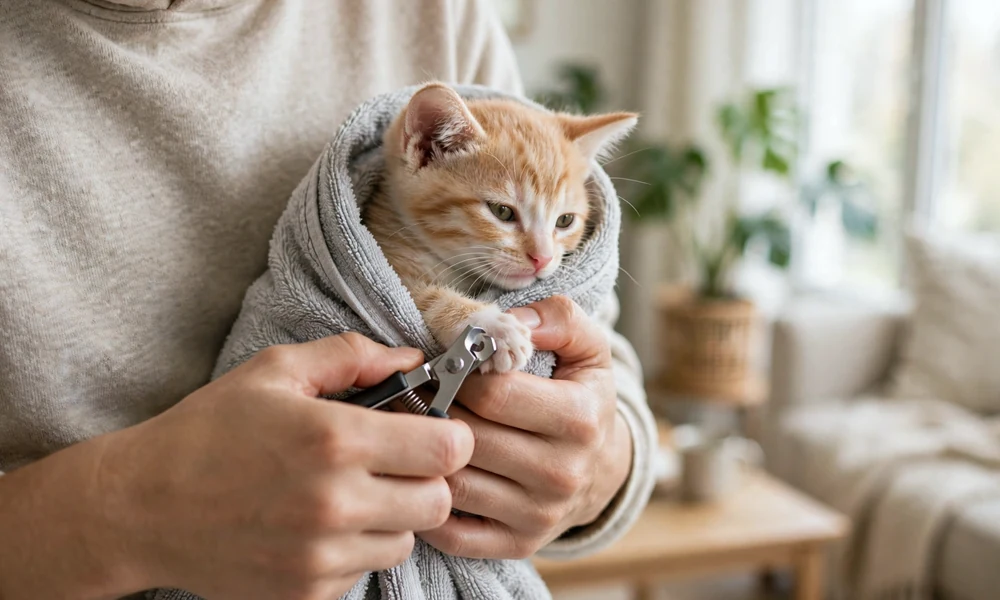
The third mistake is turning the trim into a battle. Pinning a cat down teaches it that trimming is something to fear, and each session gets harder. A towel wrap can help a nervous cat feel secure, but it should be loose and gentle, never a restraint, and a second pair of hands is better than force. If your cat is truly distressed, stop, try again another day, or ask your vet or groomer to show you the technique.
The fourth mistake is ignoring the back claws and the dewclaws. Cats use their back claws less, so they grow longer and sharper without wearing down, and the dewclaw on the inside of the front leg does not touch the ground at all, so it can grow in a circle and dig into the leg if forgotten. Check all eighteen claws, including the four dewclaws, every time. The care that goes into choosing baby nail clippers is a useful reminder that small nails need small, gentle tools.
Keeping Your Clippers in Good Shape
Good clippers last for years if they are looked after. Wipe the blades clean after each use, since claw dust and oils dull the edge and can rust even stainless steel if left damp. Store them dry, away from other tools, and oil the hinge every few months; a quick check before each session tells you whether they are still sharp.
The Verdict
For most cats and most owners, the best choice in 2026 is a small, sharp scissor-style clipper with stainless steel blades, a light spring and a comfortable non-slip grip. It gives the clearest view of the claw, the quietest cut and the most control, and it suits kittens, adults and seniors alike. Add a small nail file for rough edges, keep styptic powder in the drawer for accidents, and trim a little and often rather than a lot and rarely.
If your cat hates the sound of a snip, try a grinder for finishing. If trimming at home never becomes calm, let a vet or groomer do it: a professional trim every few weeks beats a stressful home session. What matters is that the claws stay short, the cat stays comfortable, and the routine stays kind.
Clean claws, a good scratching post and a calm routine go together. If your cat leaves muddy prints or the occasional accident while you are getting the routine right, the guide to why pet stain removers beat regular cleaners is worth a read. Start small, trim often, reward generously, and the best cat nail clippers of 2026 will do what good tools always do: make a fiddly job feel easy, and leave both of you happier than when you started.