Soda makers are the small kitchen machines that turn ordinary tap water into sparkling water at home, one bottle at a time. They force carbon dioxide from a gas cylinder into cold water under pressure, and the result is a glass of fizz that costs a fraction of bottled sparkling water, uses no single-use plastic, and is ready whenever you want it. The best soda makers of 2026 are the ones that carbonate evenly, hold their fizz, fit a normal kitchen, and keep working for years.
This guide is about carbonation machines for the home, and only about those machines. It is not a guide to bottled sparkling water, which is a different purchase, and it is not a guide to the large vessels that serve drinks to a crowd at a party. A soda maker makes fizz in a single bottle, for one person or one family, at the kitchen counter. If you drink sparkling water most days, it can pay for itself within a year.
Key Takeaways
- A soda maker carbonates tap water at home with a CO2 cylinder, so you get fresh fizz without buying bottles.
- Cold water carbonates far better than warm water, so chill the bottle first for finer, longer-lasting bubbles.
- Manual machines are cheaper and simpler; electric machines are easier to use but cost more and need power.
- The real running cost is the gas: compare cylinder exchange prices, not just the price of the machine.
- A soda maker suits daily sparkling water drinkers best, and it will not replace bottled soda, tonic or flavoured drinks.
What a Soda Maker Actually Does
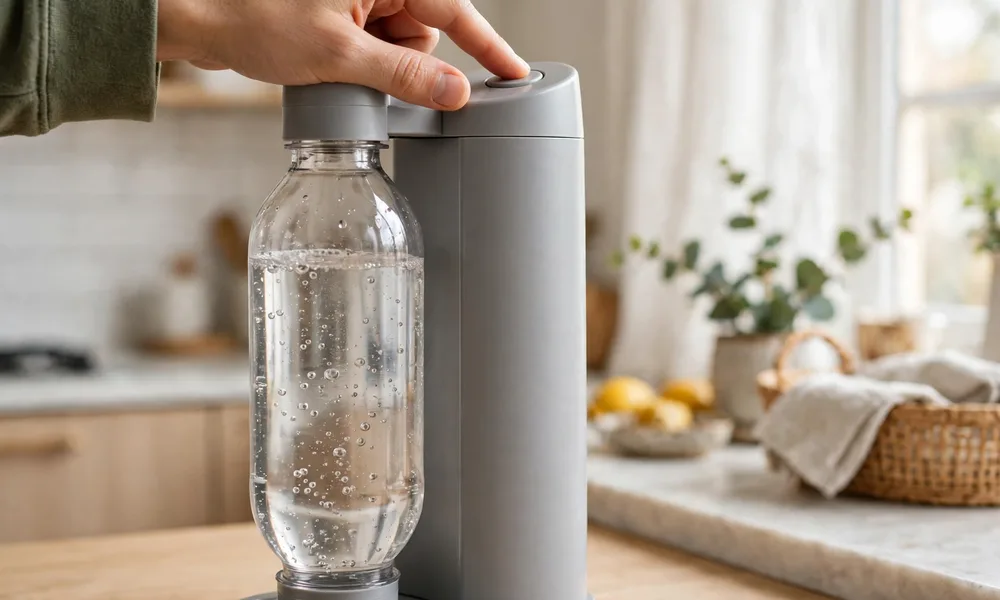
A soda maker is a simple machine with one job: dissolve carbon dioxide gas into water. The machine holds a bottle of cold water under a nozzle, releases gas from a cylinder into the bottle, and the pressure forces the gas to dissolve. When you pour, the gas comes out as bubbles, and that is the fizz you taste.
The distinction from other fizzy drinks matters, because shoppers often confuse them. Sparkling water is the finished drink, bought in a bottle or a can, and a soda maker is the machine that makes it at home. Club soda is carbonated water with added minerals, which give it a faintly salty taste, and it is usually bought ready-made. A drink dispenser, by contrast, is a large vessel with a spigot that serves a batch of drinks to a crowd, and it does not carbonate anything at all.
The other common confusion is with soda itself. A soda maker makes sparkling water, not cola or lemonade. You can add flavouring after carbonating, and many machines sell syrups and flavour drops for exactly that purpose, but the machine itself only adds bubbles. If what you want is a sweet fizzy drink, a soda maker will not make it on its own, and you should read our ranking of the best vs worst sodas before deciding what to drink.
How We Judged the Soda Makers
We judged every soda maker on seven things, by making sparkling water every day for weeks. First, fizz quality: are the bubbles fine and persistent, and does the water stay lively to the last glass? Second, ease of use: can you carbonate a bottle with one hand, without gas escaping in a loud hiss? Third, bottle design: does it seal well and fit in the fridge door? Fourth, gas efficiency and exchange cost. Fifth, build quality. Sixth, running costs over a year of daily use. Seventh, safety and reliability.
Manual vs Electric Soda Makers
The first choice is between a manual and an electric machine. A manual soda maker has a lever or a button that you press to release the gas. You control the fizz yourself: one press for light fizz, two or three for strong fizz. Manual machines are cheaper, need no power socket, have fewer parts to break, and work anywhere. Their only real disadvantage is that the fizz depends on your technique, so the first few bottles may come out lighter or stronger than you intended.
An electric soda maker does the work for you. You press a button, the machine carbonates to a preset level, and a light or a sound tells you when it is done. Electric machines are easier to use and give a more consistent result, and they suit a household where several people use the machine. They cost more, need a power socket, and have more parts that can fail. If you live alone and like control, buy manual. If the whole family drinks sparkling water, buy electric.
What Makes Good Fizz
Good fizz starts with cold water. Carbon dioxide dissolves far better in cold water than in warm water, so chill the bottle in the fridge for at least an hour before carbonating, and you will get finer bubbles that last longer. Warm water gives big, harsh bubbles that go flat within minutes. Use fresh tap water, or filtered water if yours tastes of chlorine.
The second rule is to carbonate in stages. Press once, wait a second, press again, and listen for the sound of the gas. Most machines give a small hiss or click when the water is fully carbonated, and pressing beyond that wastes gas without adding fizz. The third rule is to add flavour after carbonating, never before, because syrups and juice can foam up inside the bottle. Carbonate plain water first, then add a squeeze of lemon or a splash of juice in the glass.

The Running Costs, Honestly
The price of the machine is the smallest part of the cost of a soda maker. The real cost is the gas, and it is the number most buyers forget to check. A standard cylinder carbonates roughly sixty litres, and when it runs out you exchange it for a full one. Exchange prices vary widely, so compare them before you buy, because a cheap machine with expensive gas costs more over a year than an expensive machine with cheap gas.
Soda Makers vs Bottled Sparkling Water
Bottled sparkling water has one great advantage: it is always ready, it comes in flavours, and it needs no machine, no cylinder and no fridge space for a bottle to chill. Its disadvantages are cost, waste and choice. A daily drinker will spend far more on bottles over a year than on gas, will throw away hundreds of bottles or cans, and will be limited to the flavours on the shelf. A soda maker reverses all three.
Soda Makers vs Drink Dispensers
The other comparison worth making is with drink dispensers, because the two are sometimes confused. A drink dispenser is a large vessel with a spigot near the base, built to serve a batch of lemonade, iced tea or fruit water to a crowd at a party. It does not carbonate anything, and it is at its best when twenty guests help themselves. A soda maker is the opposite: a small machine that carbonates one bottle at a time, for one person or one family.
Choosing the Right Machine for Your Kitchen
Start with the space. A soda maker lives on the kitchen counter, so measure the height under your cupboards before you buy, because some machines are too tall to fit with the bottle in place. Check the footprint too: a slim machine fits beside the kettle, while a wide one will push something else off the counter.
Next, check the bottles. Most machines come with one bottle, and one bottle is not enough for a household that drinks sparkling water daily, because you need one chilling while you drink from the other. Buy a spare bottle at the same time, and check that it is dishwasher safe and marked with a fill line. Never carbonate anything except water in the bottle.
Finally, check the gas supply before you buy the machine. Find out where you can exchange the cylinder near you, how much the exchange costs, and whether you can order a spare by post. A machine with no local exchange is a machine that will sit unused after the first cylinder runs out, and that is the most common reason soda makers end up in a cupboard.
How to Use and Care for a Soda Maker
Using a soda maker well is a short routine. Chill the bottle in the fridge, fill it to the marked line, attach it firmly, and carbonate in short presses until you hear the machine tell you it is done. Release the bottle slowly, pour into a cold glass, add flavour after pouring, and drink it within a few hours.
Comparison Table
| Type | Best for | Fizz control | Running cost |
|---|---|---|---|
| Manual soda maker | One person, full control | You choose, press by press | Low, gas only |
| Electric soda maker | Families, same fizz daily | Preset, consistent | Higher, gas plus power |
| Bottled sparkling water | Occasional drinkers | Fixed by the bottler | High per litre |
| Club soda, bottled | Mixing drinks | Fixed, mineral taste | High per litre |
| Drink dispenser | Parties, batches | No carbonation | Low, no gas |
Checklist: Buying a Soda Maker
- Chill the water first: cold water gives finer, longer-lasting bubbles.
- Check the cylinder exchange and its price before buying.
- Measure the height under your cupboards and the counter space.
- Buy a spare bottle, so one can chill while you drink.
- Carbonate plain water only; add flavour after pouring.
- Replace a scratched bottle; never use a wrong-brand bottle.
Frequently Asked Questions
Is a soda maker cheaper than buying bottled sparkling water?
Yes, if you drink sparkling water most days. A cylinder carbonates roughly sixty litres, and the gas costs far less per litre than bottled water, so a daily drinker usually recovers the cost of the machine within a year. If you drink it once a week, bottled water is cheaper.
Can I carbonate anything other than water?
No, and you should not try. Carbonate plain cold water only, then add flavour after pouring. Syrups, juice and wine foam up inside the bottle, make a mess of the nozzle, and can damage the machine. For a standard soda maker, water only is the safe rule.
How long does the fizz last?
A sealed bottle kept in the fridge stays lively for a day or two. Once opened, the fizz fades within hours, so drink it the same day. Keep the cap on and the bottle cold.
Do soda makers need electricity?
Manual soda makers do not: they work with a lever or a button and need no power socket. Electric soda makers do need power, and they carbonate to a preset level at the press of a button. If you want fewer parts to break, choose manual. If you want the same fizz every time, choose electric.
Is homemade sparkling water as good as bottled?
Yes, if you start with good water and chill it first. The bubbles are the same gas, dissolved the same way, and the taste depends on the water, not the machine. Use filtered water if your tap water tastes of chlorine, carbonate it cold, and add lemon after pouring.
What is the difference between a soda maker and a drink dispenser?
A soda maker carbonates one bottle of water at a time for daily drinking, using a CO2 cylinder. A drink dispenser serves a batch of drinks to a crowd at a party, and it does not carbonate anything. The soda maker is for every day, the dispenser for guests.
The Bottom Line
The best soda makers of 2026 make good fizz, simply and reliably, day after day: cold water in, fine bubbles out, a cylinder that is easy to exchange, and a bottle that fits the fridge. Buy manual for control and simplicity, electric for the same fizz every time, and check the gas price before you buy. If you drink sparkling water most days, a soda maker will save you money and give you fresher fizz than any bottle.