The best drink dispensers in 2026 are the quiet heroes of a good party. They sit on the table, full of lemonade, iced tea or fruit water, and let every guest help themselves without waiting for the host to pour. A good drink dispenser changes the rhythm of the evening, because nobody queues in the kitchen and the host can talk to people instead of refilling glasses all night.
A drink dispenser is a large countertop vessel with a spigot near the base, built to serve a batch of drinks to a crowd. Unlike a pitcher, which you lift and pour, a dispenser stays put and serves one glass at a time through its valve. That single difference is what makes parties easier: the drink is always visible, always within reach, and always ready.
This guide compares the drink dispensers worth buying in 2026, explains how to choose the right size and material, and shows how to set one up, keep it cold, and clean it afterwards.
Key Takeaways
- Choose a spigot first: a smooth, drip-free metal tap matters more than the shape of the vessel.
- Size the dispenser to your guest list: two litres serves about eight glasses, five litres serves about twenty.
- Glass looks best and never holds flavours, while stainless steel keeps drinks colder for longer outdoors.
- A wide mouth makes filling, adding ice and cleaning far easier, and it is the feature most buyers regret ignoring.
- Set the dispenser on a sturdy, level table with glasses, ice and a drip tray beside it.
Why a Drink Dispenser Changes a Party
A party without a dispenser has a bottleneck, and the bottleneck is the host. Someone has to fetch the jug from the fridge, pour eight glasses, put the jug back, and repeat the routine twenty minutes later. Guests wait, glasses sit empty, and the host spends the evening in the kitchen. A dispenser removes that job entirely.
The Spigot Is the Whole Point
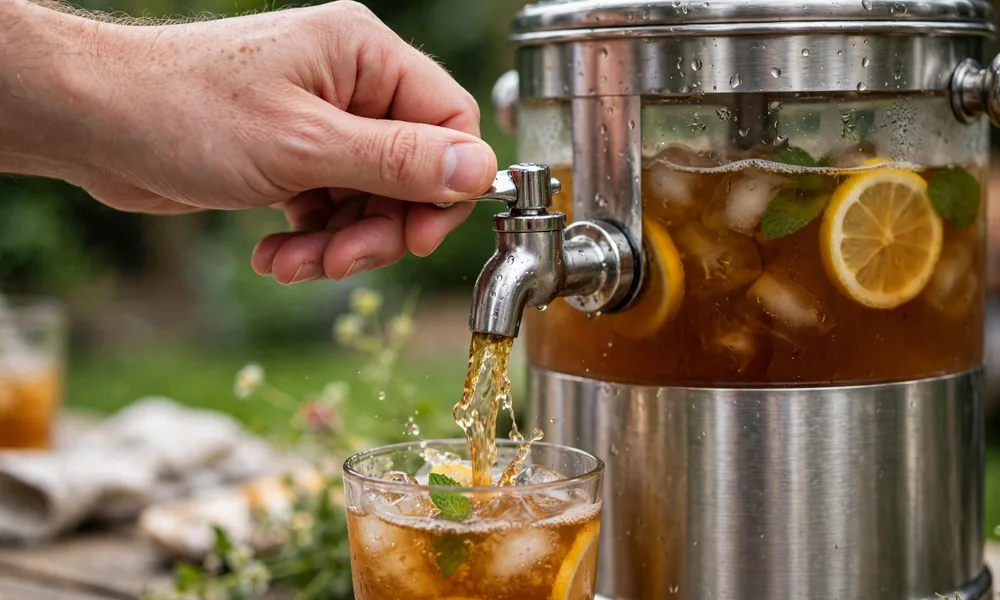
The spigot decides whether you love a dispenser or regret buying it. A good spigot opens with a light touch, pours in a smooth, controlled stream, and shuts off cleanly without dripping. A bad one sticks, dribbles, or pours so fast it splashes over the rim. Before you buy, check that the tap is metal rather than thin plastic, that it moves smoothly, and that a tall glass fits underneath it.
Batch Serving Beats Pouring One by One
Batch serving is the real advantage of a dispenser. A five-litre dispenser holds roughly twenty glasses, so you can mix a whole batch of lemonade in the morning, chill it, and forget about drinks for the rest of the afternoon. Guests help themselves, and children can pour their own squash without lifting a heavy jug.
Types of Drink Dispensers in 2026
Drink dispensers come in four main materials, and each suits a different kind of party. Glass is the classic choice and the one most people picture first. Stainless steel is the practical choice for gardens and long afternoons. Plastic and acrylic are the light, affordable choices for big crowds, and insulated dispensers are built to hold temperature for hours without ice.
Glass Dispensers
Glass dispensers are the best-looking option, and glass never absorbs flavours, so lemonade tastes like lemonade even after hours in the vessel. They show off the drink beautifully, which matters when you have layered fruit and mint inside. The drawback is weight and fragility, so choose thick glass with a sturdy base and keep it away from the edge of the table.
Stainless Steel Dispensers
Stainless steel dispensers are the toughest option and the best at keeping drinks cold in the sun. A double-walled steel vessel holds its temperature far longer than glass, and it will not crack or shatter if it is knocked. The trade-off is that you cannot see the drink inside. Steel suits garden parties and barbecues, where durability matters more than display.
Plastic and Acrylic Dispensers
Plastic and acrylic dispensers are light, cheap and easy to carry, which makes them the sensible choice for a large crowd or a party with children. A three-litre acrylic dispenser costs a fraction of a glass one, and if it tips over, nobody is sweeping up broken glass. The compromise is that plastic can hold faint flavours and scratches more easily, so buy food-grade, BPA-free plastic.
Choosing the Right Size
Size is the easiest thing to get wrong. A dispenser that is too small needs constant refilling, and one that is too large leaves half a batch of warm drink at the end of the night. Allow about 250 millilitres per glass, and assume each guest will have two or three glasses over an evening. A two-litre dispenser serves eight glasses, a three-litre dispenser serves twelve, and a five-litre dispenser serves twenty.

One to Two Litres: Small Gatherings
A one to two litre dispenser suits a dinner for four to eight people, where the drink is one option among several. It is light enough to carry to the table when full, fits in the fridge for chilling, and is easy to store afterwards. At a party of ten or more it will be empty within the hour, but for a small gathering it is the right size, and it looks better on a dinner table than a large vessel does.
Two to Three Litres: The Sweet Spot
Two to three litres is the sweet spot for most households, because it covers a party of ten to fifteen without dominating the table. A three-litre glass dispenser is still light enough to lift when full and fits on a standard sideboard. If you only buy one dispenser, buy this size.
What to Look For Before You Buy
Beyond size and material, three details decide whether a dispenser is a pleasure to use or a chore. The spigot, the lid and the base each matter, and each one is easy to check before you buy. A dispenser that gets all three right will serve you for years.
Spigot Quality
Look for a metal spigot with a smooth action and a seal that closes firmly. Plastic spigots can work, but they are the first part to fail, and a leaking tap will empty a dispenser onto your tablecloth. Check that the spigot can be removed for cleaning, because fruit pulp and sugar build up inside it.
Lid, Seal and Base
A good lid keeps insects out, keeps the drink cold, and stays on when someone bumps the table. The best lids seal snugly without being hard to remove, and they have a wide opening so you can add ice and fruit without a funnel. Pair that with a wide, heavy base, because a narrow base tips easily. Always place the dispenser a handspan from the edge of the table.
Drinks That Work Well in a Dispenser
Almost any cold drink works in a dispenser, but some work better than others. The best drinks are clear or lightly coloured, lightly sweetened, and served cold, because they look beautiful through glass and stay fresh for hours. Lemonade, iced tea, fruit-infused water and sangria are all natural choices for a batch.
Best Choices for a Crowd
Lemonade and iced tea are the two safest choices for a crowd, because almost everyone drinks them and both keep well for several hours. Fruit water, with cucumber, orange and mint, is the lightest option and the one guests reach for on a hot day. If you are serving a single drink alongside water, a water pitcher on the same table gives guests a plain option and keeps the dispenser for the special drink.
Setting Up a Drinks Station
A dispenser works best as part of a small drinks station, not on its own in the middle of a table. Set it on a sturdy sideboard, with glasses in front, ice in a bowl beside it, and a small drip tray under the spigot. Keep the station away from the food table, and shade the dispenser from direct sun outdoors. Our guide to the ice buckets that keep drinks cold all evening explains how to keep the ice cold beside it, and a bar cart for small-space entertaining makes a neat mobile station if you are short on tables.
Cleaning and Storing Your Dispenser
Cleaning is the part of owning a dispenser that nobody thinks about when they buy one, and it decides whether you use it twice or twenty times. Rinse the vessel as soon as the party ends, before sugar and fruit dry onto the glass. Take the spigot apart, soak it in warm soapy water, and run a bottle brush through it.
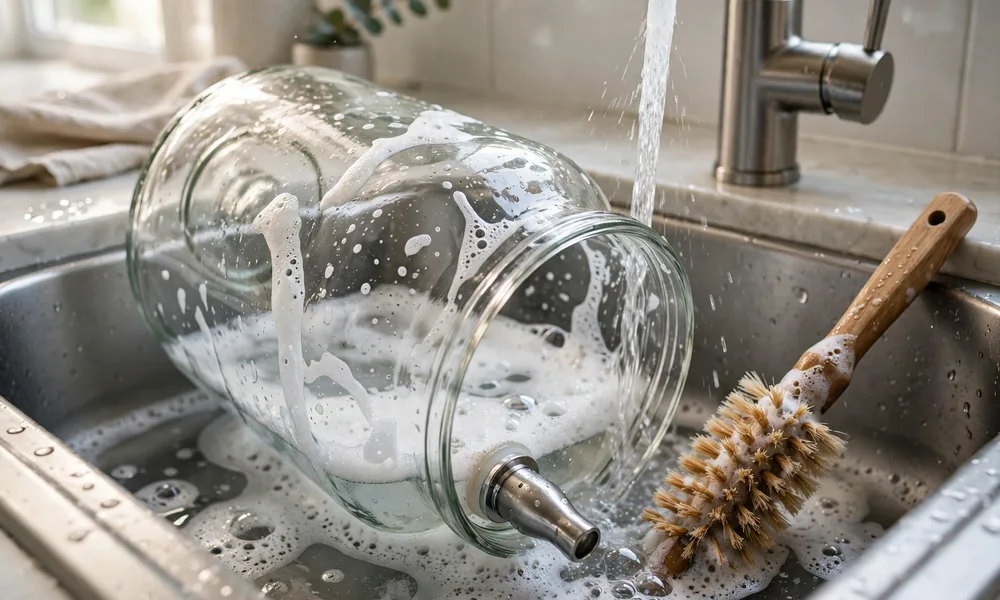
Glass vessels go in the dishwasher only if the manufacturer says so, and even then the spigot should be washed by hand. Dry everything thoroughly before you store it, and store it with the lid off or ajar.
Drink Dispensers Compared
| Type | Capacity | Keeps Cold | Best For | Typical Price |
|---|---|---|---|---|
| Glass | 2–5 litres | Fair | Dinner parties, display | $25–$60 |
| Stainless steel | 3–8 litres | Excellent | Garden parties, outdoors | $40–$90 |
| Plastic / acrylic | 2–5 litres | Fair | Big crowds, children | $15–$35 |
| Insulated | 3–5 litres | Excellent | Long afternoons, hot days | $50–$100 |
Drink Dispenser Buying Checklist
- Measure your table and fridge shelf before you buy, and check the dispenser fits both.
- Choose a metal spigot that pours smoothly, shuts off cleanly, and comes apart for cleaning.
- Pick the size from your guest list: two litres for eight glasses, five litres for twenty.
- Check the mouth is wide enough for ice cubes, fruit and your hand with a sponge.
- Make sure a tall glass fits under the spigot, or you will be tilting every glass you pour.
- Buy a drip tray and set the dispenser a handspan from the edge of a sturdy, level table.
Frequently Asked Questions
How much drink does a dispenser hold?
A two-litre dispenser holds about eight glasses, a three-litre dispenser holds about twelve, and a five-litre dispenser holds about twenty, assuming a standard glass of around 250 millilitres.
Can I put ice directly in a drink dispenser?
Yes, if the mouth is wide enough for the cubes. Large cubes melt more slowly than small ones, so they keep the drink cold longer without watering it down as quickly.
How do I stop a dispenser spigot from leaking?
Check that the seal is seated properly and the tap is fully closed. If it still drips, take the spigot apart, clean the seal, and replace any worn washer, because a tired washer is the most common cause of a slow leak.
Can I use a drink dispenser for hot drinks?
Only if the manufacturer says it is safe for hot liquids. Most glass and plastic dispensers are made for cold drinks, and hot liquid can crack glass, warp plastic, or make the spigot fail.
How long can a drink sit in a dispenser?
A cold drink keeps well for four to six hours at a party, provided it stays cool and covered.
What is the difference between a drink dispenser and a water pitcher?
A pitcher is lifted and poured, while a dispenser stays on the table and serves through a spigot. A dispenser holds more and serves a crowd without the host pouring, while a pitcher suits everyday meals and the fridge.
The Bottom Line
The drink dispensers that make parties easier in 2026 are the ones that get the simple things right: a smooth metal spigot, a size matched to your guest list, a wide mouth for filling and cleaning, and a stable base on a sturdy table. Glass suits dinner parties, stainless steel suits the garden, and a three-litre vessel is the sweet spot for most homes. Buy the dispenser for the parties you actually host, and you will spend the evening with your guests instead of in the kitchen.