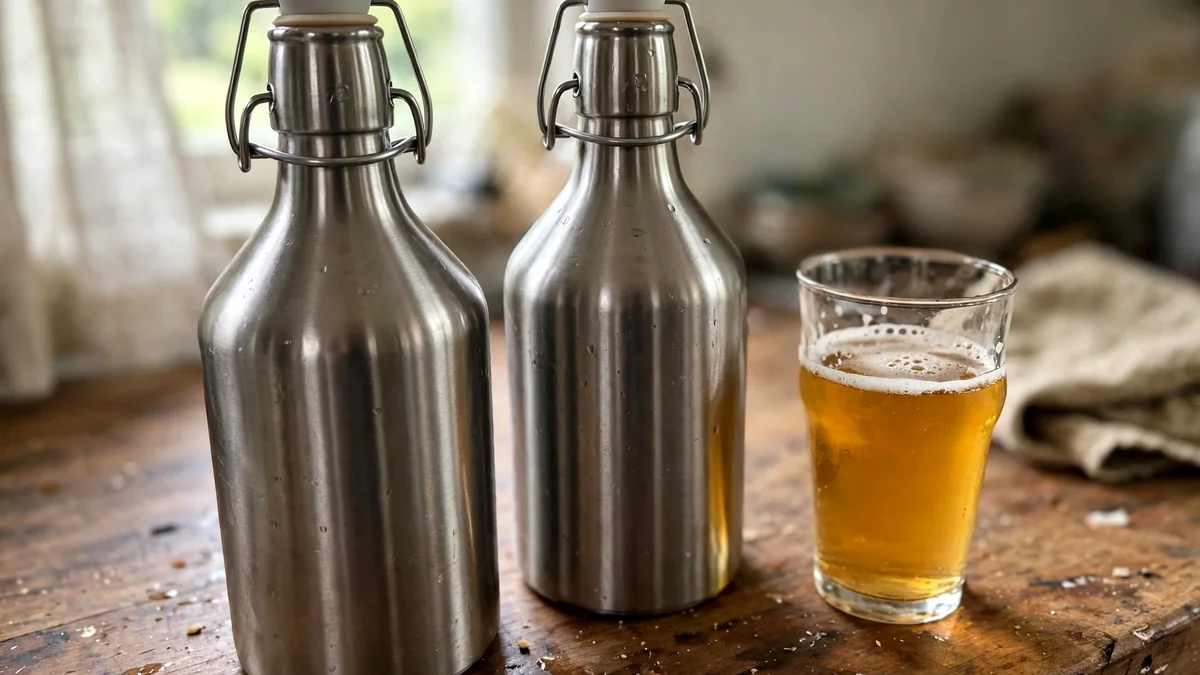
Best Growlers for Fresh Draught Beer at Home in 2026
The best growlers in 2026 do one job well: they carry draught beer home from the brewery tap and keep it tasting like it just left the tap. A growler is a refillable jug, usually 32 or 64 ounces, that a brewery fills straight from the tap so you can drink fresh draught beer at home, at a picnic, or at a friend’s house. The wrong growler leaks in the car, lets the fizz die overnight, and leaves beer flat and stale by the second day. The right one seals tight, keeps the beer cold, and pours cleanly for days. This guide compares the best growlers of 2026 across glass and stainless steel, swing-top and screw-cap lids, and the sizes that suit a quiet evening versus a party, so you can stop pouring good beer down the sink.
A growler is not a bottle and not a keg. A bottle is sealed once at the brewery. A growler sits between them: you choose the beer, watch it poured, seal it yourself, and drink it within a few days. That short window is the whole point. Growlers exist for beer best drunk fresh, the seasonal pale ale or small-batch stout that never reaches bottles. Buy for the beer you actually drink, because a growler that sits empty is just a heavy jug.
Key Takeaways
- Buy the size you will finish in two or three days: 64 ounces suits sharing, 32 suits one or two people, and a half-finished growler goes flat fast.
- Stainless steel keeps beer colder and survives drops; glass shows the beer and costs less but breaks and lets light in.
- A swing-top lid with a fresh rubber seal holds carbonation best; a screw cap is simpler and cheaper but needs a firm, even twist.
- Chill the growler before the fill and keep it in the fridge afterwards: warm beer in a warm growler loses its fizz before you get home.
- Clean a growler the day you empty it with hot water and a bottle brush, and never let old beer dry inside: dried beer leaves a smell no rinse will shift.

How to Choose the Best Growler
Start with how you drink beer, not with the growler that looks best on a shelf. A Friday fill shared that evening suits almost any well-sealed growler. A Saturday fill drunk on Tuesday makes the seal and material matter far more. A picnic or beach trip makes weight and toughness matter most. And if you collect small-batch releases, check your taproom fills the growler first, because some fill only their own branded growlers or certain sizes.
Size: 32 or 64 Ounces
Most growlers come in two sizes: 64 ounces holds about four pints, suiting a small gathering or a weekend with a friend, while 32 ounces holds about two pints, suiting one person over two evenings or a couple sharing one round. An opened growler goes flat within a day or two, so buy the size you will finish before the fizz dies. A 64-ounce growler that is only half drunk is worse than a 32-ounce growler finished the same night.
Material: Glass or Stainless Steel
Glass growlers are the classic choice: amber glass blocks most light, which matters because light turns beer skunky in hours, while clear glass looks lovely but leaves the beer exposed. Glass is cheap, easy to clean, and lets you see how much is left. Its weakness is obvious: one knock on a car boot or picnic table and the evening is over. Stainless steel costs more but solves both problems: it blocks all light, keeps beer cold far longer, and survives drops that would shatter glass. Double-wall vacuum-insulated steel keeps beer cold for a full day out of the fridge, which glass cannot do, though you cannot see the beer inside and steel is heavier.
The Lid: Swing-Top or Screw Cap
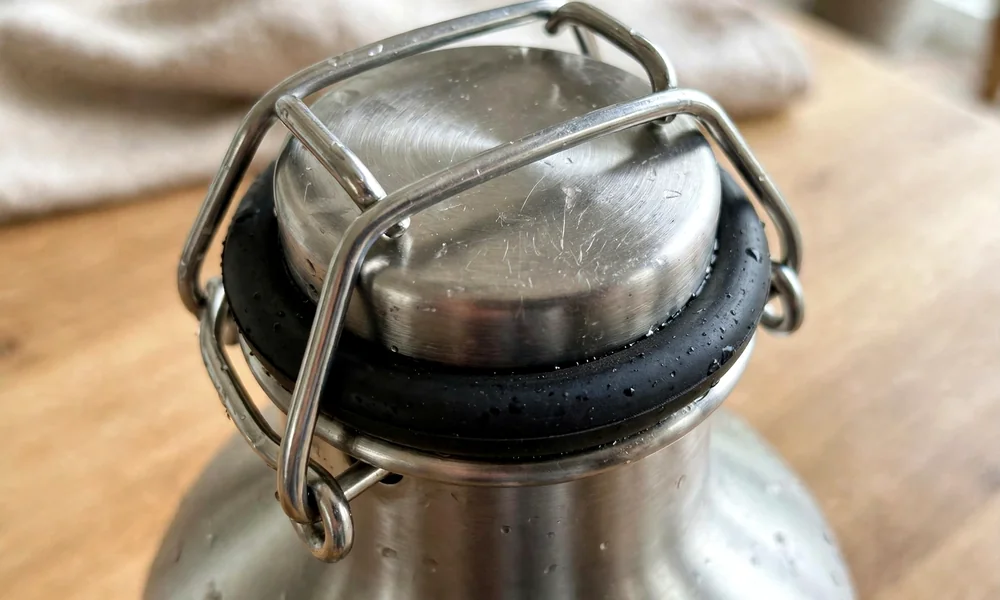
The lid is the part that decides whether the beer stays fizzy. A swing-top lid uses a wire bail to press a ceramic or steel cap onto a rubber seal, the best seal on an ordinary growler: it closes with a satisfying snap, opens and reseals easily, and the seal can be replaced when it wears out. A screw cap is simpler and cheaper, and works well if the threads are clean and the cap is tightened evenly, but a cross-threaded or worn cap leaks gas slowly and the beer goes flat with no visible leak. Some steel growlers use a wide-mouth cap with a handle, easy to fill and clean but needing its seal checked regularly. Whatever lid you choose, inspect the rubber seal before every fill: a cracked, flattened, or smelly seal is the most common reason a growler fails, and a replacement costs very little.
The Main Types of Growler
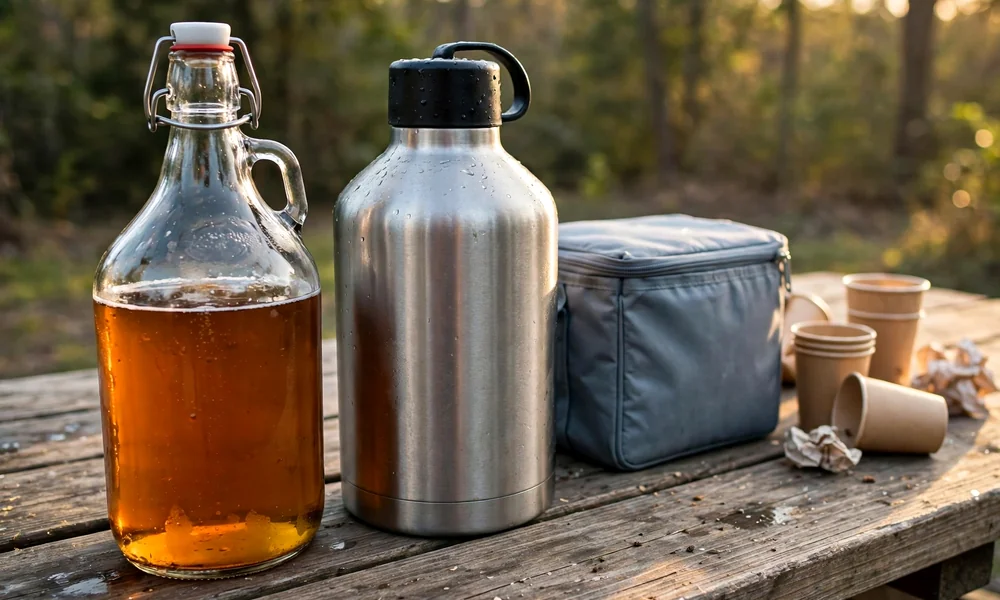
Most growlers fall into four kinds, and the right one depends on where the beer is going. The classic glass growler is the amber jug with a handle and a swing-top or screw cap, the one most taprooms fill without a second thought. It is the cheapest way in, the easiest to clean, and suits anyone whose growler travels from taproom to fridge and no further. The stainless steel growler is the tougher, colder cousin: single-wall for everyday carrying, double-wall vacuum-insulated for long days out, and the insulated growler is best for picnics, beaches, and barbecues, holding temperature for hours in the sun. The mini growler, usually 32 ounces or smaller, suits solo drinkers and anyone trying a new beer without committing to four pints. A related vessel is the crowler, a large can filled and sealed at the taproom: it keeps beer fresher for longer because it is sealed like a can, but it cannot be refilled.
Growler Comparison: Which One Suits You
| Growler | Size | Material | Best for | Price range |
|---|---|---|---|---|
| Amber glass swing-top growler | 64 oz | Amber glass | First growler, home use | $10–$20 |
| Stainless steel vacuum growler | 64 oz | Double-wall steel | Picnics and long days out | $30–$50 |
| Mini steel growler | 32 oz | Single-wall steel | Solo drinking, trying new beers | $20–$35 |
| Glass growler with handle | 64 oz | Amber glass | Easy pouring at the table | $12–$25 |
| Insulated growler with carry handle | 64 oz | Double-wall steel | Barbecues and beach days | $35–$60 |
Price is a poor guide here. A ten-dollar glass growler with a fresh seal keeps beer better than a fifty-dollar steel one with a worn seal. Spend on the seal, material, and size you will use, not a brand name; between two at the same price, pick the replaceable seal and wide mouth, which make a growler last years longer.
How Long Does Beer Last in a Growler?
An unopened growler keeps beer well for two to three days in the fridge, and a good seal can stretch that to four or five for stronger, darker beers. Hoppy beers fade fastest: the bright hop aroma that makes a fresh pale ale sing starts to dull within a day or two, so drink hoppy fills first. Once opened, finish it the same day: every pour lets gas out and air in, and the beer flattens fast. After the seal, cold matters most: beer at fridge temperature holds carbonation far longer than beer left on a warm counter. Never store a growler on its side: beer against the seal leaks gas and can seep past a worn ring. A hiss on opening means the seal held; silence means the beer is probably flat, and no chilling will bring the fizz back. For a crowd, a large drink dispenser serves better than a row of growlers, because it keeps one batch cold and pouring without opening and resealing anything.
Filling, Cleaning and Care
A good fill starts before you leave the house: chill the growler in the fridge or with cold water, because cold glass or steel keeps the beer cold and calm. At the taproom, ask for a slow, steady fill: a fast pour foams up, and foam in the neck means less beer and a weaker seal. Some taprooms purge the growler with carbon dioxide before filling, pushing the air out and keeping the beer fresher; it is worth asking for. Once filled, keep it upright and cold on the way home, and into the fridge as soon as you arrive.
Cleaning is simple but unforgiving if skipped: rinse with hot water the day you empty it, scrub with a bottle brush, and dry upside down with the lid off. Never leave soap unrinsed inside, because soap residue kills the head on the next beer. Never put a glass growler in the dishwasher unless the maker says it is safe, because heat and knocks chip the neck and wear the seal. Check the rubber seal every few fills: cracked, flat, or smelling of old beer, replace it. A seal costs a dollar or two; a failed one costs a growler of good beer. Some crown-cap glass growlers need a proper opener rather than a twist, so our bottle openers guide covers the caps you will actually meet. At a picnic, keep it cold the same way as any drink: shade, a cold bag, and ice. Our ice buckets guide covers keeping drinks cold all evening outdoors.
Checklist: Before You Buy a Growler
- Size you will finish in two or three days: 32 ounces for one person, 64 ounces for sharing.
- Material that fits the trip: steel for carrying, glass for home, insulated steel for hot days.
- Seal in good condition, with replacements available: swing-top seals are the easiest to swap.
- Mouth wide enough to clean with a brush and to fill without foam everywhere.
- Taproom rules checked: your local brewery fills this size and this material.
- Handle or grip that feels safe when the growler is full and cold, because a full 64-ounce growler is heavy.
Frequently Asked Questions
How long does beer last in a growler?
Unopened and kept in the fridge, two to three days for most beers, and up to five for strong dark beers. Hoppy beers fade fastest, so drink those first. Once opened, finish it the same day.
Are stainless steel growlers better than glass?
For keeping beer cold and surviving drops, yes. For price and seeing how much is left, glass wins. Insulated steel is the best choice for carrying beer outdoors, while glass is fine for taproom-to-fridge trips.
Can any brewery fill my growler?
Most will, but rules vary. Some fill only their own branded growlers, some fill any clean growler, and a few fill only certain sizes. Ask before you buy, and bring the growler clean and dry.
Do growlers keep beer fizzy?
Yes, if the seal is good and the growler stays cold. A swing-top lid with a fresh rubber seal holds carbonation best. A worn seal, warm storage, or an opened growler left overnight will all flatten the beer.
How do I clean a growler?
Rinse with hot water the day you empty it, scrub with a bottle brush, and dry upside down with the lid off. Avoid leaving soap residue inside, and replace the rubber seal when it cracks or smells.
What is the difference between a growler and a crowler?
A growler is a reusable jug you bring back for refills. A crowler is a large can filled and sealed at the taproom, which keeps beer fresher for longer but cannot be refilled.
The Bottom Line
The best growler is one your brewery will fill, that you will finish in two or three days, and that seals tight every time: a 64-ounce amber glass swing-top for home, or a 64-ounce insulated steel one if the beer travels. Buy the size you will drink, check the seal before every fill, keep it cold, and clean it the day you empty it, and the beer you bring home will taste like the beer you tasted at the tap.


