A Guide to Swim Fins That Make Every Kick Count in 2026
Swim fins are the rubber or silicone blades you wear on your feet to swim faster and train harder with less effort. A fin turns each kick into more forward push, so you cover more water per stroke, build leg strength, and learn a better kick. This guide explains the kinds of swim fin, how each one fits and works, and how to pick the right pair in 2026.
Key Takeaways
- A swim fin propels you: it makes each kick push more water, so you swim faster with the same effort.
- Short fins suit training and technique; long fins suit speed, diving and snorkelling.
- The fit must be snug but not tight: a fin that slips wastes power, and a fin that pinches causes blisters.
- Open-heel fins need booties; full-foot fins are worn barefoot, usually in a pool.
- Rinse fins in fresh water after every swim, and never leave them in a hot car or in direct sun.
What Swim Fins Actually Do
A swim fin works like a paddle for your foot. Your bare foot is small and slips through the water, so most of your kick is wasted. A fin adds surface area, so the same kick pushes far more water behind you. The result is more speed for the same effort, or the same speed for less effort, which is why fins are a training tool as much as a speed tool.
Fins also teach a better kick. A barefoot kick is easy to cheat: you can bend the knee and bicycle the legs and still move. A fin punishes that. It only works with a straight-leg flutter kick from the hips, so it trains the exact movement good swimmers use. Coaches give beginners short fins for this reason: the fin makes the right kick feel obvious, and the wrong kick feel useless.
Fins build leg strength, too. The extra resistance works the quads, hamstrings, glutes and calves, and the extra speed lets you practise body position at a pace you could not reach barefoot. That is why fins appear in almost every swim squad session.
Swim Fins vs a Snorkel: Propelling vs Breathing
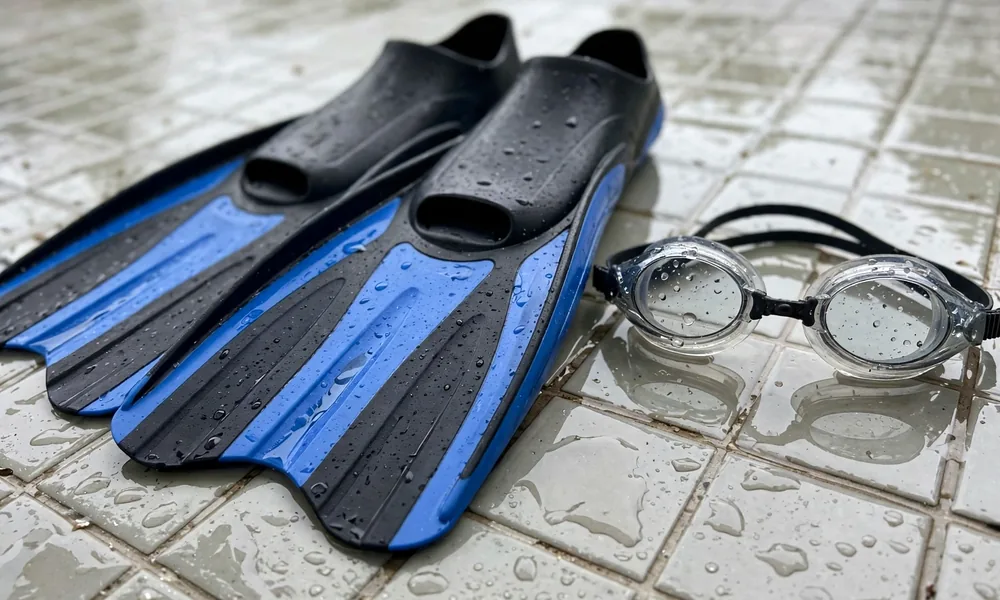
The difference between a swim fin and a snorkel is the job each one does. A fin propels: it makes your legs push more water, so you move faster. A snorkel breathes: it is a tube that lets you draw air while your face stays in the water. The two are often used together, and a snorkel mask is the third piece of the set, letting you see underwater while the fins move you and the snorkel lets you breathe. Our guide to the best snorkel masks covers the mask in full.
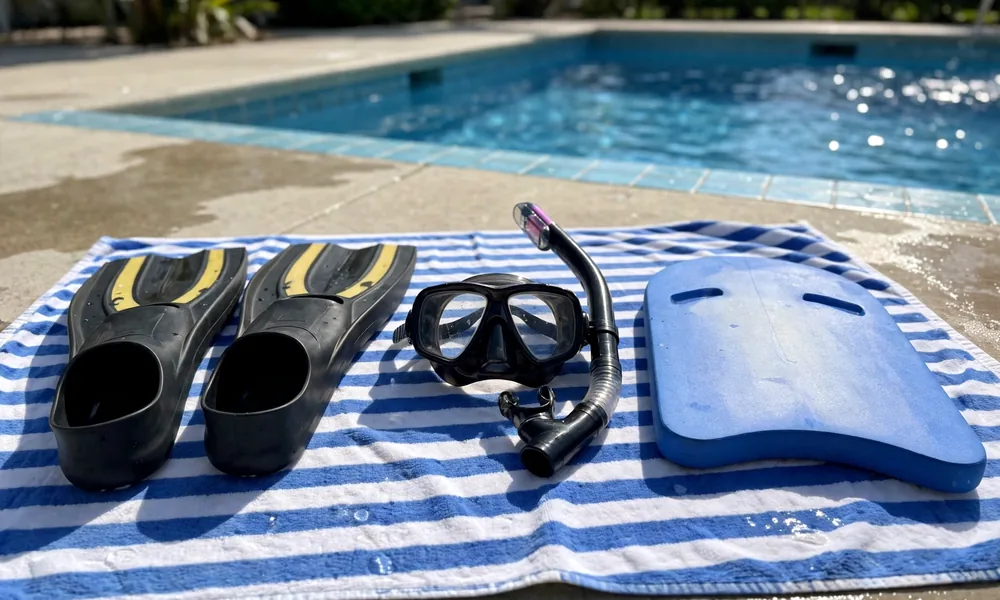
Confusing them is easy, because fins, masks and snorkels are sold as a set. But they are not the same purchase. A fin is chosen by blade length, stiffness and foot pocket. A snorkel is chosen by tube shape, purge valve and mouthpiece. A kickboard is different again: it floats, holds your arms up, and lets you train your legs alone.
The Main Types of Swim Fin
There are four kinds of swim fin in common use, and the right one depends on where you swim and what you want it for.
Short Training Fins
Short fins have a blade of 15 to 25 centimetres, and they are the standard pool training fin. They add enough push to speed you up and teach the kick, but not so much that your legs tire in a few lengths. Short fins suit beginners, squad swimmers, triathletes and anyone doing kick drills. They are light, easy to pack, and the safest first fin to buy.
Long Fins
Long fins have a blade of 50 centimetres or more, and they are built for speed and distance. A long fin gives the most push per kick, which suits open-water swimming, snorkelling and diving. The cost is effort: long fins tire the legs fast, and they are awkward in a crowded pool lane. They are the wrong choice for technique drills, and the right choice for moving fast through open water.
Full-Foot Fins
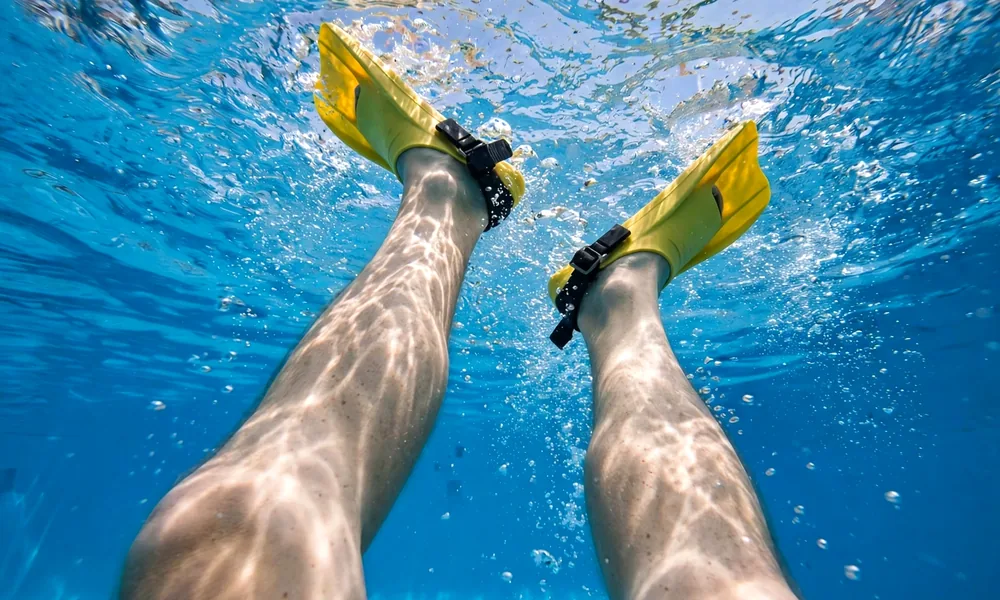
A full-foot fin has a closed pocket that hugs the whole foot, like a shoe, and it is worn barefoot. Full-foot fins are light, simple and comfortable for pool and warm-water swimming, and they are the most common training fin. The drawback is fit: the pocket comes in fixed sizes, so a foot between sizes may find one size too tight and the next too loose.
Open-Heel Fins
An open-heel fin has a strap around the heel and an open back, and it is worn over a neoprene bootie. Open-heel fins suit cold water, rocky entries and diving, where a bootie protects the foot. The strap adjusts, so the fit is more forgiving than a full-foot pocket, and the bootie stops blisters on long swims. They are heavier and bulkier, and overkill for a warm pool.
Swim Fins Compared
| Fin Type | Best For | Push | Fit | Typical Price |
|---|---|---|---|---|
| Short training fin | Pool training, technique | Moderate | Full-foot | $25–$60 |
| Long fin | Open water, snorkelling | Very strong | Full-foot or open-heel | $40–$120 |
| Full-foot fin | Pool, warm water | Moderate | Fixed sizes, barefoot | $25–$70 |
| Open-heel fin | Cold water, diving | Strong | Adjustable strap, booties | $50–$150 |
| Monofin | Freediving, dolphin kick | Very strong | Both feet together | $80–$250 |
Price is a rough guide, not a rule. A cheap fin with a stiff blade and a rough pocket will blister your feet and teach a bad kick, while a dearer fin with a soft pocket and a flexible blade is comfortable from the first length. Judge by the pocket comfort and the blade flex, not the price tag.
Fit and Sizing
Fit is the most important thing about a fin, and it is also the easiest to get wrong. A fin should feel snug all round the foot, with no heel slip and no pinching at the toes. Try fins on with the feet you will swim with: barefoot for a full-foot fin, booties on for an open-heel fin. Walk a few steps: the fin should stay put, not flap. If you can wiggle your toes freely, the pocket is too big; if your toes are jammed, it is too small.
Sizing runs like shoe sizes, but every brand cuts its pockets differently, so never trust the size chart alone. If you are between sizes, go up and wear a thin neoprene sock to take up the slack: a slightly loose fin with a sock is far better than a tight fin that blisters. Goggles matter here too, because a fin session is usually a full-kit session: a good pair of swim goggles keeps your eyes clear while your legs do the work.
Blade stiffness is the second choice. A soft blade is forgiving and suits beginners, children and anyone with weak ankles. A medium blade suits most swimmers. A stiff blade gives the most push, but it punishes a bad kick and tires the legs fast. Start soft, and go stiffer only when your kick is clean and your legs are strong.
Kicking Technique and Training
The kick a fin wants is the flutter kick: legs nearly straight, movement from the hips, toes pointed, small fast kicks rather than big slow ones. Keep the knees soft but not bent, and let the fin do the work: push the water down and back, and let the blade flex and spring. If your knees are bending, you are bicycling, and the fin will tell you: it will feel heavy and slow.
A good first session is short: four lengths with fins, then four without, repeated, so your legs learn the movement without tiring. Use fins for kick drills and easy swimming while you practise body position. Do not use fins for every length: your legs need barefoot swimming too, or you will lean on the fins and never build a real kick. Water shoes are a different tool: they protect feet on rocks and hot decks, while fins move you through water. Our guide to the best water shoes covers them.
Care and Common Problems
Fins need little care, but they do need some. Rinse them in fresh water after every swim, because chlorine and salt dry the rubber out and make it crack. Dry them out of the sun, and store them flat, not bent or folded, so the blade keeps its shape. Never leave them in a hot car: heat warps the blade and shrinks the pocket.
The most common problem is blisters, and the cause is almost always fit: a pocket that is too tight, or a bare foot in a fin that needs a sock. A thin neoprene sock fixes most blisters, and it is cheaper than new fins. Cramps are the second problem, and they usually mean the blade is too stiff or the session was too long. Drop to a softer blade, shorten the fin sets, and stretch your calves before you swim.
How to Choose: A Six-Point Checklist
- Start short: buy short training fins first, unless you dive or snorkel in open water, where long fins earn their place.
- Try them on: snug all round, no heel slip, no pinched toes, and try them with the socks or booties you will actually wear.
- Pick soft first: a soft blade suits beginners and weak ankles; go stiffer only when your kick is clean and your legs are strong.
- Match the water: full-foot fins for warm pools, open-heel fins with booties for cold water, rocky entries and diving.
- Check the pocket: smooth edges, no rough seams, and a heel strap that adjusts easily if you choose open-heel.
- Budget for socks: a pair of thin neoprene socks costs little and fixes most fit problems and blisters.
Frequently Asked Questions
Do swim fins make you faster?
Yes, at once. A fin adds surface area to your foot, so each kick pushes more water and you move faster for the same effort. The gain is biggest for beginners.
Are swim fins good for training?
Yes, they are one of the best training tools in swimming. Short fins teach the straight-leg flutter kick, build leg strength, and let you practise body position at a speed you could not reach barefoot.
What size swim fins should I buy?
Buy your usual shoe size, but try them on: every brand cuts its pockets differently. If you are between sizes, go up and wear a thin neoprene sock. The fin should feel snug, with no heel slip.
Can I use swim fins in a public pool?
Usually yes, but check the pool rules first. Some pools ban long fins in crowded lanes, because they take up space and can kick the swimmer behind. Short training fins are accepted almost everywhere.
Do I need booties with swim fins?
Only with open-heel fins, which are designed to be worn over a neoprene bootie. Full-foot fins are worn barefoot, though a thin sock helps if the pocket rubs or the fit is slightly loose.
How do I stop my fins giving me blisters?
Wear thin neoprene socks, check the fit, and keep sessions short at first. Most blisters come from a pocket that is too tight or a rough seam. If the same spot keeps blistering, the fin is the wrong size or shape for your foot.
The Bottom Line
Swim fins are the simplest way to swim faster and train better: they turn each kick into more push, teach the straight-leg flutter kick, and build leg strength. For most swimmers in 2026, the right first pair is a short, soft, full-foot training fin that fits snugly barefoot. Add neoprene socks if the pocket rubs, rinse the fins after every swim, and use them for drills and easy lengths rather than every lap. Get the fit right, and the fins will do the rest.