
Flasks That Slip Into a Pocket and Pour a Proper Dram in 2026
The best flasks in 2026 are the ones you forget you are carrying until you want them. A flask, as this guide means it, is a hip flask: a small, flat, pocket-sized container for spirits, usually whiskey or bourbon, curved to sit against the body and sealed with a captive cap so it never leaks. A hip flask holds a few ounces of something worth sipping, and it does it discreetly, durably, and without fuss. The wrong flask leaks, tastes of metal, or bulges in a jacket for everyone to see. The right one rides flat, pours cleanly, and still looks good after years of use. This guide compares the best flasks of 2026 across steel, pewter, and leather-wrapped designs, the sizes for a wedding versus a walk, and the small details that separate a flask you love from one you leave at home.
A flask is a simple object with a narrow job, which is why the details matter. It carries spirits, not water or coffee, so it never needs insulation. What it needs is a flat shape, a tight seal, a mouth wide enough to fill without spilling, and a material that does not flavour the drink. Buy for the pocket it will live in, not the shelf it will sit on, because a flask that does not fit your jacket is one you will never carry.
Key Takeaways
- Buy the size for the occasion: 6 ounces suits a wedding or a dinner, 8 ounces suits a long evening, and anything bigger stops being pocket-flat.
- Stainless steel is the best all-rounder: it does not flavour the spirit, it survives drops, and it costs less than pewter.
- A captive cap, hinged or tethered to the flask, is worth more than any other feature, because a lost cap ends the flask’s useful life.
- A curved flask sits flatter against the body than a straight one, and a slim profile matters more than capacity once the flask is in a pocket.
- Fill with a funnel, clean with hot water and rice or a brush, and never store spirits in a flask for weeks: even steel can pick up a stale note.
How to Choose the Best Flask
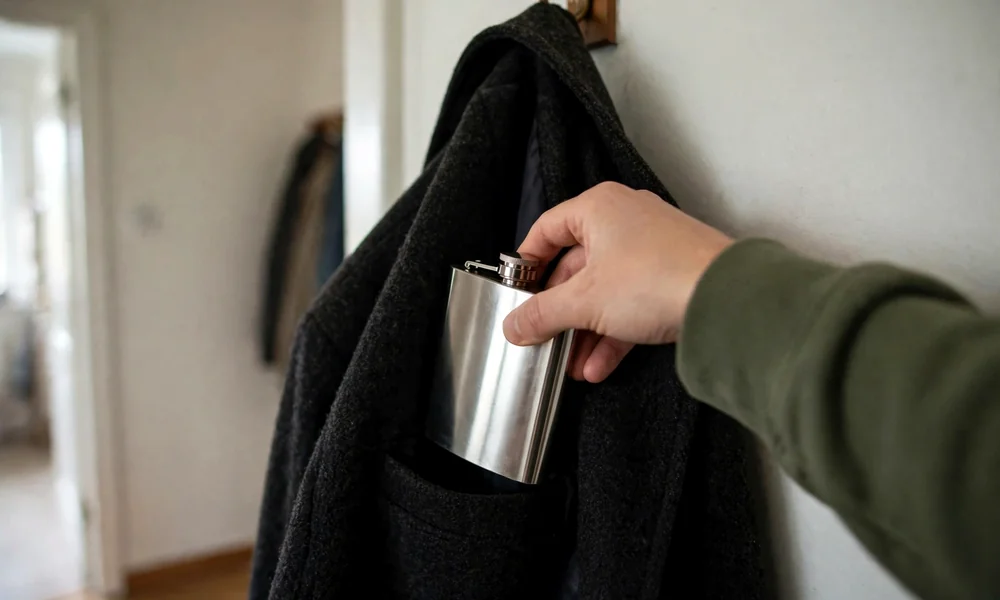
Start with the pocket, not the shop shelf. A flask lives in a jacket inside pocket, a coat pocket, or a bag, so its shape and thickness decide whether you carry it or leave it behind. Too thick and it prints through a jacket; too tall and it pokes out; too heavy and it drags a light jacket down on one side. Slip it into the pocket you will actually use before you decide, because numbers on a box never tell you how a flask carries.
Size: 4, 6 or 8 Ounces
Most hip flasks hold between 4 and 8 ounces. A 4-ounce flask holds about two generous pours and suits a short occasion, a wedding or a dinner, where discretion matters most. A 6-ounce flask is the standard: about four pours, flat enough for most jacket pockets, and the size most people reach for. An 8-ounce flask holds about five pours and suits a long evening outdoors, but it is thicker and heavier, and shows more in a slim jacket. Above 8 ounces it is really a pocket bottle, not a flask, and belongs in a bag rather than a pocket. The honest rule is that a flask is for a few drinks shared or savoured, not for carrying a whole evening’s supply, so buy the smallest size that covers the occasion.
Material: Steel, Pewter or Leather-Wrapped
Stainless steel is the default choice for most people in 2026. Food-grade steel does not flavour the spirit, it does not rust, it survives drops, and it is easy to clean. Brushed steel hides scratches better than mirror-polished steel, which shows every mark within a week. Pewter is the traditional choice: heavier, softer, with a warm grey finish that suits engraving beautifully, and it is the classic gift flask. Pewter costs more, dents more easily, and needs gentler cleaning, but it feels special in a way steel never does. Leather-wrapped flasks wrap a steel body in stitched leather, which grips better in cold hands, hides scratches, and looks at home in a country jacket. The leather needs occasional care and will darken with use, which most owners consider a feature rather than a fault. Avoid flasks with unknown metal linings or painted interiors: paint and spirits do not mix, and a flask should never leave a taste in the drink.
The Cap: Captive, Hinged or Screw
The cap is the part that decides whether a flask is trustworthy. A captive cap stays attached to the flask on a hinge or a small arm, so it cannot be lost in a dark field or a crowded room, and it is the single most important feature on any flask. A screw cap seals tightly and is easy to clean around, but a cap that unscrews fully will be lost sooner or later. Whatever cap you choose, check the seal: it should close with a firm twist and no wobble, and not weep when the flask is turned upside down. A flask that leaks in a pocket ruins a jacket and an evening, so test the seal with water before you trust it with whiskey.
Flask vs Thermos Flask: A Different Object Entirely
The word flask causes more confusion than any other part of this guide, so it is worth drawing the line clearly. A hip flask is a small, flat, uninsulated container for spirits, carried in a pocket and drunk in small sips. A thermos flask is a tall, vacuum-insulated bottle for keeping tea or coffee hot for hours, carried in a bag and poured into a cup. They share a word and almost nothing else: different shape, drink, job, and buying criteria. A thermos flask is judged on heat retention, vacuum seals, and cup lids. A hip flask is judged on pocket fit, leak-proofing, and discretion. If you want a flask for hot drinks, our thermos flasks guide covers vacuum insulation, sizes, and heat-retention numbers in full; if you want one for a quiet dram outdoors, you are in the right place.
The Main Types of Flask
Most flasks fall into a few kinds, and the right one depends on how and where you will carry it. The classic curved steel flask is the standard: 6 ounces, gently curved to sit against hip or chest, brushed steel, captive cap, suiting almost everyone and almost every occasion. The pewter flask is the gift and the heirloom: heavier, softer, beautifully engraved, and best kept for occasions rather than rough use. Some people carry a tiny flask as a taster at whisky festivals or distillery visits, where 2 or 3 ounces lets you carry a sample without committing to a full bottle.

Flask Comparison: Which One Suits You
| Flask | Size | Material | Best for | Price range |
|---|---|---|---|---|
| Curved steel hip flask | 6 oz | Brushed steel | Everyday carry, first flask | $15–$30 |
| Straight steel flask | 8 oz | Steel | Long evenings, easy filling | $15–$35 |
| Pewter hip flask | 6 oz | Pewter | Gifts and engraving | $40–$90 |
| Leather-wrapped flask | 6 oz | Steel, leather wrap | Outdoors, cold hands | $30–$60 |
| Mini taster flask | 3 oz | Steel | Festivals and distillery visits | $10–$20 |
Price is a poor guide here. A fifteen-dollar steel flask with a captive cap and a good seal serves better than a ninety-dollar pewter one with a loose cap. Spend on the cap, the seal, and the shape that fits your pocket, not decoration; between two at the same price, pick the captive cap and flatter profile, because those decide whether the flask gets carried or stays at home.
Filling, Cleaning and Care
Filling a flask well is a small skill: use a funnel, because the mouth is narrow and whiskey spilled on a counter is whiskey wasted, and a fitting funnel is often included in the box. Fill slowly, leave a little air at the top so the spirit can move without pressing on the seal, and wipe the neck dry before you close the cap. Never fill a flask with a carbonated drink or a cream liqueur: one fizzes, the other spoils, and both are miserable to clean out. Pour into a proper glass when you can: a small dram in a good glass tastes better than a swig from the neck, and our whiskey glasses guide covers the shapes that show a spirit best. A flask pour is roughly four to five measures, so if you like to keep count, our shot glasses guide explains what a true measure looks like.
Cleaning is simple but worth doing properly: rinse with hot water after each use, shake with hot water and a spoonful of dry rice to scour the inside, and dry upside down with the cap off. A narrow bottle brush reaches the corners a rinse cannot. Never use soap and leave it unrinsed, because soap residue flavours the next fill, and never put a pewter flask in the dishwasher. Do not store spirits in a flask for weeks: a few days is fine, but over weeks even steel can lend a stale note to a good whiskey, so keep the bottle for storage and the flask for carrying. Check the cap seal now and then: if the flask ever weeps, replace the seal or cap before trusting it again.

Checklist: Before You Buy a Flask
- Size for the occasion: 6 ounces for most uses, 4 for discretion, 8 for a long evening.
- Profile flat enough to disappear in the pocket you will actually carry it in.
- Captive cap, hinged or tethered, so it cannot be lost in the dark.
- Seal that closes firmly with no wobble and does not weep upside down.
- Material that will not flavour the spirit: food-grade steel, pewter, or leather over steel.
- Funnel included or available, because filling without one wastes whiskey.
Frequently Asked Questions
What is the best size for a hip flask?
Six ounces suits most people: about four pours, flat enough for a jacket pocket. Four is better for discretion, eight for a long evening; anything bigger stops being pocket-flat.
Do hip flasks leak in a pocket?
A good one does not: look for a captive cap, a firm seal, and no wobble when closed, and test the seal with water, upside down, before trusting it with whiskey in a pocket.
Is stainless steel or pewter better for a flask?
Steel is the practical choice: it does not flavour the spirit, survives drops, and costs less. Pewter is heavier and softer, engraves beautifully, and suits a gift, but it dents and needs gentler care.
How long can you keep whiskey in a flask?
A few days is fine. Over weeks, even steel can lend a stale note to a good spirit, so keep the bottle for storage and use the flask for carrying.
How do you clean a hip flask?
Rinse with hot water after each use, shake with hot water and a spoonful of dry rice to scour the inside, and dry upside down with the cap off; a narrow bottle brush reaches the corners.
Can you put anything other than whiskey in a flask?
Any spirit works: bourbon, rum, brandy, or gin. Avoid carbonated drinks and cream liqueurs, which fizz, spoil, and are hard to clean.
The Bottom Line
The best flask disappears into your pocket, never leaks, and pours a clean dram when you want it: for most people, a 6-ounce curved stainless steel flask with a captive cap and a funnel in the box. Buy the size for the occasion, test the seal with water before you trust it, fill it with a funnel, and clean it the day you empty it, and the flask will be the quiet companion it is meant to be, not the leak in your pocket you regret.


