
Whiskey Glasses That Make Every Pour Feel Special in 2026
The best whiskey glasses in 2026 do something simple and hard to fake: they make an ordinary pour feel like an occasion. The right glass gathers the aroma, sits comfortably in your hand, and delivers the whiskey to your tongue in a way that lets you taste it properly. The wrong glass flattens the smell, feels clumsy, and turns a good bottle into a forgettable drink. This guide sorts the best whiskey glasses from the rest, so you can buy glasses that make every pour feel special, whether you drink neat, on the rocks, or with a splash of water.
Key Takeaways
- The best whiskey glasses have a shape that gathers aroma, a smooth rim, and a base wide enough to stand steady.
- A rocks tumbler suits whiskey on ice; a tulip-shaped nosing glass suits sipping neat and nosing the aroma.
- Thin, clear glass shows the colour properly and feels better on the lip than thick, heavy glass.
- A heavy base is good for stability, but a glass that tires your wrist is a glass you will stop reaching for.
- Hand washing keeps whiskey glasses clear; a dishwasher clouds cheap glass over time.
What Makes a Good Whiskey Glass
A good whiskey glass starts with the shape. Whiskey gives off its aroma from the surface of the liquid, and the glass decides how much of that aroma reaches your nose. A glass that narrows slightly towards the top gathers the scent and holds it where you can smell it before the first sip. A glass that is wide open at the top lets the aroma escape into the room, and the whiskey tastes flatter for it. That is why the same whiskey can smell rich and full from one glass and thin and sharp from another.
The rim matters more than most people expect. A thin, smooth rim lets the whiskey flow onto your tongue in a neat, controlled sip, and you barely notice the glass itself. A thick, rolled rim feels clumsy and pushes the liquid over your tongue in a rush, so you taste the glass before you taste the whiskey. Run a finger around the rim before you buy: if it feels smooth and fine, it will drink well. If it feels blunt and heavy, it will not.

The Main Whiskey Glass Shapes
The rocks glass, also called an Old Fashioned glass or tumbler, is the one most people should buy first. It is short and wide, with a heavy base, and it holds a generous pour over a large cube of ice without crowding. It suits whiskey on the rocks, and it suits simple mixed drinks too. The best rocks glasses have straight or gently sloping sides, a smooth rim, and enough weight to feel steady. A rocks glass that is too tall or too narrow defeats its own purpose, because the ice has nowhere to sit.
The tulip-shaped nosing glass, often called a Glencairn, is the best choice for sipping whiskey neat. Its bowl is wide at the bottom and narrow at the top, so the aroma gathers and rises straight to your nose. It has a short stem or a solid base, and it holds a small pour, which is all you need when you are tasting properly. If you drink whiskey to enjoy its smell as much as its taste, this is the glass that shows you what the bottle can do. It is also the glass that makes a modest bottle taste more expensive than it is.
The Best Whiskey Glasses of 2026
The best whiskey glasses of 2026 share one quality that you notice the moment you lift them: they feel balanced, the glass is clear, and the whiskey inside looks like more of itself. The rim is smooth, the base sits flat, and there is no thick edge getting in the way of the first sip. These are the glasses that make an ordinary bottle feel like an occasion, and they are the ones guests reach for again without thinking about it. A good set does not need to be expensive, and it does not need to match a famous brand to drink well.
A strong all-round choice is a set of four rocks glasses with a heavy base and a thin rim. They cover most evenings, they stack neatly in a cupboard, and they suit guests who drink their whiskey in different ways. Add two nosing glasses if you like to sip neat, and you have a home bar that handles almost any whiskey occasion. If you are building that home bar from scratch, our guide to the best home bar essentials of 2026 covers the bottles, tools and storage that go with the glasses, so the whole setup works together instead of growing by accident.
Comparison Table: Whiskey Glass Shapes
| Glass | Best for | Watch out for |
|---|---|---|
| Rocks tumbler | Whiskey on ice, Old Fashioned | Too narrow for a large ice cube |
| Nosing glass | Sipping neat, nosing aroma | Too small for ice or mixers |
| Highball | Whiskey and soda, long drinks | Too wide, so fizz dies fast |
| Stemmed copita | Tasting, keeping hands off bowl | Delicate, easy to knock over |
| Double rocks | Large pours, big ice spheres | Heavy, tiring over a long evening |
Neat, On the Rocks, or With Water
How you drink your whiskey should decide which glass you reach for. Neat whiskey, with nothing added, belongs in a nosing glass, because the aroma is half the drink and a wide-open tumbler lets it escape. A small splash of water opens the whiskey up further, softening the alcohol bite and letting the flavours underneath show. Add the water a few drops at a time, and taste as you go, because too much water drowns the whiskey instead of opening it.
Whiskey on the rocks belongs in a rocks glass with one large cube, not a handful of small ones. A large cube melts slowly, chilling the drink without watering it down in minutes, and it looks better too. Small cubes melt fast and leave you with a weak, watery drink by the time you are halfway through. If you like your whiskey cold but undiluted, a whiskey stone or a chilled glass does the job without adding water at all, though purists will tell you that a little dilution is part of the drink.
The Worst Whiskey Glasses of 2026
The worst whiskey glasses fail in ways that are small, annoying, and surprisingly hard to forgive. The most common failure is the thick, heavy tumbler with a rolled rim, a glass so bulky that every sip feels like work. Instead of the whiskey flowing smoothly onto your tongue, it arrives over a blunt edge, and the glass feels more like a jam jar than a drinking glass. Once you have drunk from a thin-rimmed glass, a thick rim is hard to go back to, because the difference is there in every mouthful.
The second common failure is the cloudy, scratched glass. Cheap glasses are often made from thick, soft glass that clouds after a few washes, scratches at the slightest touch, and never looks clean even when it is. The whiskey inside looks dull, its colour hidden behind a milky haze, and the whole glass feels tired and second-hand. The same trap shows up across the bar: our comparison of the best vs worst cocktail glasses of 2026 found the same cloudy, thick-rimmed glasses at the bottom of its list, for the same reasons.

Ice, Water and the Perfect Pour
A good pour is smaller than most people think. A standard whiskey pour is about forty-five millilitres, which leaves room in the glass for the aroma to gather and for ice to sit without crowding. Pouring to the brim leaves no room for the smell, and it means the first sip is warm whiskey over melting ice. Measure it once with a jigger, learn what it looks like in your glass, and then pour by eye with confidence.
Looking After Your Whiskey Glasses
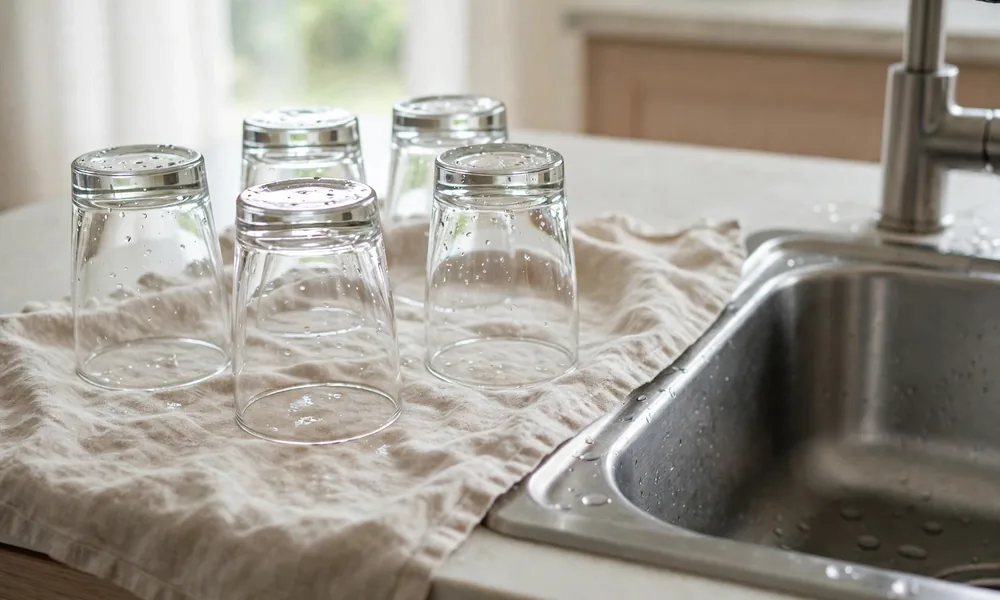
Hand washing is the kindest thing you can do for a good whiskey glass. Warm water, a little washing-up liquid, and a soft cloth keep the glass clear and the rim smooth. Rinse well, because soap residue dulls the aroma of the next pour, and dry the glass upside down on a clean towel so water does not leave spots. A dishwasher is faster, but the heat and the harsh detergent cloud fine glass over time, and the glasses knock against each other and chip.
Store whiskey glasses upright, not stacked, and keep them somewhere they will not be knocked. Stacking chips rims, and a chipped rim is the end of a good glass, because it feels rough on the lip and can cut. If a glass does chip, retire it: it is not worth the risk, and a good set is cheap enough to replace one glass at a time. A little care keeps a good set of whiskey glasses looking new for years, which is more than can be said for most bar tools.
Checklist: Before You Buy Whiskey Glasses
- Choose the shape for how you drink: rocks glass for ice, nosing glass for sipping neat.
- Check the rim is thin and smooth, with no thick rolled edge.
- Hold the glass up to the light: it should be clear enough to show the whiskey’s true colour.
- Make sure the base is wide and flat, so the glass stands steady and does not tip.
- Pick a weight that feels solid but does not tire your wrist over an evening.
- Buy a set of four, and add two nosing glasses if you sip whiskey neat.
Frequently Asked Questions
What is the best glass for drinking whiskey neat?
A tulip-shaped nosing glass is the best choice for whiskey neat, because its narrow top gathers the aroma and delivers it to your nose before the first sip. A rocks glass works too, but it lets more of the smell escape into the room.
Do whiskey glasses really change the taste?
Yes, because taste starts with smell, and the glass shapes how much aroma reaches your nose. The whiskey itself does not change, but a glass that gathers the aroma makes the same whiskey smell richer and taste fuller.
Should I use ice in my whiskey?
It is a matter of taste. Ice chills the whiskey and softens the alcohol bite, which many people prefer. Use one large cube, which melts slowly, rather than small cubes that water the drink down in minutes.
How many whiskey glasses do I need?
Four rocks glasses cover most households, with two nosing glasses added if you sip neat. Buy a matching set rather than single glasses, so the weight and the rim feel the same from glass to glass.
Can I put whiskey glasses in the dishwasher?
You can, but hand washing keeps them clearer for longer. Dishwasher heat and detergent cloud fine glass over time, and glasses knock together and chip. If you do use a dishwasher, place glasses upright and keep them apart.
What pairs well with whiskey glasses as a gift?
A set of whiskey glasses pairs well with a bottle, a large ice mould, and a good shaker for cocktails. Our guide to the best cocktail shakers for home bars covers the shaker side, so a gift set can cover the whole home bar rather than just the glass.
The Bottom Line
The best whiskey glasses in 2026 are the ones that gather the aroma, feel balanced in your hand, and make a quiet evening pour feel like an occasion. Start with a set of rocks glasses with a thin rim and a steady base, add a pair of nosing glasses if you sip neat, and look after them with a hand wash. The whiskey does the rest, and a good glass simply lets it speak.


