The best pretzels for snacking and dipping in 2026 are the ones that stay crisp, taste of real baked dough, and hold up to whatever you spread or dip on them. A good pretzel has a proper snap, a warm malty flavour, and just enough salt to make you reach for another. A bad one is stale, oddly sweet, or so hard it threatens your teeth, and it turns soft the moment it meets a dip.
Pretzels look simple, but the shelf is crowded with very different things wearing the same name: thin sticks, fat twists, bite-sized nuggets, soft bakery pretzels and sweet coated versions. Some are made for dipping, some for plain snacking, and some for baking at home. This guide explains how the main types differ, how much salt is right, what to dip them in, and how to keep them crisp, so the bag you buy is the one you actually enjoy.
Key Takeaways
- A good pretzel snaps cleanly, tastes of baked dough and malt, and is salted enough to notice without leaving you thirsty.
- Twists suit plain snacking, rods and sticks suit dipping, nuggets suit sharing, and soft pretzels suit eating warm on the day.
- Check the ingredient list: flour, water, yeast, salt and a little malt or oil is enough, and a long list of flavourings is a warning sign.
- Thick dips need sturdy pretzels, and thin pretzels need thin dips, or the pretzel breaks before it reaches your mouth.
- Seal the bag after every handful: pretzels go stale faster than almost any other pantry snack, and a stale pretzel cannot be rescued.

The Main Types of Pretzel, Compared
Most pretzels on the shelf fall into four clear families. Knowing them makes choosing faster, because each family is built for a different job, and the wrong one for the occasion is a disappointment however good the brand.
| Type | Shape | Best for | Watch out for |
|---|---|---|---|
| Classic twists | Knotted twist | Plain snacking | Stale, soft bags |
| Rods and sticks | Long thin rods | Dipping, lunchboxes | Too thin to scoop |
| Nuggets and bites | Small chunks | Sharing, parties | Over-salted coatings |
| Soft pretzels | Large soft twist | Eating warm | Goes tough within hours |
Classic Twists
The classic twist is the pretzel most people picture: a knotted loop of baked dough, salted on top, crisp all the way through. It is the best all-rounder, good for plain snacking and sturdy enough for a thick dip. Judge it by the snap: a fresh twist breaks cleanly with a sharp crack, while a stale one bends or crumbles. The flavour should be malty and lightly browned, never pale and floury. Mini twists are the same dough in a smaller shape, and they suit lunchboxes and parties.
Rods and Sticks
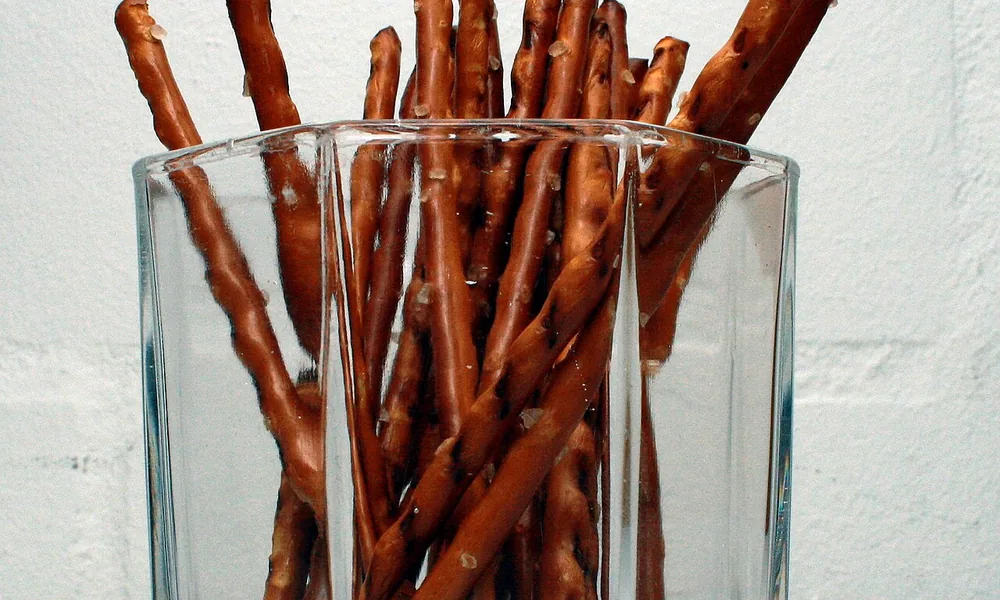
Pretzel rods and sticks are long, thin and made for dipping. Their shape is the point: you hold one end, dip the other, and nothing gets on your fingers. They are also the most practical pretzel for a lunchbox, because they pack flat and rarely break. The weakness is strength: a very thin rod will snap in a thick cheese dip, so match the rod to the dip. Thick rods handle hummus and cheese spread; thin sticks suit mustard and thin sauces. Rods also come in flavoured coatings, but the plain salted ones dip best, because the coating flakes off into the dip.
Nuggets and Bites
Nuggets and bites are small chunks of pretzel dough, baked hard and sold for sharing. They are the party pretzel: easy to grab by the handful, easy to scatter in a bowl, and hard to stop eating. The best nuggets are evenly baked and lightly salted, with a proper crunch. The worst are coated in thick flavour powder that stains your fingers and leaves you thirsty. If the powder is thicker than the pretzel, you are eating seasoning, not a pretzel. Nuggets also make the best base for a snack mix, because their size matches nuts and dried fruit.
Soft Pretzels
A soft pretzel is a different food from the bagged kind: a large warm twist with a chewy inside, a browned outside, and coarse salt on top. It is at its best within an hour of baking, eaten warm with mustard or cheese sauce, and it is the pretzel to choose at a bakery, a market or a fair. The weakness is time: a soft pretzel goes tough within hours, and reheating only partly revives it. Frozen soft pretzels are a good compromise at home, because you bake one at a time and eat it warm.

Salt: How Much Is Right
Salt is the first thing you taste on a pretzel and the easiest thing to get wrong. The right amount is a scattering of coarse crystals you can see and feel, enough to sharpen the malty flavour without overwhelming it. Too little salt and the pretzel tastes flat and floury. Too much and your mouth is dry after three bites. Coarse salt works better than fine salt, because the crystals sit on the surface and give a small crunch rather than dissolving into the dough.
The salt on the packet matters too. A pretzel that lists salt high in its ingredients will be salty through and through, not just on the surface, and those are the bags that leave you thirstiest. If you are watching sodium, look for a lightly salted or unsalted version and add your own pinch, or choose a soft pretzel and ask for it without salt. Sweet pretzels are the other extreme: cinnamon sugar and honey glazes turn a pretzel into a biscuit, which is fine as a treat, but it is no longer a snack you can eat by the handful.
Dipping: What Works and What Does Not
Pretzels and dips belong together, but not every pairing works. The rule is simple: thick dips need sturdy pretzels, and thin pretzels need thin dips. A classic twist or a thick rod can carry hummus, cheese spread or a thick mustard without breaking. A thin stick will snap in the same dip and leave half the pretzel behind. For thin sticks, choose mustard, a thin cheese sauce, or a yoghurt dip that the pretzel can slide through.
Mustard is the classic partner: its sharpness cuts through the salty dough, and it is thin enough for any pretzel shape. A good mustard for pretzels is a wholegrain or Dijon style, coarse enough to cling, rather than a thin yellow sauce that slides off. Cheese sauce is the second classic, best served warm so it coats rather than sits. Sweet dips such as chocolate or caramel suit nuggets and soft pretzels, but they turn a salty snack into a dessert, so keep them for sharing. Serve the dip in a small bowl beside the pretzels, not poured over them, or the whole bowl goes soft.
Reading the Packet
The packet tells you almost everything in about thirty seconds. Ingredients should be short: flour, water, yeast, salt, and a little malt or oil is enough for a good pretzel. A list that runs to flavourings, colourings and preservatives is a processed snack, and it will taste like one. The first ingredient should always be flour, and if sugar appears near the top, the pretzel will be sweet however salty it looks.
Freshness is the second check. Pretzels go stale fast, and a bag that has sat on a warm shelf will be soft before you open it. Squeeze the bag gently: the pretzels inside should feel hard and separate, not soft or clumped. Check the date, and buy the smaller bag if you will not finish a large one within a few days. A good pretzel is also different from a cracker, though the two share a shelf: crackers are thinner, flatter and made to carry cheese, while a pretzel is thicker, chewier and built to be eaten on its own or dipped.
Storing Pretzels at Home
Pretzels go stale faster than almost any other pantry food, because air softens them within a day. The fix is simple: seal the bag properly after every handful, squeezing the air out before you close it. A clip is better than folding the bag over, and a sealed tub is better still. Keep the bag in a cool, dry cupboard, away from warmth and steam. Good snack containers with a tight lid will keep a bag crisp for a week or more.
Once a pretzel has gone soft, it cannot be rescued. A few minutes in a low oven will crisp a slightly soft pretzel, but one that has gone fully limp is finished, and no amount of heat brings back the snap. Soft pretzels are different: they keep for a day in a sealed bag at room temperature, and a few minutes in a hot oven will revive a day-old one. Freeze any soft pretzels you will not eat the same day, and bake them from frozen when you want one.
Checklist: Buying Pretzels
- The pretzel snaps cleanly and tastes of baked dough and malt, not flour or cardboard.
- Salt is visible but not excessive, and the pretzel does not leave you thirsty after a few bites.
- The ingredient list is short, with flour first and no sugar near the top.
- The bag feels full of separate, hard pretzels, not soft or clumped ones.
- The shape suits the occasion: twists for snacking, rods for dipping, nuggets for sharing.
- The bag is small enough to finish within a few days, and it seals well after opening.
Frequently Asked Questions
Are pretzels healthy?
Pretzels are low in fat and made from simple ingredients, which is in their favour, but they are also low in fibre and protein, so they do not keep you full for long. A plain salted pretzel in a small handful is a reasonable snack; a large bag of coated nuggets is not.
What is the difference between a soft pretzel and a hard pretzel?
A hard pretzel is baked until it is crisp all the way through and keeps for weeks in a sealed bag. A soft pretzel is baked briefly so the inside stays chewy, and it is best eaten warm within an hour. They share a shape and a flavour, but they are different foods.
Can you eat pretzels if you are gluten-free?
Ordinary pretzels are made from wheat flour, so they are not gluten-free. Gluten-free pretzels made from rice or chickpea flour are widely available now, and the best ones are crisp and sturdy, though some go soft faster than wheat pretzels.
Why do my pretzels go soft?
Air is the cause. Pretzels absorb moisture from the air as soon as the bag is open, and warmth and steam speed it up. Seal the bag tightly after every handful and keep it in a cool, dry cupboard, and the pretzels will stay crisp far longer.
What dip goes best with pretzels?
Mustard is the classic choice, because its sharpness cuts through the salty dough and it suits every pretzel shape. Warm cheese sauce is the second classic, and hummus works well with thick twists and rods. Keep sweet dips for sharing.
How long do pretzels last once opened?
A sealed bag of hard pretzels stays crisp for about a week once opened, and less in warm or humid weather. A soft pretzel lasts a day at most. If a bag has gone soft, a few minutes in a low oven may crisp it, but a fully limp pretzel is finished.
The Bottom Line
The best pretzels in 2026 are the ones that snap cleanly, taste of real baked dough, and match the occasion: twists for snacking, rods for dipping, nuggets for sharing, and soft pretzels eaten warm. Judge the bag by its snap, its salt and its ingredient list, seal it after every handful, and keep the mustard close. The rest is just a matter of how many you can eat before the bag is empty.