The Crumpets Worth Toasting in 2026
The best crumpets in 2026 are the ones that survive the toaster with their holes intact, their tops crisp and their middles soft enough to drink up the butter. A good crumpet is a small piece of engineering: a yeasted batter full of tiny bubbles that rise through the crumb as it cooks, leaving a sponge that holds melted butter in every pocket instead of letting it run off the edge. The difference shows up in the first bite. The great one is light, chewy and warm all the way through, with a golden top and a base that stays firm under a spread. The forgettable one is dense, pale and damp, or so dry it turns to crumbs before the jam reaches it. This guide compares the best crumpets of 2026 by type, so you can match the crumpet to the breakfast you actually eat.
Key takeaways
- Holes matter most: a crumpet with deep, open holes holds butter and jam far better than a smooth, dense one.
- Fresh crumpets toast best within a few days of baking, while frozen ones need a full thaw before they go near the toaster.
- Thick crumpets suit butter and jam, while thin ones work better for cheese on toast and savoury toppings.
- A crumpet should be golden on top and firm underneath, never pale, soggy or burnt at the edges.
- Buy small packs if you eat crumpets once a week, because an open pack loses its softness within two or three days.
How the best crumpets were chosen
Every type below was scored on five measures. Texture comes first: the crumb should be open and spongy, with holes running from the top into the middle, so butter melts in instead of pooling on top. Freshness is second, judged on the day it is bought and how well it keeps. Toasting is third, because a crumpet that collapses, burns or dries out in the toaster is no good however nice it looks raw. Flavour is fourth: faintly yeasty and warm, with a little salt. Value is fifth: the real cost per crumpet once you count the ones that go stale.
Two notes before the list. First, no single brand is named as the best, because the same good patterns appear across many bakeries and supermarket ranges, and what matters is learning to recognise them on the shelf. Second, crumpets are a breakfast food with a very short window, so this guide weighs freshness and storage as heavily as flavour. If you want the rest of the breakfast table to match, our guide to the best jams for breakfast tables covers the spreads that belong on a warm crumpet, and the best toasters of 2026 explains the wide slots and even browning a crumpet needs.

Comparison table: the best crumpets of 2026
| Rank | Crumpet type | Best for | Watch out for |
|---|---|---|---|
| 1 | Classic thick crumpets | Butter and jam, slow breakfasts | Stale packs, dense crumb |
| 2 | Bakery-fresh crumpets | Weekend breakfasts, best flavour | Short shelf life, higher price |
| 3 | Wholemeal crumpets | Fibre, nutty flavour, hearty toppings | Dry crumb if over-toasted |
| 4 | Thin crumpets | Cheese on toast, quick snacks | Butter runs through, less sponge |
| 5 | Sourdough crumpets | Tangy flavour, eggs and cheese | Strong taste, not for sweet spreads |
| 6 | Frozen crumpets | Stocking the freezer, no waste | Must thaw fully before toasting |
| 7 | Mini crumpets | Children, snacking, party plates | Cool fast, fiddly to butter |
The best crumpets of 2026
1. Classic thick crumpets: the best all-round crumpet
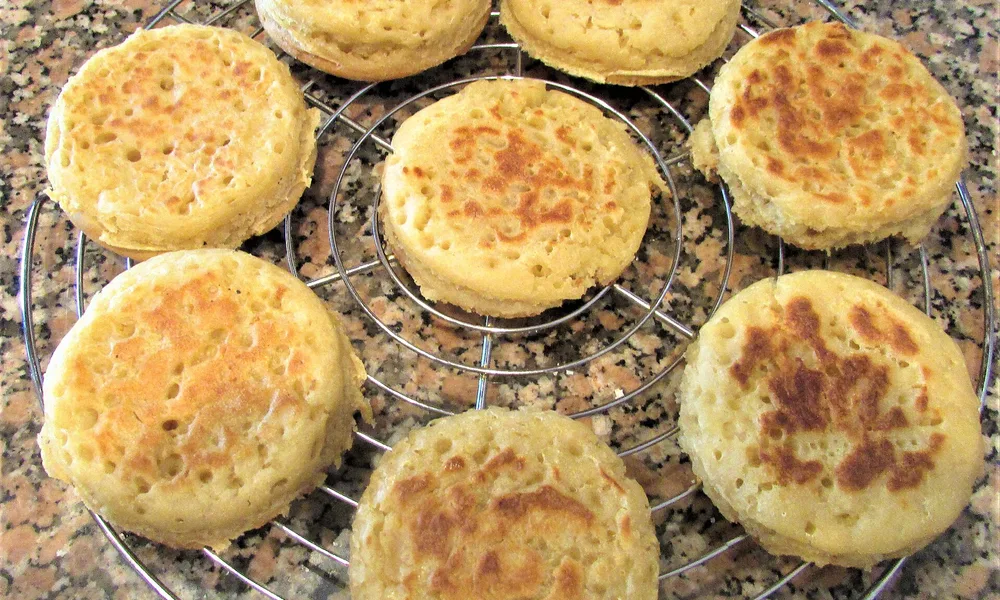
The classic thick crumpet is the one most people picture: about a centimetre and a half tall, pale gold on top, full of holes, and soft enough to squash gently between your fingers. It is the best all-round choice because it does the central job better than any other type: the thick crumb holds a proper knob of butter, and the holes carry it down into the middle so every bite tastes buttery rather than dry. Toasted on a medium setting, the top goes crisp while the inside stays soft. Buy them in small packs, check the date, and eat them within two days of opening.
2. Bakery-fresh crumpets: the best flavour
Bakery-fresh crumpets are the best-tasting you can buy, because they were made this morning, not last week. A fresh crumpet smells faintly of yeast and warm bread, and feels soft and springy in the hand. The flavour is rounder and more wheaty than a supermarket pack, and the texture is lighter, with holes open all the way through. The trade-off is shelf life: best on the day it is bought, good the next day, past its best by the third. Freeze any you will not eat within two days, and thaw them fully before toasting.

3. Wholemeal crumpets: the best hearty crumpet
Wholemeal crumpets suit anyone who wants a crumpet that eats like a proper breakfast rather than a snack. The wholemeal flour gives a nuttier, deeper flavour and a firmer crumb, and the extra fibre makes one crumpet feel like enough. They toast well, taking a slightly longer setting than a white crumpet, and they hold up under heavier toppings such as baked beans or a poached egg without going soggy in the middle. The risk is dryness. A wholemeal crumpet that is over-toasted turns hard and crumbly, so use a medium setting and butter it the moment it pops up, while the crumb is still warm enough to drink the butter in.
4. Thin crumpets: the best for savoury toppings
Thin crumpets are about half the height of a classic, and they suit a different job. The shallower crumb toasts faster and goes crisper all the way through, which makes them a better base for cheese on toast and rarebit. They are also the best choice for a quick snack, ready in a single toasting round and cool enough to eat straight away. The weakness is butter: a thin crumpet has less sponge to hold it, so butter can run straight through the holes and onto the plate. Use a lighter hand, or spread it on a crumpet that has cooled for a minute so the crumb has set.
5. Sourdough crumpets: the best tangy crumpet
Sourdough crumpets bring the slow-fermented tang of sourdough bread to the crumpet, and they are the best choice for savoury breakfasts. The sour note cuts through rich toppings such as melted cheese, smoked salmon and a fried egg, and the flavour is more interesting than a plain crumpet. The crumb is usually a little chewier and the holes a little less regular, because the sourdough starter ferments more slowly than commercial yeast, but that is part of the character. They are not the best choice for sweet spreads: jam and honey fight with the tang instead of sitting alongside it.
6. Frozen crumpets: the best for the freezer
Frozen crumpets are the most practical crumpets you can buy, and for a household that eats them once a week or less, they are the best choice. They come out of the freezer one or two at a time, so nothing goes stale in the pack, and they keep for months without losing their flavour. The trick is the thaw. A frozen crumpet toasted straight from the freezer will be burnt on the outside and cold in the middle. Thaw it fully first, either on the counter for twenty minutes or in the microwave for a few seconds, then toast it on a medium setting.
7. Mini crumpets: the best for children and snacking
Mini crumpets are small, bite-sized versions of the classic, usually about half the diameter, and they are the best choice for children, for snacking and for party plates. They toast in half the time, they are easy to hold, and they take a small spread of butter or jam without making a mess. Adults like them as a light snack with tea, because two or three minis feel less heavy than one full crumpet. The downside is that they cool very fast, so butter them the moment they come out of the toaster, and they are fiddly to spread if you are in a hurry.
What to avoid when buying crumpets
The most common crumpet mistake is buying a pack that is already stale. A stale crumpet feels firm and dry, the top looks pale and flat, and the holes are shallow or sealed over. A fresh one springs back when pressed and smells faintly of yeast. The second mistake is over-toasting: the highest setting burns the edges while the middle stays pale. Use a medium setting and a second round if you want it darker. The third mistake is buttering a cold crumpet, which leaves the butter sitting on top instead of melting in. Butter while it is hot, and let it melt into the holes before you add jam. Our guide to real butter versus margarine for baking explains why real butter melts and tastes better on warm bread.
Checklist: buying and toasting crumpets
- Check the date on the pack and buy the freshest one on the shelf, not the one at the front.
- Press a crumpet gently through the pack: it should feel soft and springy, not firm or dry.
- Look for deep, open holes on the top, because they are what hold the butter and jam.
- Toast on a medium setting in a wide-slot toaster, and give it a second round rather than turning the heat up.
- Butter the crumpet the moment it pops up, while the crumb is still hot enough to drink the butter in.
- Freeze any crumpets you will not eat within two days, and thaw them fully before toasting.
Frequently asked questions
How long do crumpets keep after opening?
An opened pack of crumpets keeps for two to three days in a cool cupboard, sealed in its bag or in an airtight container. After that they go dry and stale, even if they are still within the printed date. Freeze them if you will not finish the pack in time.
Can you toast crumpets from frozen?
You can, but the result is poor: the outside burns while the middle stays cold. Thaw the crumpet fully first, for about twenty minutes on the counter, then toast on a medium setting.
Why do some crumpets have no holes?
Holes form when the batter rises and bubbles escape as it cooks. A crumpet with few holes was usually made with a batter that was too thick, too cold, or left to rise for too short a time. It will still taste of crumpet, but it will not hold butter well.
What is the difference between a crumpet and an English muffin?
A crumpet is made from a wet batter cooked in a ring on a griddle, so it has holes on top and a spongy crumb. An English muffin is made from a firmer dough, baked on both sides and split open before toasting.
Should crumpets be buttered on the top or the bottom?
Butter the holey top, always. The holes are there to hold the butter, and buttering the smooth bottom wastes them. Spread the butter while the crumpet is hot so it melts down into the crumb.
Are crumpets better than toast for breakfast?
It depends on the topping. Crumpets are better for butter and jam, because the holes hold the spread. Toast is better for toppings that need a flat, firm base, such as avocado or a fried egg. A good breakfast table has room for both.
Bottom line
The best crumpets in 2026 are thick, fresh and full of holes: a classic crumpet for everyday butter and jam, a bakery-fresh one for the weekend, and a frozen pack in the freezer so you never have to eat a stale one. Check the date, toast on medium, butter while it is hot, and the crumpet will do the rest.