Herb Jars That Keep Your Herbs Fresh for Weeks in 2026
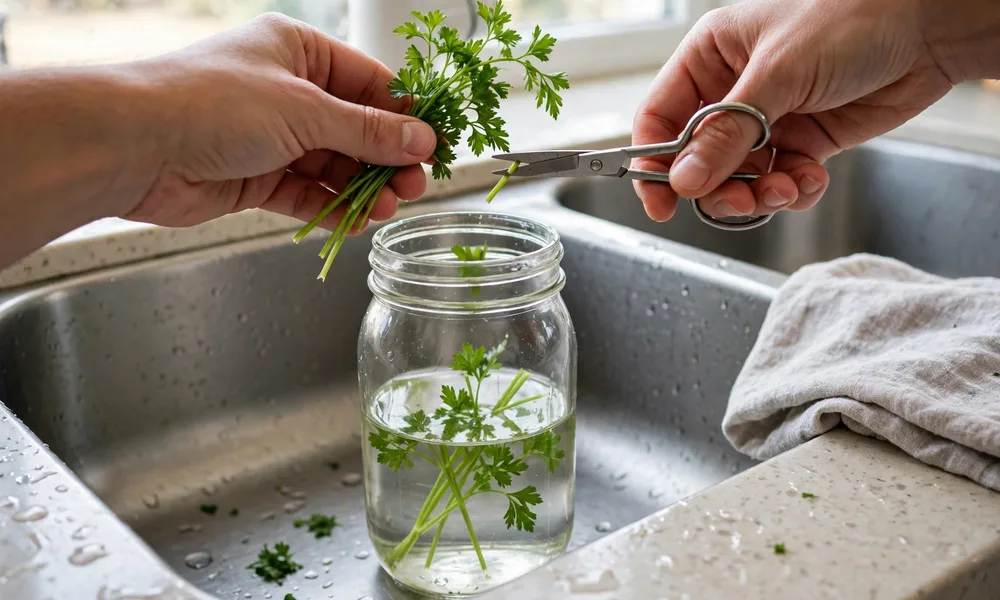
The best herb jars in 2026 treat a bunch of fresh herbs the way a vase treats flowers: stems standing in a little water, leaves up in the air, and nothing crushing them from above. A good herb jar can stretch basil, parsley, mint and coriander from three or four days loose in the fridge to a fortnight or more, with nothing more complicated than glass, water and a wide mouth. This guide covers the herb jars worth buying, the types that suit different herbs, and the small mistakes that turn a fresh bunch limp overnight.
Key takeaways
- A herb jar keeps fresh herbs alive by standing the stems in water, like flowers in a vase.
- Wide-mouth glass jars beat narrow bottles: a whole bunch fits without snapping stems, and you can see the water level at a glance.
- Soft herbs such as basil, parsley, mint and coriander love water; woody herbs such as rosemary and thyme prefer a dry jar.
- Change the water every two or three days and trim the stem ends weekly, and most bunches last twice as long.
- Basil hates the cold, so keep its jar on the counter; parsley, mint and coriander last longest chilled.
How the best herb jars were chosen
Every jar below was scored on five measures. Freshness comes first: does the jar keep a bunch crisp for two weeks, with the water staying clear and the leaves green? Ease of use is second, judged on the mouth width and how easy the jar is to wash. Fit is third, because a jar too tall for a fridge shelf will sit unused. Material is fourth: glass that does not stain or hold smells. Value is fifth: the cost of the jar against the bunches it saves from the bin.
One distinction matters before the list. A herb jar is a simple glass jar, open at the top, that holds water and stems. A purpose-built herb keeper is a different storage form: a ventilated plastic container with a basket and vents that controls airflow. Keepers suit people who want a sealed fridge unit; jars suit people who want something cheaper and simpler on the counter. The two are neighbours, not twins. Dried herbs belong in a different jar, covered in our guide to spice jars.
Comparison table: the best herb jars 2026
| Rank | Jar type | Best for | Watch out for |
|---|---|---|---|
| 1 | Wide-mouth mason jars | Everyday soft-herb bunches | No lid fits tall stems |
| 2 | Tall preserving jars | Long-stemmed parsley, coriander | Too tall for some shelves |
| 3 | Small lidded herb jars | Woody and dried herbs | Too small for a full bunch |
| 4 | Glass jars with bamboo lids | Countertop display | Lids trap moisture |
| 5 | Clip-top glass jars | Herbs used a pinch at a time | Seal can bruise leaves |
| 6 | Recycled jam jars | Starting out, small bunches | Narrow mouths crush stems |
| 7 | Stackable square jars | Small kitchens, neat shelves | Corners harder to clean |
The best herb jars
1. Wide-mouth mason jars: the best all-round herb jar
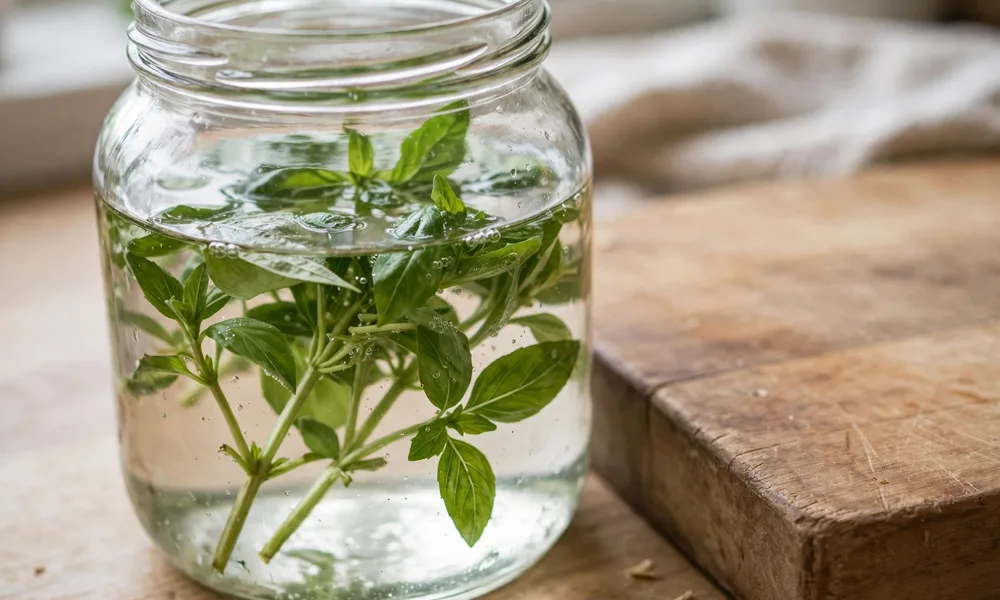
A wide-mouth mason jar is the herb jar most kitchens should buy first: it holds a whole bunch upright in water without forcing the stems through a narrow neck. The mouth is wide enough to slide a bunch in and out without snapping stems, and the glass is thick enough to survive daily handling and the dishwasher. Fill it with a few centimetres of water, trim the stem ends, and stand the bunch in. That is the whole routine, and it works for basil, parsley, mint, coriander and dill.
The weakness is the lid: a screw lid will not fit over stems above the rim, so store the jar open, or drape a small bag loosely over the top in the fridge. Buy the 500-millilitre size for a supermarket bunch and the one-litre size for market bunches.
2. Tall preserving jars: the best for long stems
Parsley and coriander are often sold with long stems, and a short jar leaves the leafy tops flopping over the rim, where they bruise and dry out. A tall preserving jar, the kind sold for pickles and jam, gives the whole stem room to stand straight, keeping the leaves in the air and the cut ends in the water. They are usually a litre or more, and fit a full market bunch.
Measure your fridge shelf first: a tall jar with parsley sticking out can be twenty-five centimetres high. Look for a wide, flat base, since a narrow base tips easily when you pull a bunch out one-handed.
3. Small lidded herb jars: the best for woody and dried herbs
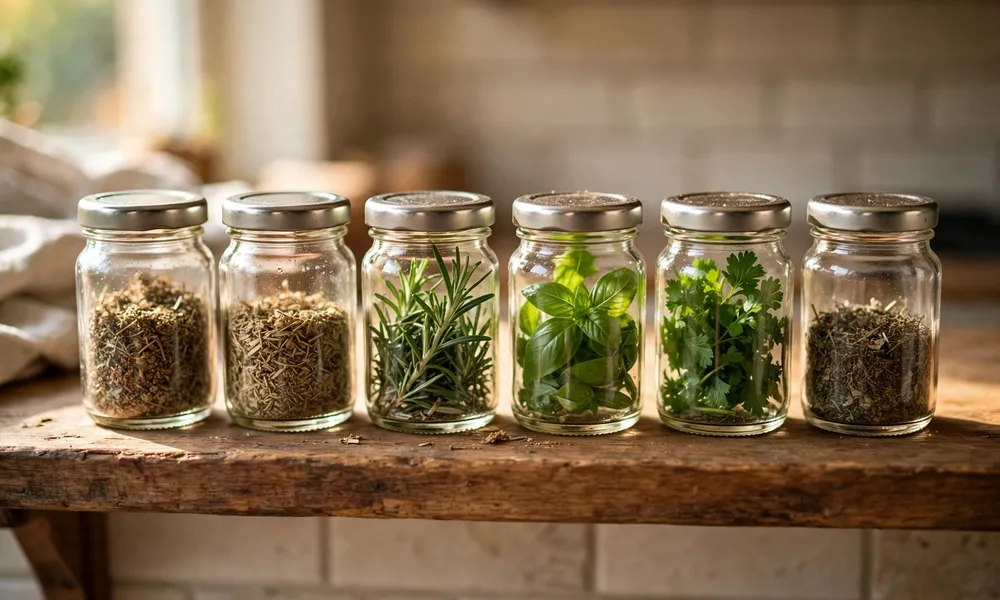
Not every herb wants water. Rosemary, thyme and bay are woody herbs with stiff stems and tough leaves, and they keep best dry in a small lidded jar in a cool cupboard, where they last for weeks. A tight lid keeps the scent in and other smells out, and the same jar works for dried herbs you have grown yourself.
Keep these jars small, around 150 to 250 millilitres: a big jar half full of rosemary is mostly air. Label each jar with the herb and the fill date, and wash and dry it before refilling, since one drop of trapped water can start mould.
4. Glass jars with bamboo lids: the best for the countertop
If the jar will live on the counter rather than hidden in the fridge, a glass jar with a bamboo lid earns its place. The lid looks warmer than metal or plastic, and a row of them holding different herbs turns a bare countertop into something that looks deliberate. They work best for herbs you use every day, because the jar is right there when you cook, and you will notice the water level without having to remember.
The lid is for storage, not for use: leave it off while the jar holds a fresh bunch in water, because a lid over wet leaves traps humidity and turns them slimy. Wipe bamboo lids dry after washing; never leave them soaking.
5. Clip-top glass jars: the best for a little at a time
Clip-top jars, with their wire bail and rubber gasket, are for herbs you use a pinch at a time rather than a bunch at a time. They seal tighter than a screw lid, which suits dried and woody herbs kept dry, and the glass is thick and the jars stack well, surviving years of daily use if the gasket is replaced when it goes flat.
They are a poor choice for a fresh bunch in water, because the lid cannot close over stems and the narrow neck crushes leaves. Use them for dried herbs in a dark cupboard, and buy spare gaskets, because a hard gasket will not seal.
6. Recycled jam jars: the best way to start
You do not have to buy a herb jar at all to start. A clean jam jar, washed in hot soapy water and dried, does the job well for a single small bunch, and costs nothing, which makes it the best way to find out whether the jar method suits your cooking before you spend money on a set. Keep it on the counter for basil and in the fridge for everything else.
The limit is the mouth: most jam jars have a narrow neck, and pushing a bunch through it snaps stems and bruises leaves. Trim the bunch to fit, or use two jars. Remove the label before the first use, since a jar you cannot see through is a jar whose water level you will forget to check.
7. Stackable square jars: the best for small kitchens
Round jars waste space on a fridge shelf, and in a small kitchen that waste matters. Square glass jars sit flush against each other, so three fit in the space of two round ones, and they do not roll when you pull one out. They suit a crowded fridge and a household that keeps several herbs going at once, one jar per herb.
The corners are the trade-off: they collect debris and are harder to scrub than a smooth round jar, so own a bottle brush. Square jars often take lids that fit only that brand, so buy a set from one maker, and keep them in the fridge, since tall square jars tip more easily than round ones.
What to avoid when choosing herb jars
The most common mistake is treating every herb the same. Basil in the fridge turns black within days, while parsley on a warm counter wilts in a day. The second mistake is sealing a fresh bunch in a closed jar: wet leaves in still air go slimy fast. The third is forgetting the water: cloudy water feeds bacteria to the stems, and the bunch will collapse within a day. Change it every two or three days, without exception.
Do not buy a jar for its looks alone: a tall, thin jar that tips, a dark jar you cannot see through, and a jar with a mouth too narrow for a bunch are all worse than a plain jam jar that fits. And do not confuse storing herbs with growing them: a jar keeps a cut bunch alive, but for fresh herbs all year a herb garden on the windowsill is the better investment.
Checklist: buying herb jars
- Choose a wide mouth first: the bunch should slide in and out without snapping stems.
- Match the jar height to your fridge shelf, and keep basil on the counter instead of in the fridge.
- Use glass, not plastic, so the jar does not stain or hold the smell of the last herb.
- Fill with a few centimetres of water only, and change it every two or three days.
- Trim the stem ends at an angle before the bunch goes in, and again once a week.
- Label lidded jars for dried and woody herbs with the herb name and the fill date.
Frequently asked questions
How long do fresh herbs last in a jar of water?
Most soft herbs last ten to fourteen days in a jar of fresh water in the fridge, against three or four days loose in a bag. Basil on the counter lasts about a week; woody herbs kept dry last several weeks.
Should the jar go in the fridge or on the counter?
Parsley, mint, coriander and dill last longest in the fridge. Basil is the exception: it turns black in the cold, so keep its jar on the counter.
Do I need a lid on a herb jar?
No, not for a fresh bunch in water: the leaves need air, and a lid traps moisture and turns them slimy. Lids belong on jars of dry or dried herbs, where a seal keeps the flavour in.
How often should I change the water?
Every two or three days, sooner if it looks murky, and rinse the jar before refilling it.
Can I put different herbs in the same jar?
Yes, if they like the same conditions: parsley and mint share a jar happily in the fridge. Keep basil on its own, because it wants the counter.
Are herb jars better than herb keepers?
Neither is better in general. A jar is cheaper and simpler, and you change the water yourself. A keeper is a sealed ventilated unit that suits a crowded fridge and people who want to set it and forget it.
Bottom line
The best herb jars in 2026 are wide-mouth glass jars that stand a bunch in a little water and leave the leaves in the air: a mason jar for everyday bunches, a tall jar for long stems, and small lidded jars for woody and dried herbs. Change the water every few days, keep basil on the counter and everything else in the fridge, and a bunch you used to throw away will still be crisp next week.