
Real butter beats margarine for baking, and the difference shows up in the very first bite. A biscuit made with butter is crisp at the edges, tender in the middle, and rich with a flavour margarine cannot copy. A cake made with butter smells of cream as it bakes and stays moist for days, while the same recipe made with margarine tastes flat and dries out by morning. After decades of spreads promising to do the same job for less, bakers keep coming back to butter: it works better.
This guide explains why real butter wins in the oven, where margarine falls short, and how to choose and use butter so every bake comes out its best.
Key Takeaways
- Real butter is cream and salt, nothing else; margarine is vegetable oils, water and emulsifiers built to imitate it.
- Butter creams into a light, airy base that lifts cakes, while margarine creams into a greasy paste that bakes flat.
- Butter’s water turns to steam in pastry, creating the layers that make croissants flake.
- Brown butter adds a nutty, toffee-like flavour no spread can match, and takes only minutes in a pan.
- Use unsalted butter for baking so you control the salt, and bring it to room temperature before you cream it.
What Real Butter Actually Is
Real butter is cream, churned until the fat separates from the liquid. That is the whole recipe: cream, and sometimes a pinch of salt. A good block is around eighty per cent butterfat, the rest water and a little milk solids. Those solids are what brown in the pan and give butter its nutty flavour: melt butter and you can see them as pale specks that settle and turn golden.
Margarine is a different thing entirely. It starts as vegetable oil, hardened, blended with water, and mixed with emulsifiers, colourings and flavourings until it looks and spreads like butter. Modern margarines are better than the hard, waxy blocks of the past. But they are engineered foods, built to imitate butter rather than to be butter, and that difference matters most in the oven.
Salted, Unsalted, Cultured and Grass-Fed
Unsalted butter is the baker’s default, because it lets you control exactly how much salt goes into a recipe. Salted butter varies from brand to brand, and that variation can throw off a delicate cake. Cultured butter is made from cream fermented with live cultures before churning, giving it a gentle tang and deeper flavour. It is wonderful in pastry and worth the extra cost for a special bake.
For everyday baking, a good unsalted block is all you need. Save cultured butter for pastry and shortbread, where the butter flavour is the star. Salted butter belongs on the table, not in the mixing bowl. Choose a block rather than a tub: tub butters are softened with oil and water, and behave like margarine in the oven.
Butter vs Margarine: What Happens in the Oven
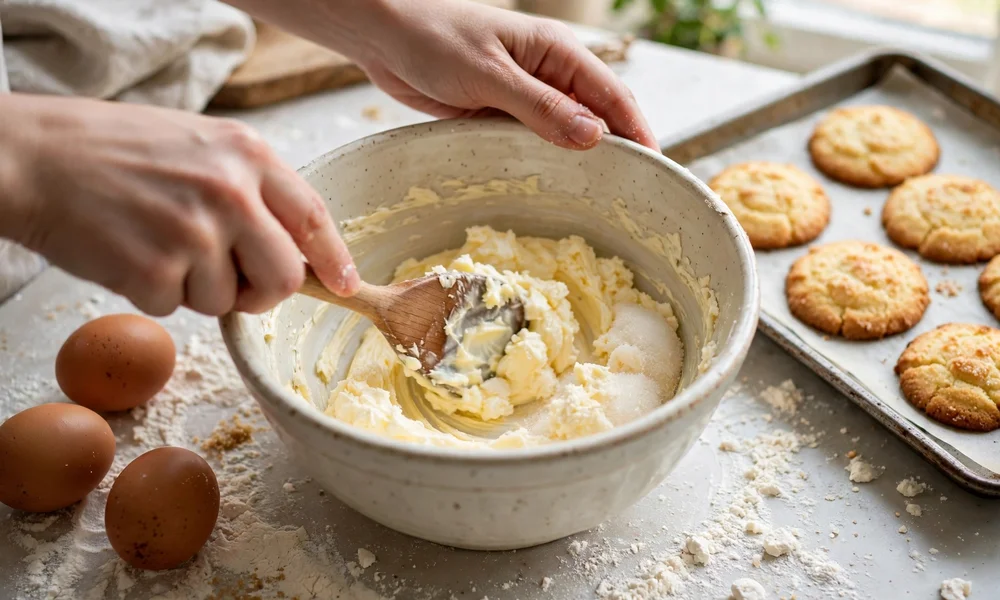
The first difference shows up when you cream the fat with sugar. Butter at room temperature is firm but pliable, and as you beat it, it traps thousands of tiny air bubbles. Those bubbles expand in the oven and lift the cake, which is why a butter cake rises evenly with a fine crumb. Margarine is softer and oilier, and creams into a smooth paste that traps far less air, so the cake rises less and feels greasy.
The second difference is flavour. Butter tastes of cream, and that flavour deepens as it bakes, turning nutty and rich in a biscuit or a pastry crust. Margarine tastes of whatever flavouring was added to it, and that flavour fades in the heat. A blind tasting settles it quickly: the butter version is the one people reach for second.
Water, Steam and Flaky Pastry
Butter contains about sixteen per cent water, and that water is the secret of flaky pastry. When a layer of butter in a croissant hits a hot oven, the water turns to steam and pushes the layers of dough apart. That is what creates the flakes. Margarine contains more water, sometimes twenty per cent or more, but it is bound up with emulsifiers and does not release steam the same way, so the pastry rises into a soft, bread-like puff rather than crisp layers. Our guide to croissants shows how much of a good croissant is about the butter inside it.
Lamination is the other place butter wins. Firm when cold and melting at a precise temperature, butter folds into dough in thin, even layers that stay separate until the oven. Margarine softens too quickly and melts lower, so the layers merge into the dough before the pastry reaches the oven. The result is tough rather than flaky.
Brown Butter: The Flavour Margarine Cannot Copy
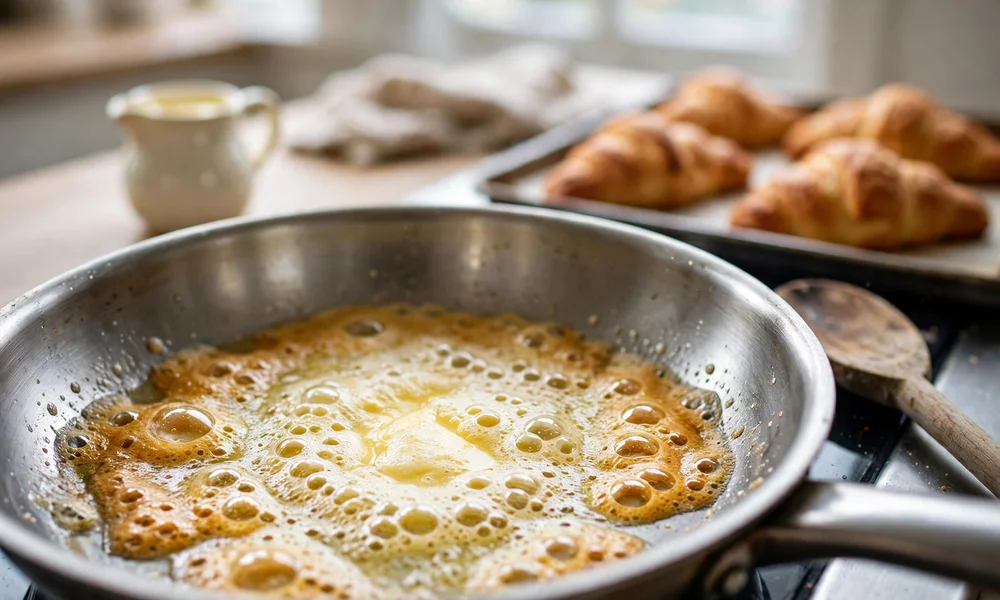
Brown butter is what happens when you melt butter gently and let the milk solids toast. The butter foams, then the foam subsides, and the solids at the bottom turn a warm amber, smelling nutty, almost like toffee. It takes five minutes and a single pan, and it transforms cookies, blondies or a simple pasta sauce into something that tastes like it came from a restaurant.
Margarine cannot brown, because it has no milk solids to toast. Heat it and it simply melts into oil, then burns. That is the clearest proof they are not interchangeable: one deepens with heat, and the other only melts.
How Butter Behaves at Different Temperatures
Butter’s behaviour changes with temperature, and understanding that is the key to using it well. Cold butter, straight from the fridge, is firm and sliceable, which is what you want for pastry: cold cubes cut into flour stay separate and create flakes. Room-temperature butter, soft enough to dent when pressed but not shiny, is what you want for creaming. Melted butter suits recipes that need richness without lift, like brownies, where the fat makes the crumb dense and fudgy.
The most common baking mistake is using butter at the wrong temperature. Butter that is too cold will not cream, and the sugar will stay gritty. Butter that is too warm will not hold air, and the cake will be dense and greasy. The test is simple: press a finger into the block. It should give easily and leave a dent. Twenty to thirty minutes on the counter usually gets a fridge-cold block there.
Choosing Butter for Baking
For most baking, a good unsalted block is the right choice. Look for a short ingredient list: cream, and cultures if it is cultured. The block should smell fresh and creamy, not sour or stale. Price is a rough guide: the cheapest blocks are often made from cream stored longer, so the flavour is flatter. A mid-priced block from a brand you trust is the sweet spot.
European-style butter, with a fat content of around eighty-two to eighty-four per cent, is worth buying for pastry and laminated doughs, because the extra fat and lower water make the layers cleaner. For cakes and biscuits, ordinary butter is fine. Avoid anything labelled as a butter blend, a spread, or a baking spread: those are margarine in disguise. Our guide to shortening explains where a pure fat like shortening still has a job.
Butter vs Margarine Compared
| Quality | Real butter | Margarine |
|---|---|---|
| Ingredients | Cream, sometimes salt | Vegetable oils, water, emulsifiers |
| Flavour | Rich, creamy, nutty when browned | Mild, fades in the oven |
| Creaming | Traps air, lifts cakes | Greasy paste, bakes flat |
| Pastry | Steam makes crisp, separate layers | Soft, bread-like rise |
| Browning | Milk solids toast to nutty brown butter | Melts to oil, cannot brown |
| Melting point | Sharp, around 32°C | Lower and less precise |
The table tells the story in one glance. Butter wins on flavour, lift, pastry and browning, and loses only on price and spreadability straight from the fridge. Margarine’s one real advantage is that it spreads cold, which is a matter for the breakfast table, not the oven.
Where Margarine Still Has a Place
Honesty requires saying that margarine is not useless. On toast, a good margarine spreads straight from the fridge and tastes pleasant enough. For anyone who cannot eat dairy, a plant-based spread is the only option. In a recipe where the fat is a background player, like a heavily spiced fruit cake, the difference is small enough that few people would notice.
But those are exceptions. In any recipe where butter is the point, margarine is a compromise. A shortbread made with margarine is a biscuit; a shortbread made with butter is shortbread.
Common Butter Mistakes in Baking
The most common mistake is using butter straight from the fridge and wondering why the batter is lumpy. The second is melting butter that should have been creamed, which kills the lift. The third is using a spreadable tub where a block is called for, because tub butters contain oil and water that change the bake. A fourth is using salted butter where salt is already measured. A fifth is storing butter unwrapped, where it picks up the smell of onions.
Baking Checklist: Getting Butter Right
- Use unsalted block butter for baking; save salted butter for the table.
- Bring butter to room temperature for creaming, and keep it cold for pastry.
- Never use a spreadable tub or blend where a block is called for.
- Try brown butter in cookies for a nutty flavour margarine cannot copy.
- Store butter wrapped tightly, away from strong smells.
- Taste the difference yourself: bake one batch with each.
Frequently Asked Questions
Can I swap margarine for butter one-for-one in a recipe?
You can in most recipes, but the result will be different: less flavour, less lift, and a softer, greasier crumb. In pastry and shortbread the difference is large; in a heavily spiced cake it is small. If the recipe calls for butter, use butter.
Is butter healthier than margarine?
Both are high in fat and best used in moderation. Butter is a natural food with a short ingredient list, while modern margarines are made from vegetable oils and contain no trans fats. Neither is a health food; choose on flavour and baking performance, not health claims.
Why does my butter cake sink in the middle?
A cake usually sinks because the butter was too warm when creamed, so it could not hold air, or because the oven door was opened too early. Cream cool butter properly, and do not open the oven for the first two-thirds of the bake.
What is the difference between butter and cocoa butter?
Dairy butter is churned cream, used for spreading, cooking and baking. Our guide to cocoa butter covers a different fat entirely: the pale fat pressed from cocoa beans, used in chocolate making for its sharp melting point and chocolate scent. They share a name and little else.
Can I freeze butter?
Yes, butter freezes very well. Wrap blocks tightly in foil and then in a freezer bag, and use them within six months. Thaw a block overnight in the fridge. Grated frozen butter is excellent for pastry, because it stays cold while you work it in.
How long does butter last in the fridge?
An unopened block keeps for several weeks if it is cold and sealed. Once opened, use it within two to three weeks, kept wrapped tightly. If it smells sour, tastes rancid or has darkened at the edges, throw it out.
The Bottom Line
Real butter beats margarine for baking because it is better in every way that matters in the oven: it creams lighter, it flakes better, it browns into something wonderful, and it tastes of cream. Margarine has its place on the breakfast table, but in a cake, a pastry or a biscuit, it is a compromise. Buy a good unsalted block, use it at the right temperature, and let the baking speak for itself.


