
Fudge That Melts Right: The Best Fudge in 2026
The best fudge in 2026 is the piece that gives way the moment it touches your tongue, smooth and dense, rich without being cloying, and gone before you have time to reach for a second square. It is a small, old-fashioned pleasure, and the difference between a great batch and a disappointing one is rarely the recipe on paper. It is the sugar, the temperature, the beating, and the patience to let it set properly. Get those right and fudge becomes one of the most satisfying sweets you can buy or make at home.
This guide looks at what makes fudge worth buying in 2026, which flavours hold up best, how to judge a piece before you commit to a whole box, and how to make a reliable batch in your own kitchen. Whether you are buying a gift, stocking a sweet table, or simply treating yourself after a long week, the same rules apply: look for a clean cut, a matte finish, a firm set, and a flavour that tastes of its ingredients rather than of sugar alone.
5 Key Takeaways
- Great fudge is smooth and dense, never grainy, greasy, or crumbly at the edges.
- Chocolate leads for flavour, but peanut butter, vanilla, and salted caramel reward careful makers.
- A candy thermometer is the single best tool for repeatable fudge at home.
- Buy small batches from makers who list real butter, cream, and chocolate first.
- Store fudge airtight at room temperature for a week, or freeze it for up to three months.
What Good Fudge Feels Like
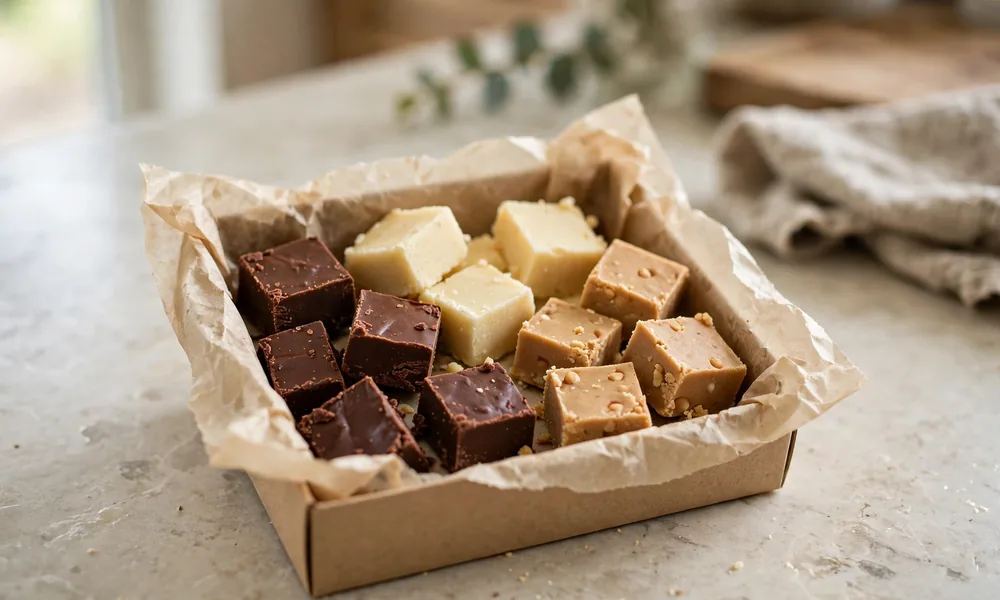
Texture is the first test, and it tells you almost everything about how the fudge was made. A good piece feels firm when you pick it up, holds its square shape, and then yields softly as you bite. It should not crumble into dry crumbs, and it should not bend like toffee. The surface is usually matte rather than glossy, with a fine, even crumb when you look at a cut edge. If the surface shines like oil, the batch probably has too much butter, or the fat has separated during cooling.
Flavour That Tastes of Its Ingredients
Flavour is the second test, and it is just as revealing. Chocolate fudge should taste of cocoa or dark chocolate, not of generic sweetness. Peanut butter fudge should taste nutty and a little salty. Vanilla fudge should taste creamy and warm, with the vanilla present rather than implied. When a piece tastes only sweet, the maker has leaned on sugar to carry a flavour that the real ingredients never delivered. A pinch of salt helps enormously here, rounding the sweetness and letting the main flavour come forward.
Chocolate Fudge Leads the Field
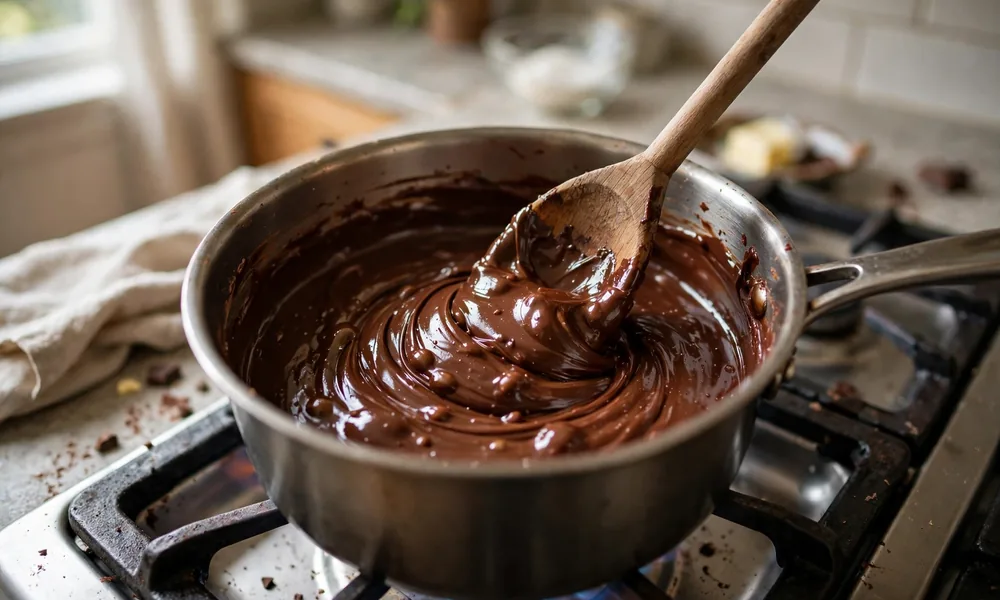
Chocolate is the flavour most people mean when they say fudge, and for good reason. It is the most forgiving to make, the most widely available, and the easiest to judge. A good chocolate fudge uses real chocolate or good cocoa, real butter, and cream or condensed milk, and it tastes deep and slightly bitter at the edges. The chocolate should be the star, with the sugar in a supporting role. Cheap chocolate fudge, by contrast, tastes of cocoa powder and corn syrup, with a flat sweetness that fades fast.
If you love chocolate in all its forms, the same instinct that picks a good cake applies here: look for depth, real ingredients, and a maker who is not afraid of a little bitterness. Our guide to the best chocolate cake in 2026 makes the same point about cocoa quality, and it holds for fudge too. A maker who buys good chocolate for one product usually buys it for all of them.
Other Flavours Worth Your Money
Peanut butter fudge is the strongest challenger to chocolate, and in some households it wins outright. It is creamy, salty, and deeply satisfying, and it keeps well because the peanut butter adds fat and stability. The best versions use real peanut butter rather than a sweetened spread, and a little sea salt on top sharpens the flavour. Avoid versions that taste of icing sugar with a faint peanut hint; they are usually made with too little peanut butter and too much filler.
Fudge Compared: Flavour, Texture, and Keeping
| Flavour | Texture | Sweetness | Keeps Well | Best For |
|---|---|---|---|---|
| Dark chocolate | Dense, smooth | Moderate | Yes | Gifting, after dinner |
| Milk chocolate | Soft, creamy | High | Yes | Children, sweet tables |
| Peanut butter | Creamy, firm | Moderate | Yes | Everyday snacking |
| Vanilla | Smooth, buttery | High | Fair | With coffee |
| Salted caramel | Soft, rich | High | Fair | Special occasions |
| Rocky road | Chunky, varied | High | Yes | Parties, sharing |
How to Choose Fudge When You Buy It
Start with the ingredient list, which good makers display proudly. Butter, cream, sugar, chocolate, and flavourings should come first, in that order or close to it. If the list opens with corn syrup, palm oil, or a long run of additives, the fudge is built for shelf life rather than flavour, and it will taste like it. Short lists are a good sign. So is a maker who tells you when the batch was made, because fresh fudge is noticeably better than fudge that has sat for weeks.
Buy small before you buy big. A single piece, or a small mixed box, tells you everything you need to know about a maker, and it costs little. Look at the cut, smell the piece before you bite, and notice whether the flavour arrives straight away or only after the sweetness fades. A good piece announces itself. If you are buying online, read recent reviews for mentions of texture and freshness rather than just flavour, and check whether the seller ships in cool packaging during warm weather, because fudge softens fast in transit.
Making Fudge at Home
Homemade fudge is one of the most rewarding kitchen projects, because the ingredient list is short and the result is impressive. The classic method is simple: heat sugar, butter, and milk or cream to the soft-ball stage, cool the pan without stirring, then beat the mixture until it thickens and loses its shine. Pour it into a lined tin, let it set, and cut it into squares. The whole process takes under an hour, plus setting time.
The single tool that turns fudge from a gamble into a routine is a candy thermometer. Sugar stages are precise, and guessing by eye or by time is how most first batches go wrong. A thermometer that reads accurately at the soft-ball stage, around 234 to 240 degrees Fahrenheit, removes the guesswork entirely. Our guide to the candy thermometers that get sugar right in 2026 explains which types hold their calibration and which ones drift, and it is worth reading before you buy one for fudge, toffee, or jam.

Ingredients That Make the Difference
Butter matters more than most people expect. Real butter gives fudge its richness and its clean finish, while cheaper fats leave a waxy coating on the roof of the mouth. Salted butter works well in most recipes, but if you want precise control, use unsalted butter and add your own salt. Cream adds body and a softer set than milk, and evaporated milk is a reliable middle ground that many old recipes rely on for a reason.
Condensed milk is the shortcut that many fudge makers swear by, and it earns its reputation. It is already thick and sweet, so it shortens the cooking time and makes a smooth, reliable set, especially for beginners. If you keep a tin in the cupboard, it is worth knowing which brands perform best, and our notes on condensed milk worth stocking in 2026 cover the ones that give the most consistent results in fudge and other sweets. Chocolate choice matters too: a good dark chocolate with around 60 to 70 percent cocoa gives depth without bitterness, while cheap chocolate chips often contain stabilisers that resist melting smoothly.
Storing, Freezing, and Gifting Fudge
Fudge keeps best in an airtight container at cool room temperature, away from direct sunlight and strong smells. Stored this way, most fudge stays good for one to two weeks, with chocolate and peanut butter varieties lasting longest. Refrigeration firms it up and can dry it out, so if you do refrigerate it, let it come back to room temperature before serving, and keep it wrapped so it does not pick up fridge odours.
Freezing works well for longer storage. Wrap individual pieces or small slabs tightly in cling film, then place them in a freezer bag with the air pressed out. Frozen fudge keeps for up to three months and thaws in about an hour at room temperature. The texture survives freezing better than most sweets because the sugar and fat protect it, though nut toppings can soften slightly. Label the bag with the flavour and the date, because frozen fudge all looks the same after a month.
Your Fudge Checklist
- Check the cut: clean, straight edges and no crumbling.
- Read the ingredients: butter, cream, and real chocolate first.
- Taste one piece before buying a whole box.
- Use a thermometer and cool undisturbed when making it at home.
- Store airtight at room temperature for up to two weeks.
- Freeze extras in small, labelled portions for up to three months.
Frequently Asked Questions
Why is my fudge grainy?
Grainy fudge usually comes from stirring while the mixture is still too hot, or from cooling it too slowly. Sugar crystals grow large when they are disturbed at high temperatures, so let the pan cool undisturbed to about 110 degrees Fahrenheit before you beat it, and keep the sides of the pan free of stray crystals.
How long does fudge last?
Most fudge keeps for one to two weeks in an airtight container at cool room temperature. Chocolate and peanut butter varieties last longest, while cream-heavy or fruit varieties are best eaten within a week. Frozen fudge keeps for up to three months if it is wrapped well.
Can I make fudge without a thermometer?
You can, using the cold-water test, where a drop of syrup forms a soft ball in cold water, but it is much less reliable than a thermometer. A thermometer removes the guesswork and is the best investment for anyone who plans to make fudge more than once.
What is the best chocolate for fudge?
A good dark chocolate with 60 to 70 percent cocoa gives the deepest flavour without excessive bitterness. Avoid chocolate chips with stabilisers if you can, because they resist melting smoothly, and taste the chocolate on its own first: if you would not eat it plain, it will not improve in fudge.
Why did my fudge not set?
Fudge that will not set was usually undercooked, under-beaten, or poured while still glossy. It needs to reach the soft-ball stage, cool undisturbed, and then be beaten until it thickens and turns matte. If a batch fails, you can often reheat it with a little milk and cook it again to the right temperature.
Is fudge gluten free?
Plain fudge made from sugar, butter, cream, and chocolate is naturally gluten free, but always check the label. Some varieties add biscuits, malt, or flavourings that contain gluten, and shared equipment can introduce cross-contact, so people with coeliac disease should buy from a maker who states their allergen controls clearly.
The Bottom Line
The best fudge in 2026 is smooth, dense, and honest about its ingredients. Chocolate leads, peanut butter challenges it, and vanilla rewards the careful makers, but the maker matters more than the flavour. Judge a piece by its cut and its texture, buy small before you buy big, and if you make it at home, trust a thermometer and leave the pan alone while it cools. Do that, and fudge stays what it has always been: a small, rich pleasure that is worth doing properly.


