
Cocoa butter that melts like the real thing is the quiet secret behind good chocolate. It is the pale, creamy fat pressed from cocoa beans, solid and waxy in the block, yet melting cleanly at just below body temperature into a silky liquid that smells faintly of chocolate. That sharp melting point is why real chocolate snaps, then melts on the tongue instead of turning greasy, and why a spoonful can lift a cake, a ganache or a batch of homemade chocolate from ordinary to excellent. In 2026, as more home bakers try chocolate making, cocoa butter has moved from a specialist ingredient to a pantry staple.
This guide explains what cocoa butter is, how it is made, how it behaves when melted, and how to buy and use it well in the kitchen.
Key Takeaways
- Cocoa butter is the natural fat pressed from cocoa beans: pale yellow, solid at room temperature, faintly chocolate-scented.
- It melts at around 34 degrees Celsius, just below body temperature, which is why real chocolate melts in the mouth, not in the hand.
- Food-grade cocoa butter gives chocolate its snap, shine and smooth melt; look for it in blocks or wafers.
- Use refined cocoa butter when you want no flavour, and raw or unrefined for a gentle chocolate note.
- Store cocoa butter sealed in a cool, dark cupboard for a year or more, and throw it out if it smells sharp or stale.
What Cocoa Butter Actually Is
Cocoa butter is the fat inside the cocoa bean. A cocoa bean is roughly half fat, and when the beans are fermented, roasted and ground, the fat can be pressed out under high pressure. What comes out is a pale yellow fat, hard and brittle at room temperature, with a faint smell of chocolate. What is left behind is the pressed cake that is ground into cocoa powder, and our guide to cocoa powder explains how it works in hot chocolate and baking.

Cocoa butter is not the same as the cocoa butter in skin creams, though it comes from the same fat. Food-grade cocoa butter is made for the kitchen, pressed and filtered for cooking, while cosmetic cocoa butter is made for the skin and may carry scents or additives you would not want in food. Buy food-grade cocoa butter from a baking supplier, and never cook with a tub meant for the bathroom shelf.
How Cocoa Butter Is Made
Cocoa butter starts in the cocoa pod, where beans ferment in their pulp for several days, developing the flavours that make chocolate taste of chocolate. The beans are dried, roasted and cracked open, and the nibs are ground into a thick paste called cocoa liquor. The liquor is pressed under enormous pressure, and the fat runs out while the solids stay behind as a hard cake. That fat is filtered, cooled and moulded into blocks, buttons or wafers.
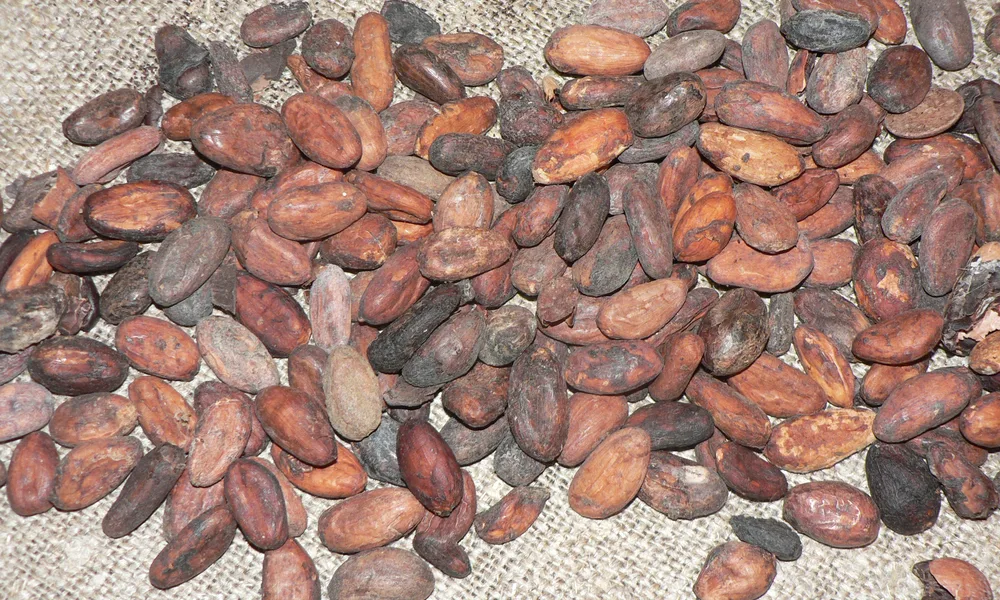
The pressing is what makes cocoa butter special. Because the fat is pressed out rather than extracted with solvents, food-grade cocoa butter is a single-ingredient fat with nothing added, and its flavour stays clean. Good cocoa butter is pale yellow or ivory, hard enough to snap, and smells faintly of chocolate. Dark, soft or strongly smelling butter has usually been stored badly or pressed from poor beans.
Melting Point, Flavour and Texture
Cocoa butter melts at around 34 degrees Celsius, just below body temperature, and it melts fast once it starts. That sharp melting point is its defining trait: it stays solid in the hand, then turns liquid on the tongue, which is why chocolate feels cool and silky rather than greasy. Its flavour is mild and gently chocolatey in raw or unrefined butter, and almost none at all in refined butter, which is deodorised to remove the chocolate note.
The texture is what sets cocoa butter apart from other baking fats. It is hard and brittle when cold, melts into a thin, fluid liquid, and sets again into a firm, glossy solid with a clean snap. It does not coat the mouth the way butter does, and it leaves no greasy film, because it melts so completely. In the bowl it melts gently over low heat, mixes cleanly with chocolate and cream, and sets with a shine other fats cannot match.
Cocoa Butter Against the Other Baking Fats
No single fat does every job, and cocoa butter is no exception. It wins on melt and snap and loses on everyday versatility. The comparison below shows where each common fat stands.
| Fat | Melting point | Flavour | Best for |
|---|---|---|---|
| Cocoa butter | About 34°C | Mild, chocolatey | Chocolate, ganache, moulding |
| Butter | About 32°C | Rich, creamy | Baking, sauces, finishing |
| Coconut oil | About 24°C | Light, coconut | Quick melts, dairy-free baking |
| Shortening | About 45°C | None | Flaky pastry, frosting |
| Vegetable oil | Liquid | Neutral | Everyday frying and baking |
Butter is still the fat most bakers reach for first, and our guide to chocolate explains how to judge the chocolate you buy, including what the cocoa butter content on the label really means. Cocoa butter is the better fat wherever snap, shine and a clean melt matter, while butter wins wherever its flavour is the point.
Cocoa Butter in Chocolate Making: Tempering
Tempering is where cocoa butter earns its reputation. Melted chocolate that cools without tempering turns dull, soft and streaked, because its cocoa butter crystals set in the wrong form. Tempered chocolate sets with a glossy shine, a firm snap and a smooth melt, because the crystals are lined up in their most stable form. The trick is temperature: melt to around 45 degrees, cool to around 27, then warm gently back to around 31, stirring all the while.
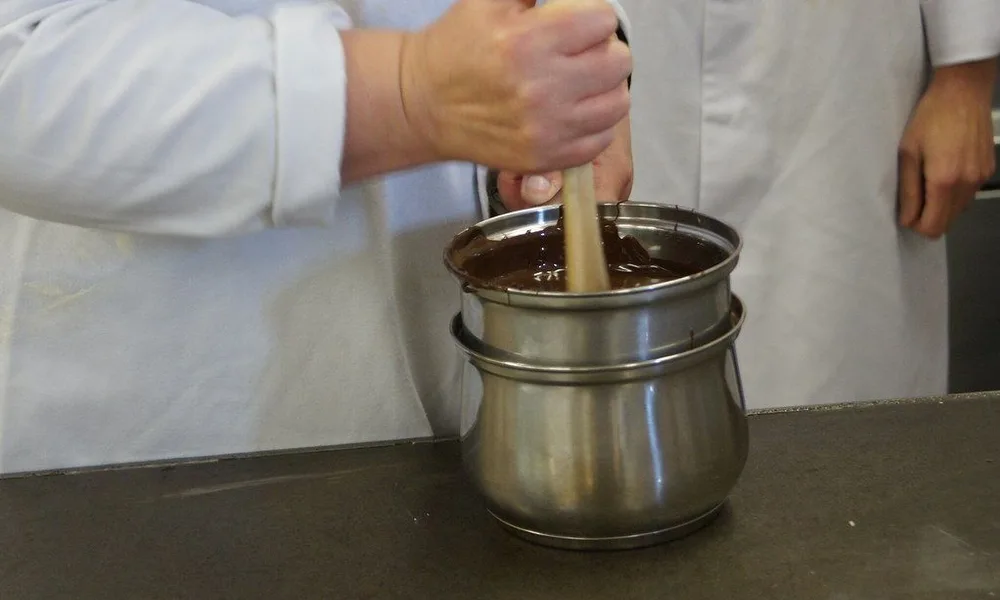
A little extra cocoa butter makes tempering easier. Stir a spoonful into melted chocolate and it thins the chocolate, so it coats moulds and dips more evenly, and it helps the chocolate set with a harder snap. It is also the fat in white chocolate, which is cocoa butter, sugar and milk with no cocoa solids at all, and the reason a good white chocolate melts so cleanly.
Cocoa Butter in Baking
Cocoa butter has a smaller role in everyday baking than butter, but it still earns its place. Melted into a cake batter it adds richness without water, so cakes stay moist longer and keep a fine, even crumb. Stirred into a ganache it makes the ganache firmer and glossier, and it helps truffles hold their shape at room temperature. Brushed thinly over a finished cake it sets into a glossy coat that seals in moisture.
The trick is to use it in small amounts and melt it gently. Cocoa butter scorches easily over direct heat, so melt it in a bowl over simmering water and never let the bowl touch the water. In cookies and brownies, a spoonful adds a subtle chocolate depth without extra cocoa powder, and in dairy-free baking it replaces butter cleanly. Used with restraint, it is a quiet upgrade to any chocolate bake, and our guide to dark chocolate explains which bars melt best.
Buying Cocoa Butter: Food Grade, Refined or Unrefined
Good cocoa butter starts with good beans, and the best source is a baking supplier that sells it in blocks, buttons or wafers. Always buy food-grade cocoa butter, and check the label lists one ingredient, cocoa butter, with nothing else added. Wafers melt fastest and are easiest to measure, blocks are the best value, and buttons sit in between. Avoid tubs sold for skin care, however similar they look.
Refined cocoa butter has been deodorised, so it has almost no flavour and suits any recipe, including white chocolate and delicate cakes. Unrefined or raw cocoa butter keeps its gentle chocolate scent and suits recipes where a little chocolate note is welcome. Either is fine for tempering: buy refined when you want the fat to disappear, unrefined when you want it to add something. Buy a small pack first, because quality varies from supplier to supplier.
Mistakes That Spoil Cocoa Butter
The commonest mistake is overheating it. Cocoa butter scorches above 60 degrees, turning dark and bitter, so melt it gently over simmering water and take it off the heat the moment it turns liquid. The second is letting water into melted chocolate: a single drop seizes chocolate into a stiff, grainy paste, so keep bowls, spoons and moulds completely dry. The third is cooling chocolate too fast, in the fridge, which sets the wrong crystals and leaves a dull, streaky finish.
Do not use cosmetic cocoa butter in food, do not mix cocoa butter with butter in tempered chocolate unless you want a soft set, and do not leave melted chocolate sitting for hours, because it thickens and loses its shine.
Storage and Shelf Life
Cocoa butter keeps well because it is almost pure fat with very little water. In a sealed bag or jar in a cool, dark cupboard it lasts a year or more, in the fridge longer still, and it rarely goes rancid if kept dry. Keep it sealed and away from strong smells, and always use a clean, dry spoon so moisture does not get in. If it smells sharp or stale, or has yellowed and tastes bitter, throw it out: rancid cocoa butter cannot be saved.
Melted cocoa butter needs a little care. Let it cool, pour it into a clean mould or jar, and let it set at room temperature rather than in the fridge, where it can bloom with white streaks.
Checklist: Buying and Using Cocoa Butter
- Buy food-grade cocoa butter only, and check the label lists one ingredient.
- Choose pale yellow, hard butter that smells faintly of chocolate, never dark or soft.
- Pick refined for no flavour and unrefined when you want a gentle chocolate note.
- Melt it gently over simmering water, never over direct heat, and keep water out.
- Use it for tempering, moulding, ganache and white chocolate, where snap and shine matter most.
- Store it sealed in a cool, dark cupboard, and throw it out if it smells sharp or stale.
Frequently Asked Questions
What is cocoa butter, exactly?
Cocoa butter is the natural fat pressed from cocoa beans: a pale yellow, hard fat that melts just below body temperature. It is the fat that gives chocolate its snap, shine and smooth melt.
Is cocoa butter the same as body butter?
No. Body butter is a cosmetic moisturiser for the skin, often made with cocoa butter among other ingredients. Food-grade cocoa butter is the kitchen fat, and you should never cook with a tub meant for the skin.
What is the melting point of cocoa butter?
Around 34 degrees Celsius, or about 93 degrees Fahrenheit: just below body temperature, which is why chocolate stays solid in the hand and melts on the tongue.
Why does chocolate need cocoa butter to temper?
Tempering lines up the cocoa butter crystals in their most stable form. Tempered chocolate sets glossy and firm with a clean snap, while untempered chocolate turns dull, soft and streaked as it cools.
Can you bake with cocoa butter instead of butter?
Yes, in small amounts, especially in chocolate cakes, brownies and ganache, where it adds richness without water. It has no butter flavour, so it suits recipes where chocolate is the star.
How long does cocoa butter keep?
A year or more in a sealed bag or jar in a cool, dark cupboard, longer in the fridge. Throw it out if it smells sharp or stale, or has yellowed and tastes bitter.
The Bottom Line
Cocoa butter is no fad ingredient: it is the fat that makes chocolate taste like chocolate. It gives a bar its snap, a ganache its gloss, and a moulded sweet its clean, silky melt, all from a single pressed fat. Buy food-grade cocoa butter, melt it gently, keep water away, use it where snap and shine matter. Bake with it once and you will understand why chocolatiers never work without it.


