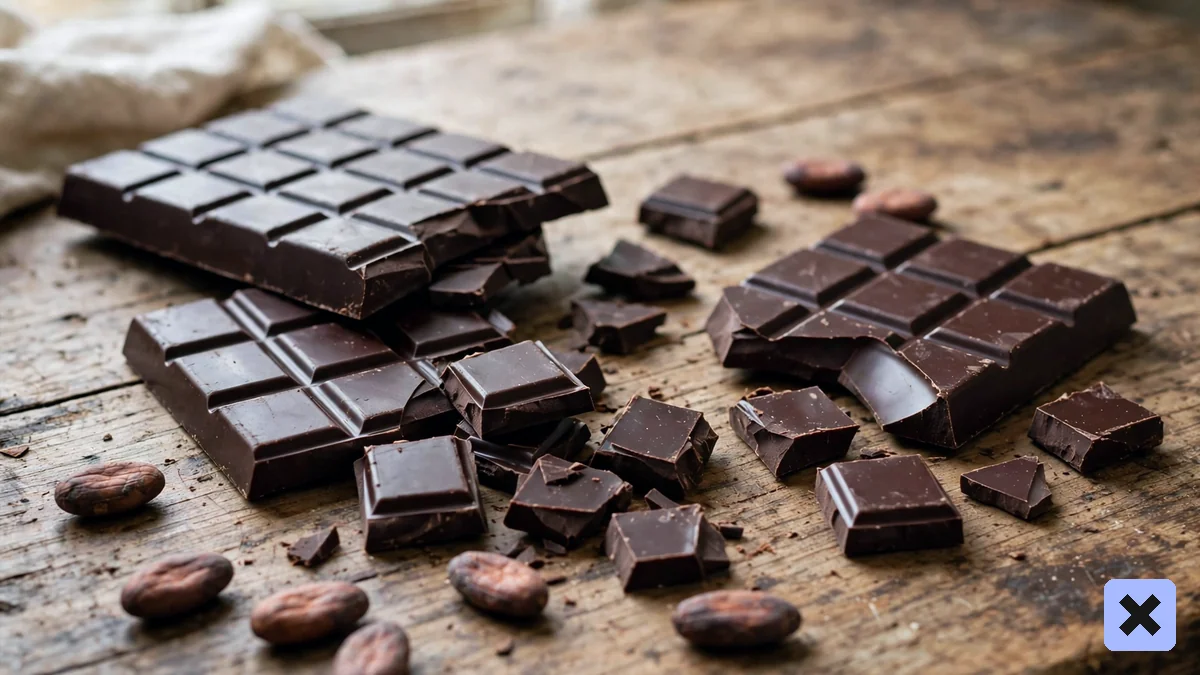
Real hot chocolate starts with cocoa powder, not with a packet of instant mix, and the difference is not subtle. A good cocoa powder is pure ground cocoa bean, with no added sugar, no milk powder and no artificial flavour, and it makes a drink that tastes of actual chocolate: deep, dark and a little bitter. The best cocoa powders for real hot chocolate in 2026 dissolve smoothly and work as well in a cake as they do in a mug.
Cocoa powder is what remains after cocoa beans are fermented, roasted and pressed to remove most of their cocoa butter. The pressed cake is ground into a fine powder, the most concentrated form of chocolate flavour you can buy. A single tablespoon carries the flavour of a whole bar of dark chocolate, which is why the choice of powder matters so much.
Key Takeaways
- Cocoa powder is pure ground cocoa bean, with no sugar or milk added; instant hot chocolate mix is a different product.
- Natural cocoa is acidic, fruity and light in colour, while Dutch-processed cocoa is alkalised, darker, smoother and milder.
- Natural cocoa needs baking soda to rise; Dutch-processed cocoa needs baking powder, because its acid has been neutralised.
- Good cocoa powder should contain about 20 to 22 percent cocoa butter and list only cocoa, or cocoa and alkali, as ingredients.
- Store cocoa powder airtight in a cool, dark cupboard, where it keeps for about two years without losing its flavour.
Natural vs Dutch-Processed: The Choice That Matters Most
Every cocoa powder falls into one of two families, and the split decides how it tastes and how it bakes. Natural cocoa powder is simply ground cocoa bean, nothing added. It is light reddish-brown, sharply acidic, with a bright, fruity flavour and a pH of about 5.3 to 5.8.

Dutch-processed cocoa is the same powder washed in an alkaline solution, usually potassium carbonate, to neutralise its acidity. The process, invented by Coenraad van Houten in the Netherlands in 1828, raises the pH to about 6.8 to 8.1. The result is darker, sometimes almost black, smoother, milder and less bitter, with a deep, earthy chocolate flavour. Dutch cocoa also dissolves more easily in liquid, which is one reason it is the favourite for drinking chocolate.
Which One Should You Buy?
For hot chocolate, Dutch-processed cocoa is usually the better pick. Its smooth, mellow flavour needs less sugar to taste balanced, its dark colour looks dramatic in the mug, and it whisked into hot milk with almost no lumps. Natural cocoa makes a brighter, fruitier hot chocolate that some people prefer, but it needs a little more sugar and whisking to taste round rather than sharp.
For baking, the choice depends on the recipe. A recipe that uses baking soda expects the acidity of natural cocoa, and swapping in Dutch cocoa can leave the bake flat and pale. A recipe that uses baking powder, which carries its own acid, works with either powder, and Dutch cocoa gives the darker crumb most people associate with a good chocolate cake.
Cocoa Powder Compared: What the Label Tells You
The fat content of a cocoa powder is the quietest quality marker on the label, and one of the most useful. Cocoa butter carries flavour, and a powder that retains 20 to 22 percent cocoa butter tastes richer than a heavily defatted powder at 10 to 12 percent, which can taste thin and dusty. Most supermarket powders sit in the middle, around 16 to 18 percent.
The ingredient list should be short. Natural cocoa lists one ingredient: cocoa. Dutch-processed cocoa lists two: cocoa and alkali, sometimes written as potassium carbonate. Anything else on the list, such as sugar, milk powder or flavouring, means you are holding a hot chocolate mix, not a cocoa powder, and it will not bake the way a pure powder does.
| Cocoa Type | Colour | Flavour | Best For | Leavening |
|---|---|---|---|---|
| Natural cocoa | Light reddish-brown | Bright, fruity, sharp | Hot chocolate, brownies | Baking soda |
| Dutch-processed | Dark brown | Smooth, mellow, earthy | Drinking chocolate, cakes | Baking powder |
| Black cocoa | Near black | Intense, bitter, smoky | Oreo-style cookies, dark cakes | Baking powder |
| Raw cacao powder | Medium brown | Bitter, fruity, raw | Smoothies, raw desserts | Baking powder |
| Hot chocolate mix | Varies | Sweet, mild | Instant drinks only | Not for baking |
How to Choose the Best Cocoa Powder in 2026
Start with the type, and buy for the job you will use it for most. If you mainly drink hot chocolate, a Dutch-processed powder is the safest all-rounder. If you bake brownies and cakes with baking soda, keep a natural cocoa in the cupboard too. Many keen cooks keep both, because the two powders cost little and last for years.
Next, check the fat content and the ingredient list. Aim for 20 to 22 percent cocoa butter if you can find it, and accept nothing with added sugar or milk powder in a product sold as cocoa. Then look at the colour and smell: open the tin and the powder should smell deeply of chocolate, not of dust or cardboard. A stale powder loses its aroma first.
Making Real Hot Chocolate: The Method
Real hot chocolate is a three-ingredient drink: cocoa powder, milk and a little sugar, with a pinch of salt to sharpen the flavour. The method matters more than the recipe. Start by whisking the cocoa powder with a little sugar and a splash of cold milk into a smooth paste, which stops the powder clumping. Then add the rest of the milk, warm the pan gently over a medium heat, and whisk steadily until the chocolate is hot and just starting to steam, but never boiling.
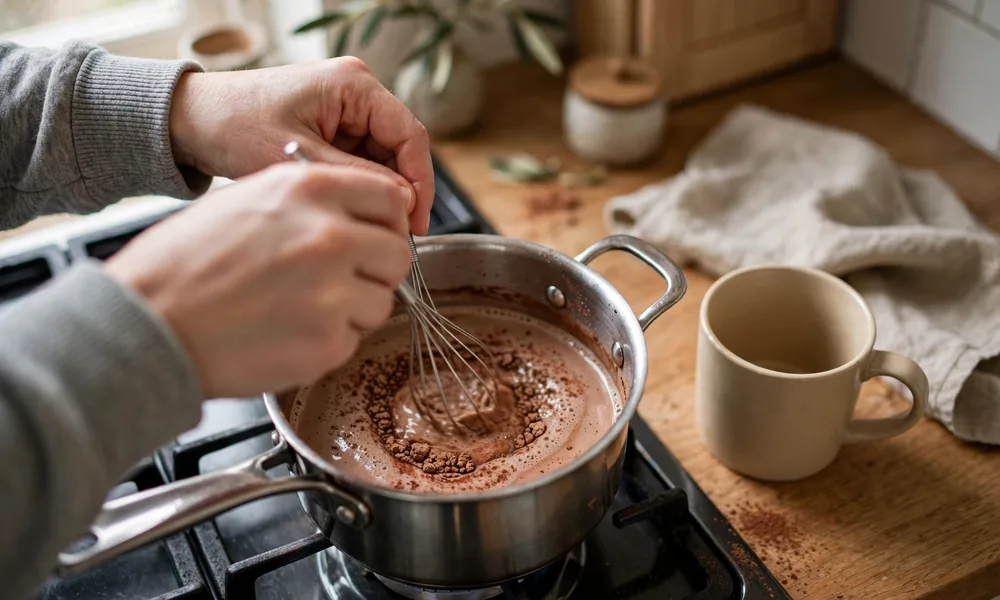
The ratio is personal, but a reliable starting point is two tablespoons of cocoa powder and one tablespoon of sugar per 250 millilitres of milk. For a richer drink, use half milk and half cream, or add a small square of dark chocolate to the pan as it warms. Our guide to the best chocolate milk of 2026 covers the ready-made bottles if you want a quick comparison, but nothing in a bottle tastes quite like a mug made from scratch.
Why Your Hot Chocolate Goes Lumpy
Cocoa powder is hydrophobic, which means it resists mixing with water and floats on milk in stubborn clumps. The paste method solves it: a little liquid first, whisked into a thick paste, then the rest of the liquid added slowly. A small whisk, a milk frother or a blender all work, and sifting the powder through a fine sieve before you start helps too. A pinch of salt, added at the paste stage, suppresses the bitter edge and makes the chocolate flavour taste fuller.
Cocoa Powder in Baking
Cocoa powder is the backbone of chocolate baking, and it behaves differently from melted chocolate. It adds intense flavour without adding fat or liquid, which makes it ideal for cakes, brownies and cookies where the texture is already set by butter and eggs. A standard chocolate cake uses about 50 to 75 grams of cocoa per 200 grams of flour, and blooming the powder, whisking it with hot water or hot coffee before adding it to the batter, deepens the flavour noticeably.
Blooming is the single best trick in chocolate baking. Hot liquid dissolves the cocoa particles and releases flavour compounds that stay locked up in a dry mix, and the difference is obvious: darker, deeper, more chocolatey. Coffee is the classic blooming liquid, because a small amount of coffee makes the cake taste more of chocolate, not of coffee.
Cocoa Powder for Smoothies and Everyday Use
Cocoa powder is not only for hot drinks and baking. A tablespoon in a morning smoothie adds deep chocolate flavour for about 12 calories and almost no sugar, and it pairs well with banana, peanut butter and oats. It works in overnight oats, in yoghurt, dusted over cappuccinos and tiramisu, and stirred into porridge. A teaspoon in a chilli con carne or a mole sauce is an old cook’s trick: it adds depth and a dark colour without any sweetness.
For smoothies, a Dutch-processed powder blends more smoothly and tastes milder, which suits a drink that is already sweet from fruit. Our guide to the best smoothies of 2026 has more ideas for building a balanced blend, and our guide to the best peanut butter of 2026 covers the other half of the classic chocolate and peanut butter pairing.
Storing Cocoa Powder So It Keeps Its Flavour
Cocoa powder is one of the longest-lived ingredients in the pantry, and it keeps for about two years if it is stored well. The enemies are moisture, strong smells and air. Keep it in its original tin or an airtight jar, in a cool, dark cupboard, away from the stove and away from spices, because cocoa absorbs smells readily. Never store it in the fridge, where condensation can dampen the powder and cause clumping.

Common Mistakes When Buying Cocoa Powder
The first mistake is buying a hot chocolate mix and expecting it to bake like cocoa powder. A mix is mostly sugar and milk powder, with a little cocoa, and it will make a cake that is too sweet, too pale and too soft. The second mistake is using the wrong type for the leavening: natural cocoa with baking powder alone, or Dutch cocoa with baking soda alone, will leave a cake flat or soapy-tasting.
Cocoa Powder Buying Checklist
- Choose Dutch-processed for drinking chocolate and natural cocoa for recipes that use baking soda.
- Check the ingredient list says cocoa only, or cocoa and alkali, with no sugar or milk powder.
- Aim for 20 to 22 percent cocoa butter for the richest flavour, and accept no less than 16 percent.
- Smell the powder when you open it: it should smell deeply of chocolate, not of dust.
- Use two tablespoons of cocoa and one tablespoon of sugar per 250 millilitres of milk for hot chocolate.
- Store it airtight in a cool, dark cupboard, away from heat, moisture and strong smells.
Frequently Asked Questions
What is the difference between cocoa powder and hot chocolate mix?
Cocoa powder is pure ground cocoa bean, with no sugar or milk. Hot chocolate mix is mostly sugar and milk powder with a little cocoa added. Cocoa powder is for cooking and baking; a mix is only for instant drinks.
Is Dutch-processed cocoa better than natural cocoa?
Neither is better overall. Dutch cocoa is darker, smoother and milder, best for drinking chocolate and cakes made with baking powder. Natural cocoa is brighter and acidic, best for brownies and recipes that use baking soda.
Can you substitute natural cocoa for Dutch-processed cocoa?
Yes, but adjust the leavening. Natural cocoa needs baking soda to rise, while Dutch cocoa needs baking powder. Swapping one for the other without changing the leavening can leave a bake flat or soapy.
How much cocoa powder should I use for hot chocolate?
Two tablespoons of cocoa powder and one tablespoon of sugar per 250 millilitres of milk is a reliable starting point. Add a pinch of salt, and adjust the sugar to taste.
Does cocoa powder expire?
It does not spoil in a dangerous way, but it loses flavour after about two years. An old tin that smells of dust rather than chocolate is past its best and worth replacing.
Is cocoa powder healthy?
Unsweetened cocoa powder is rich in flavanols and minerals, with about 12 calories per tablespoon and almost no sugar. The health of a hot chocolate depends on how much sugar and cream you add to it.
The Bottom Line
The best cocoa powder for real hot chocolate in 2026 is a pure, fresh powder matched to the job: Dutch-processed for a smooth, dark drinking chocolate, natural cocoa for bright brownies and baking-soda recipes. Check the ingredients, aim for a high cocoa butter content, and store the tin airtight in a cool, dark cupboard.