The best peanut butter in 2026 is the jar you actually finish, not the one with the prettiest label. Peanut butter is one of those foods nearly every household buys, yet the difference between a great jar and a mediocre one is enormous: two ingredients or twelve, real roasted flavour or a sugary spread that barely tastes of peanuts, a texture that spreads smoothly or one that tears the bread. This guide sorts the shelf so you can buy with confidence.
We looked at what matters in a jar of peanut butter in 2026: the ingredient list, the peanut content, the balance of healthy fats, the texture, the price per serving, and how it behaves in real kitchens — on toast, in sandwiches, and in baking. The winners below score well on all of those fronts, not just one.
Peanut butter has quietly changed in recent years. Natural, two-ingredient jars are now easy to find and no longer cost a fortune, while the big classic brands have improved their recipes too. The shelf has also filled with flavoured and protein-boosted jars, and not all of them deserve your money.
Key Takeaways
- The best peanut butter lists peanuts first and ideally contains just peanuts and salt — no hydrogenated oils, no added sugar, no palm oil.
- Creamy spreads best on soft bread, crunchy adds texture to sandwiches and baking, and neither is healthier than the other by default.
- Natural peanut butter needs a good stir when first opened, then keeps well in the fridge or a cool cupboard.
- A standard serving is two tablespoons, roughly 190 calories and 7 to 8 grams of protein — measure it, because it is easy to spread twice that.
- Powdered peanut butter is useful for smoothies and baking but is not a replacement for the real thing on toast.
What Makes a Great Peanut Butter
A great peanut butter starts with the peanuts themselves. The best jars use roasted peanuts ground slowly enough to release their own oils, which is why a two-ingredient jar can taste richer than a jar with a dozen additives. Roasting depth matters: a light roast tastes mild and sweet, while a darker roast brings out a deeper, almost smoky flavour that stands up well in cooking.
The Ingredient List Test
Turn the jar around before you buy it. The shortest ingredient lists win. Peanuts and salt is the gold standard. Peanuts, salt, and a little palm oil is acceptable if you prefer a no-stir jar, though many shoppers now avoid palm oil on environmental grounds. What you do not want to see is hydrogenated vegetable oil, which keeps the jar unnaturally smooth at room temperature, or sugar and molasses high on the list, which turn a savoury staple into a sweet spread.
Some jars add honey, cocoa, or cinnamon. Those can be delicious, but treat them as flavoured spreads rather than everyday peanut butter, and check the sugar per serving first.
Texture: Creamy, Crunchy, and Everything Between
Texture is personal, but it is also practical. Creamy peanut butter spreads evenly on soft bread without tearing it, blends smoothly into sauces and smoothies, and is the better choice for baking, where an even crumb matters. Crunchy peanut butter gives sandwiches a satisfying bite, adds texture to cookies and energy bars, and is often the pick for people who eat peanut butter on crackers or apple slices.

Creamy vs Crunchy Peanut Butter
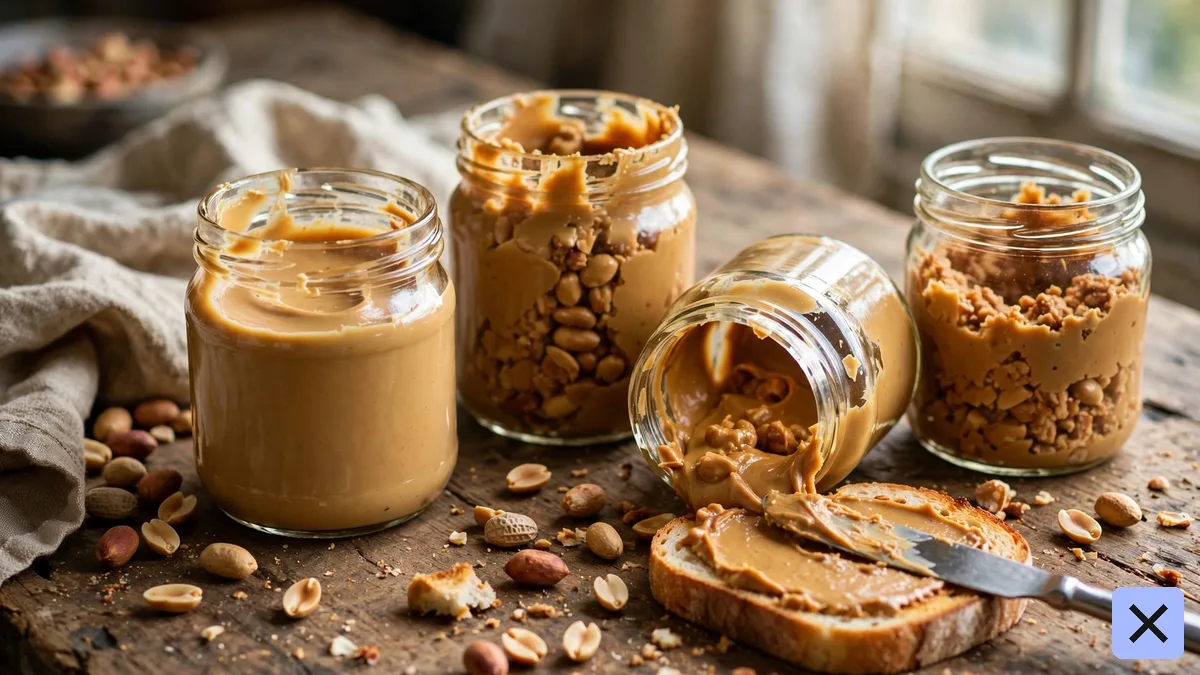
The creamy versus crunchy debate is really a question of what you eat it with. For a classic peanut butter sandwich, creamy wins for most people: it spreads in an even layer, pairs neatly with jam or banana, and does not push the filling out of the sides. Crunchy wins when the peanut butter is the star — on toast with a drizzle of honey, on celery sticks, or in a cookie where the pieces add crunch.
Nutritionally, the two are almost identical. Crunchy jars sometimes contain a fraction more fibre and a touch less fat per serving, because the peanut pieces displace a little of the ground paste, but the difference is small enough to ignore. Choose by taste and by use, not by the nutrition label.
Best Peanut Butter 2026 Compared
| Style | Best For | Ingredients | Typical Price | Why It Wins |
|---|---|---|---|---|
| Natural creamy | Everyday sandwiches and toast | Peanuts, salt | Mid-range | Cleanest flavour, spreads beautifully |
| Natural crunchy | Snacking, baking, texture lovers | Peanuts, salt | Mid-range | Real peanut pieces, great bite |
| Classic no-stir creamy | Kids, lunchboxes, convenience | Peanuts, palm oil, salt, sugar | Budget | Never separates, always spreadable |
| Classic crunchy | Family sandwiches | Peanuts, palm oil, salt, sugar | Budget | Familiar taste, easy to find |
| Powdered peanut butter | Smoothies and baking | Peanuts, salt | Premium per serving | Low fat, mixes into drinks |
| Flavoured (honey, cocoa) | Treats and desserts | Peanuts, sugar, flavouring | Premium | Fun, but higher in sugar |
The table tells the real story of the peanut butter shelf in 2026: there is no single best jar, only the best jar for each job. A household that eats peanut butter daily will get the most value from a natural creamy jar for everyday use and a crunchy jar for weekends and baking. A household with young children may prefer a no-stir classic for lunchboxes, where a jar that separates is a jar that ends up on the floor.
Price is worth a closer look. Peanut butter is sold by weight and jar sizes vary widely, so compare the price per 100 grams rather than the shelf price. Natural jars often look expensive until you do the maths: a 500-gram jar that costs a little more but contains only peanuts is usually better value than a cheaper jar bulked out with oils and sugar.

How to Choose the Right Peanut Butter
Start with how you will eat it. If peanut butter mostly goes on toast and sandwiches, a natural creamy jar is the best all-rounder. If it mostly goes into smoothies, porridge, or baking, texture matters less and a natural jar of either style works. If it is mainly a snack for children, a no-stir jar will save you mess and complaints.
Next, read the label for the two numbers that matter: added sugar and sodium. The best everyday jars have zero added sugar and 100 to 140 milligrams of sodium per serving. If a jar lists more than 3 grams of added sugar per serving, it belongs in the treat category, not the everyday one.
Allergies and School Rules
Peanut allergies are serious and common, and many schools are now nut-free. If you pack lunches, check the school rules first: some allow peanut butter, many do not, and a few allow it only in sealed containers. Sunflower seed butter is the closest widely available substitute for school lunches, with a similar texture and a nutty flavour.
Peanut Butter in the Kitchen
Peanut butter earns its place in the kitchen far beyond the sandwich. A spoonful whisked into a noodle sauce with soy, lime, and chilli makes a quick satay-style dressing, and it adds body to curries and stews. In baking it keeps cookies soft and adds flavour to brownies and energy bars without extra butter.
For breakfast, it turns plain porridge into something that keeps you full until lunch. If you want more ideas for what to spread it on, our guide to the best bread makers of 2026 is a good place to start, since a fresh loaf and good peanut butter are a hard combination to beat.
Peanut butter also pairs well with fruit and dairy. Apple slices, banana, and celery are the classics, and a spoonful stirred into yoghurt or a smoothie adds protein and staying power. For a post-workout snack, peanut butter on toast with a glass of milk covers protein, carbohydrate, and healthy fats in one quick plate — and if you are building a higher-protein routine, our roundup of the best pea protein of 2026 covers the powders that pair well with it in shakes.
Storing Peanut Butter Properly
Natural peanut butter separates because it contains no stabilisers: the oil rises and the solids settle. This is normal, not a sign that the jar has gone bad. Stir it thoroughly once when you open it, and the texture will stay good for weeks. Storing the jar upside down slows separation, and the fridge stops it almost entirely — though it makes the butter firmer, so take it out ten minutes before breakfast.
No-stir jars do not separate and keep well in a cool cupboard for months. Once opened, any peanut butter should be used within two to three months for the best flavour. If a jar smells rancid, tastes sharp, or has mould, throw it away, and keep jars away from heat and sunlight.
Peanut Butter Shopping Checklist
- Check the ingredient list first: peanuts and salt is ideal, and sugar or hydrogenated oil is a reason to put the jar back.
- Compare the price per 100 grams, not the shelf price, because jar sizes vary widely.
- Pick creamy for sandwiches and baking, crunchy for snacking and texture — or keep one jar of each.
- Choose natural for everyday eating and no-stir only when convenience matters more than the ingredient list.
- Check the added sugar per serving: zero is best for an everyday jar, and anything above 3 grams is a treat.
- Buy the size you will finish within two months, and store it upside down, then stir well on opening.
Frequently Asked Questions
Is peanut butter healthy?
Yes, in its natural form. Peanut butter made from peanuts and salt is rich in healthy monounsaturated fats, protein, fibre, and vitamin E, and it keeps you full for hours. The less healthy versions are the ones with added sugar and hydrogenated oils.
How much peanut butter should I eat per day?
A standard serving is two tablespoons, about 190 calories and 7 to 8 grams of protein. One serving a day fits easily into most diets, but measure it: a heaped knife can easily be double a serving without looking like it.
Does natural peanut butter need to be refrigerated?
It does not have to be, but refrigeration slows oil separation and keeps it fresh longer. The trade-off is a firmer texture. Stirring the jar once and keeping it in the cupboard works well too.
What is the difference between natural and regular peanut butter?
Natural peanut butter contains only peanuts and salt, and it separates because it has no stabilisers. Regular peanut butter adds palm oil or hydrogenated oil to stop separation, and often sugar. Natural tastes more strongly of peanuts; regular is smoother, sweeter, and more convenient.
Can I eat peanut butter if I am trying to lose weight?
Yes, and it can help, because its protein and fat keep you satisfied. The key is portion control: measure two tablespoons rather than spreading freely, and pair it with fruit or wholegrain bread rather than white bread and jam.
What can I use instead of peanut butter for school lunches?
Sunflower seed butter is the closest substitute in taste and texture, and most schools allow it. Soy nut butter is another option. Both spread like peanut butter and work in sandwiches and baking, though they cost a little more. Always check the school’s allergy policy first, since rules vary.
The Bottom Line
The best peanut butter in 2026 is a natural jar with peanuts and salt, in the texture you actually enjoy eating. Creamy is the best all-rounder for sandwiches and cooking, crunchy is the best choice when you want texture, and a no-stir classic is worth keeping for lunchboxes and busy mornings. Read the label, compare the price per 100 grams, and measure your serving — and if you like your peanut butter with something to drink alongside it, our guide to the best banana milk of 2026 pairs surprisingly well with a thick peanut butter sandwich. Buy the jar that fits your kitchen, stir it well, and it will earn its place on the shelf.